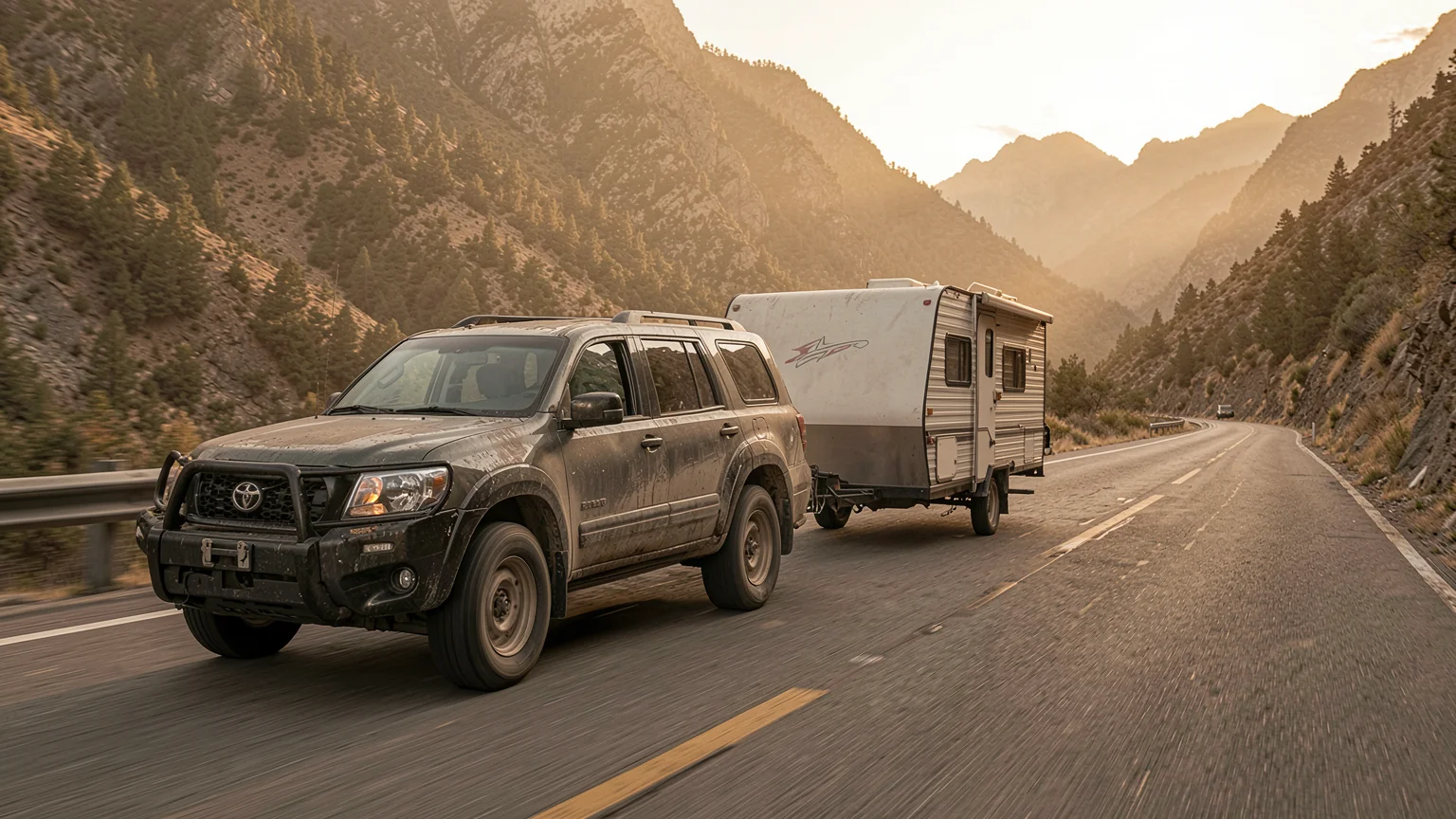
The 4Runner towing capacity is up to 6,000 pounds on the current sixth-generation model, according to Toyota. That is 1,000 pounds more than the 5,000-pound rating the fifth generation carried on every trim.
Your own number can be lower. Published ratings differ by trim and engine, and sources do not agree on which powertrain tows the most. This guide shows each figure, explains tongue weight and payload, and gives you a short checklist to run before you hitch up.
Key Takeaways
- Toyota lists a maximum 4Runner towing capacity of 6,000 lbs for the 2026 model year.
- Some trims, mainly the heavier hybrid ones, are listed at 5,800 lbs by tow-spec databases.
- The fifth-generation 4Runner towed 5,000 lbs on every trim.
- Tongue weight and payload often limit you before the trailer rating does.
- Always confirm your exact rating in the owner’s manual before you tow.
In this guide:
- How much is the 4Runner towing capacity?
- 2026 4Runner towing capacity by trim
- 4Runner hybrid towing capacity: gas vs i-FORCE MAX
- 4Runner tongue weight and payload limits
- What you can tow with a 4Runner
- Towing tech, gear and a pre-trip checklist
- FAQ
How Much Is the 4Runner Towing Capacity?
Toyota states that the 4Runner offers a maximum towing capacity of 6,000 lbs, enough for trailers, boats or UTVs. That headline number applies to the sixth generation, which Toyota built on its TNGA-F body-on-frame platform.
The rating has moved a lot over the years. Here is how the generations compare.
| Generation | Max towing | What changed |
|---|---|---|
| First generation (after 1986 updates) | 3,500 lbs | Truck-based frame and rugged origins |
| Third generation (from 1996) | 5,000 lbs | New frame and a V6 |
| Fourth generation (V8, rear-wheel drive) | 7,300 lbs | V8 power from 2003 |
| Fifth generation (4.0L V6) | 5,000 lbs | Same rating on every trim |
| Sixth generation (2025 and 2026) | Up to 6,000 lbs | Turbo four-cylinder and hybrid option |
So the 4Runner towing capacity of the latest model beats the fifth generation but still trails the old V8 model. The newer truck gets there with a turbocharged 2.4-liter engine instead of a V6.
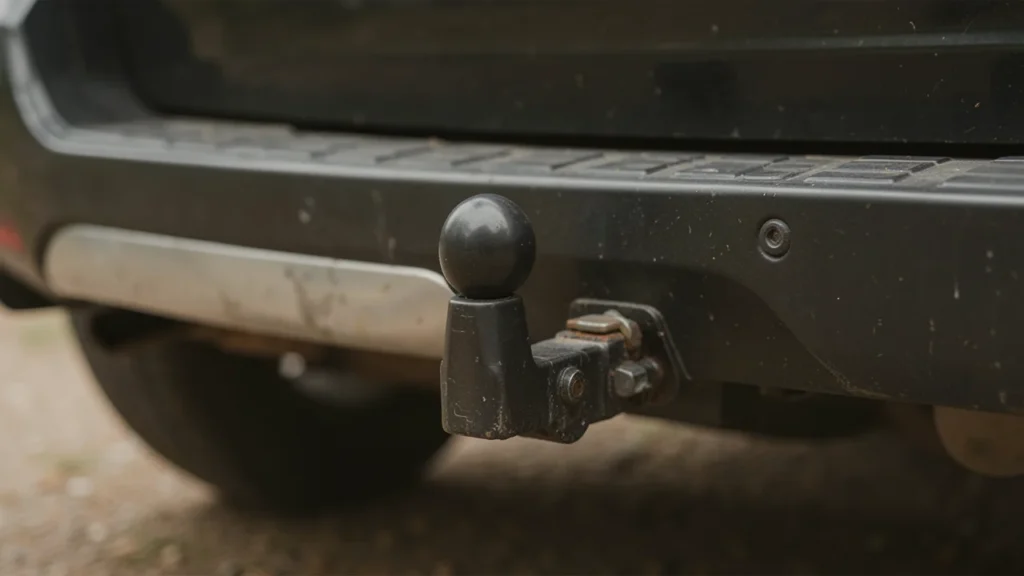
2026 4Runner Towing Capacity by Trim
The 2026 lineup has nine grades: SR5, TRD Sport, TRD Sport Premium, TRD Off-Road, TRD Off-Road Premium, Limited, Platinum, TRD Pro and Trailhunter. What decides your rating is the powertrain under the hood.
| Grades | Powertrain | Output | Rating listed by TowingSpecs |
|---|---|---|---|
| SR5, TRD Sport, TRD Sport Premium | i-FORCE turbo 2.4L | 278 hp, 317 lb-ft | 6,000 lbs |
| TRD Off-Road, TRD Off-Road Premium, Limited | i-FORCE, or i-FORCE MAX hybrid as an option | 278 hp or 326 hp | 6,000 lbs |
| Platinum, TRD Pro, Trailhunter | i-FORCE MAX hybrid (standard) | 326 hp, 465 lb-ft | 5,800 lbs |
Toyota confirms the engine and grade split in its newsroom release, and it quotes one maximum figure of 6,000 lbs. The per-trim split, with 5,800 lbs on the three hybrid-only grades, comes from the independent site TowingSpecs, which says it verified the numbers against Toyota’s product sheet.
Treat the 2026 4Runner towing capacity as a range from 5,800 to 6,000 lbs. Then check the sticker and manual for your exact truck.
4Runner Hybrid Towing Capacity: Gas vs i-FORCE MAX
The hybrid adds an electric motor and boosts output from 278 to 326 horsepower and from 317 to 465 lb-ft of torque. More torque helps a heavy trailer move and climb, even when the rating is not higher.
Here is where it gets confusing. Reviewers do not agree on which version tows more:
- Autoblog reports 6,000 lbs for the hybrid and 5,000 lbs for non-hybrid trims.
- Jalopnik reports 6,000 lbs for non-hybrid trims and up to 5,800 lbs for hybrids, blaming the extra weight of the hybrid parts.
- TowingSpecs lists most gas trims and the optional hybrid on TRD Off-Road and Limited at 6,000 lbs.
The safest reading is simple. The 4Runner hybrid towing capacity is somewhere between 5,800 and 6,000 lbs depending on the grade, and Toyota’s own maximum is 6,000 lbs. Do not buy a hybrid for towing until you have the written rating for the exact grade on the dealer’s sticker.
Torque still counts. A hybrid with 465 lb-ft pulls a loaded trailer with less strain than the gas engine, which matters on long grades.
4Runner Tongue Weight and Payload Limits
Tongue weight is the downward push of the trailer on the hitch ball. A good target is 10 to 15 percent of the loaded trailer weight. Too little causes sway, and too much overloads the rear axle.
| Loaded trailer weight | Tongue weight at 10% | Tongue weight at 15% |
|---|---|---|
| 3,000 lbs | 300 lbs | 450 lbs |
| 4,000 lbs | 400 lbs | 600 lbs |
| 5,000 lbs | 500 lbs | 750 lbs |
| 6,000 lbs | 600 lbs | 900 lbs |
TowingSpecs lists a maximum 4Runner tongue weight of 600 lbs for most 2026 trims and 580 lbs for the 5,800-lb grades. At those limits, a trailer with 15 percent tongue weight tops out near 4,000 lbs. A trailer with 10 percent tongue weight can reach about 6,000 lbs.
Payload is the second limit. Tongue weight counts against it, along with passengers and cargo. TowingSpecs derives payload from Toyota’s gross vehicle weight and curb weight figures, and its numbers run from about 1,550 lbs on a rear-wheel-drive SR5 down to about 1,005 lbs on the Trailhunter.
Here is a quick example. A 4,000-lb trailer with 12 percent tongue weight puts 480 lbs on the hitch. Add 500 lbs of people and gear, and you use 980 lbs of payload. On a hybrid grade with about 1,050 lbs of payload, you have almost nothing left.
Tow tires matter here too. Our guide to the best tires for towing explains load ratings, and this list of tires that fit the 4Runner Limited shows common sizes.
What Can You Tow With a 4Runner?
Weight is the main filter. The table below uses typical loaded weights from TowingSpecs, so your own trailer may be heavier or lighter.
| Trailer type | Typical loaded weight | Fits a 6,000-lb rating? |
|---|---|---|
| Motorcycle trailer | 2,500 lbs | Yes |
| Utility trailer | 2,990 lbs | Yes |
| Pop-up camper | 3,000 lbs | Yes |
| Pontoon boat trailer | 4,500 lbs | Yes |
| Boat trailer | 5,500 lbs | Yes, with little margin |
| Travel trailer | 6,500 lbs | Use caution |
| Horse trailer | 10,000 lbs | No |
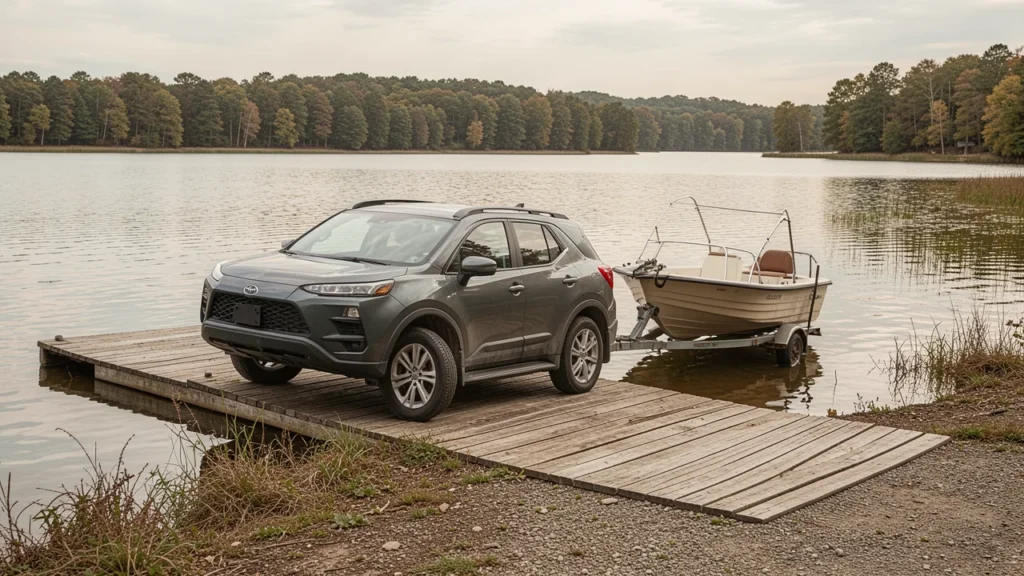
Small campers, jet skis, utility trailers and light boats fit well. Big travel trailers, horse trailers and toy haulers do not. If you plan to pull something heavy often, a bigger truck makes more sense, such as the one in our 2026 Toyota Tacoma towing capacity guide or the 2026 Toyota Tundra tow capacity ratings.
Towing Tech, Gear and a Pre-Trip Checklist
Toyota lists several towing aids for the 4Runner. An available trailer brake controller and digital rear-view mirror are on the list. Trailer Back-Up Guide with Straight Path Assist uses sensors and cameras to help keep a trailer straight in reverse.
The standard Blind Spot Monitor can also detect a trailer and widen its detection area. Tow/Haul mode is standard on all i-FORCE MAX grades and most others, and it adjusts throttle and transmission behavior for towing. The Platinum grade includes a tow tech package as standard.
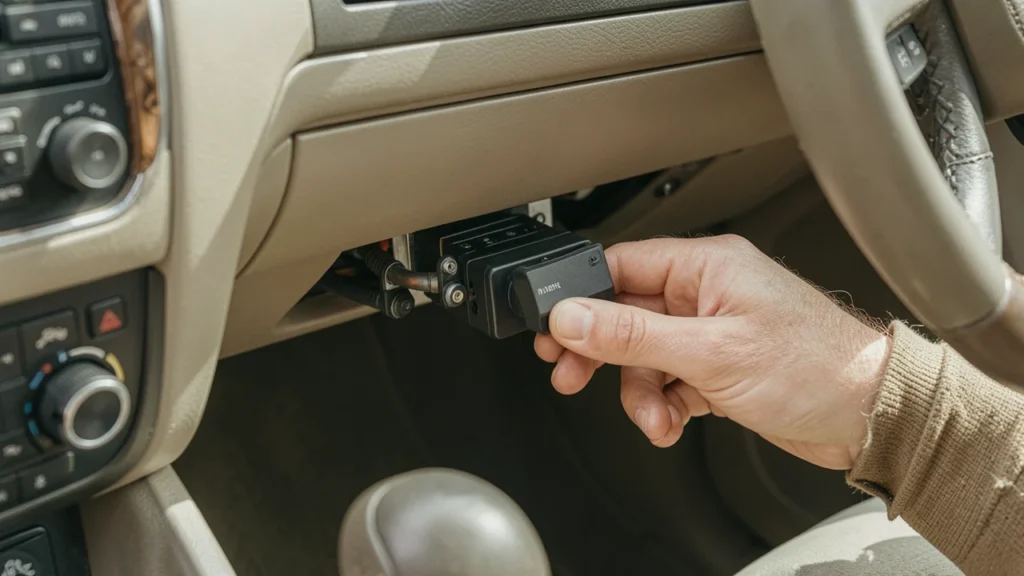
Some sources say the 4Runner comes with a hitch receiver and wiring harness, and TowingSpecs lists a Class 3 hitch with the tow package as standard. Look under your bumper to confirm what your truck has.
Follow these steps before every trip:
- Find your exact towing rating in the owner’s manual or on the door sticker.
- Check the loaded weight of the trailer, not just its empty weight.
- Calculate tongue weight at 10 to 15 percent of that loaded weight.
- Add tongue weight, passengers and cargo, then compare the total with your payload.
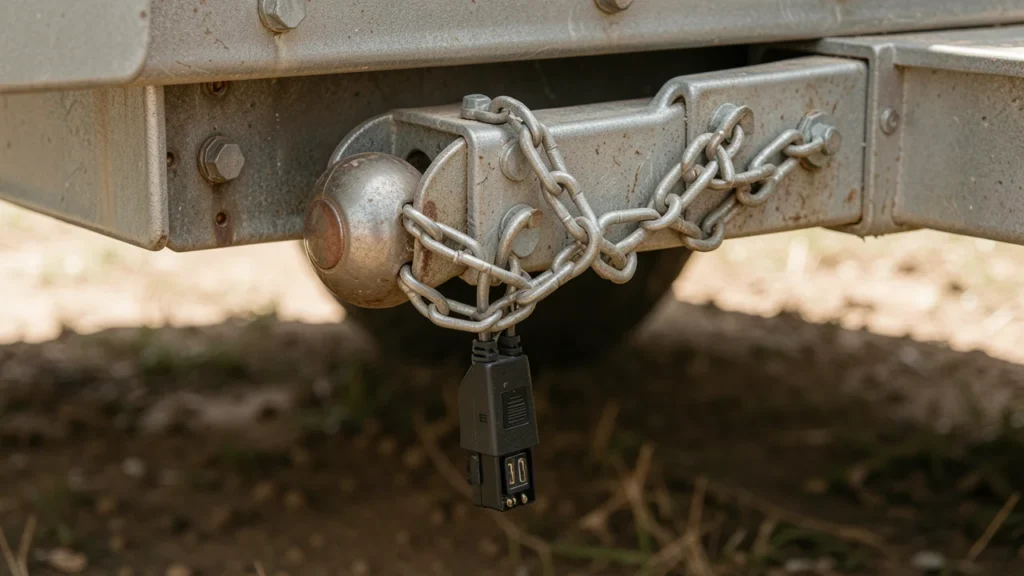
- Connect the coupler, cross the safety chains, plug in the wiring and test the lights.
- Set the brake controller and switch on Tow/Haul mode before you roll.
Warning: Never tow above the rating in your manual. Overloading hurts braking and steering, and many states require trailer brakes above a set weight, so check your local rules.
Towing also wears tires unevenly. Review the tire rotation pattern for 4×4 vehicles and rotate more often if you tow regularly.
Frequently Asked Questions
What is the towing capacity of the 2026 Toyota 4Runner?
Toyota lists a maximum of 6,000 lbs for the 2026 4Runner. Independent databases show 6,000 lbs on most trims and 5,800 lbs on the hybrid-only Platinum, TRD Pro and Trailhunter grades. Confirm the exact figure for your truck in the owner’s manual.
Does the 4Runner hybrid tow more than the gas model?
Not necessarily. The hybrid makes more torque, but published ratings conflict. One outlet gives the hybrid 6,000 lbs, while another gives it up to 5,800 lbs. Ask the dealer for the written rating on the specific grade before you buy for towing.
How much tongue weight can a 4Runner handle?
TowingSpecs lists 600 lbs for most 2026 trims and 580 lbs for the 5,800-lb grades. Aim for 10 to 15 percent of the loaded trailer weight. Because tongue weight counts against payload, add passengers and cargo to it before you compare numbers.
Can a 4Runner tow a travel trailer?
Yes, if the loaded weight stays under your rating with room to spare. Small travel trailers and pop-up campers fit well. A typical 6,500-lb travel trailer is too heavy, so check the trailer’s loaded weight and tongue weight first.
Does the 4Runner come with a tow hitch?
Some sources say a receiver hitch and wiring harness are included, and TowingSpecs lists the tow package as standard. Equipment can vary by grade and year, so look under the rear bumper or ask your dealer before you assume you have one.
Did older 4Runners tow more?
The fifth-generation V6 model towed 5,000 lbs on every trim. The fourth-generation V8 with rear-wheel drive reached 7,300 lbs, according to Jalopnik. So the newest model beats the fifth generation but does not match that V8 truck.
Final Thoughts
The 4Runner towing capacity tops out at 6,000 lbs on the 2026 model, which suits small campers, boats and utility trailers. The limits that bite first are usually tongue weight and payload, not the trailer rating.
Pick your grade with the written rating in hand, size the trailer with the 10 to 15 percent rule, and run the checklist before every trip. If your plans call for a heavier trailer, step up to a full-size truck instead of pushing the limit.