Best SD Card Size for Dash Cams: A Complete Guide (2026)
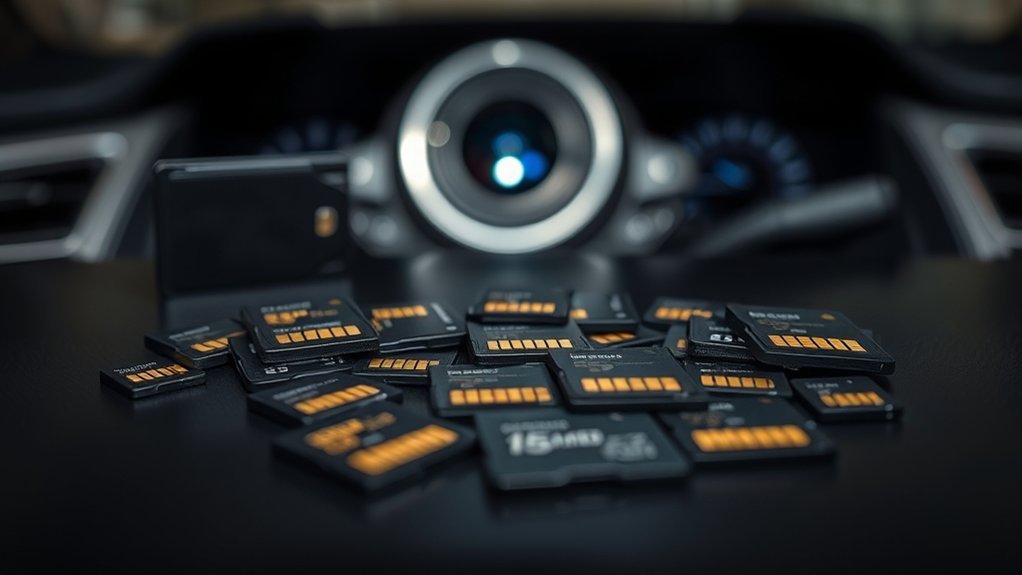
For most current dash cams, a 128GB high-endurance microSD card is the best starting point. Choose 256GB for high-bitrate 4K recording, long trips, or regular parking mode, and consider 256GB to 512GB for dual- or triple-channel systems. The final choice must match your dash cam’s maximum supported capacity and required speed class.
Quick Answer
Use 128GB for most single-channel dash cams, 128GB to 256GB for 1440p or 4K models, and 256GB to 512GB for multi-camera or parking-mode setups. Always confirm the camera’s capacity limit first, then choose a genuine high-endurance card that meets the speed rating listed in the manual.
Key Takeaways
- 128GB is the practical default for most modern single-channel dash cams.
- Recording time depends on total bitrate, not resolution alone. Add the bitrates of every camera channel.
- Check the owner’s manual before buying. An unsupported 512GB or 1TB card may not format or record correctly.
- Choose high-endurance memory designed for continuous writing, heat, vibration, and repeated overwriting.
- Save incident footage immediately. Loop recording can eventually overwrite an unlocked clip.
Why the Right Storage Size for Your Dash Cam Is Important
The storage size controls how long your dash cam can keep normal footage before loop recording overwrites the oldest unlocked files. A larger card gives you a longer review window and spreads write cycles across more flash memory, which can help a suitable high-endurance card last longer.
However, capacity alone does not tell you the recording time. A 128GB card might hold more than 20 hours from a lower-bitrate single camera, about 10 hours at 25 Mbps, or roughly 3 to 6 hours from a high-bitrate 4K or multi-channel setup. Audio, frame rate, codec, event-file allocation, and parking mode also change the result.
If your card is too small, older footage gets overwritten sooner. A critical clip from a fender bender or road incident could disappear if it is not locked or copied. For more detail on continuous and parking recording, see how dash cams record.
Checking recent files is useful, but simply checking the remaining storage does not prevent corruption. The better habit is to confirm that the camera is recording, review sample clips, follow the manufacturer’s formatting schedule, and replace the card when errors appear.
Warning: Loop recording is not a backup system. After an incident, stop recording when it is safe, lock the file if your camera supports it, and copy the clip to a phone, computer, or separate drive as soon as possible.
How Much Footage Will a Dash Cam SD Card Hold?
The most accurate estimate uses the camera’s total recording bitrate. For a dual-channel model, add the front and rear bitrates. For a triple-channel model, add all three. The table below uses about 93% of the labeled capacity to allow for formatting and normal storage overhead.
| Card Size | 12 Mbps | 25 Mbps | 50 Mbps | 80 Mbps |
|---|---|---|---|---|
| 32GB | 5.5 hours | 2.6 hours | 1.3 hours | 0.8 hour |
| 64GB | 11 hours | 5.3 hours | 2.6 hours | 1.7 hours |
| 128GB | 22 hours | 10.6 hours | 5.3 hours | 3.3 hours |
| 256GB | 44.1 hours | 21.2 hours | 10.6 hours | 6.6 hours |
| 512GB | 88.2 hours | 42.3 hours | 21.2 hours | 13.2 hours |
These are estimates, not promises. Variable bitrate, H.264 versus H.265 compression, separate low-bitrate parking files, protected-event storage, and the camera’s reserved system space can move the real result up or down.
How to Calculate Your Camera’s Real Recording Time
- Record a normal 10-minute drive using your usual resolution, frame rate, and channel settings.
- Add the file sizes from every channel for that same 10-minute period.
- Multiply that total by six to estimate gigabytes used per hour.
- Multiply the card’s labeled capacity by 0.93, then divide by the gigabytes used per hour.
Example: if all files from a 10-minute sample total 0.8GB, the camera uses about 4.8GB per hour. A 128GB card would provide roughly 24.8 hours before allowing for any extra event or parking partitions.
Resolution is only part of the storage equation. Total bitrate is the number that determines how quickly your dash cam fills the card.
Key Features to Look for in Dash Cam SD Cards
Picking a dash cam SD card goes beyond capacity. Compatibility, endurance, sustained write speed, temperature range, and authenticity all affect whether the camera records reliably.
| Feature | Why It Matters | What to Choose |
|---|---|---|
| Camera compatibility | The dash cam controls supported capacity, file system, and card requirements. | Use a size and card family approved in the manual or support list. |
| High-endurance design | Continuous recording creates repeated write-and-erase cycles. | Choose a card specifically sold for dash cams, surveillance, or continuous video. |
| Sustained write speed | A card that cannot sustain the required write rate can cause stopped recordings or errors. | Match or exceed the manual’s Class 10, U1, U3, V10, or V30 requirement. |
| Temperature resistance | Windshield-mounted cameras face hot and cold cabin conditions. | Check the card’s stated operating range and the dash cam’s own temperature limits. |
| Authenticity | Counterfeit cards may report false capacity or fail under sustained writing. | Buy from the manufacturer or an authorized, reputable seller. |
| Warranty terms | Some general-purpose card warranties exclude continuous-recording use. | Choose a product whose stated use includes dash cams or monitoring devices. |
Loop recording itself is a dash cam feature, not a special function inside the card. The card’s job is to remain compatible and sustain repeated writes while the camera manages file creation, locking, and overwriting.
Understanding SD Card Speed Classes
SD cards carry several speed symbols. The SD Association’s speed-class standard defines minimum sustained sequential write performance for video recording.
UHS Speed Class (U1/U3): U1 guarantees at least 10 MB/s, while U3 guarantees at least 30 MB/s under the applicable UHS protocol.
Video Speed Class (V10/V30/V60): V10, V30, and V60 indicate minimum sustained write rates of 10, 30, and 60 MB/s. V30 is a common conservative choice for 4K and multi-channel dash cams, but the camera manual remains the authority.
Application Performance Class (A1/A2): A1 and A2 focus on random input/output performance for apps. They can appear on a suitable dash cam card, but they do not replace the required video or UHS speed rating.
For many 1080p cameras, Class 10 or U1 may meet the manufacturer’s requirement. Higher-bitrate 4K models often call for U3 or V30. Buying V60 will not improve image quality and may add cost without helping unless the dash cam specifically requires it.
Note: Match the card to the camera, not just to the resolution printed on the box. Two 4K dash cams can use very different bitrates and may have different approved-card lists.
Best Memory Sizes for Dash Cams
These capacity ranges are practical starting points. Confirm the maximum supported size before purchasing.
| Dash Cam Type | Practical Capacity | Best For |
|---|---|---|
| Basic or older 720p/1080p camera | 32GB to 64GB | Short commutes and models with low capacity limits |
| Single-channel 1080p or 1440p | 64GB to 128GB | Daily driving with a useful loop-recording window |
| Single-channel 4K | 128GB to 256GB | Higher bitrate, longer trips, and less frequent overwriting |
| Dual-channel front and rear | 128GB to 512GB | Two simultaneous video streams and parking recording |
| Triple-channel or 360-degree system | 256GB to 512GB | Cabin, front, rear, or panoramic recording |
| 1TB card | Only when expressly supported | Very high-bitrate systems, fleets, or long parking windows |
Parking mode does not always record at the same rate as normal driving. Time-lapse and low-bitrate modes may use less space, while buffered event recording and multiple parking channels can use more. The camera may also reserve separate storage percentages for normal, event, and parking files.
Warning: Do not assume that every modern dash cam supports 512GB or 1TB. Some older models stop at 32GB or 64GB, while newer models may support 256GB or 512GB. Check the exact model’s manual or official compatibility page.
How to Choose the Best SD Card for Your Dash Cam
- Check the exact dash cam model. Confirm maximum capacity, required speed class, and any approved-card list. Garmin, for example, publishes model-specific memory-card guidance, and VIOFO publishes its own recommended-card advice.
- Choose high-endurance memory. Samsung PRO Endurance, SanDisk MAX Endurance, SanDisk High Endurance, Lexar High-Endurance, and camera-brand industrial cards are designed for repeated video recording.
- Match the speed requirement. Use at least the Class 10, U1, U3, V10, or V30 rating specified by the manufacturer.
- Size the card for your recording window. Use the bitrate table or test a 10-minute sample instead of relying on resolution alone.
- Buy from a reputable source. Suspiciously cheap cards can be counterfeit or falsely labeled.
- Format the new card in the dash cam. Then record a test drive and play back files from every camera channel.
A 128GB card remains a strong default for a single-channel camera. Move to 256GB when you want a longer loop window, use high-bitrate 4K, or rely on parking mode. For two or three channels, 256GB to 512GB is usually more practical, provided the camera supports it.
Pro Tip: Keep a second compatible, preformatted card in the vehicle. After a serious incident, swapping cards can preserve the original recording while letting the dash cam continue operating.
Top Recommended Dash Cam SD Cards
High-endurance cards are built for the constant write cycles that dash cams demand. The best choice is not automatically the card with the largest endurance number; it is the genuine card that your dash cam manufacturer approves and that meets the required capacity and speed.
High-Endurance Card Options
- Samsung PRO Endurance microSD: Designed for dash cams and monitoring devices. The 256GB model is rated for up to 140,160 hours of Full HD recording under Samsung’s stated 26 Mbps test condition.
- SanDisk MAX Endurance microSD: Available up to 256GB and rated for up to 120,000 hours on the 256GB model. Warranty length varies by capacity and region.
- SanDisk High Endurance microSD: A lower-cost endurance line available up to 512GB. SanDisk rates the 256GB model for up to 20,000 Full HD hours and the 512GB model for up to 40,000 hours.
- Lexar High-Endurance microSD: The correct endurance product name, available in 32GB, 64GB, and 128GB. Lexar rates the 128GB model for up to 12,000 Full HD hours, with U3/V30 applying to 64GB and above.
- VIOFO Industrial Grade microSD: A U3/A2/V30 option intended for VIOFO dash cams, with capacities up to 512GB shown on the current product listing.
Performance and Durability Features
| Card | Current Capacity Range | Speed Rating | Manufacturer Endurance Claim |
|---|---|---|---|
| Samsung PRO Endurance | 32GB to 256GB | Up to U3/V30; varies by capacity | Up to 140,160 hours on 256GB at Full HD, 26 Mbps |
| SanDisk MAX Endurance | 32GB to 256GB | Class 10, U3, V30 | Up to 120,000 hours on 256GB; Full HD basis |
| SanDisk High Endurance | 32GB to 512GB | Class 10, U3, V30 | Up to 20,000 hours on 256GB; 40,000 on 512GB |
| Lexar High-Endurance | 32GB to 128GB | U1 on 32GB; U3/V30 on 64GB and 128GB | Up to 12,000 hours on 128GB at Full HD, 25 Mbps |
| VIOFO Industrial Grade | Up to 512GB on current listing | U3, A2, V30 | No directly comparable recording-hour figure stated on the product page |
Do not compare endurance-hour numbers without reading the test conditions. Full HD bitrate, capacity, temperature, camera workload, and the manufacturer’s test method differ. A 4K or multi-channel camera will generally consume the rated write allowance faster than the Full HD examples used in many product claims.
Protection claims also differ. Samsung lists water, temperature, X-ray, magnetic, drop, and wear-out resistance for PRO Endurance. SanDisk lists temperature, water, shock, and X-ray protection for its endurance lines. Lexar lists temperature, shock, vibration, and X-ray resistance. Check each product page instead of assuming every card has the same protections.
Ideal Capacity Recommendations
- Basic Dash Cams (720p to 1080p): 32GB to 64GB can work for older or lower-bitrate models, while 64GB to 128GB gives most current users a more useful loop window.
- Premium Dash Cams (1440p to 4K): 128GB to 256GB is the practical range for one channel.
- Dual-Channel Dash Cams: 128GB can work at modest bitrates, but 256GB to 512GB is better for longer retention.
- Triple-Channel or 360-Degree Dash Cams: Start at 256GB and move to 512GB when supported.
- 1TB Cards: Use one only when the exact dash cam model officially supports it.
Choose high-endurance memory and meet the camera’s stated speed requirement. V30 is a safe common target for many high-resolution systems, but it is not a universal requirement for every dash cam.
Maintenance Tips for Prolonging Your Dash Cam SD Card Life
Even a high-endurance card will eventually wear out. These habits reduce avoidable failures and help you catch problems before you need an important clip.
| Maintenance Tip | What to Do | Frequency |
|---|---|---|
| Use a compatible high-endurance card | Choose a genuine card approved for continuous recording and supported by the camera. | At purchase |
| Format in the dash cam | Format a new card in the camera, then follow the camera maker’s schedule or prompts. Garmin recommends at least every six months for many models. | Before first use and as directed |
| Back up important footage | Copy incident, scenic, or protected files before formatting or returning the card to service. | Immediately when needed |
| Avoid removal during recording | Power down the dash cam and wait for recording to stop before removing the card. | Always |
| Review sample files | Play recent clips from every channel and check timestamps, audio, and file continuity. | Monthly and before long trips |
| Keep a spare card properly stored | Store a compatible card in a protective case away from moisture, dirt, and direct heat. | Ongoing |
Warning: Formatting deletes normal, locked, and protected files on the card. Copy anything important before you format.
How Often Should You Replace Your Dash Cam SD Card?
There is no reliable one-size-fits-all replacement interval. Card capacity, total bitrate, daily recording hours, parking mode, heat, firmware behavior, and the card’s endurance design all affect lifespan.
Rather than automatically replacing a standard card every 6 to 12 months, avoid general-purpose cards for heavy daily recording. Use a high-endurance model and replace it when the camera reports an error, files become corrupted, recording stops unexpectedly, playback stutters, the card repeatedly needs formatting, or the camera no longer recognizes it.
High-endurance Samsung, SanDisk, Lexar, and camera-brand cards can last much longer than ordinary cards under suitable conditions, but manufacturer recording-hour ratings are laboratory-based limits, not guarantees for every dash cam. Commercial drivers and fleets may choose a proactive replacement schedule based on actual recording hours and risk tolerance.
- Replace the card immediately after repeated write or format errors.
- Replace it if recent clips are missing, frozen, unreadable, or cut off.
- Replace it if the camera restarts or stops recording only when that card is installed.
- Keep the old card out of service until important footage has been recovered or backed up.
Frequently Asked Questions
What Is a Good Size SD Card for a Dash Cam?
A 128GB high-endurance card is a good default for most current single-channel dash cams. Use 256GB for higher-bitrate 4K, longer trips, or parking mode. Dual- and triple-channel cameras often benefit from 256GB to 512GB. Confirm the exact model’s maximum supported capacity first.
How Long Will 128GB Last on a Dash Cam?
Using about 93% usable capacity, 128GB holds roughly 22 hours at 12 Mbps, 10.6 hours at 25 Mbps, 5.3 hours at 50 Mbps, or 3.3 hours at 80 Mbps. Add every channel’s bitrate for a multi-camera system. Actual time varies with codec, variable bitrate, and reserved file partitions.
Is a 128GB or 256GB SD Card Better for a Dash Cam?
Choose 128GB for a typical single-channel camera and normal commuting. Choose 256GB when you want about twice the recording window, use high-bitrate 4K, drive long distances, or depend on parking mode. The larger card is only better when the dash cam officially supports it.
Do Dash Cams Need Special SD Cards?
Dash cams should use high-endurance microSD cards designed for continuous recording and repeated overwriting. Match the camera’s capacity and speed requirements, use a card rated for vehicle temperature conditions, and buy from a reputable seller. A fast general-purpose card is not automatically an endurance card.
Can I Use a 512GB or 1TB Card in My Dash Cam?
Only when the exact model supports that capacity. Some newer dash cams accept 512GB cards, while many older models are limited to 32GB, 64GB, 128GB, or 256GB. An unsupported card may fail to format, stop recording, or behave unpredictably.
Does Formatting a Dash Cam SD Card Erase Footage?
Yes. Formatting erases the card, including normal and protected files. Back up anything important first. Format a new card in the dash cam and follow the model’s manual or on-screen prompts for later maintenance.
Does Every Dash Cam Need a V30 Card?
No. Some 1080p dash cams require only Class 10 or U1, while many high-bitrate 4K and multi-channel models recommend U3 or V30. Use the same or a higher compatible rating than the one listed by the dash cam manufacturer.
Sources
- SD Association: Speed Class — minimum sustained write-speed definitions and host/card matching.
- Garmin: Memory Card Compatibility for Dash Cams — high-endurance guidance, model compatibility, formatting, and replacement advice.
- VIOFO: Recommended Memory Cards — capacity, write speed, endurance, and compatibility guidance.
- Samsung PRO Endurance 256GB — official endurance, speed, warranty, and temperature specifications.
- SanDisk MAX Endurance — official capacities, endurance ratings, speed, and warranty details.
- SanDisk High Endurance — official capacities, endurance hours, and durability specifications.
Conclusion
Do not undercut a good dash cam with the wrong SD card. For most single-channel cameras, 128GB is the best balance of capacity and cost. Choose 256GB for high-bitrate 4K, long trips, or parking mode, and use 256GB to 512GB for multi-channel systems when supported.
Capacity is only one part of the decision. Confirm the camera’s maximum card size, match its speed requirement, buy a genuine high-endurance model, format it in the dash cam, and test playback from every channel. Most importantly, copy incident footage immediately instead of trusting loop recording to preserve it indefinitely.