Are Dash Cams Legal? What U.S. Drivers Need to Know
Dash cams are legal in all 50 states, but regulations vary widely. You need to know your local laws regarding installation and audio recording. For instance, some states require consent for audio recordings, while others do not. Proper installation is key; make certain your dash cam isn’t obstructing your view. Following these guidelines can help you avoid legal issues down the line. If you stick around, you’ll discover essential details on safe and compliant dash cam use.
What You Need to Know About Dash Cam Legality in Your State
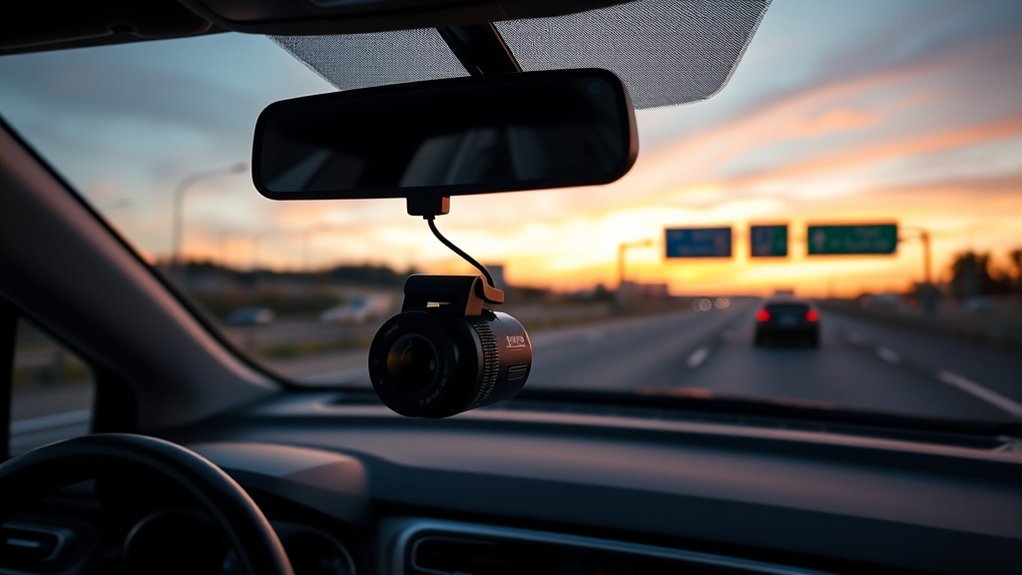
When considering the legality of dash cams in your state, it is vital to recognize that while they are permitted across all 50 states, specific regulations can vary considerably. Dash cams are legal to use, but you must comply with state laws regarding their placement. Most states require that these devices do not obstruct the driver’s view, so mounting dash cams in an appropriate location is essential. Additionally, consider audio recording regulations; some states, like California and Maryland, are consent states, mandating all-party consent for recording conversations. Conversely, states like Texas and New York follow one-party consent laws, which may simplify your usage. Awareness of local laws is key for compliance and can impact the admissibility of dash cam footage in court. Always stay updated on these regulations, especially if you travel across state lines, to avoid potential fines or legal complications.
Key Regulations for Installing Dash Cams
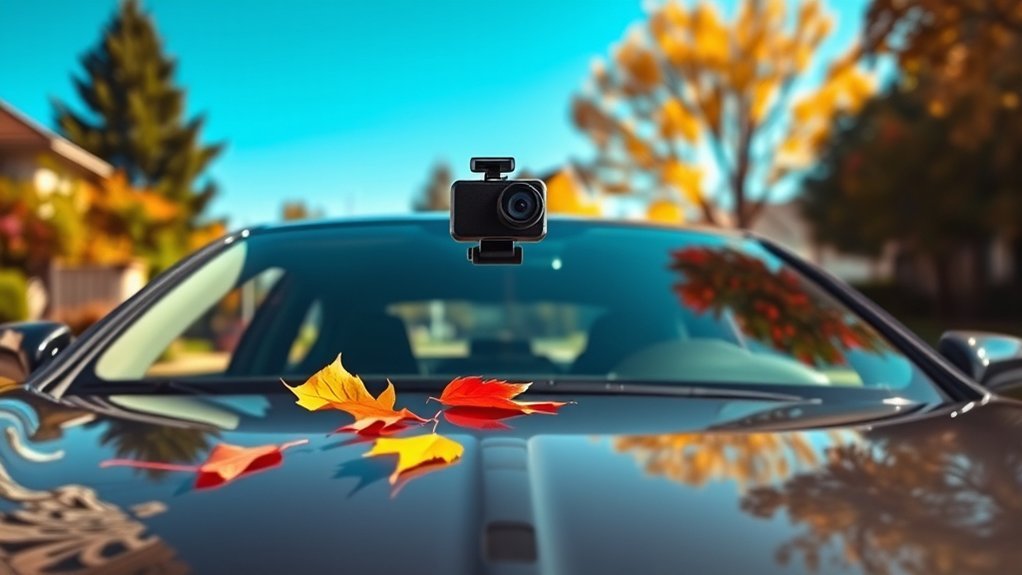
While dash cams are generally legal to install in vehicles across the United States, various key regulations govern their placement that you must consider. First, you need to be aware of dash cam laws in your state, as some prohibit mounting dash cams on windshields to avoid obstructing the driver’s view. For instance, California and Florida restrict placement to lower corners, guaranteeing compliance with visibility regulations. In Michigan and Maryland, mounting dash cams on dashboards or behind rearview mirrors is required to enhance safety. Additionally, some jurisdictions mandate that dash cams don’t interfere with airbags, emphasizing the importance of proper installation. By understanding these state rules, you’ll assure compliance with data and consent laws while capturing video recording without legal repercussions. Always prioritize maintaining a driver’s clear view to avoid fines and guarantee safety on the road.
Audio Recording Laws You Should Know
Understanding audio recording laws is essential for anyone considering installing a dash cam in their vehicle, as these laws can vary widely from state to state. Some states, like Maryland and Massachusetts, enforce all-party consent, requiring you to obtain permission from everyone in the vehicle before recording. Conversely, states such as Texas and Minnesota allow one-party consent, meaning you can record without informing passengers. Non-compliance with these audio recording laws can lead to legal complications, including the potential inadmissibility of recorded footage. To protect your privacy rights and guarantee compliance with local laws, it’s advisable to inform passengers about your dash cam’s audio capabilities. This not only fosters transparency but also helps avoid any misunderstandings regarding privacy expectations. Understanding these nuances will empower you as a driver and help you navigate the complexities of recording audio while using dash cams.
How Dash Cam Footage Is Used as Evidence in Court
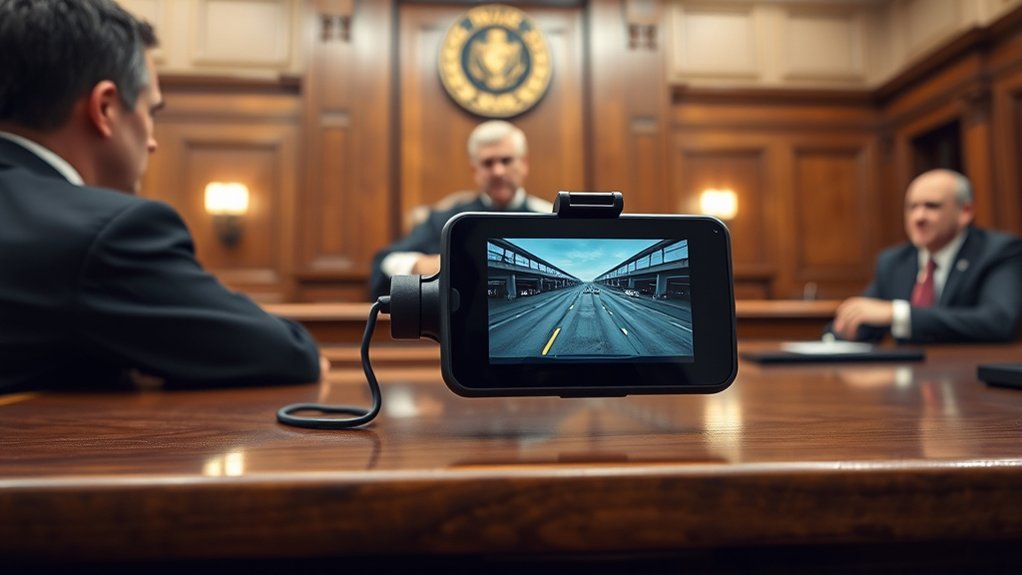
When you’re considering dash cam footage as evidence in court, you need to understand the admissibility standards that apply. Courts often require that the footage is legally obtained, properly authenticated, and unedited, which guarantees its reliability. Knowing the specific requirements in your state can greatly impact the footage’s effectiveness in supporting your case.
Admissibility Standards in Court
Dash cam footage can serve as a powerful piece of evidence in court, provided it meets certain admissibility standards. The admissibility in court hinges on legality; footage must comply with state regulations and recording privacy laws. For instance, states like Michigan and Minnesota generally accept dash cams as legal evidence if recorded lawfully, while Maryland requires stricter adherence regarding private conversations. Courts often demand unedited footage with accurate timestamps to guarantee reliability. In some states, like California and Pennsylvania, you may need consent for audio recording, impacting footage admissibility. When dash cam footage is credible, it can greatly influence crash evidence, proving your innocence or clarifying traffic incidents during legal proceedings.
Proper Footage Authentication Process
While many drivers rely on dash cams for recording their journeys, ensuring the footage is properly authenticated for court use is essential. To maximize the chance that your dash cam footage is admissible in court, keep these points in mind:
- Integrity of the Video: The video must be unedited and clearly timestamped to demonstrate authenticity.
- Recording Consent: Familiarize yourself with local laws regarding audio recordings, as some states require consent from all parties.
- Secure Storage Practices: Store your footage securely, using methods like cloud backups and restricted access to maintain credibility.
Avoid These Common Legal Risks When Using Dash Cams
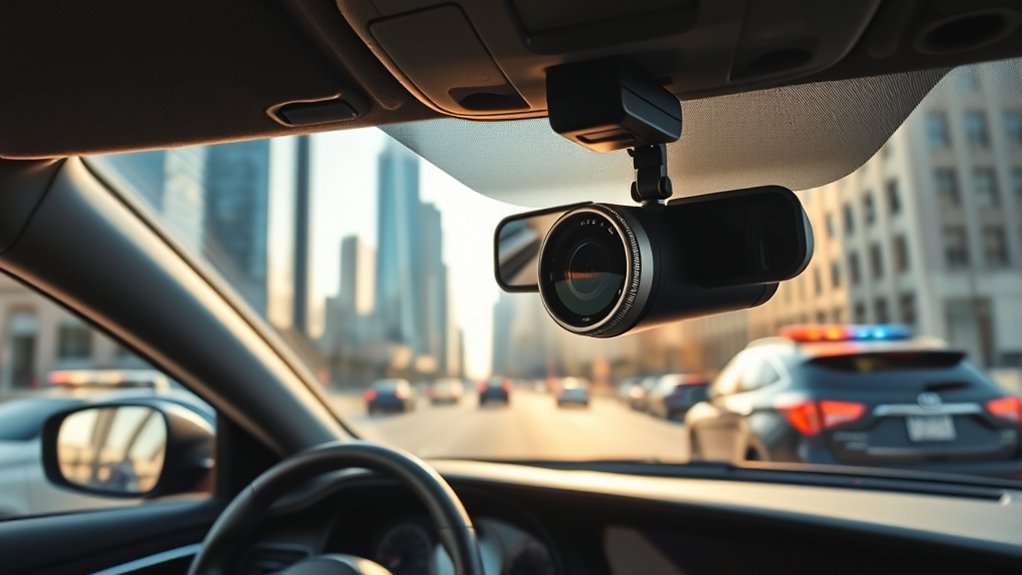
Understanding the legal landscape surrounding dash cams is vital for any driver looking to use this technology effectively. Misunderstanding state laws can lead to fines or render your footage inadmissible in court, especially if you record audio without consent in all-party consent states. Always inform your passengers about audio recording, as failing to do so may lead to legal issues. Proper mounting is essential; obstructing the driver’s view can result in citations, so make certain your dash cam complies with local regulations. Additionally, securely storing footage maintains the chain of custody, as tampering can have serious legal repercussions. Regularly check and adhere to evolving state laws regarding dash cam use and audio recording to avoid penalties and guarantee that your footage remains admissible in legal matters. By staying informed and compliant, you can navigate potential legal risks effectively.
Best Practices for Safe and Compliant Dash Cam Use
To guarantee your dash cam is both effective and compliant, proper installation is key. Position it behind the rearview mirror to avoid obstructing your view, while also staying mindful of state audio consent laws. By understanding these regulations and following best practices, you can maximize the benefits of your dash cam without legal complications.
Proper Installation Techniques
Installing a dash cam correctly is essential for ensuring both safety and compliance with local laws. To achieve this, focus on these proper installation techniques:
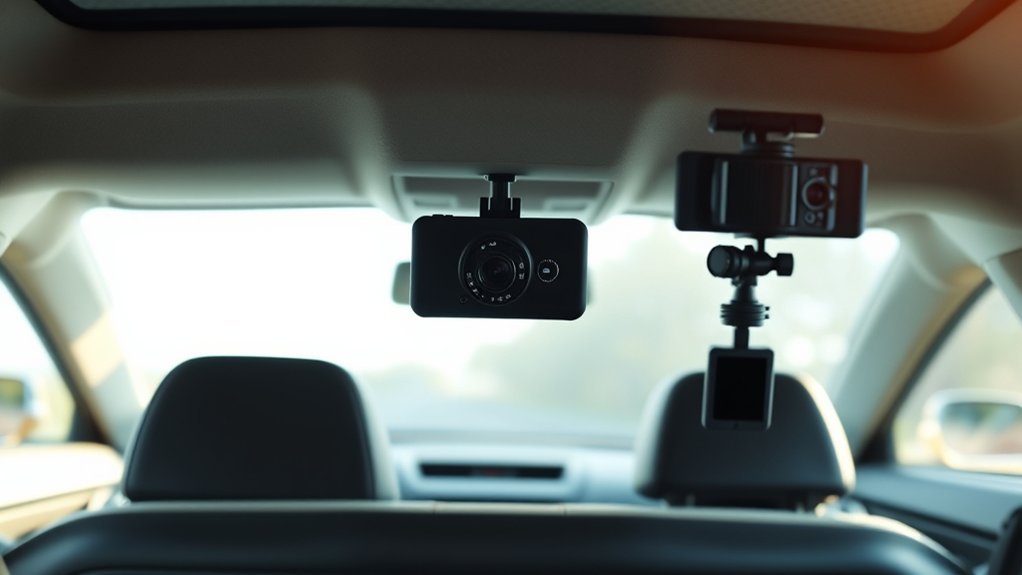
- Mounting Location: Your dash cam must be mounted behind the rearview mirror to maintain a clear view for the driver, avoiding any obstruction of airbags.
- Lens Selection: Choose a dash cam equipped with a wide-angle lens (120-155 degrees) to capture extensive footage while minimizing blind spots.
- Secure Storage Practices: Implement secure storage practices, like cloud backups and password protection, to maintain the chain of custody for footage.
Understanding Audio Consent Laws
Proper installation techniques set the foundation for using a dash cam, but it’s equally important to grasp the implications of audio consent laws. These laws vary considerably across states. For instance, in consent states like Maryland and Massachusetts, you must obtain permission from all passengers before recording audio. Ignoring this can lead to legal complications. Best practice suggests disabling audio recording in such states unless explicit consent is secured. Conversely, states like Texas allow one-party consent, simplifying matters. Complying with local privacy laws guarantees your dash cam footage remains admissible evidence in legal scenarios. Always inform passengers about the dash cam’s capabilities to foster transparency and safeguard against potential issues. Understanding state-specific regulations is key to responsible dash cam use.
Frequently Asked Questions
In Which States Are Dashcams Illegal?
Dashcams aren’t illegal in any state, but state regulations vary. You must consider privacy concerns, audio recording laws, and mounting positions to avoid legal consequences. Understanding these nuances guarantees driver accountability and better insurance implications on public roadways.
Will My Insurance Go Down if I Have a Dash Cam?
Yes, having a dash cam can lead to premium reduction through insurance discounts. It provides accident evidence, enhances driver accountability, and improves claim processing, offering liability protection and promoting safe driving behaviors that insurers appreciate.
Can the Police Use Your Dash Cam Against You?
Yes, police can use dash cam footage as evidence against you, especially in traffic incidents. Understanding dash cam regulations, privacy concerns, and self-incrimination risks is essential for protecting your legal rights and ensuring responsible recording.
Do I Need to Tell Insurance I Have a Dash Cam?
Yes, you should tell your insurance about your dash cam. It boosts accident evidence, enhances insurance claims, and may reveal policy discounts. Plus, it shows responsible driving habits, easing privacy concerns and ensuring thorough coverage.
Conclusion
In the evolving landscape of road safety, dash cams serve as your vigilant co-pilot, capturing moments that could otherwise slip through the cracks. While the legality of their use varies by state, understanding key regulations and audio recording laws is essential. By adhering to best practices and being mindful of potential legal pitfalls, you can guarantee that your dash cam enhances your driving experience without crossing any lines. Stay informed, stay safe, and let your dash cam work for you.