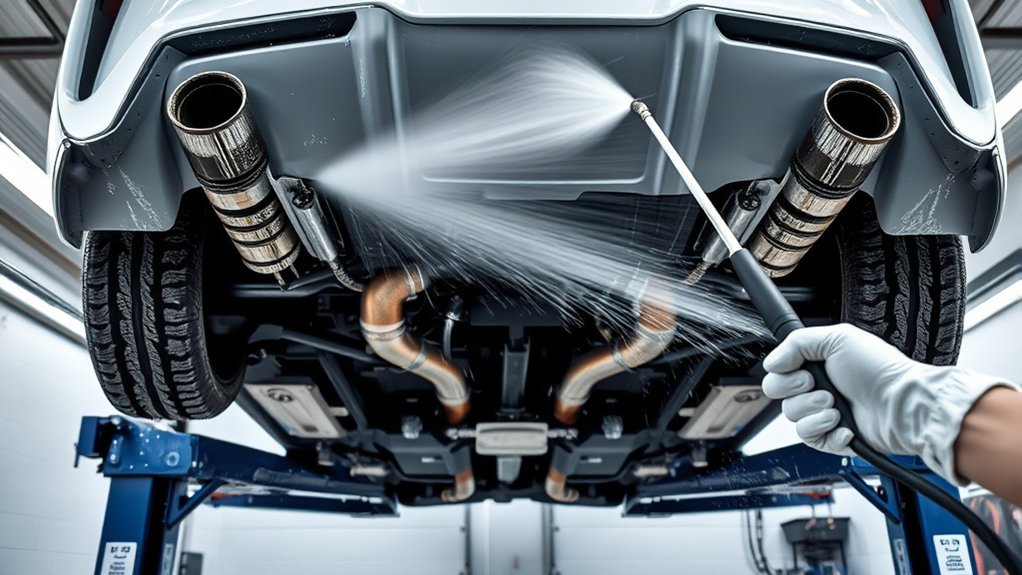
Winter roads leave more than dirt under your Toyota Supra. Salt, slush, and grime can cling to metal parts and raise the risk of rust if you let them sit. This guide shows you how to clean your Toyota Supra’s undercarriage safely, what tools to use, and how to protect it after the final rinse.
What’s in This Article
- Why Cleaning Your Toyota Supra Undercarriage Is Crucial After Winter
- What You’ll Need for Undercarriage Cleaning
- How to Get Your Vehicle Ready for Undercarriage Cleaning
- Estimated Time for Cleaning Your Supra’s Undercarriage
- Steps to Clean Your Toyota Supra’s Undercarriage After Winter
- Rinse Away Winter Grime and Salt
- Applying Your Undercarriage Cleaning Solution Effectively
- Scrubbing Hard-to-Reach Areas for a Thorough Clean
- Common Undercarriage Cleaning Mistakes to Avoid
- Final Rinse and Long-Term Undercarriage Protection
- Frequently Asked Questions
- Conclusion
Quick Answer
To clean your Toyota Supra’s undercarriage after winter, rinse away loose salt and grime, apply a safe degreaser, scrub tight areas, then rinse again. Let the underside dry fully before you add protection. Clean it every 2 to 4 weeks during salted-road season and after harsh winter drives.
Key Takeaways
- Rinse the undercarriage soon after driving on salted winter roads.
- Use a pressure washer, undercarriage attachment, degreaser, and long-handled brush for the best reach.
- Scrub suspension parts, brake line areas, wheel wells, and hidden crevices with care.
- Dry the undercarriage before you apply any protective dressing or rust-inhibiting product.
- Inspect the underside during cleaning so you can spot rust, leaks, or damaged parts early.
Why Cleaning Your Toyota Supra Undercarriage Is Crucial After Winter
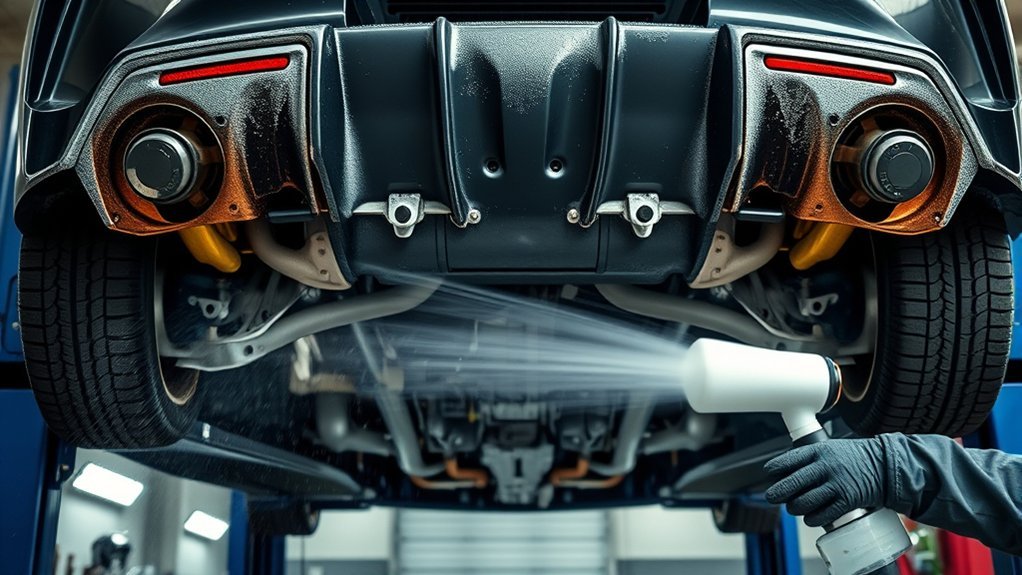
Cleaning your Toyota Supra’s undercarriage after winter helps protect the parts you rarely see. Road salt can hold moisture against metal, which can speed up rust on brake lines, suspension parts, fasteners, brackets, and exhaust components.
A clean undercarriage also makes problems easier to spot. When you remove grime, you can check for rust, leaks, cracked bushings, loose shields, or damage from winter road debris.
Wash the undercarriage every 2 to 4 weeks during salted-road season when conditions allow. You should also rinse it after long drives on treated roads or after slushy weather.
What You’ll Need for Undercarriage Cleaning
Gather your tools before you start so the job goes faster and safer. You don’t need a shop lift, but you do need enough reach to clean under the car without putting yourself at risk.
- Pressure washer or garden hose with a high-pressure nozzle
- Undercarriage cleaner attachment or angled spray wand
- Automotive-safe degreaser or undercarriage cleaner
- Long-handled brush with firm bristles
- Soft detailing brush for sensitive areas
- Jack and jack stands rated for your vehicle, if you need more access
- Wheel chocks, gloves, eye protection, and waterproof clothing
- Leaf blower, air blower, or microfiber towels for drying reachable areas
- Protective undercarriage dressing or rust-inhibiting spray, if suitable for your climate and vehicle
Choose cleaners made for automotive use. Harsh household chemicals can stain finishes, damage rubber parts, or leave residue on nearby components.
How to Get Your Vehicle Ready for Undercarriage Cleaning
Park your Toyota Supra on a flat, stable surface. Engage the parking brake, let hot parts cool, and keep the car away from traffic or loose gravel.
If you lift the vehicle, use the lift points listed in your owner’s manual. Support the car with jack stands, chock the wheels, and never rely on a jack alone.
Warning: Never crawl under a car supported only by a hydraulic jack.
Inspect the undercarriage before you spray. Look for loose panels, dangling wires, visible leaks, or damaged parts that need care before cleaning.
Estimated Time for Cleaning Your Supra’s Undercarriage
Plan on about 30 to 60 minutes for a basic undercarriage wash. Heavy salt buildup, tight access, and a final protective coating can add more time.
Let drying time guide your schedule. A protective dressing works best after the undercarriage dries fully, not while water still hides in seams and brackets.
Steps to Clean Your Toyota Supra’s Undercarriage After Winter
- Park on a flat surface and secure the vehicle.
- Inspect the undercarriage for damage, leaks, or loose shields.
- Rinse the underside with cold water to remove loose salt and grime.
- Apply an automotive-safe degreaser to dirty areas.
- Let the cleaner dwell for the label’s recommended time.
- Scrub suspension parts, wheel wells, brackets, and hidden crevices.
- Rinse from several angles until water runs clear.
- Dry the undercarriage fully with airflow or time.
- Apply a protective dressing or rust-inhibiting product where appropriate.
Keep the spray moving while you rinse. A steady stream works well, but a fixed high-pressure blast can damage weak clips, loose trim, or old rubber parts.
Rinse Away Winter Grime and Salt
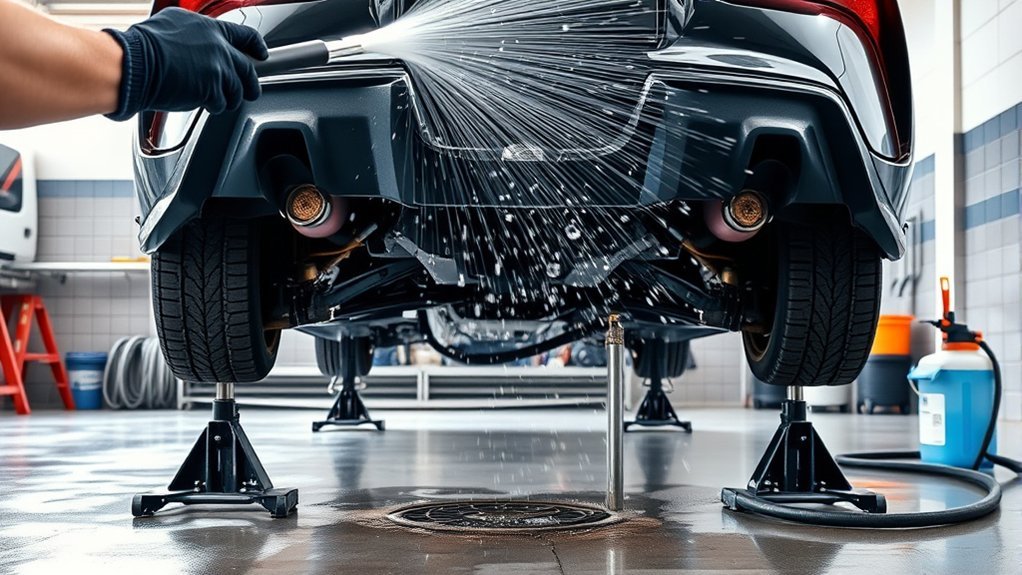
Regular rinsing helps remove road salt before it sits on bare or chipped metal. Use cold water, steady pressure, and several spray angles to reach wheel wells, suspension mounts, brake line areas, and seams.
Why Regular Rinsing Matters
Salt and grit can collect in pockets where water drains slowly. When you rinse those areas, you reduce buildup and make later scrubbing easier.
During winter, rinse the underside every 2 to 4 weeks when roads dry enough for safe cleaning. After a heavy salted-road drive, rinse sooner if temperatures and conditions allow.
Best Rinse Techniques
Use a pressure washer with an undercarriage attachment if you have one. It sprays upward and reaches areas that a standard wand can miss.
If you use a garden hose, attach a high-pressure nozzle and work slowly from front to rear. Focus on the wheel wells, lower control arm areas, subframe sections, and the rear suspension.
Pro tip: Rinse from more than one angle so water reaches the backs of brackets and shielded areas.
When to Rinse After Winter Driving
Rinse the undercarriage as soon as practical after driving on salted or slushy roads. You don’t need to clean it in unsafe weather, but don’t let salt sit for weeks.
Avoid pouring hot water onto frozen parts. A sudden temperature change can stress some materials, and hot water can refreeze fast in cold weather.
Applying Your Undercarriage Cleaning Solution Effectively
Choose an automotive-safe cleaner that can break down road grime without harming rubber, plastic, or coated parts. Citrus-based degreasers can work well when you dilute and use them as the label directs.
Apply the cleaner with a pump sprayer, foam cannon, or spray bottle. Coat dirty surfaces evenly, then let the product dwell for the recommended time.
Do not let the cleaner dry on the undercarriage. Rinse it off before it leaves residue, especially around bushings, hoses, wiring, and painted surfaces.
Scrubbing Hard-to-Reach Areas for a Thorough Clean
Some grime will not rinse away on the first pass. Use a long-handled brush to clean tight areas without putting your hands near sharp edges or hot parts.
Use Long-Handled Brushes
A long-handled brush helps you reach around subframe sections, brackets, wheel wells, and splash shields. Choose firm bristles for heavy grime, but avoid brushes that can gouge coatings or tear rubber parts.
- Scrub seams where salt can collect.
- Brush around suspension mounts and brackets.
- Use gentle pressure near wiring and hoses.
- Rinse the brush often so you don’t drag grit across surfaces.
Focus on Suspension Components
Your Supra’s suspension parts need close attention because they sit low and collect road grime. Apply cleaner to control arms, shock areas, sway bar mounts, and nearby brackets, then scrub gently.
| Step | Action |
|---|---|
| 1 | Apply cleaning solution |
| 2 | Scrub suspension components |
| 3 | Rinse thoroughly |
| 4 | Inspect for rust or damage |
| 5 | Confirm suspension system integrity |
After you rinse, check for torn boots, cracked bushings, loose fasteners, and surface rust. Cleaning gives you a clear view of parts that need service.
Inspect Hidden Crevices
Hidden crevices trap salt, grit, and moisture. Focus on seams, frame openings, splash shield edges, wheel wells, and areas around brake lines.
- Flush loose debris with a high-pressure nozzle.
- Apply degreaser only where grime remains.
- Scrub tight spots with a long-handled brush.
- Rinse until no cleaner or grit remains.
- Check the cleaned areas for rust or damage.
Common Undercarriage Cleaning Mistakes to Avoid
Undercarriage cleaning protects your car only when you do it with care. Avoid these mistakes so you don’t create new problems while trying to prevent rust.
- Do not blast sensors, wiring, or rubber boots at close range.
- Do not use harsh household cleaners on coated or rubber parts.
- Do not apply dressing over wet grime or trapped moisture.
- Do not skip drying before you add long-term protection.
- Do not ignore leaks, rust, or damage you find during cleaning.
Use light pressure near fragile areas and more pressure only on solid, dirty surfaces. If you spot a leak or serious rust, schedule a proper inspection before you drive hard.
Final Rinse and Long-Term Undercarriage Protection
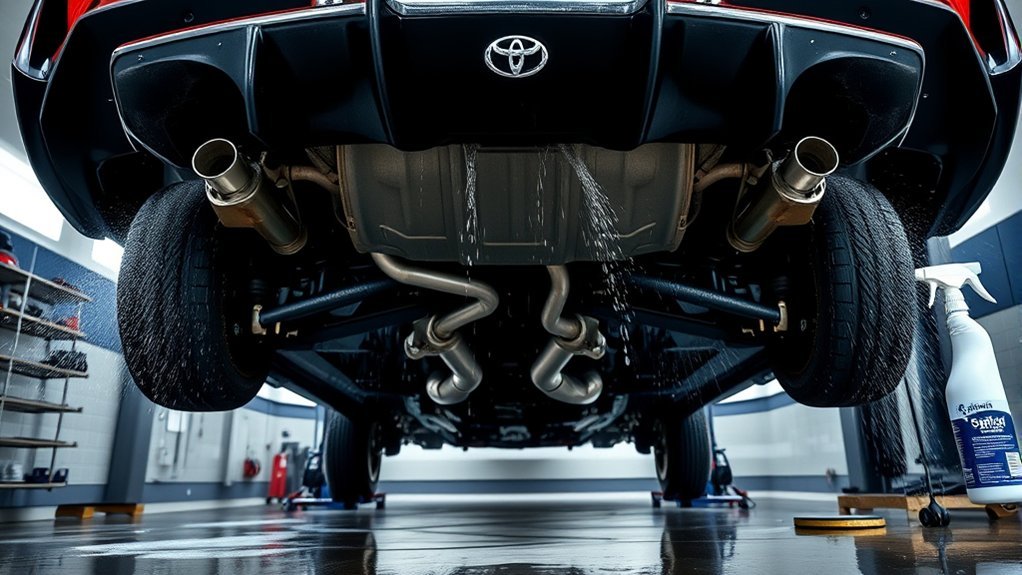
Finish with a thorough rinse to remove cleaner, loosened grime, and salt residue. Spray from several angles until the runoff looks clear.
Let the undercarriage air-dry fully, or use a blower to move water out of seams and brackets. Trapped moisture can undercut the benefit of a protective product.
After the underside dries, apply a protective dressing or rust-inhibiting spray where the product label says it’s safe. Avoid brakes, tires, exhaust surfaces, belts, sensors, and any part the product warns against coating.
Note: Protective dressings improve appearance, but rust-inhibiting coatings offer better long-term protection when you apply them correctly.
Frequently Asked Questions
How Long Do You Leave Snow Foam on Before Washing Off?
Leave snow foam on for about 5 to 15 minutes, depending on the product label and weather. Do not let it dry on the surface, because dried cleaner can leave residue.
Is It Safe to Wash the Undercarriage of Your Car?
Yes, you can safely wash your car’s undercarriage when you use the right tools and pressure. Keep the spray moving, avoid fragile parts at close range, and support the vehicle correctly if you lift it.
How Do I Properly Clean Under Everything Under the Hood of My Car?
Remove loose debris first, then cover sensitive electrical areas if needed. Use an automotive-safe degreaser, agitate gently, rinse with low pressure, and dry the engine bay with microfiber towels or airflow.
How to Clean a Car When It’s Below Freezing?
Clean the car only when you can keep doors, locks, brakes, and moving parts from freezing afterward. Use a heated wash bay if possible, dry the car well, and avoid soaking the undercarriage before a hard freeze.
Can You Use an Automatic Car Wash for Undercarriage Cleaning?
An automatic car wash with an underbody rinse can help remove loose salt. It may not clean tight crevices as well as a focused hand wash with an undercarriage attachment.
Conclusion
A clean Toyota Supra undercarriage helps slow rust, protects key parts, and makes damage easier to find. Rinse away winter salt, scrub hidden grime, and let the underside dry before you add protection.
Make undercarriage cleaning part of your winter and post-winter care routine. Your Supra will stay cleaner, safer, and better protected for the miles ahead.
References
- Snow and Ice Control Material Performance — Federal Highway Administration
- Stormwater Best Management Practice: Vehicle and Equipment Washwater — U.S. Environmental Protection Agency
- Toyota Owner’s Manuals and Warranty Information — Toyota