What’s in This Article
- Understanding Weight Distribution in the Toyota Supra
- Common Weight Distribution Issues and Their Solutions
- The Impact of Weight Distribution on Performance
- Key Factors Influencing Weight Distribution in the Supra
- Measuring Weight Distribution: Tools and Techniques
- How Your Suspension Setup Influences Weight Distribution
- Modifications That Change Weight Distribution
- Practical Tips for Optimizing Weight Distribution for Street and Track
- Community Insights on Supra Weight Distribution
- Frequently Asked Questions
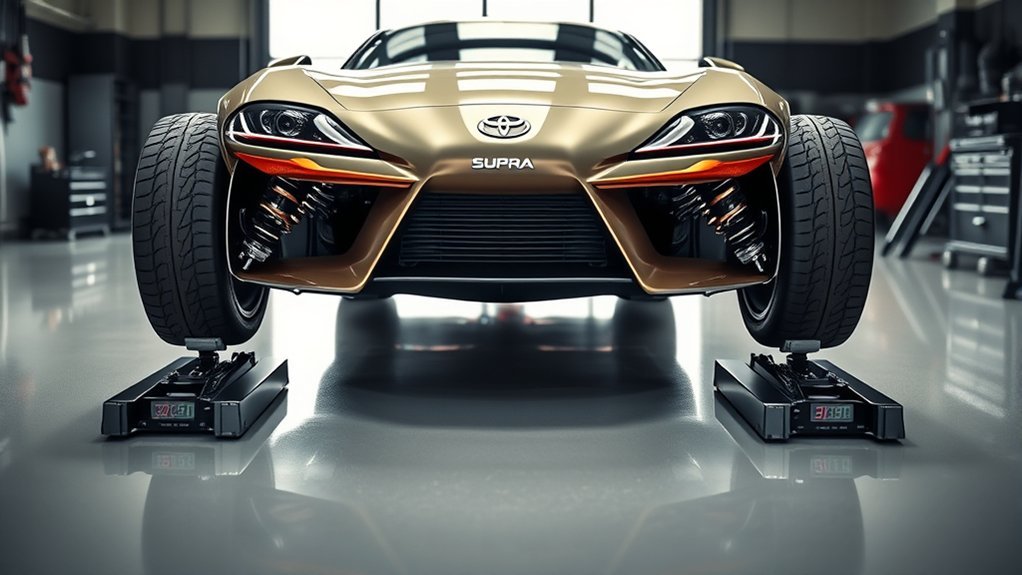
Your Toyota Supra can feel sharp, planted, or nervous based on how its weight sits on each tire. Weight distribution affects steering feel, braking balance, tire wear, and corner exit grip. This guide explains how Supra weight balance works, what can disturb it, and how you can tune it for better street or track performance.
Quick Answer
Toyota Supra weight distribution varies by generation, trim, fuel level, driver weight, and modifications. A near-balanced front-to-rear split helps the car turn, brake, and put power down with more control. You can improve balance by setting ride height, checking alignment, using corner-weight scales, and avoiding heavy parts that add weight far from the car’s center.
Key Takeaways
- Near-balanced weight distribution helps your Supra feel more stable during braking, turning, and acceleration.
- Fuel level, driver weight, wheel choice, exhaust parts, battery placement, and aero parts can all change balance.
- Corner-weight scales give better data than guessing from curb weight or forum numbers.
- Suspension setup, alignment, and tire pressure can reduce uneven tire wear and handling problems.
- Track setups need more precise balance than street setups because load transfer happens faster at higher speeds.
Understanding Weight Distribution in the Toyota Supra
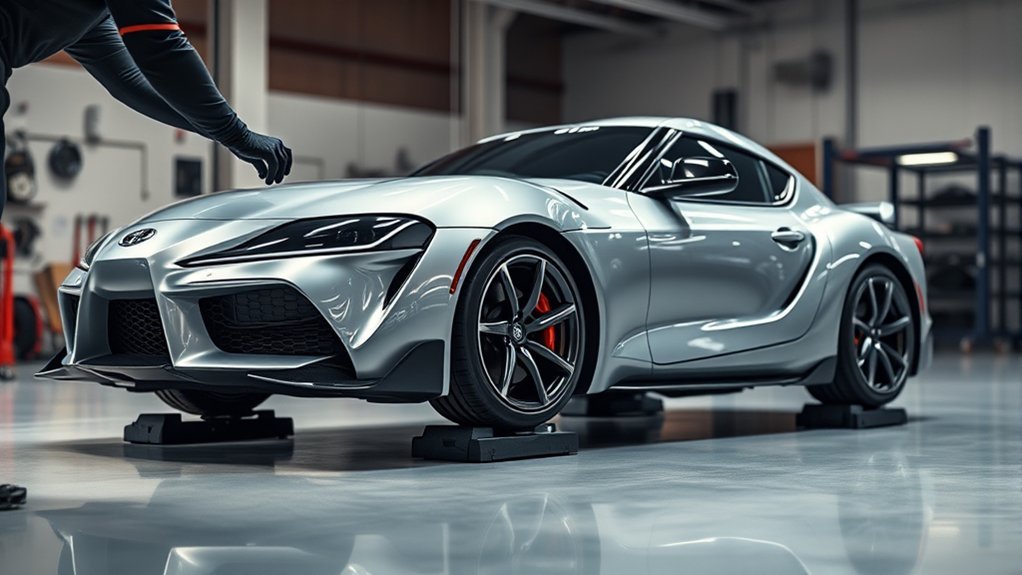
Understanding weight distribution in the Toyota Supra helps you improve how the car feels and responds. Weight distribution describes how the car’s total weight sits over the front and rear axles. It also affects how much load each tire carries while you brake, turn, or accelerate.
A near-balanced front-to-rear split helps the Supra feel stable at speed and more predictable in corners. Exact numbers can vary by generation, trim, transmission, fuel load, driver weight, and installed parts. That’s why you should treat published figures as a starting point, not a final setup number.
Engine placement, chassis layout, suspension geometry, and aftermarket parts can all shift this balance. If you add aftermarket components, check how they change front, rear, left, and right weight. Corner-weight scales give the most useful data when you want to tune the car for serious performance driving.
Common Weight Distribution Issues and Their Solutions
Poor weight balance can cause uneven tire wear, traction loss, nervous braking, or weak corner exit grip. These issues often become more obvious after lowering the car or adding heavy parts. You can correct many problems with careful setup changes and regular checks.
Uneven Tire Wear Solutions
Uneven tire wear can hurt your Toyota Supra’s grip and steering feel. It can also hide deeper setup problems, such as poor alignment or incorrect tire pressure. Start with simple checks before you make major changes.
| Solution | What to Check | Why It Helps |
|---|---|---|
| Adjust Suspension Setup | Check alignment, camber, caster, toe, and ride height. | Helps each tire carry load more evenly. |
| Monitor Tire Pressure | Set pressure based on the door placard, tire type, and driving use. | Reduces edge wear and heat buildup. |
| Use Corner-Weight Scales | Measure weight at each tire with the driver weight included. | Shows cross-weight issues that normal scales miss. |
| Move Removable Weight | Avoid heavy tools, audio gear, or cargo at one end of the car. | Keeps the chassis closer to its intended balance. |
These steps can help your Supra wear tires more evenly and handle with more confidence. If wear continues after alignment and pressure checks, inspect bushings, wheel bearings, and suspension arms.
Traction Loss Remedies
Traction loss can frustrate any Toyota Supra driver, especially during hard acceleration or fast corner exits. Poor weight balance can make this worse, but tire quality and surface conditions matter too. Use a full setup approach instead of blaming one part.
- Move removable heavy items closer to the center of the car when possible.
- Use adjustable coilovers only after you understand ride height, spring rate, and damping effects.
- Choose tires that match your power level, climate, and street or track use.
- Check rear alignment because toe and camber can change how the car puts power down.
Note: More rear weight can help traction, but too much can make the car feel lazy or unstable during quick transitions.
Handling Stability Improvements
Good handling stability comes from more than one front-to-rear number. Your Supra also needs proper cross-weight, matched tire pressures, healthy bushings, and a clean alignment. Small setup errors can make the car feel loose, push wide, or react too sharply.
If your Supra feels front-heavy, start with alignment and ride height before moving major components. Relocating parts can help in race builds, but it can also create wiring, safety, and packaging issues. A careful suspension setup often gives you a cleaner result for street use.
Use corner-weight scales when you want a precise setup. Measure the car with the normal driver weight, fuel level, and cargo load. That gives you data that matches how you actually drive.
The Impact of Weight Distribution on Performance
Weight distribution shapes how your Supra reacts under load. During braking, weight moves toward the front tires. During acceleration, weight moves toward the rear tires. During cornering, weight moves toward the outside tires.
A near-balanced setup can improve cornering stability and make the car easier to control near the limit. Too much front bias can increase understeer, while too much rear bias can make the rear feel nervous. The best balance depends on your tires, suspension, power level, and driving style.
- Balanced front-to-rear weight helps the car feel predictable during quick direction changes.
- Cross-weight balance affects how the car turns left compared with how it turns right.
- Poor setup can increase tire wear and reduce grip during braking or corner exit.
Key Factors Influencing Weight Distribution in the Supra

Engine placement and suspension design have a major effect on Supra weight balance. So do smaller details, such as wheels, exhaust parts, seats, aero parts, and fuel level. A strong setup looks at the whole car, not one part alone.
Engine Placement Effects
The Supra uses a front-engine, rear-wheel-drive layout, so engine placement affects how much weight sits over the front axle. Toyota designed the Supra platform for sports-car handling, but every generation has its own layout and curb weight. You should check data for your exact model before planning major changes.
- Engine and transmission position can affect center of gravity and steering response.
- Fuel level can change rear axle load and overall balance.
- Lightweight parts can reduce mass, but their location matters as much as their weight.
Think carefully before changing engine, cooling, or exhaust parts. A lighter part at the front, center, or rear can produce different handling results. The goal is not only lower weight, but better control.
Suspension Design Considerations
The Toyota Supra’s suspension design plays a key role in how weight moves during driving. Suspension geometry, spring rates, anti-roll bars, dampers, and ride height all affect load transfer. A setup that works on smooth roads may feel too harsh or unstable on rough streets.
Lowering the car can improve looks and reduce the center of gravity, but too much drop can hurt suspension travel. It can also change alignment and reduce grip. Set ride height with real measurements instead of only using wheel gap as your guide.
Lightweight materials can help when they reduce unsprung weight, such as wheel and brake weight. Lower unsprung weight can improve tire contact on uneven roads. Still, choose parts for strength and fitment, not weight alone.
Measuring Weight Distribution: Tools and Techniques
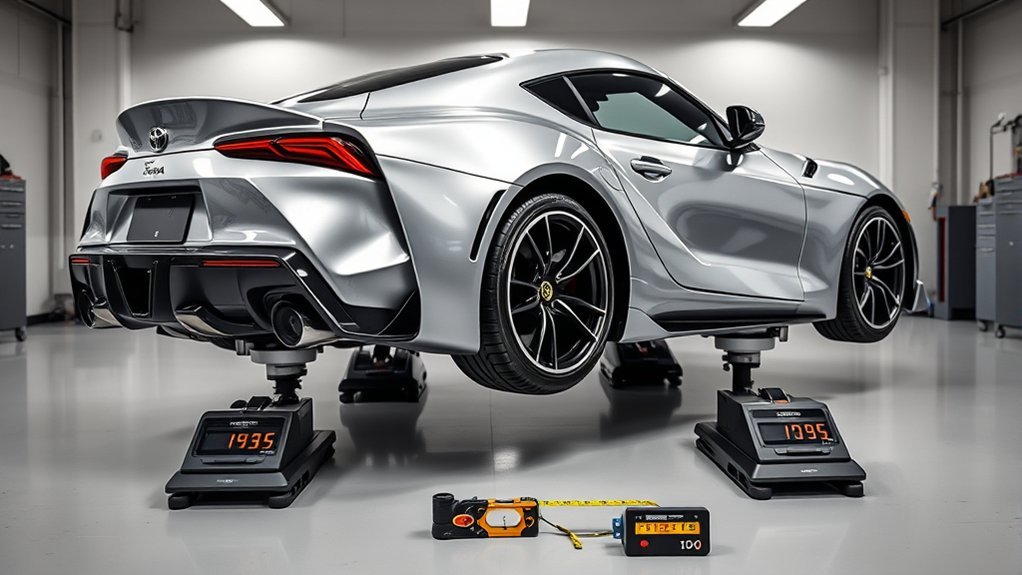
Accurate measurement gives you better results than guessing. Before you change parts, record your starting setup. Then measure again after every major suspension or weight change.
- Corner-weight scales: Measure the weight on each tire and show left-right balance.
- Vehicle scale or weighbridge: Confirm total vehicle weight, but it may not show corner balance.
- Alignment rack: Check camber, caster, toe, and ride height after suspension changes.
- Tire pyrometer: Track tire temperature across the tread after hard driving.
For the best reading, set the car as you drive it. Use your normal fuel level, tire pressures, driver weight, and track or street cargo. This keeps the data useful and repeatable.
Pro tip: Record fuel level during each measurement because fuel weight can change your balance numbers.
How Your Suspension Setup Influences Weight Distribution
Your suspension setup does not change the car’s total weight, but it changes how that weight loads each tire. Ride height changes can shift corner weights across the chassis. Spring preload and damper settings can also change how the car reacts during braking and turning.
Adjustable coilovers can help when you use them with proper measurement. Set the ride height first, then check alignment, then measure corner weights. Random height changes can make the car look better but handle worse.
Anti-roll bar stiffness affects how weight transfers during turns. A stiffer front bar can reduce body roll but may increase understeer. A stiffer rear bar can help rotation but may reduce rear grip if you go too far.
Modifications That Change Weight Distribution
Modifications can improve your Toyota Supra’s weight distribution, but they can also create new problems. A single part may lower total weight while shifting balance in the wrong direction. Always think about where the part sits on the car.
- Battery relocation can shift weight rearward, but it needs safe mounting and proper wiring.
- Lightweight wheels reduce rotating and unsprung weight, which can improve response.
- Carbon fiber or aluminum panels can reduce mass, but their effect depends on placement.
- Titanium or lighter exhaust parts can reduce rear weight and change balance.
- Large aero parts can add static weight and also create speed-based downforce.
Power upgrades can also change how weight distribution feels. More torque can overload the rear tires faster, even if the static balance looks good. Tune suspension, tires, and alignment together after major power changes.
Warning: Do not relocate a battery, fuel system part, or safety-related component without proper mounting, wiring, and fire protection.
Practical Tips for Optimizing Weight Distribution for Street and Track
Street and track setups need different levels of precision. A street Supra should stay stable, comfortable, and safe over bumps. A track Supra can use firmer settings because it runs harder and sees more load transfer.
Start with a healthy baseline. Check tire condition, pressure, alignment, bushings, ball joints, and wheel bearings. A worn part can mimic a weight balance problem and waste your tuning time.
- Set tire pressures based on use, then recheck them when the tires heat up.
- Align the car after lowering, changing wheels, or replacing suspension parts.
- Measure corner weights with driver weight included for track-focused tuning.
- Keep heavy cargo out of the trunk during spirited driving.
- Test one change at a time so you can feel what improved or worsened.
For track use, keep notes after each session. Record tire pressures, tire temperatures, lap feel, fuel level, and weather. These notes help you tune the car without guessing.
How Fuel, Driver Weight, and Cargo Affect Balance
Fuel, driver weight, and cargo can change how your Supra feels more than many drivers expect. A full tank adds weight in a fixed location, while a driver adds weight to one side of the car. Tools, audio equipment, or luggage can also shift balance toward the rear.
For street driving, these changes usually matter less than tire and alignment condition. For track use, they can affect consistency from one session to the next. Measure and tune the car in the same load condition you plan to use most often.
Street Setup vs Track Setup: What Should Change?
A street setup should give you stable handling, even tire wear, and good ride quality. You do not need an aggressive corner-weight setup for normal driving. You need a safe alignment, correct tire pressure, and parts that can handle rough roads.
A track setup can use sharper alignment, firmer damping, and more detailed corner-weight adjustment. It should also match your tire compound and driving skill. If you drive the same car on the road and track, choose settings that do not make daily driving unsafe.
Community Insights on Supra Weight Distribution
Supra owners often compare curb weight, corner weights, fuel levels, and setup notes in forums and track groups. These reports can help you understand trends, but they rarely match your exact car. Different wheels, seats, exhaust parts, aero parts, and fuel levels can change the numbers.
- Owner-reported weights can vary due to trim, fuel, driver weight, and modifications.
- Engine layout and transmission choice can affect front-to-rear balance.
- Battery, seat, exhaust, and wheel changes can shift real-world handling feel.
Use community numbers as a rough guide, not a final answer. Your own measurements matter more than another owner’s setup. If you want the best result, combine forum insight with scale data and careful road testing.
Frequently Asked Questions
What Is the Weight Distribution of the Toyota Supra?
The Toyota Supra’s weight distribution depends on the generation, trim, engine, transmission, fuel level, and modifications. Many Supra setups sit close to a balanced sports-car layout, but you should verify your exact car with scales if the number matters for tuning.
Is a 50/50 Weight Distribution Good?
A 50/50 weight distribution can help a car feel balanced and predictable. It does not guarantee perfect handling by itself because tires, suspension, alignment, and driver input also matter.
What Is the Weight Distribution of the 2020 Supra?
The 2020 Toyota GR Supra was designed with a near-balanced sports-car layout. Exact real-world numbers can vary based on fuel level, driver weight, options, and modifications, so use corner-weight scales for accurate setup work.
Can a 6’5″ Guy Fit in a Supra?
A 6’5″ driver may fit in a Supra, but comfort depends on torso length, seat position, helmet use, and personal preference. Sit in the car before buying, especially if you plan to track it with a helmet.
Do Lightweight Wheels Improve Supra Weight Distribution?
Lightweight wheels reduce unsprung and rotating weight, which can improve steering response and ride control. They do not always change front-to-rear distribution much, but they can still improve how the car feels.
Should You Corner Balance a Street-Driven Supra?
You do not need corner balancing for normal street use, but it can help if you run adjustable coilovers. For a daily-driven Supra, proper alignment, tire pressure, and healthy suspension parts usually matter more.
Conclusion
Weight distribution matters because it changes how your Toyota Supra turns, brakes, grips, and wears tires. Start with tire pressure, alignment, and suspension health before making expensive changes. If you modify the car, measure the results instead of guessing. With careful setup and real data, your Supra can feel more stable, more responsive, and more rewarding to drive.
References
- Toyota Official Website — Toyota Motor Corporation
- Toyota Owners Resources — Toyota Motor Corporation
- Tires — National Highway Traffic Safety Administration