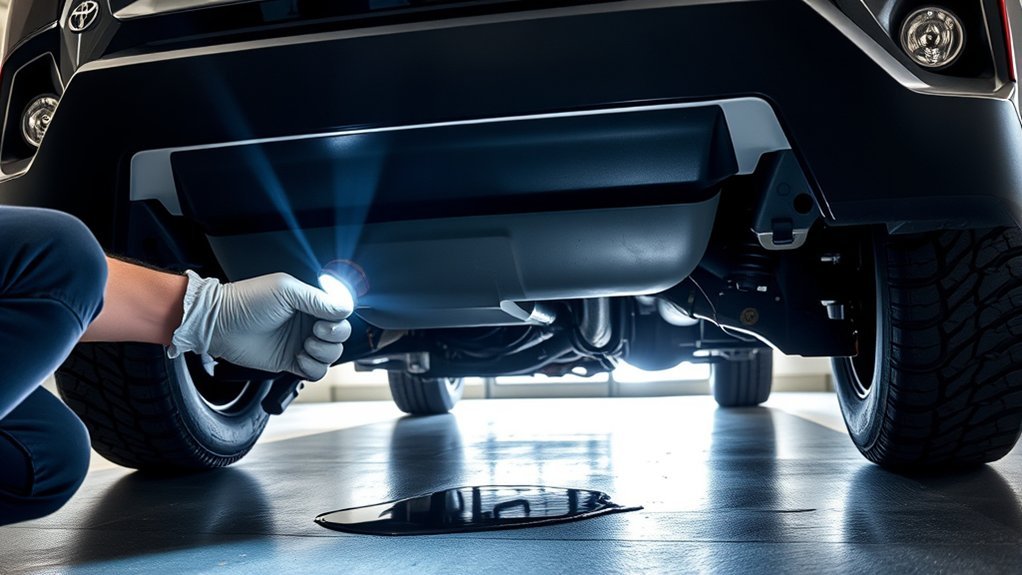
To find a leak in your Toyota RAV4, start by inspecting the roof rail seals and clips for dirt and wear. Look for water stains on the headliner and floorboards, as these are signs of moisture intrusion. Perform a water test with a hose, focusing on critical areas like roof seams and door seals. Don’t forget to differentiate between water and washer fluid leaks for accurate diagnostics. There’s more to learn about preventing leaks effectively.
Identifying Common Leak Issues in Toyota RAV4

When you drive a Toyota RAV4 from 2019 to 2021, it’s essential to be aware of potential leak issues that can arise due to design flaws. Common problems stem from the roof panel cutout, leading to water intrusion through deteriorated roof rail seals. You might notice stains on the headliner, indicating moisture exposure that can damage your vehicle’s interior. Roof rail clips can also fail, allowing dirt and water to enter, which is often visible on both sides. If you find severe headliner damage, Toyota may cover the replacement costs, but roof rail assemblies usually aren’t covered. If you need help identifying leaks early, proactive inspections of these components can save you from costly repairs down the line.
Inspecting Roof Rail Seals and Clips
To effectively prevent water intrusion in your Toyota RAV4, it’s essential to inspect the roof rail seals and clips regularly. Here’s how to conduct thorough roof rail maintenance:
Regularly inspecting your Toyota RAV4’s roof rail seals and clips is crucial for preventing water intrusion.
- Inspect Seals: Look for signs of deterioration in the seals, as they’re vital for preventing leaks.
- Check Clips: Examine the roof rail clips for dirt buildup, which may indicate potential water ingress.
- Evaluate Both Sides: Don’t forget to check both sides of the vehicle, as water leaks often occur symmetrically.
- Assess Headliner Staining: Look for significant staining on the headliner, which can signify prolonged exposure to water and may necessitate seal replacement.
Stay proactive in these inspections to maintain your RAV4’s integrity and avoid costly repairs.
Conducting Water Tests to Detect Leaks
To effectively identify leaks in your Toyota RAV4, begin by conducting a systematic water test using a hose. Focus on critical areas like roof seams, door seals, and window edges, while observing the interior for any signs of moisture. Document your findings for a thorough review, which can aid mechanics in pinpointing the source of any leaks.
Visual Inspection Techniques
Detecting leaks in your Toyota RAV4 requires a thorough visual inspection, particularly focusing on vulnerable areas like roof rail seals and windshield seams. Here are key roof inspection techniques:
- Inspect seals and clips: Look for dirt buildup or seal deterioration signs that could indicate potential leaks.
- Examine the headliner: Check for staining or dampness, indicating prolonged exposure to water.
- Assess drainage channels: Verify they’re clear and functioning correctly to aid in water pooling prevention.
- Document findings: Record any leaks or signs of water intrusion for future reference with a mechanic.
Water Hose Method
While inspecting your Toyota RAV4 for leaks, conducting a water test with a hose can effectively simulate rain and reveal hidden water entry points. Start at the top of the vehicle, utilizing water test techniques to direct a steady stream over areas like roof rail seals and window edges. As water flows down, have a partner monitor the interior for leaks, focusing on the headliner, floorboards, and seat bases. This hose inspection method enhances your leak detection tools by allowing you to pinpoint water accumulation. Document any findings during the test; this information will assist mechanics in diagnosing and repairing issues accurately. A systematic approach guarantees you catch all potential leaks, safeguarding your vehicle’s integrity.
Interior Leak Detection
When you suspect leaks in your Toyota RAV4’s interior, conducting a thorough water test can help pinpoint the source of the problem. Follow these steps for effective leak detection:
- Gently spray water over the roof, windows, and door seals to identify any entry points.
- Inspect roof rail clips and seals for deterioration or dirt buildup, common culprits for leaks.
- Look for stains on headliners, floorboards, or seats, indicating prolonged water exposure.
- Use a flashlight to check hard-to-see areas around windows and doors for moisture.
Implementing these leak repair techniques and sealant application methods will enhance your interior moisture management, ensuring a dry and comfortable ride.
How to Distinguish Between Water and Washer Fluid Leaks?

To distinguish between water and washer fluid leaks, start by checking the fluid’s color and location. Water leaks are typically clear and odorless, while washer fluid is often dyed blue or green and has a sweet smell. You can also test the texture; washer fluid feels slippery, whereas water does not.
Visual Differences In Fluid
Identifying the source of a fluid leak is essential for maintaining your Toyota RAV4. To distinguish between water and washer fluid, pay attention to the following visual differences:
- Fluid Color: Water leaks are clear and odorless, while washer fluid often has a colored tint, typically blue or green.
- Odor Differences: Washer fluid may have a sweet smell due to its chemical makeup, unlike plain water.
- Texture Comparison: Washer fluid feels slippery to the touch, whereas regular water is not viscous.
- Residue Test: Place a piece of cardboard under the leak; if it evaporates quickly with no residue, it’s likely water; washer fluid will leave a stain.
Smell And Texture Test
While diagnosing a leak in your Toyota RAV4, the smell and texture test can provide essential insights. Start by examining the fluid characteristics; water feels neutral and non-sticky, whereas washer fluid has a slippery texture due to its chemical composition. Check the fluid’s color and odor—washer fluid typically has a sweet smell and may appear tinted, while water is clear and odorless. For a practical testing method, collect the fluid on cardboard; if it evaporates quickly or leaves no residue, it’s likely water. Remember that leak origins differ: washer fluid leaks drain rapidly from the reservoir, while water leaks may not produce immediate changes in fluid levels. This test can enhance your leak diagnosis effectively.
What You Need to Know About Headliner Damage
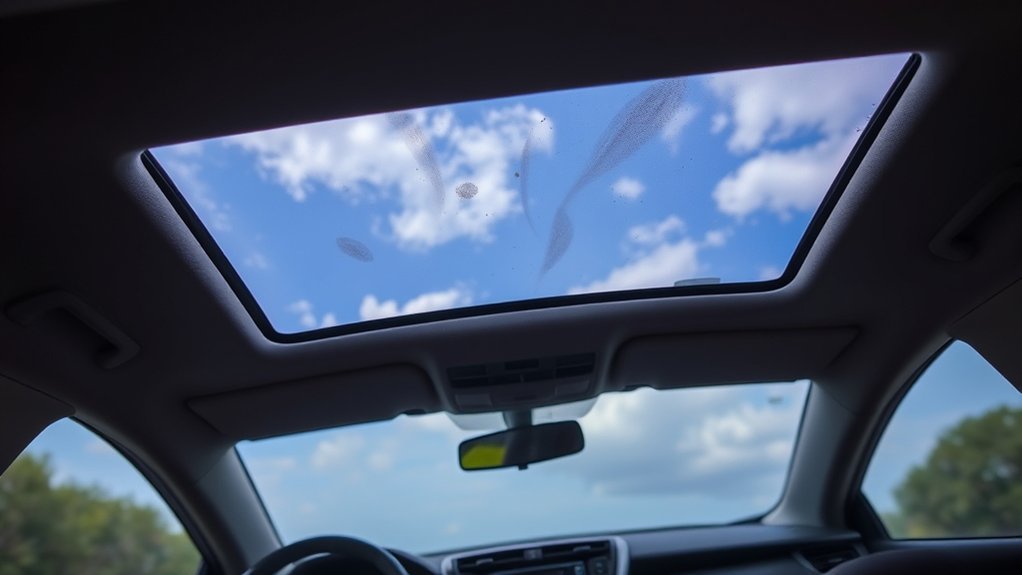
Headliner damage in your Toyota RAV4 can signal serious underlying issues, especially when it stems from water leaks. If you notice stains, assess their severity to determine your next steps. Here’s what you must know:
Headliner damage in your Toyota RAV4 may indicate serious issues, particularly from water leaks; assess stains to guide your next steps.
- Stain Assessment: Check for blue or reddish stains, indicating significant damage.
- Cleaning Techniques: Minor stains may respond to cleaning, using appropriate products and methods.
- Replacement Options: Extensive damage often requires a full headliner replacement, which Toyota might cover if deemed severe.
- Removal Process: Removing the headliner is straightforward, typically taking around 20 minutes, allowing for quicker resolution.
Addressing headliner damage promptly guarantees your RAV4 remains in good condition and prevents further complications.
Next Steps After Finding a Leak?
Finding a leak in your Toyota RAV4 can lead to further complications, especially if water damage is involved. Start by performing a fluid analysis—touch and observe the leak to determine its type. If it seems to originate from the A/C system, drive without the A/C to rule out condensation. Document the leak’s behavior, noting when and under what conditions it occurs. If windshield washer fluid is suspected, refill the reservoir to replicate the issue for quicker identification. After gathering this information, seek professional assistance promptly. Using diagnostic tools, a mechanic can better pinpoint the source and perform the necessary leak repair, safeguarding your vehicle from potential damage to its interior and critical components.
Preventing Future Water Leaks
To prevent future water leaks in your Toyota RAV4, it’s essential to regularly inspect and maintain the roof rail seals. Follow these seal maintenance tips to enhance your vehicle’s integrity:
Regularly inspecting and maintaining roof rail seals is crucial to prevent water leaks in your Toyota RAV4.
- Inspect seals for wear and deterioration, especially on models from 2019 to 2021.
- Perform roof rail cleaning by removing dirt and debris from clips, ensuring seals function effectively.
- Conduct thorough inspections of the headliner and floorboards for water stains if a leak is suspected, allowing for early detection.
- Apply waterproof sealant to vulnerable areas around roof rail assemblies for added protection against leaks.
Staying informed about design updates in newer models can also guide future purchase decisions, ensuring you avoid previous leak issues.
Frequently Asked Questions
How to Identify Where a Leak Is Coming From?
To identify a leak, use leak detection methods like visual inspections and fluid characteristic checks. Common leak sources include HVAC systems and washer reservoirs. Implement preventive maintenance tips to catch issues early and guarantee vehicle integrity.
What Is the Most Common Problem With a Toyota RAV4?
Most Toyota RAV4 owners report reliability issues, particularly with common oil leaks and brake system concerns. Statistically, about 30% experience these problems, highlighting the need for vigilant maintenance to guarantee your vehicle’s longevity and performance.
How Do I Figure Out Where My Car Is Leaking From?
To figure out your car’s leak, employ leak detection methods like checking fluid levels and inspecting seals. Common leak sources include hoses and connections. Troubleshooting leaks involves observing fluid characteristics and monitoring for drops in levels.
How to Find a Water Leak That Isn’t Visible?
To find a hidden water leak, conduct moisture inspections using water leak detection methods. Inspect seals, check for stains, and apply hose tests on suspected areas. These hidden leak solutions help pinpoint elusive sources of moisture.
Conclusion
In summary, identifying and addressing leaks in your Toyota RAV4 is essential for maintaining your vehicle’s integrity and comfort. Notably, studies show that nearly 60% of water leaks in vehicles originate from improper sealing or aging components. By regularly inspecting seals and conducting water tests, you can prevent extensive damage and costly repairs. Don’t overlook these preventative measures—stay proactive, and your RAV4 will serve you well for years to come.