You’ll want a corded inflator (120V or 12V) for fast, powerful, and reliable garage work, and a cordless model for portable roadside fixes. Corded units provide consistent high PSI, quicker fills, and lower long‑term cost, while cordless inflators offer convenience, mobility, and emergency readiness but require battery management. Check pressure accuracy, hose length, and duty cycle regardless of type. Pick corded for home, cordless for travel — keep reading to see specific features and top picks for 2026.
When to Choose Corded vs Cordless Tire Inflators
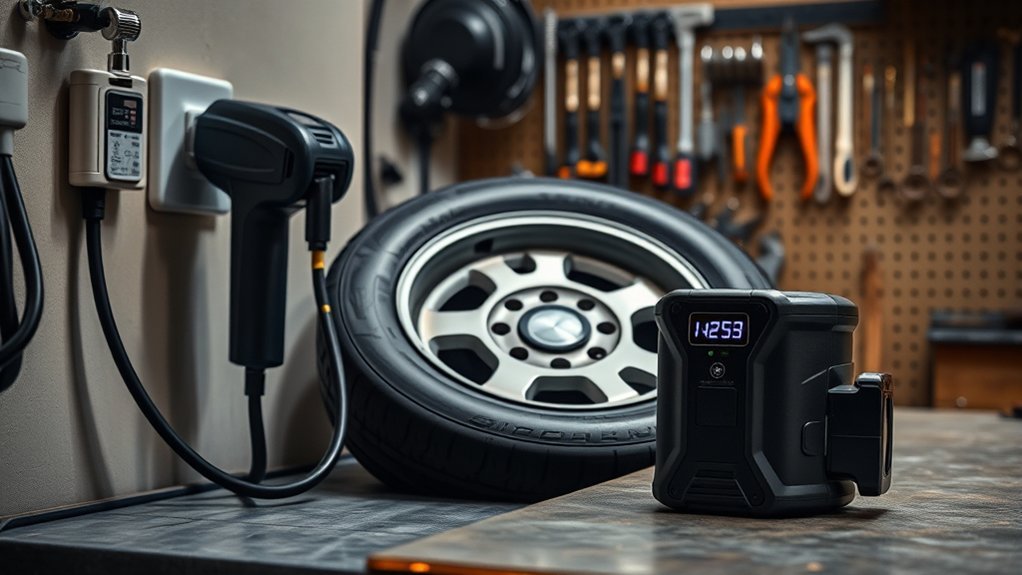
When you need reliable, fast inflation at home or in a garage, pick a corded tire inflator (specifically a 120V AC model) because it plugs into your wall outlet, runs continuously, and handles larger tires and high-volume jobs more affordably. Choose a cordless inflator when you want portability and quick, on-the-go convenience for travel, outdoor activities, or emergencies, but check battery life and charging time since those factors limit how long a cordless unit will serve you.
You’ll choose Corded Tire Inflators when you’ve got steady access to a power source and need faster, repeated inflation without worrying about recharging. Go Cordless when portability is key: you can toss one in a trunk for trips, trails, or roadside fixes where a power cord might not reach. Weigh the pros and cons—corded gives continuous power and lower cost per use, while cordless delivers freedom and transport ease. Consider how often you inflate, your tire sizes, and whether battery constraints could hinder you during extended use.
Tire Inflator Power, Speed, and Inflation Range
You’ll notice corded inflators (especially 120V garage units) almost always deliver higher sustained power output, which translates to faster fill times and a wider PSI range for trucks and RVs. Cordless units are convenient on the go but usually take longer to fill large tires and may only inflate 2–4 tires per charge depending on battery capacity. Compare advertised PSI, airflow (SCFM or LPM), and realistic fill times to match a model to your vehicle.
Power Output Comparison
Although cordless inflators give you portability, corded models (120V AC) deliver noticeably more consistent power, so they inflate tires faster and handle heavy-duty tasks reliably. You’ll notice corded inflators offer steady power without voltage drop, producing quicker inflation and consistent performance across multiple tires. Cordless models sacrifice raw output for freedom; as the battery drains, some lower-end models may see reduced performance.
- Corded inflators (120V AC): Higher power output, infinite runtime, quicker inflation for trucks and SUVs.
- Cordless models: Highly portable, but limited by battery capacity and potentially slower speeds on large tires.
- Practical choice: Pick corded for heavy-duty garage needs; choose cordless if liberation and convenience matter more.
Inflation Speed Range
Because power and design directly affect fill times, the inflation speed range is one of the clearest differentiators. You’ll find corded 120V inflators deliver faster inflation speed—often 2–4 minutes for a standard car tire—thanks to stronger motors. If you’re inflating multiple tires (e.g., swapping winter tires), their continuous power keeps you moving without interruption. Cordless inflators give freedom of movement but usually take 5–10 minutes per tire and may need recharging after a few uses. Consider the trade-off: choose corded for speed and power at home, and cordless for location flexibility on the road.
Portability & Battery: Real‑World Usability
How often do you need to inflate tires away from a power outlet? You’ll appreciate portability when cordless tire inflators let you handle tire inflation on the road, at campsites, or for bike trails without searching for outlets. Their compact design and lightweight build mean you can stash one in the trunk or a backpack.
- Battery life: Many modern cordless models (like the ETENWOLF Vortex S6) can inflate up to four standard tires on a single charge, covering routine needs; however, limits exist if you’re topping up multiple large truck tires.
- Power output vs usability: Corded inflators deliver higher power output and faster fills, so choose corded if speed matters; choose cordless if mobility and independence matter more.
- Emergency readiness: For peace of mind, cordless inflators free you from dependence on outlets or your car’s 12V socket (which requires the engine running), while corded 12V models are arguably more reliable for emergencies since they don’t have a battery that can go flat in storage.
Cost, Durability, and Long‑Term Maintenance
When you weigh upfront price against ongoing expenses, corded inflators usually win for cost-conscious users because they often cost less to buy and need little maintenance. Cordless models often mean higher long-term spending for battery replacements. You’ll find corded inflators deliver better durability since they don’t rely on internal lithium batteries that degrade over 3–5 years. Cordless inflators give freedom, but that comes with recurring attention to battery health.
| Factor | Impact |
|---|---|
| Initial cost | Corded (12V) inflators: Lower |
| Durability | Corded inflators: Higher (no battery degradation) |
| Maintenance | Corded inflators: Minimal |
| Battery needs | Cordless inflators: Requires charging & eventual replacement |
| Long-term cost | Cordless inflators: Higher costs possible |
Choose based on your priorities: budget and resilience, or mobility and acceptance of replacement cycles.
6 Must‑Check Features for Tire Inflators
Now that you’ve weighed cost and longevity, you’ll want to zero in on the specific features that make an inflator useful day-to-day. When choosing tire inflators, focus on accuracy, speed, and resilience so you stay free from roadside worry. A built-in digital pressure gauge prevents over-inflation and ensures you hit the safe PSI recommended by the NHTSA. Inflation speed matters — faster units save time, while slower ones can overheat. If you pick cordless models, check battery life and charging time so a single charge covers your needs.
- Accuracy: Look for a digital gauge with an auto-shutoff feature to avoid over-inflation errors.
- Performance: Check the CFM (Cubic Feet per Minute) or L/min rating; higher numbers mean faster fills.
- Duty Cycle: This determines how long the unit can run before it needs to cool down. A 50% duty cycle is good; 100% is professional grade.
- Durability & power: Rugged construction, long battery life (for cordless), and sensible charging time.
Choose an inflator that’s precise, quick, and tough — it’ll liberate you from dependence on gas station air pumps and keep you moving.
Best Use Cases: Home, Road Trips, and Emergencies
Because your needs vary by setting, choosing between corded and cordless inflators comes down to where you’ll use them most: plug-in 120V models shine at home for fast, repeated fills and heavier vehicles, while cordless units give you the portability and immediate access you need on road trips, at remote trails, or during roadside emergencies. At home, a Corded Tire inflator tied to a steady wall outlet delivers quicker inflation and handles larger tires with less strain. For road trips, a Cordless Tire inflator frees you from cords, letting you top off tires at rest stops or trailheads. In emergency situations, that same cordless portability matters most — you’ll get immediate inflation on the roadside without hunting for power.
Quick Buying Recommendations: Top Picks by Need
For home use where speed, power, and long-term reliability matter, pick a corded inflator that plugs into your garage outlet and handles multiple tires or larger vehicles. If you need something for travel or emergencies, choose a lightweight cordless model that fits in your trunk and works without a power source. Consider budget and how often you’ll use it—corded for economy and longevity, cordless for portability and versatility.
Home Use Picks (Garage Ready)
When you want reliable, fast inflation at home without breaking the bank, corded 120V models are usually the best choice because they deliver consistent power and never run out of juice. For home use, pick a tool that balances performance, portability, and budget-friendly value.
- DEWALT DCC020IB — A versatile hybrid inflator. It runs on a 20V battery (sold separately) for travel but can also plug into a 110V wall outlet (with an adapter) or 12V car socket, making it the ultimate do-it-all tool for 2026.
- Slime 120V Garage Inflator (40045) — A dedicated corded unit that plugs directly into your wall outlet. It’s built specifically for garage use, offering reliable power without the need for batteries or converters.
- EPAuto 12V Portable Compressor — A top budget-friendly option. Note: This is a 12V DC unit, meaning it must be plugged into your car’s cigarette lighter to work. It’s excellent to keep in the garage for the car, but it does not plug into a wall outlet.
Travel And Emergency
You’ve got your home inflator sorted; now think about what to keep in the car for roadside stops and emergencies. For travel, cordless inflators shine: their portability and battery-powered design let you inflate tires without hunting for power. Pick a lightweight unit with smart PSI presets so you can set pressure quickly and get back on the road. Models like the ETENWOLF Vortex S6 can handle multiple tires on one charge, useful for longer trips. Remember recharge times—batteries can take hours, so check the charge level before a long trip. If you want speed and constant power, a corded option works at home, but for freedom on the roadside, cordless inflators are the practical choice.
Frequently Asked Questions
Which Is Better, Cordless or Corded Tire Inflator?
Cordless is better if you value freedom and portability for bikes, sports gear, and quick car top-ups. Corded (specifically 120V AC) wins for raw power, speed, and reliability in a garage setting where you have access to a wall outlet.
What Is the Most Reliable Portable Tire Inflator?
As of 2026, the Viair 88P (corded 12V) is widely considered the most reliable portable unit due to its durable construction and direct battery connection. For cordless reliability, the DeWalt DCC020IB is a top-tier choice due to its robust build and hybrid power options.
Are Cordless Inflators Good?
Yes. Modern cordless inflators use powerful lithium batteries that can inflate 3–4 car tires on a single charge. They are excellent for emergencies and maintaining tire pressure without the hassle of cords, though they are generally more expensive than basic corded units.
How to Choose a Good Tire Inflator?
Prioritize pressure accuracy (digital gauges are best), inflation speed (check the CFM rating), and duty cycle. Ensure the hose is long enough to reach all four tires, and verify that the power source (12V plug, 120V wall plug, or battery) matches your primary use case.
Conclusion
You’ll probably buy whichever inflator has the flashiest ad — until you need it at 2 a.m. on a cold highway with a dead battery. So pick what actually matches your habits: corded (120V) for steady power at home, cordless for true roadside rescue, and don’t ignore pressure accuracy and duty cycle. You’ll thank yourself later, even if you still blame “convenience.”