
You’ll want a tire‑inflator with a built‑in power bank when you value compact, multiuse gear: it inflates tires enough for emergencies and also charges phones, lights, or GPS. Look for true mAh, 5V/≥2.1A USB output, and a rated inflation capacity (bigger mAh = more tire fills but more weight). Don’t expect professional continuous use or fast heavy‑vehicle inflation; heed duty‑cycle limits. Keep it for road autonomy—and read on for specs, trade‑offs, and buying tips.
What a Tire‑Inflator Power Bank Actually Does
Think of a tire-inflator power bank as a two-in-one roadside tool: it inflates tires and doubles as a portable USB charger. You get a tire inflator that also functions as a power bank, providing a charging source when road or trail isolates you. Via USB ports you’ll top up phones, tablets, or small electronics without adding separate gear. Compared to single-purpose inflators, these multi-functional tools consolidate weight and decision-making—valuable if you favor autonomy. Battery capacity commonly starts around 6,000mAh, enough to recharge a smartphone multiple times depending on model efficiency. Some units add an LED flashlight, improving operation in low-light conditions and serving as an auxiliary light for tasks beyond inflation. You’ll trade marginal size and cost for combined utility: inflation performance remains primary, but integrated power delivery and illumination reduce the kit you carry. If liberation means fewer dependencies, this hybrid design directly supports self-reliance on road and off-grid outings.
Quick Verdict: When a Built‑In Power Bank Helps (And When It Doesn’t)
When you’re deciding whether a pump with a built‑in power bank is worth it, weigh emergency charging and convenience against reduced inflation reserve: the battery can top up phones and small devices on trips or at breakdowns, but using it for USB power will cut into the ampere‑hours available for inflation cycles. If you prioritize self-reliance during road trips or outdoor activities, a cordless tire inflator with a meaningful power bank boosts versatility—one device handles tire inflation and charging devices in emergencies. If your goal is maximal tire service, choose models with higher battery capacity or separate power packs; low-capacity units may only provide a partial phone charge and limit inflation cycles. Compare specifications: capacity (mAh or Wh), rated inflation cycles, and recharge time. Opt for clear labeling and realistic claims. In short, the built‑in power bank helps when you need multiuse freedom; it doesn’t when you need guaranteed, repeated tire inflation without compromise.
When Is a Power Bank Useful on the Road?
How often will you need more than just air on the road? You’ll find a power bank most useful when you can’t access mains power and need to charge devices for navigation, communication, or lighting. Portable tire inflators with USB ports let you charge devices and run LEDs, so a single tool replaces multiple gadgets and reduces pack weight.
Compare scenarios: short trips where you carry spare batteries versus long drives, remote travel, or breakdowns in low visibility—those are where a robust power bank matters. In emergencies you’ll want higher battery capacity to top off phones, power GPS, or illuminate a scene with built-in LED lights. That improves safety and convenience without juggling chargers.
Pick inflators that balance inflation performance with usable power bank features. If you crave freedom from roadside dependency, choosing a multifunctional portable tire inflator gives you autonomy, communication, and light when it counts.
Reading Power‑Bank Specs: Capacity, Voltage, and Real Output
Although capacity numbers look straightforward, they don’t tell the whole story, so you should parse mAh, voltage, and real output together to judge a tire inflator’s usefulness as a power bank. You’ll compare stated capacity (mAh) to usable energy; conversion losses mean real output is lower than the rechargeable battery’s nominal rating. Check voltage: most USB devices expect 5V — confirm the power bank supplies stable voltage to avoid compatibility problems with digital displays or the air compressor control circuits. Assess charging speed: look for ≥2.1A outputs or Quick Charge for faster device and bank replenishment. Multiple ports let you use the power source for phone and inflator simultaneously, but total output matters.
| Spec | What to check | Why it matters |
|---|---|---|
| capacity | mAh rating | Indicates stored energy |
| voltage | output volts | Device compatibility |
| real output | amps/W usable | Actual charging performance |
Choose systems that free you from dependence on roadside help.
[Products Worth Considering]
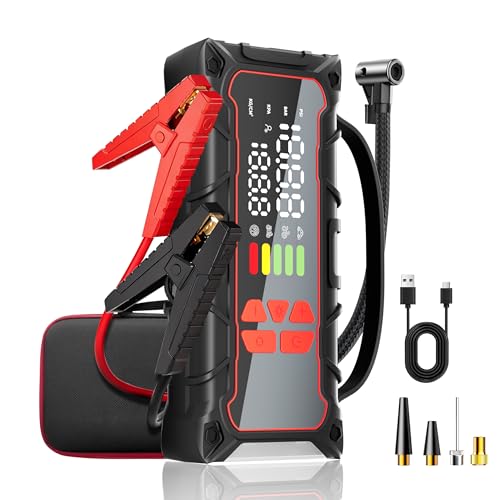
🌪️ 5000A INSTANT START – ROAD TRIP READY IN ANY WEATHER: Engineered to deliver peak performance when you need it most. This booster packs 5000 peak amps to instantly revive completely dead 12V batteries (compatible with up to 7.0L gas or 6.0L diesel). The specialized Force Start function powers through deeply discharged batteries – whether your car sat unused for weeks, you left the lights on, or you're facing sudden spring storms. Rated for extreme conditions from -4°F to 140°F, it's your year-round roadside backup.

➤【4-in-1, compact & road-ready】 The 2026 GOOLOO A5 jump starter is a 4-in-1 kit that combines a jump starter, tire inflator, 20,000mAh battery for emergency device charging, and LED light in one rugged body (8.98 × 5.55 × 2.40 in). A dependable gooloo jump starter to keep in the trunk for daily use, road trips, and emergencies.
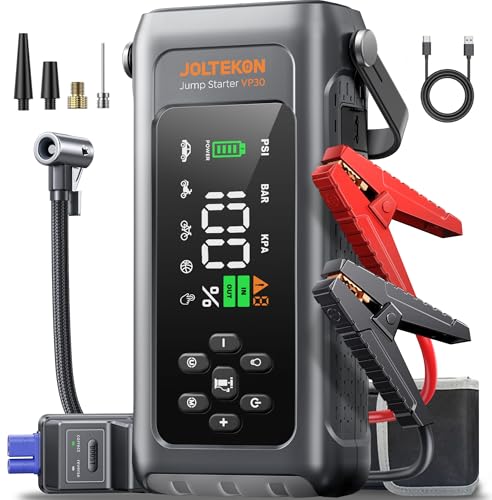
【8-IN-1 CAR BATTERY JUMP STARTER】This 12V Jump Box highlights highly integrated advanced functions but is more portable, transcending general battery booster. It's a portable car jump starter, tire pump, pressure gauge, portable power bank, flashlight, SOS signal, white strobe, red strobe as triangle warning light. Portable, versatile and must-have kit, your ultimate companion for emgencies, adventures and daily use!
Realistic Phone Charges and Tire Inflations Per Battery
You’ve looked at capacity, voltage and real output; now compare those numbers to what you’ll actually get in the field. If you need liberation from uncertainty, translate battery capacity into measurable outcomes. Cordless inflators above 15,000mAh commonly deliver four or more car tires per charge, so they suit heavy use and faster inflation speed expectations. Midweight units around 6,000mAh will typically handle two to three car tires, trading endurance for portability.
For phone charging, a 10,000mAh power bank feature will usually restore a modern smartphone two to three times, subject to the phone’s battery size and conversion losses. Expect inflating a tire from 0 to 30 psi to consume roughly 1,500–2,000mAh; use that to estimate how many inflations you’ll have left after phone charging. Always consult the manufacturer’s specifications to confirm real-world performance and to balance inflating tires versus phone charging needs before you rely on the tool.
Safety Limits: Jump‑Starting, Device Charging, and Duty‑Cycle Concerns
When you use the power-bank jumper, check the unit’s peak and sustained current ratings — many consumer inflators can spike high but only supply safe jump-start currents if they have 15,000mAh+ batteries and proper clamp circuitry. Also compare rated run times: most inflators will overheat if you run them continuously beyond ~20 minutes, so you’ll need cooling pauses between heavy use. Treat charging small devices and jump-start attempts differently — the former tolerates lower continuous current, the latter demands short high-current bursts within the duty-cycle limits.
Jump-Start Current Limits
A proper jump-start typically needs 200–600 amps depending on engine size and condition, so you should only use an inflator whose jump‑start output matches your vehicle’s demand. You’ll compare specs: tire inflators advertise peak vs. cranking amps; pick one that meets your engine without exceeding its rated jump-start current. Treat the portable inflator like a tool — know battery life, power bank limits, and continuous operation caps to avoid overheating and damage.
| Parameter | Typical Range | User Action |
|---|---|---|
| Jump‑start current | 200–600 A | Match vehicle demand |
| Continuous operation | ~20 min | Limit runtime |
| Power bank output | Device rated | Don’t exceed |
Follow specifications to protect unit lifespan and preserve your freedom on the road.
Duty-Cycle Heat Risks
Because portable inflators heat up under load, you should respect duty‑cycle limits to prevent thermal damage when jump‑starting, charging devices, or running prolonged inflation. You want freedom from breakdowns, so compare models: most portable tire inflators limit continuous operation to ~20 minutes; 100% duty cycles let you run without overheating. Don’t assume multi‑tasking is free — jump‑starting or device charging while inflating increases stress. Follow manufacturer guidelines and monitor heat build‑up on high‑capacity battery units to protect safety and longevity.
- Know your model’s duty cycles before use.
- Avoid simultaneous jump‑starts and heavy inflation tasks.
- Let the unit cool between cycles.
- Use 100% duty cycle inflators for extended work.
- Monitor temperature; stop if you sense overheating.
Tradeoffs for Tire‑Inflator Power Banks vs Standard Inflators
Although the added battery lets you charge phones and run more inflation cycles, tire inflators with power‑bank features trade off weight, cost, and sometimes inflation performance compared with standard inflators. You’ll get convenience—charging a phone or topping multiple tires from a 10,000mAh+ battery—but you’ll sacrifice portability and often inflation speed versus dedicated inflators optimized for rapid airflow and pressure. For liberation-minded users who want self-reliance, weigh battery capacity against mission: a higher mAh count extends usefulness in remote scenarios but increases mass and price. Dedicated inflators keep airflow efficient, cooling needs lower, and usually cost less, making them superior for frequent tire maintenance or professional use. Cordless hybrids suit multi‑purpose kits and occasional emergencies where device charging matters. Choose based on how often you inflate, how critical rapid recovery is, and whether convenience of a power bank justifies the tradeoff in weight, peak inflation capability, and added expense.
[Products Worth Considering]

Inflator/Blower 2-in-1: With its exclusive dual-pump system, the X10 Cross not only rapidly inflates tires but also acts as a powerful blower for kayaks, pool floats, etc. Additionally, it deflates air mattresses and storage bags (Unable to deflate tire)

Jet-Inflate: The Fanttik X9 APEX cordless air pump inflates your car tires in just 35 seconds (28 to 33 PSI). Inflates in an instant, delivering unparalleled speed and efficiency

Rapid Inflation with Precision Accuracy: Equipped with a high-performance motor delivering fast inflation speeds, this tire inflator fills a standard car tire (20-35) within 30 Seconds (0-36 PSI) in 2-4 Minutes. The digital pressure gauge provides accurate readings up to 150 PSI, and the auto shut-off feature stops inflation automatically when your preset pressure is reached preventing over-inflation and ensuring safety.
Buyer’s Checklist and Practical Emergency Tips

When you shop for a tire inflator with a power‑bank, prioritize specs that keep it practical in emergencies: confirm USB ports for device charging, a battery capacity (ideally >15,000mAh) that matches your multi‑device needs, a tire‑inflation rating above ~120 psi so inflation performance isn’t compromised, and a stated weight/pack size that you’ll actually carry. You want a portable air compressor that doesn’t sacrifice core inflation speed or accuracy; compare models by measured flow, weight, and whether a digital screen gives repeatable tire pressure readouts. In emergency situations, the power bank feature should extend autonomy, not add dead weight.
- Confirm USB ports and cable compatibility for phones and tablets
- Verify battery capacity and realistic recharge counts
- Check psi rating and inflation time against your tires
- Prefer a clear digital screen and simple controls
- Assess total weight, pack size, and mount/storage options
Buy deliberately, know your limits, and prepare to move freely when roadside choices matter.
[Products Worth Considering]

Fast Inflation & Powerful Battery: The Nature Hero tire air pump for car tires features a high-performance motor with 30L/min airflow (inflation pressure range 2-150 PSI), delivering 3X faster inflation. The portable air compressor for cars takes 6 mins to fully inflate a car tire (2.2-2.8Bar), 2 mins to refill from 1.8-3.0Bar and just 1 min to fully inflate a bicycle tire and sports balls.

ADVANCED TRUEGAUGE SCREEN: This battery tire inflator includes updated sensor technology, capable of collecting pressure data from tire inflators at a frequency of 200 times per second. Its valid data rate is higher than 80%, which is 60% better than the market average. Wherever you go, accurate readings help you drive safely.
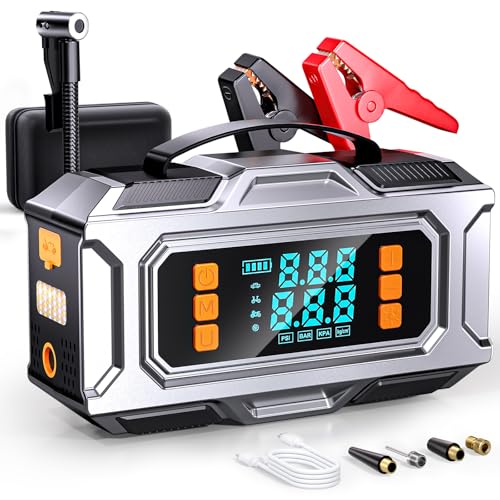
Power Car Jump Starter: This portable car jump starter offers a peak power of 8000A. A full charge provides up to 50 starts for 9.0L gasoline/8.0L diesel engines and 12V vehicles. Suitable for cars, trucks, motorcycles, and SUVs, it features an automatic supercharger that activates even in extreme temperatures ranging from -4°F to 140°F, providing extra current to start the engine when the battery is detected to be extremely low. This is far more convenient than seeking other vehicles or roadside assistance.
Frequently Asked Questions
Do Portable Tire Inflators Really Work?
Yes — they work: you’ll assess tire inflator accuracy, portable inflator speed, battery capacity comparison, inflator size options, price vs performance, user reviews analysis, common inflator brands, safety features evaluation, and follow inflator maintenance tips.
What Are the Disadvantages of Tire Inflators?
They’re noisy, have size limitations and cord length constraints, rely on a power source, show variable inflation speed, need maintenance, span a wide price range, pose durability concerns, and user reviews often highlight inconsistent performance and trade-offs.
Do Portable Tire Inflators Drain the Battery?
Yes—you’ll drain a portable tire inflator’s battery depending on battery capacity, power consumption and inflator efficiency. Compare charging time, usage frequency, user reviews; follow maintenance tips, safety precautions, and enjoy portability benefits for liberated users.
What Is a Good PSI for a Portable Tire Inflator?
A good psi is typically 30–35 PSI for cars; choose an ideal psi rating up to 120–150 PSI so your portable air compressor offers inflator accuracy, fast inflation speed, portable convenience, reliable tire pressure, solid user reviews, and fair cost comparison.
Conclusion
A tire‑inflator power bank is a compact multitool: it inflates tires and charges devices, but don’t expect car‑battery performance. Useful if you value portability — one model can deliver ~2–4 full phone charges while providing 6–12 tire inflations at 35–40 PSI per full battery. For heavier duty or repeated use choose a dedicated inflator or larger battery. Weigh capacity, true output, and duty cycle; prioritize tested specs and a reliable auto‑shutdown.







Leave a Reply