
If your tire inflator gauge is showing wrong numbers, check that the nozzle sits squarely on the valve stem, replace weak batteries in digital units, and inspect for leaks or damaged seals. Remember that temperature and altitude change pressure readings, and always measure when tires are cold. Verify accuracy by comparing the gauge to a trusted mechanical gauge or TPMS; if the difference exceeds 2-3 PSI, it may be time to replace the unit. Read on for the step-by-step checks.
Spot a Bad Tire Gauge Reading Fast
When you need a quick check, compare your gauge against a known reliable source—like a professional-grade gauge or your vehicle’s TPMS—and look for significant differences. You’ll want a repeatable routine: test on a cool tire, connect firmly, read, then repeat. If readings jump erratically or differ consistently from your reference, you likely have a bad gauge. Check that the gauge is rated for your tire’s pressure range. For digital units, swap weak batteries before blaming the tire—the display can dim or report inaccurately when power is low. Don’t ignore poor valve alignment: a loose connection leaks pressure and skews readings. By methodically comparing results and ensuring a secure seal, you can trust the pressure numbers you act on.
Quick Checks: Valve Placement, Batteries, and Leaks
Start by putting the nozzle squarely on the valve stem and hold it firmly to prevent air escape. If your gauge is digital, check the battery level immediately to avoid erratic displays. Also, scan the gauge and nozzle for visible damage or leaks that could undermine accuracy.
Check Valve Connection
Because a poor seal is the most common cause of error, always align and press the gauge nozzle squarely onto the valve stem. Listen for hissing—if you hear air escaping, the reading is invalid. Verify the tire pressure gauge sits flush; a tilted or loose fit lets air escape. Inspect the nozzle tip for cracks, bends, or trapped dirt and clear obstructions before testing. For digital units, confirm the battery is seated correctly to avoid flickering.
Replace/Inspect Batteries
Having checked the valve connection, check the gauge’s power next: many faint or blank displays just need fresh AAA batteries. Replace old batteries promptly and confirm polarity. Inspect the compartment for corrosion or loose contacts and clean them if needed.
While you’re at it, pressurize the tire and watch for stable readings; a weak power source can produce drift that masks real leaks. If the gauge won’t hold a steady number, lubricate the valve and reseat the chuck to guarantee a secure seal.
When Environment (Temp, Altitude) Skews Readings
You’ll need to account for temperature and altitude when you check tire pressure because both change the physics inside the tire. Know that air expands when hot and contracts when cold. Also remember that higher elevations mean lower atmospheric pressure, which actually causes your gauge to read slightly higher relative to the outside air.
Temperature Effects On Pressure
When temperatures shift, your tire pressure readings will shift too. Expect roughly a 1 PSI change for every 10°F (≈5.6°C) difference. This is why you must always check pressures when tires are cold (before driving). Some high-end digital gauges feature thermal correction chips, but for most standard gauges, follow these steps:
- Measure when tires are cold (driven less than 1 mile).
- Note ambient temperature; if it’s very cold outside, your tires will read lower.
- Fill to the recommended pressure for the current temperature.
- Check pressure monthly to account for seasonal temperature drops.
Altitude And Air Density
Temperature isn’t the only variable—altitude plays a role too. As you climb, atmospheric pressure drops. Since standard tire gauges measure the difference between the air inside the tire and the air outside, your gauge will read roughly 0.5 PSI higher for every 1,000 feet of elevation gain, even if the amount of air in the tire hasn’t changed. If you live at high altitude, simply follow the manufacturer’s recommended cold-pressure as normal; the gauge is reading the correct operating pressure for that environment. Be methodical: measure at rest and adjust to the recommended PSI on your door jamb.
Verify Your Gauge With Three Quick Comparisons
Start with three quick comparisons to spot errors: check your digital inflator against a reliable mechanical gauge, cross‑check both with a calibrated TPMS (if your car displays individual tire psi), and finally compare readings to a trusted air compressor gauge. Do three rapid pulls on the valve stem to spot variation.
- Compare digital vs mechanical tire gauge readings for immediate discrepancy.
- Cross‑check against your car’s dashboard TPMS (if available/calibrated).
- Take multiple consecutive readings to confirm consistency.
Keep gauges within their specified ranges. Consistent mismatches point to a faulty unit.
Common Faults: Display, Calibration, and Nozzle Leaks
Although a simple readout glitch might just be a dying battery, display problems can also signal internal circuitry failures. You’ll spot a faulty display when digits flicker, freeze, or jump; don’t trust numbers until you swap batteries and retest.
Next, check calibration. Compare readings to a validated reference. Most consumer digital gauges are rated to ±1 PSI. If your gauge is consistently off by more than 3 PSI, it has likely lost calibration due to a drop or sensor wear.
Finally, inspect the nozzle for leaks: a poor seal or misalignment lets air escape. Press the nozzle squarely, listen for hisses, and use soapy water on the valve stem if you suspect a slow leak in the tire itself.
[Products Worth Considering]

EXPERT-GRADE CALIBRATION: Each AstroAI Tire Pressure Gauge is calibrated with professional-grade tools, ensuring quick and accurate measurement results within plus-minus 1PSI. Stay prepared for any roadside emergency and travel with peace of mind.

【Accurate Digital Tire Gauge】Safeguard your every trip. HYVOHEX tire pressure gauge is certified by ANSI B40.7 Grade 2A standard and equipped with a high-sensitivity sensor to provide you with instant, error-free results (±0.1 PSI). The intelligent anti-interference chip ensures stable operation in extreme temperatures (-4°F-130°F). Whether it is daily commuting or long-distance driving, you can always know the tire condition
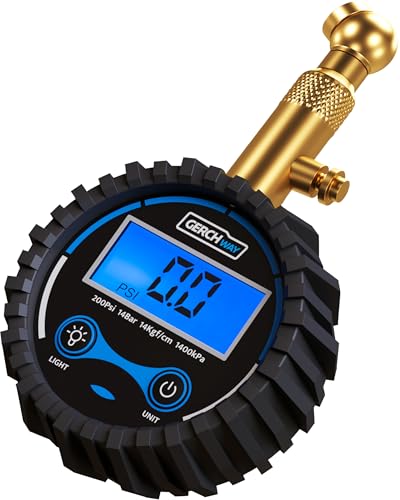
Tough & Reliable: Built with a solid brass body and surrounded by a protective rubber case, this air gauge tire pressure tool is designed for long-lasting use in any environment.
Recalibrate or Repair a Gauge at Home
Most consumer tire inflators cannot be “recalibrated” by the user, but you can check them for accuracy. Start by comparing your digital tire pressure gauge to a known accurate reference.
- Compare readings: attach both gauges to the same valve and record the difference.
- Apply a “Mental Offset”: If your gauge consistently reads 2 PSI low, simply add 2 PSI to your target number when filling.
- Maintenance: clean nozzles, tighten fittings, and replace batteries to ensure the sensor is getting proper voltage.
If the gauge is erratic or off by a dangerous amount (e.g., >5 PSI), it is safer to replace it than to attempt a repair.
[Products Worth Considering]

Enhanced Visibility in Low Light: Features a green backlit LCD screen and integrated flashlight, allowing for clear reading of tire pressure even in dark or dimly light conditions.

PROCESS LEVEL ACCURACY: Each ETENWOLF’s digital tire pressure gauge is calibrated manually to ANSI B40.7 Grade 2A(plus-minus 1 PSI).Presta valve adapter not included, if used for bicycles, it must be purchased separately
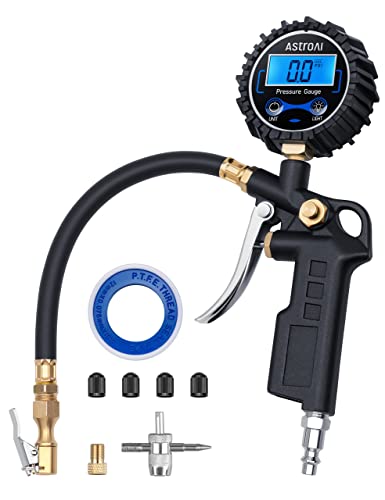
COMPATIBLE WITH both ¼” and ½” NPT air compressors outputs. COMPATIBLE WITH Standard Schrader Valves.
Decide: Recalibrate (Mental Offset) or Replace?
Facing a flaky gauge, how do you choose between using it with a mental correction or replacing it? You’ll weigh accuracy against cost. If errors are small (1-2 PSI) and consistent, you can just do the math in your head. If readings drift by ~5 psi or more, replace the unit—sensor wear likely means unreliable data. Professional calibration is generally not cost-effective for standard consumer inflators.
| Situation | Action | Why |
|---|---|---|
| Minor drift (1-2 PSI) | Use Mental Offset | Free, easy workaround |
| Digital dim/display issues | Replace batteries | Fixes low-voltage errors |
| Large error (>5 psi) | Replace Unit | Sensor likely failed |
| Erratic/Jumping numbers | Replace Unit | Unsafe/Unreliable |
| Critical use (Racing/Towing) | Buy High-End Gauge | Safety requires precision |
[Products Worth Considering]

PROCESS LEVEL ACCURACY: Each ETENWOLF’s digital tire pressure gauge is calibrated manually to ANSI B40.7 Grade 2A(plus-minus 1 PSI).Presta valve adapter not included, if used for bicycles, it must be purchased separately
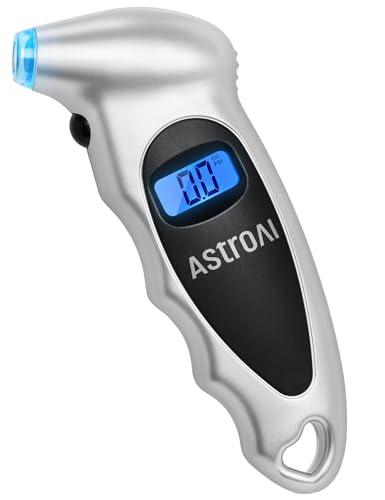
EXPERT-GRADE CALIBRATION: Each AstroAI Tire Pressure Gauge is calibrated with professional-grade tools, ensuring quick and accurate measurement results within plus-minus 1PSI. Stay prepared for any roadside emergency and travel with peace of mind.

Digital Tire Pressure Gauge 2 Pack, Industrial Tire Gauge 3-200 PSI, Calibrated to ANSI B40.7 Grade 2A(plus-minus 0.5%), Air Pressure Gauge with Replaceable AAA Batteries
Frequently Asked Questions
How to Reset a Portable Tire Inflator?
Most portable inflators do not have a reset button. However, you can often clear temporary glitches by removing the batteries (or unplugging the unit) for 60 seconds and then powering it back on.
Why Is My Pressure Gauge Not Reading Correctly?
Your gauge is likely misreading due to a poor seal on the valve stem, low batteries, or internal sensor damage from being dropped. Always check the battery first and ensure you are pressing down firmly on the valve.
Why Is My Tire Pressure Sensor Reading Incorrectly?
TPMS sensors inside the wheel can read incorrectly due to low internal batteries (they last 5-7 years) or damage from tire changes. Compare the dashboard reading with a manual hand gauge to confirm which one is wrong.
How to Recalibrate a Tire Pressure Gauge?
Digital consumer gauges usually cannot be recalibrated. If it is inaccurate, you must either replace it or calculate the difference (offset) and adjust your target pressure accordingly. Mechanical stick gauges can sometimes be adjusted by pushing the stick back in fully, but replacement is often more reliable.
Conclusion
A bad tire gauge can steer you wrong when safety counts. You’ve learned quick checks for valve position, batteries, and leaks, and how temperature and altitude impact your readings. If the display, nozzle, or calibration is suspect, try a quick battery swap or comparison check; otherwise, replace the unit. Act methodically and don’t gamble with uncertain pressure readings.







Leave a Reply