
A pre-set tire inflator lets you punch in a target PSI and stops automatically when it hits that pressure. You avoid overinflating and don’t waste time checking gauges. It uses an internal pressure sensor plus a digital display to watch pressure in real time while the motor runs, then cuts power at the exact point you set. This hands-off accuracy speeds up everyday checks, roadside fixes, and shop work. You will also find tips on choosing, using, and maintaining one as you read on.
Quick Answer
A pre-set tire inflator gives you easy, hands-free inflation. You set the PSI you need and it stops on its own so you get the right pressure every time.
- It tracks pressure with an internal sensor and shows real-time readings on a digital display.
- Perfect for families, road trips, workshops, slow leaks, flat tires, or quick maintenance.
- More accurate and convenient than manual pumps with less risk of mistakes.
- Built-in safety stops over-inflation and lets you walk away while it works.
What a Pre-Set Inflator Does : and Why It Helps
When you set a target PSI on a pre-set tire inflator, it fills the tire and stops automatically once that pressure is reached. You avoid over-inflating. You simply choose the pressure, hook it up, and let it do the work. The user-friendly interface shows current tire pressure so you can keep an eye on progress without hovering. Built-in safety features guard against over-inflation and electrical faults. Consistent tire pressure improves vehicle performance, fuel economy, and handling. For anyone who wants practical tools with less fuss, these inflators deliver predictable results and clear feedback.
How the Automatic Shut-Off Works (Step-by-Step)
Although you set the target PSI, the inflator takes over. Its internal pressure sensor continuously reads the tire as air flows in. The device compares that reading to your preset and stops the motor the moment they match. You connect the hose, enter the correct PSI on the digital gauge, and start inflation. The pressure sensor sends real-time pressure readings to the controller. You watch the digital gauge tick up. The controller keeps the motor running while pressure stays below target. As soon as the reading equals the preset, automatic shut-off functions cut power and halt airflow instantly. You get the correct PSI without babysitting the process. This automated sequence reduces human error and avoids over-inflation. Pre-set tire inflators turn a repetitive task into a precise, self-governing inflation process.
When to Pick a Pre-Set Inflator: 6 Common Scenarios
Pick a pre-set inflator if you want fast, consistent tire pressure without babysitting the pump. You will save time and stress in six common scenarios where these tools shine. They stop automatically when the pressure reaches the PSI you set, so you get correct pressure every time and avoid over-inflation.
Pick a pre-set inflator for fast, worry-free tire inflation — it stops at your chosen PSI for consistent, safe results.
- For families with multiple cars and kids — use portable tire inflators or digital tire inflators for quick inflation across different tires.
- Before long road trips — set ideal pressure once, enjoy safer handling and better fuel efficiency on highways.
- In workshops or for DIYers — rely on pre-set inflators to maintain standards, speed up service, and reduce guesswork.
- When you frequently top up after a slow leak.
- To replace a flat tire on the go.
- For consistent maintenance without monitoring the gauge constantly.
[Products Worth Considering]
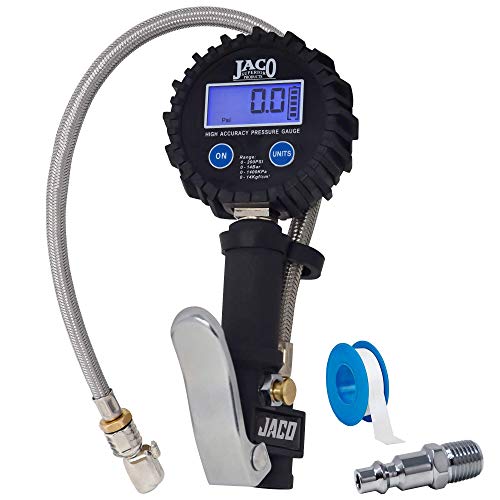
ANSI 1A ACCURACY: Performance tested & calibrated accurate to ±1% full scale with 0.5 PSI resolution for precise tire inflation. Bright 200 PSI LCD display & auto-off feature conserve battery life.

Powerful Inflation Performance – With a built-in true 6000mAh rechargeable battery, this tire inflator can support up to 4 car tires (195/55 R15) and charge them from 30PSI to 36PSI in 45 seconds

Fast-Inflation & Compact: Our compact and lightning-fast upgrade to the popular R7 air compressor portable. With a powerful 40L/Min cylinder, this air pump for car can inflate a tire (215/50 R17) in under a minute (26-35PSI) and even Tesla tires (235/40 R19) in just 1.5 minutes (28-36PSI). Say goodbye to slow and cumbersome inflation processes – This 150PSI tire inflator portable air compressor offers a smoother, faster solution for all your inflation needs.
Pre-Set vs Manual Inflators : Accuracy, Speed, Convenience
If you liked the hands-off convenience of pre-set inflators for trips or family cars, you will notice the difference when you compare them to manual pumps. You get measurable gains in accuracy. Pre-set inflators let you dial in the recommended pressure and shut off automatically. This cuts the risk of over-inflation and frees you from constant checks during the inflation process. Manual inflators put the burden on you to monitor gauges, which increases user error and variability in tire pressure.
Speed favors pre-set units too. Their automated cycles usually finish faster than the stop-start work of manual inflators. Convenience multiplies with that speed. You can move on to other tasks while the device reaches the set PSI. For anyone who values control without micromanagement, pre-set inflators deliver consistent, repeatable results. Manual inflators still work, but they demand attention, patience, and skill to match the accuracy and convenience of automated inflation.
[Products Worth Considering]

✅ Compatible with Any Air Compressor – Works seamlessly with shop and garage air systems, eliminating the need for bulky built-in compressors.

The Rapidair automatic tire inflator with shutoff feature is a professional quality handheld unit. S
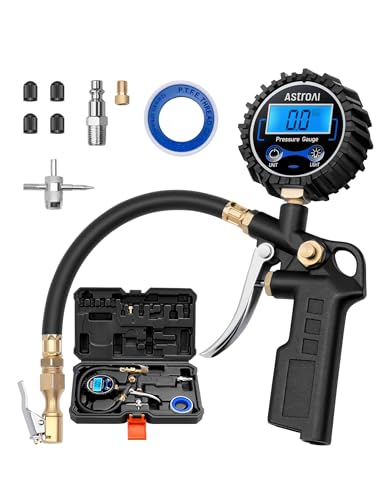
COMPATIBLE WITH both ¼” and ½” NPT air compressors outputs. COMPATIBLE WITH Standard Schrader Valves.
Choose and Use a Pre-Set Inflator: Key Specs, Setup, and Upkeep
Choosing and using a pre-set inflator is straightforward. Look for a model with a minimum 6.89 bar (100 psi) capability, an accurate digital gauge, and a user-friendly interface. Then connect the hose to the valve stem, enter your target pressure, and start inflation while briefly monitoring the cycle. These units let you set a desired pressure level and stop automatically, avoiding over-inflation and saving time. Pick a unit with a clear digital display and reliable components to support efficient operation.
- Check specs: confirm 6.89 bar (100 psi) capacity, accurate pressure gauge, and intuitive controls for quick inflation solutions.
- Setup: attach to the tire valve stem, choose the desired pressure level on the digital display, start inflation, and observe briefly to verify proper cutoff.
- Maintenance: inspect hoses and connections regularly, test the gauge accuracy, and service or replace worn parts to keep efficient operation and safe use.
[Products Worth Considering]

Digital Screen, Real-Time Pressure Display: The bike pump with large digital screen displays the tire's real-time pressure for a more accurate and intuitive experience. Avoids pressure reading errors common with dial tire pumps.

DIGITAL COMPRESSOR for OFFROAD VEHICLES – The new and improved version of the customer favorite 88P is designed for offroad enthusiasts. With the same 12V heavy-duty, gearless motor, the Every Vehicle Carry 88P now features a digital gauge and preset pressure with automatic shut-off feature for ultra-fast fill-ups.

ADVANCED TRUEGAUGE SCREEN: This battery tire inflator includes updated sensor technology, capable of collecting pressure data from tire inflators at a frequency of 200 times per second. Its valid data rate is higher than 80%, which is 60% better than the market average. Wherever you go, accurate readings help you drive safely.
Frequently Asked Questions
How to Choose a Good Tire Inflator?
Compare tire inflator types, power sources, size, speed ratings, noise levels, durability, warranty options, accessory features, brand reviews, and price ranges.
Which Is Better, 150 PSI or 300 PSI?
150 PSI works fine for daily cars, but 300 PSI gives more versatility. Consider pressure needs, inflation speed, durability, user preferences, price differences, brand reliability, portability, power sources, maintenance tips, and safety features.
Do Portable Tire Inflators Drain the Battery?
Yes, portable tire inflators can drain your battery. Monitor power consumption, match car compatibility and inflator types, limit usage frequency, use charging methods or start the engine, and follow maintenance tips plus safety features and emergency preparedness.
Are Digital Tire Inflators More Accurate?
Yes, you will usually get better accuracy with digital models than analog. Gauge comparison, inflation speed, and user convenience favor digital, but check brand reliability, feature analysis, customer reviews, maintenance tips, and cost effectiveness before you commit.
Conclusion
You’ve seen how a pre-set inflator saves time, prevents overinflation, and takes the guesswork out of tire care. But here’s the catch: one overlooked setting or a faulty sensor can still leave you underinflated or worse. So before you trust it completely, double-check the psi, test the shut-off, and watch its first few uses. Do that, and the convenience turns into reliable safety. Skip it, and you risk everything.







Leave a Reply