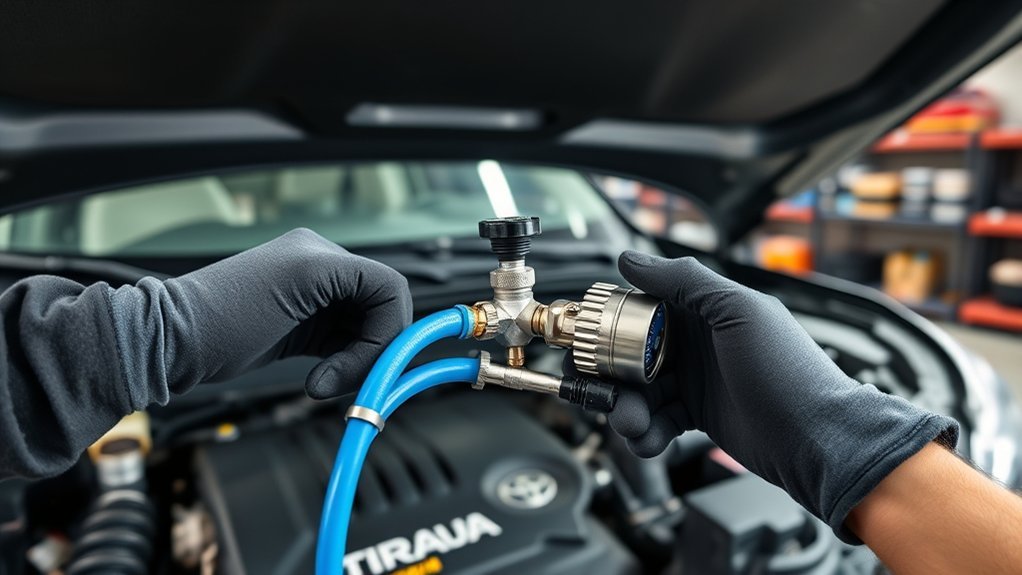
To add freon to your Toyota RAV4, first locate the low-side service port, marked with an “L.” Confirm the A/C is running and set to maximum cool. Connect the R134a refrigerant can to the port and monitor the pressure gauge as you add freon. If you notice a drop in cooling performance or hear hissing noises, you may have a refrigerant leak. Keep exploring to learn more about diagnosing and maintaining your A/C system effectively.
Understanding the A/C System in Your RAV4
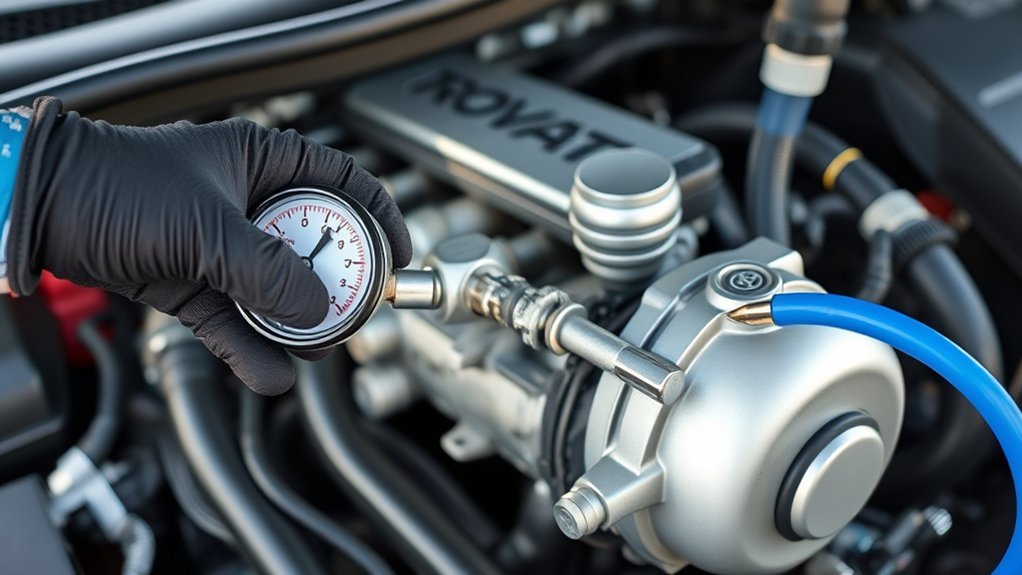
The A/C system in your Toyota RAV4 is a complex but essential component, responsible for keeping the cabin comfortable during hot weather. It consists of key parts like the compressor, evaporator, and refrigerant, specifically R134a for most 2013 models. To guarantee compatibility, always check the engine bay sticker before adding freon. If you experience hot air blowing from the vents, it’s likely a freon leak, and recharging the system may be necessary. Access the low-pressure A/C port with the compressor running to effectively add refrigerant. Regular maintenance, including checking valve cores and proper evacuation before recharging, can greatly enhance your A/C system’s efficiency and longevity, making sure you enjoy a cool and comfortable ride.
Common Signs of A/C System Leaks
If your A/C system isn’t performing as it should, there are several signs that may indicate a refrigerant leak. One major indicator is when your air conditioner blows hot air, which often suggests a loss of freon. You should also check for visible oil stains around A/C components, such as the compressor or evaporator, since oil leaks frequently accompany refrigerant loss. Listen for hissing or bubbling sounds while the A/C runs; these noises can signal escaping gas. Additionally, if you’re recharging the A/C system more than once a season, it likely points to an underlying leak. Finally, a noticeable decrease in cooling performance may mean your A/C system needs urgent attention to resolve a leak.
Identifying the Low-Side Port for Freon Addition
To identify the low-side port for adding Freon in your Toyota RAV4, locate the smaller service port near the compressor, marked with an “L.” You’ll need to remove the cap before connecting the refrigerant can securely to prevent leaks. Ensuring a proper connection is essential for an effective recharge of your A/C system.
Locating Low-Side Port
Locating the low-side port on your Toyota RAV4 is vital for adding freon to the A/C system. Follow these steps to identify it accurately:
- Find the Service Port: Look near the compressor on the larger diameter aluminum tubing of the A/C system.
- Check the Cap Color: The low-pressure port is typically capped with a blue or black plastic cap, distinguishing it from other components.
- Verify Activation: Confirm the engine’s running and A/C is set to maximum cool to activate the compressor before you connect the refrigerant can.
Connecting to the low side is essential for proper pressure measurement. Be cautious—connecting to the high-side port can be dangerous and potentially damage your A/C system.
Port Cap Removal Steps
Once you’ve identified the low-side port on your Toyota RAV4, removing the port cap is your next step for adding freon. The low-pressure port cap is typically marked and located near the compressor in the engine bay. To remove it, simply twist the cap counterclockwise until it comes off. Make sure your engine is running and the A/C system is set to maximum cool to activate the compressor before you proceed. Remember, the low-pressure port is larger than the high-pressure port, allowing for proper attachment of the refrigerant can. Once you’ve finished recharging the system, securely replace the cap on the low-pressure port to maintain the A/C system’s integrity and prevent contamination.
Importance of Proper Connection
Identifying the correct low-side port for adding freon in your Toyota RAV4 is essential for ensuring the refrigerant is introduced safely and effectively. Here’s how to find it:
- Locate the Port: The low-side A/C port is usually situated near the compressor and is marked with a blue cap.
- Check Compatibility: Always refer to the vehicle’s under-hood sticker to confirm the refrigerant type before connecting.
- Activate the Compressor: Turn on the A/C system while adding freon to achieve the correct pressure during the recharge process.
Properly connecting to the low-side port not only guarantees efficiency but also prevents dangerous mishaps associated with incorrect refrigerant handling. Always prioritize safety and accuracy in this critical step.
How to Select the Correct Refrigerant for Your 2010 RAV4
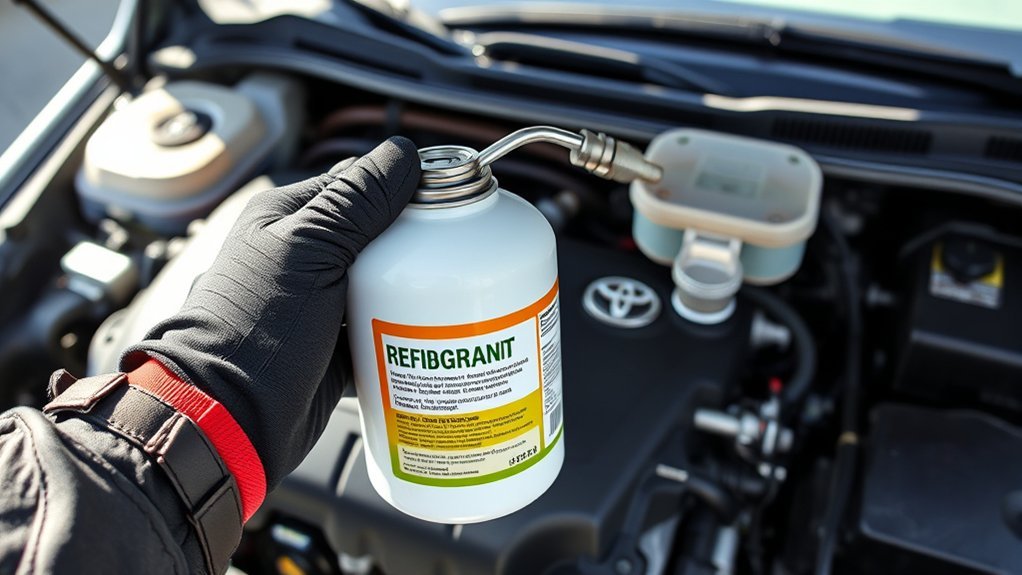
Choosing the right refrigerant for your 2010 Toyota RAV4 is crucial for maintaining peak air conditioning performance. Your RAV4 requires R134a refrigerant, as specified by the engine bay sticker. Mixing R134a with R1234YF is prohibited; these refrigerants have different chemical properties and can cause significant system issues. Before charging, always verify the type of refrigerant to avoid costly mistakes. Aim for a total fill amount between 0.93 and 1.06 pounds for maximum cooling efficiency. Additionally, remember to add approximately four ounces of PAG 46 oil for every pound of refrigerant. Before recharging, check for leaks and guarantee proper evacuation to maintain system efficiency and prevent future complications. Select wisely to keep your RAV4 running smoothly.
Step-by-Step Freon Addition Guide
Before you start adding Freon to your 2010 Toyota RAV4, make certain that you’ve gathered the necessary tools and materials, including an R134a refrigerant can and a pressure gauge. Follow these steps to successfully add refrigerant:
- Locate the low-pressure A/C port, identified by a blue cap near the compressor.
- Confirm the A/C system is running and the compressor is activated before connecting the refrigerant can to the port.
- Monitor the pressure gauge as you add refrigerant, aiming for a fill between 0.93 and 1.06 pounds for peak performance.
After adding the refrigerant, check for leaks around the valve cores, as they can be common sources of A/C issues in your vehicle.
Monitoring System Pressure During Recharge
Once you’ve added Freon to your 2010 Toyota RAV4, monitoring the system pressure during the recharge process is essential for ensuring peak A/C performance. Use a manifold gauge set to accurately assess the low-pressure side reading, which should ideally fall between 30-45 psi. This will help you determine if the system is undercharged or overcharged.
| Pressure Status | Action Needed |
|---|---|
| Below 30 psi | Add more Freon |
| Between 30-45 psi | System is functioning well |
| Above 45 psi | Reduce Freon level |
If the compressor isn’t activating during recharge, further diagnostics may be required. Regularly check the temperature of the Freon lines to avoid potential issues.
Tips for Maintaining Your A/C System
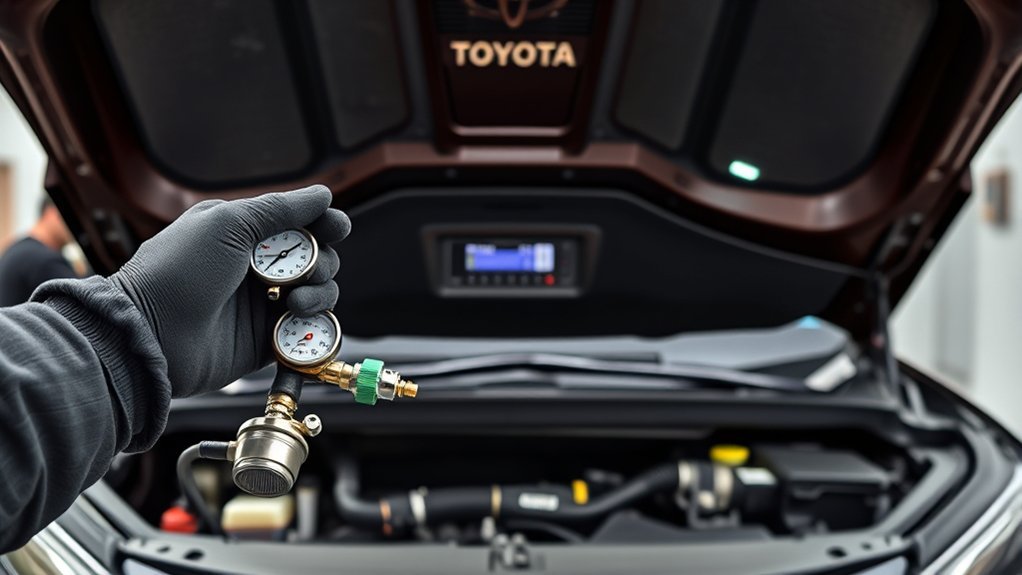
To keep your Toyota RAV4’s A/C system running efficiently, it’s crucial to perform regular maintenance checks. Here are three key tips to guarantee ideal RAV4 AC performance:
Regular maintenance checks are essential for optimal A/C performance in your Toyota RAV4.
- Check Coolant Levels: Regularly inspect and maintain coolant levels to prevent engine overheating, which can hinder your A/C’s cooling ability.
- Clean the Condenser: Make it a habit to clean the condenser to improve airflow and efficiency; dirt can greatly block airflow and reduce cooling performance.
- Replace Interior Fuses: Monitor and replace burnt-out fuses as necessary to avoid electrical issues disrupting your A/C system’s operation.
Utilizing available coupons for parts can also help you save while making sure you’re equipped for these important checks.
Troubleshooting Common A/C Issues
When your Toyota RAV4’s A/C system isn’t cooling as expected, it’s important to identify the root cause quickly. A freon leak is often the first issue to check. Start by inspecting the valve cores, as they’re common leak sources that can drastically affect your A/C’s performance. Verify the compressor is activated when adding freon; this step is essential for maintaining proper pressure during the recharge. Additionally, monitor the low pressure A/C port for any signs of refrigerant loss. Remember, simply topping off freon won’t solve the problem long-term. It’s critical to address underlying issues like leaks or compressor failures to guarantee your A/C operates effectively and efficiently, providing the cool relief you need.
Knowing When to Call in the A/C Pros
Although you may feel confident tackling minor A/C issues yourself, knowing when to call in the pros can save you time and money. Here are three key indicators that it’s time to consult a professional for your Toyota RAV4’s A/C system:
- Hot Air: If your A/C is blowing hot air even after adding freon, there may be a serious compressor or evaporator failure that requires expert diagnosis.
- Frequent Recharges: Regularly needing freon indicates a possible refrigerant leak, which should be addressed by a qualified technician.
- System Empty: If your A/C system has been empty for an extended period, a professional inspection for leaks and a thorough evacuation is crucial before recharging.
Trust the experts to guarantee your system runs efficiently and effectively.
Frequently Asked Questions
What Kind of Freon Does a Toyota RAV4 Take?
Your Toyota RAV4 typically takes R134a Freon, especially if it’s from 2013. Always check the engine bay sticker for specifics, as using the wrong Freon type can lead to costly repairs and system damage.
How Do I Tell if My AC Is Low on Freon?
To tell if your AC’s low on freon, check for hot air blowing, inspect the low-pressure port for emptiness, listen for compressor noises, and monitor for any leakage signs around the system.
How Much Is the AC Charge for a RAV4?
The AC charge for your RAV4 should be between 0.93 and 1.06 pounds of R134a refrigerant. For peak performance, aim for about 1.05 pounds, and don’t forget regular AC maintenance to prevent issues.
How to Charge a Toyota RAV4?
To charge your Toyota RAV4, locate the low-pressure port, connect R134a refrigerant, and monitor the compressor. Remember to include PAG 46 oil for lubrication, ensuring efficient AC maintenance and ideal cooling performance.
Conclusion
To sum up, keeping your RAV4’s A/C running smoothly is like giving it a revitalizing drink on a hot day. By following the steps to add Freon and monitoring system pressure, you can guarantee cool comfort in your vehicle. Remember, if things get complicated, don’t hesitate to call in the experts. They have the tools and know-how to keep your A/C system in peak condition, so you can enjoy those summer drives without a hitch.