
Check tire pressure at least monthly and always when cold, using a snug-fitting calibrated gauge to avoid stressing the stem. Don’t over-tighten or twist the gauge or pump; press straight on and keep interactions brief. Replace damaged stems, use sealed caps to block dirt and moisture, and re-check after repairs or temperature swings. Use adapters for tight valves and consider TPMS or nitrogen to reduce interventions—follow these habits and you’ll see why further guidance helps prevent failures.
Quick How-To: Prevent Valve Stem Damage
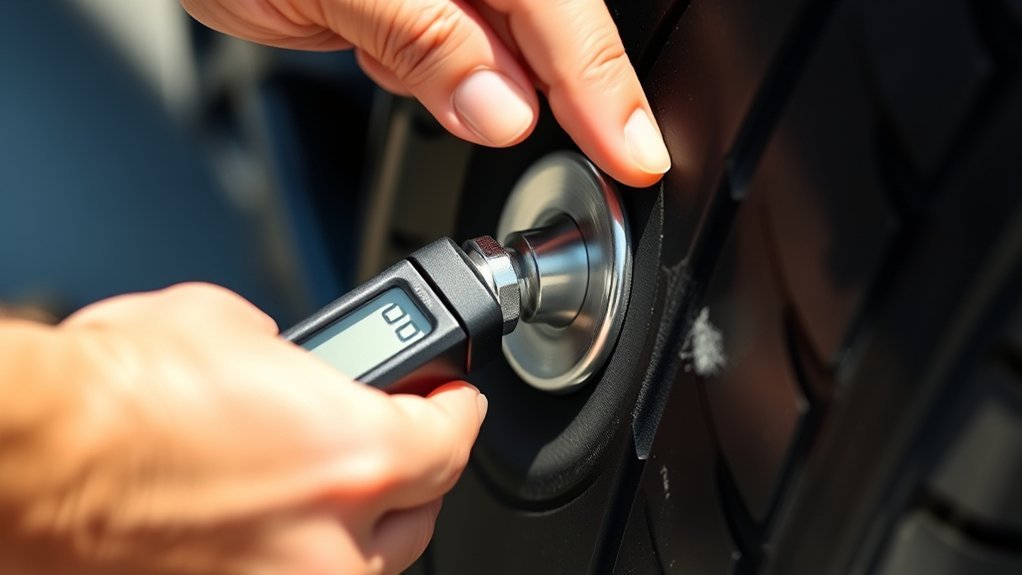
If you want to avoid valve stem damage, check tire pressure regularly with a reliable gauge, replace valve caps after every check, and inspect stems for cracks or degradation during routine maintenance. You’ll keep proper inflation by using a reliable tire pressure gauge and matching the manufacturer’s PSI; that prevents excessive stress on the valve stem and reduces the chance of air leaks. After measuring, always replace valve caps to block dirt and moisture that accelerate deterioration. When inflating, avoid excessive force on the valve stem and core—use steady, controlled airflow and secure fittings to prevent bending or dislodging. During routine tire checks, inspect valve stems for cracking, hardening, or corrosion; replace stems showing age-related wear or nearing 4–6 years. If you swap tires, fit new valve stems to prevent future failures. These actions let you prevent damage, extend component life, and keep mobility uncompromised.
When to Check Tire Pressure (Frequency and Cold Checks)
After following the valve-stem care steps, make checking tire pressure a routine habit: do it at least once a month and any time temperatures swing markedly. You’ll keep control of proper inflation, reduce underinflated tires, and cut the risk of valve stem damage and tire failure. Rely on a gauge; visual inspections aren’t enough. Cold checks give accurate readings—measure after the vehicle’s been parked three hours or driven less than a mile.
- Check monthly: schedule a quick pressure check with a gauge to maintain recommended pressure and freedom from avoidable repairs.
- Cold checks: always measure when tires are cold for consistent, comparable readings across seasons.
- Temperature swings: test pressure more often during rapid seasonal changes to prevent underinflated tires and overpressure events.
- After fixes or impacts: re-check pressure with a gauge following any puncture repair or curb strike to guard against valve stem damage and hidden tire failure.
Be precise, act routinely, and don’t let neglect limit your mobility.
How to Check Tire Pressure Without Stressing the Valve Stem
When you check tire pressure, work deliberately to avoid stressing the valve stem: use a snug-fitting gauge, press the pump nozzle straight on, and only measure when tires are cold so internal pressure and stem strain are minimal. You’ll want a low-tolerance gauge that seals quickly—this prevents rocking the valve stem and gives accurate readings for proper inflation. Pull the valve cap, inspect the valve stem for cracks or corrosion, then set the gauge squarely. When you measure tire pressure, press firmly but briefly; don’t twist or lever the tool. If you use an air pump, align its nozzle axially and hold steady to avoid bending the stem. Make tire pressure checks part of your routine freedom: they’re quick, preventive acts that prevent air leaks and extend tire life. Replace valve caps promptly when missing to keep dirt and moisture out. If you find stem damage, replace the stem or seek professional service to maintain safe, liberated mobility.
Step-by-Step: Adding and Releasing Air Safely
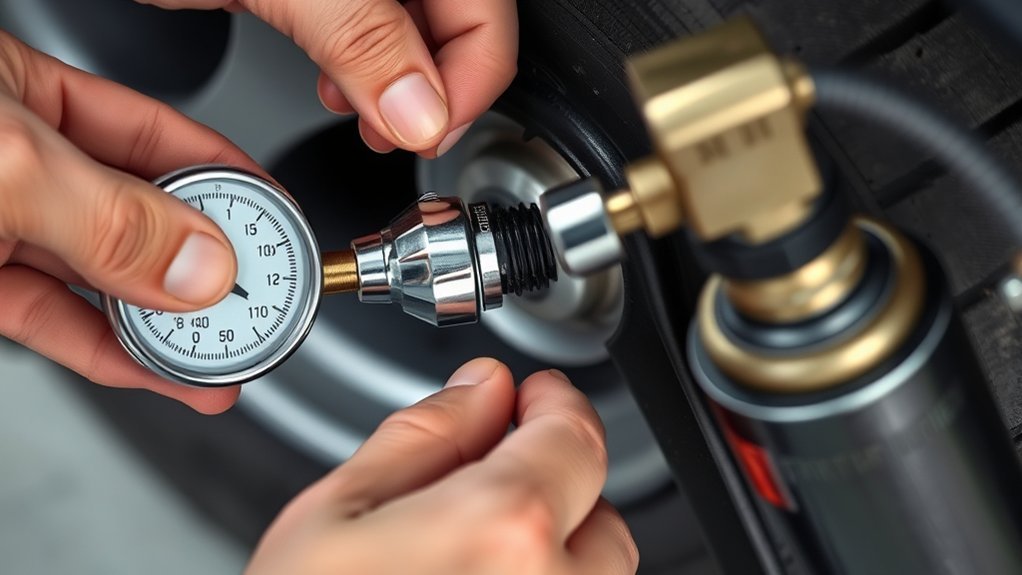
Because accurate pressure starts with cold tires, check PSI before driving and use a reliable gauge to guide every adjustment. You’ll protect the tire valve stem by following a tight, repeatable routine when adding air or releasing air. Use a calibrated pressure gauge and target proper tire pressure for ideal tire pressure and performance.
- Attach pressure gauge, read PSI, and compare to recommended ideal tire pressure.
- When adding air, connect compressor briefly, then re-check gauge; add small bursts to avoid over-inflation and valve stem damage.
- To release air, press the valve core gently with a tool or fingertip, pulse in short intervals while watching the pressure gauge to reach desired PSI.
- After adjusting tire pressure, secure the valve cap, and regularly inspect the valve stem for cracks or corrosion; replace damaged stems promptly.
You’ll maintain mobility and freedom by being precise, minimizing valve stem wear, and keeping tires at proper pressure without unnecessary risk.
Tools That Protect Valve Stems (Gauges, Caps, Adapters)
If you want to protect valve stems, use the right tools: a high-quality pressure gauge for accurate readings, a sealed valve cap to block dirt and moisture, and adapters that let you access tight valve locations without force. You’ll rely on a reliable gauge to confirm tire pressure and avoid underinflation or overinflation that stresses the valve stem. Install durable valve caps to stop debris and moisture from creating air leaks and corroding the valve core. Use adapters when space is limited so you don’t bend or torque the valve stem during inflation. Pair these tools with TPMS monitoring and regular checks to catch pressure drift early and act before damage occurs. Replace cracked or worn valve stems during routine service to maintain sealing integrity. These practical steps let you protect valve stems, preserve tire performance, and keep control over your vehicle’s safety without depending on chance or neglect.
How Proper Tire Inflation Reduces Valve Stem Wear
Although it’s easy to overlook, keeping your tires at the manufacturer’s recommended pressure directly reduces stress on valve stems by minimizing flexing and pressure fluctuations that cause cracking, corrosion, and leaks. You’ll extend stem life when you adopt proper inflation habits: consistent checks, accurate tools, and staying within the recommended range.
Keep tires at recommended pressure to reduce valve stem stress, prevent cracking and leaks, and extend stem life.
- Use a reliable tire pressure gauge each week to confirm manufacturers recommended pressure and correct deviations promptly.
- Correct underinflated tires to avoid excessive flexing that accelerates wear and tear on valve stems and invites air loss.
- Avoid persistent overinflation; high internal pressure raises stem stress and can lead to cracking or premature failure.
- Balance load and maintain ideal performance by keeping all tires equally inflated so valve stems share forces evenly.
You’re not just preserving parts; you’re reclaiming control of safety and mobility. Proper inflation is a simple, technical act that prevents valve stem damage and secures reliable, liberated travel.
Protect Valve Stems in Heat, Cold, and at Altitude

When temperatures swing or you gain elevation, valve stems face stresses that can speed deterioration, so inspect and adjust them more often to prevent leaks and failures. In extreme heat, rubber dries and develops cracks that accelerate air loss; you should include visual checks for splits and guarantee proper inflation to maintain ideal pressure. In winter months, cold contracts air and lowers tire pressure, increasing strain on valve stems—check and top off to restore ideal pressure rather than waiting for a warning light.
At altitude, lower atmospheric pressure alters tire pressure readings; measure and correct tire pressure more frequently when climbing to sustain proper inflation and avoid unexpected air loss. Consistent, regular maintenance keeps valve stems resilient across temperature conditions: clean stems, fit and tighten valve caps to block dirt and moisture, and replace damaged stems promptly. These practical steps give you control over equipment performance and reduce the risk of roadside failures.
Signs a Valve Stem Needs Replacing : and How to Do It
Keeping up with routine checks for temperature and altitude effects also helps you spot valve stem problems early, so you can replace them before they cause a failure. Do a regular inspection: look for cracks, rust, missing caps, and abnormal wear that cut the valve stem lifespan. If tire pressure drops despite proper inflation, suspect a faulty stem.
- Visual signs: cracks, corrosion, missing cap.
- Functional signs: persistent low tire pressure, audible hissing.
- Leak test: apply soap and water; bubbles indicate air leaks.
- Action: remove cap, deflate, replace stem or have a technician install a new stem and retorque the valve core.
You’ll liberate yourself from sudden flats by scheduling replacements every 4–6 years or sooner when signs appear. Keep tools and a quality replacement on hand, maintain proper inflation, and perform soap and water checks during routine maintenance.
How TPMS and Nitrogen Reduce Valve Stem Maintenance
Because your tires are monitored continuously and hold drier gas, combining TPMS with nitrogen inflation cuts down on routine valve stem care and reduces failure risk. You rely on TPMS sensors for regular monitoring of tire pressure, so you’ll detect drops before underinflation causes valve stem damage. Nitrogen inflation reduces moisture, helping prevent corrosion and keeping rubber in valve stems from drying and cracking.
You’ll maintain proper tire pressure with fewer manual checks, which lowers handling-related wear when you inflate the tire. Nitrogen’s stability minimizes pressure fluctuation, reducing cyclical stress that leads to failure and supporting ideal tire performance. This combo frees you from needless chores while protecting components; it’s practical liberation for fleet or personal use.
| Benefit | Effect |
|---|---|
| TPMS sensors | Continuous alerts |
| Nitrogen inflation | Lower moisture |
| Reduced checks | Less handling wear |
| Stable pressure | Less stress |
| Corrosion prevention | Longer stem life |
Fleet Practices: Inspection Schedules, Records, and Training
You should set a regular inspection schedule—at minimum monthly—to catch valve stem wear, leaks, or missing caps before they cause failures. Keep concise records of each check and any repairs so you can spot trends and target recurring issues. Train technicians and drivers on the checklist items and on using TPMS alerts to guarantee consistent, proactive valve stem care.
Regular Inspection Schedules
When you set a regular inspection schedule for valve stems—at least once a month—you catch wear, cracks, or corrosion early and prevent air loss and safety incidents. You’ll standardize checks so valve stem issues don’t undermine tire pressure, safety and performance, or your crew’s independence.
- Verify caps, valve core integrity, and signs of wear and cracks; note moisture contamination risks.
- Measure tire pressure with calibrated gauges; confirm proper tire inflation and record deviations.
- Use a standardized checklist during each inspection to guarantee consistency and thoroughness.
- Keep detailed records of inspections and replacements with dates, findings, and actions to enable accountability.
You’ll maintain liberation through disciplined, technical routines that protect assets and empower personnel.
Training And Recordkeeping
Although routine inspections keep issues from escalating, disciplined training and meticulous recordkeeping make that routine reliable and auditable: train your crew on correct pressure-check techniques, valve stem inspection criteria (cracks, corrosion, leaks), and proper gauge use, and require them to log readings, findings, and corrective actions in a standardized format so you can spot trends, verify compliance, and trigger maintenance or TPMS alerts before failures occur. You’ll set a monthly inspection schedule for tire pressure and valve stems, teach technicians to use a reliable gauge and follow manufacturer recommendations, and document every maintenance action. Records help you analyze trends, allocate repairs, and prove due diligence. Pair hands-on training with TPMS data integration to close the feedback loop and free your operation from preventable failures.
Frequently Asked Questions
How to Damage a Tire Valve Stem?
You can damage a valve stem by using excessive force during inflation, overtightening cores, ignoring valve stem materials and types, using poor inflation techniques, skipping maintenance routines, causing uneven tire pressure, provoking tire wear, and neglecting pressure monitoring.
What Causes a Valve Stem to Go Bad?
Cracked, corroded, or failed; valve stem materials break down from wear factors, environmental influences and aging effects. You’ll prevent leakage causes with maintenance tips, proper installation practices, tire pressure monitoring techniques and seasonal checks for liberation.
What Is the Life Expectancy of a Valve Stem?
You can expect a valve stem lifespan around 4–6 years, though valve stem types and valve stem materials, usage, environment, valve stem maintenance, valve stem replacement timing, valve stem installation, valve stem compatibility, specifications, leaks, and tire pressure monitoring matter.
What Is the Maximum Inflation Pressure for a Standard Snap-In Valve Stem?
Like a compass guiding sailors, you’ll find standard snap-in valve stems rated about 60–65 psi; follow maximum inflation guidelines, consider snap in valve types, valve stem materials, pressure monitoring tips, tire safety standards, maintenance, replacement, inflation effects.
Conclusion
You’ve got the power to stop valve stem damage with steady, simple habits: check pressure regularly (especially in cold), use proper gauges and caps, add or release air slowly, and replace worn stems. Treat valve maintenance like routine CPR for tires — a little attention keeps them breathing easy. Stick to inspection schedules, document findings, and train your team so leaks, cracks, or VPMS faults don’t turn into costly downtime.







Leave a Reply