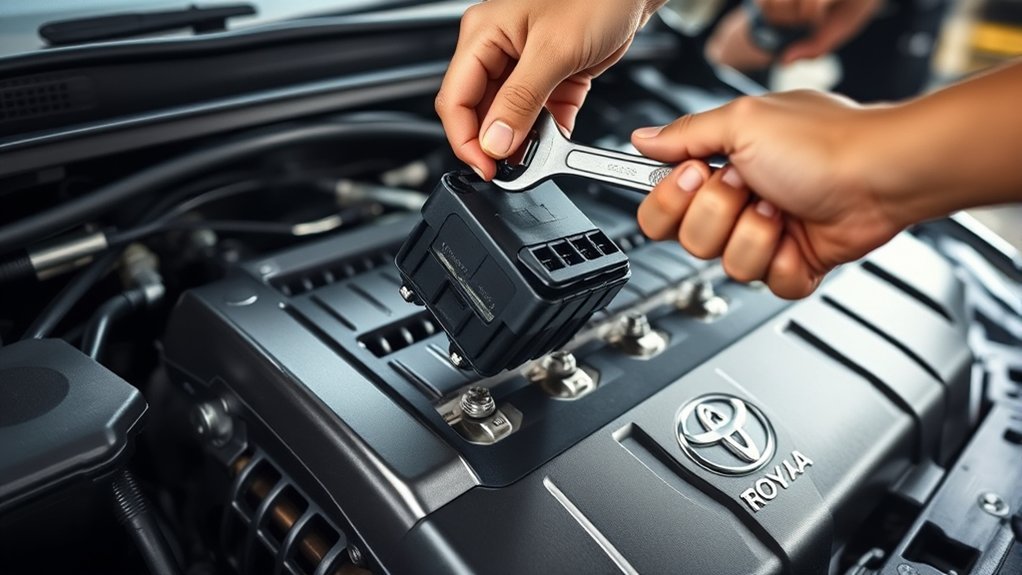
On most Toyota RAV4 four-cylinder engines, you change an ignition coil by removing the engine cover, unplugging the coil connector, taking out one 10 mm bolt and pulling the coil straight up out of the spark plug well. Installation is the same steps in reverse. The job takes little time, but you should confirm that the coil is really the problem first, because a misfire can also come from a worn spark plug.
Which RAV4 Engines This Covers
The RAV4 has used coil-on-plug ignition, with one coil sitting directly on each spark plug, across recent generations. The layout is similar, but details like the engine cover, connector clips and bolt position vary.
| Model years | Engine | What to know |
|---|---|---|
| 2006-2012 | 2.4L four-cylinder (2AZ-FE) or 3.5L V6 (2GR-FE) | Four coils on the four-cylinder. The V6 has six coils split across two banks, and the rear bank is harder to reach. |
| 2013-2018 | 2.5L four-cylinder (2AR-FE) | Four coils under a plastic engine cover. Coil bolts are 10 mm according to DIY repair guides for this engine. |
| 2019-2025 | 2.5L four-cylinder, including the hybrid’s 2.5L | Same general coil-on-plug design, but the cover and hardware differ. Check the service information for your exact engine. |
The 2019 and later engines and the V6 have different hardware and access, so treat the steps below as a general outline and follow the factory procedure for your year. Hybrid models have a high-voltage system; the ignition coils are on the gasoline engine, but read the hybrid safety notes in your manual before working under the hood.
Signs a Coil Is Failing
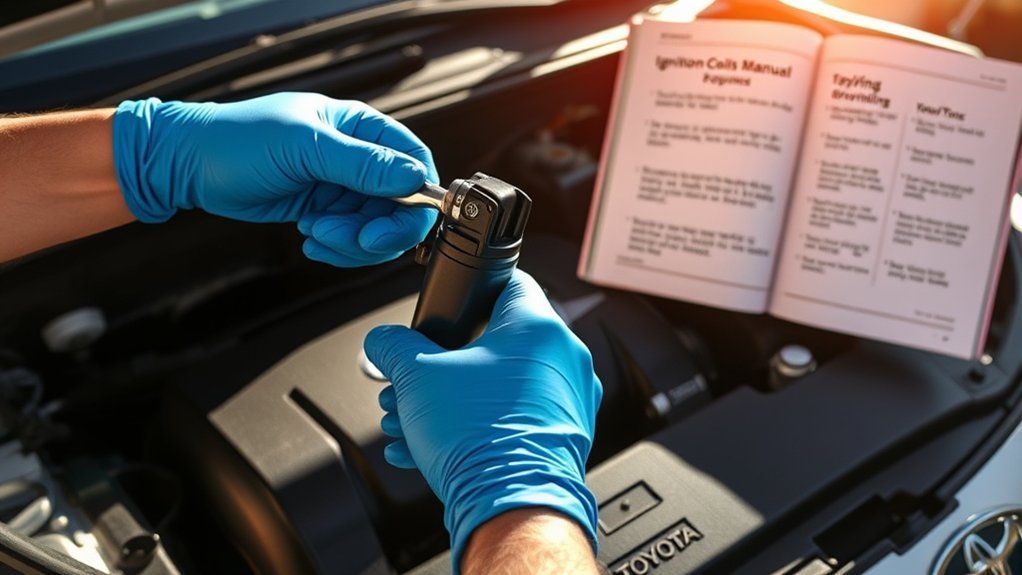
- Rough idle or shaking at a stop, often worse when the engine is cold or under load.
- Hesitation or jerking when you accelerate.
- A flashing check engine light. A flashing light means an active misfire that can damage the catalytic converter, so reduce your speed and get it checked soon.
- Misfire codes P0300 to P0304. P0300 is a random misfire, and P0301 to P0304 point to cylinders 1 to 4. A code for a single cylinder is a good indicator of the coil or plug on that cylinder. Cylinder numbering can differ by engine, so check your manual.
- Poor fuel economy and a fuel smell from unburned fuel.
Confirm the Diagnosis First
- Read the codes with an OBD-II scanner and note which cylinder is reported.
- Pull the coil from that cylinder and compare it with its neighbour. Look for cracks in the boot, oil inside the spark plug well, or burn marks on the connector.
- Swap the suspect coil with a coil from another cylinder, clear the code and drive. If the misfire code follows the coil to the new cylinder, the coil is bad. If the code stays on the original cylinder, inspect or replace that cylinder’s spark plug.
- If the plugs are old, replace them at the same time. Check your owner’s manual for the plug interval for your engine, and use the plug type that Toyota specifies, which for these engines is an iridium plug.
Tools and Parts
- 10 mm socket, a short extension and a ratchet
- Torque wrench that reads in low values
- Small flat screwdriver or trim tool to release connector clips
- Dielectric grease (a small amount, see below)
- New ignition coil of the correct part for your engine and year
- Compressed air or a clean rag to remove debris before pulling a coil
Step-by-Step: Replace the Coil
- Turn the engine off and let it cool. Disconnect the battery negative terminal if your manual recommends it.
- Remove the plastic engine cover. On many versions it lifts off or is held with a few fasteners.
- Blow loose dirt away from around the coil so nothing falls into the spark plug well.
- Squeeze or press the tab on the electrical connector and pull it off the coil. Do not pull on the wires.
- Remove the 10 mm bolt that holds the coil down.
- Pull the coil straight up with a slight twist. If it sticks, twist gently rather than prying against the valve cover.
- Look into the well. Oil or water there points to a leaking valve cover tube seal or gasket, which should be repaired.
- Put a thin film of dielectric grease inside the rubber boot of the new coil, not on the electrical terminals, unless Toyota’s procedure says otherwise.
- Push the new coil down until it seats on the plug. You should feel it press on.
- Install the bolt by hand first to avoid cross-threading, then tighten to the torque in the factory service information. Do not overtighten, because the coil bolt is small and the coil body is plastic.
- Reconnect the plug until it clicks, refit the engine cover, reconnect the battery if you disconnected it, and start the engine.
Note: This guide does not quote a torque figure for the coil bolt because we could not confirm one for every engine and year. Look it up in the factory service manual for your model.
After the Install
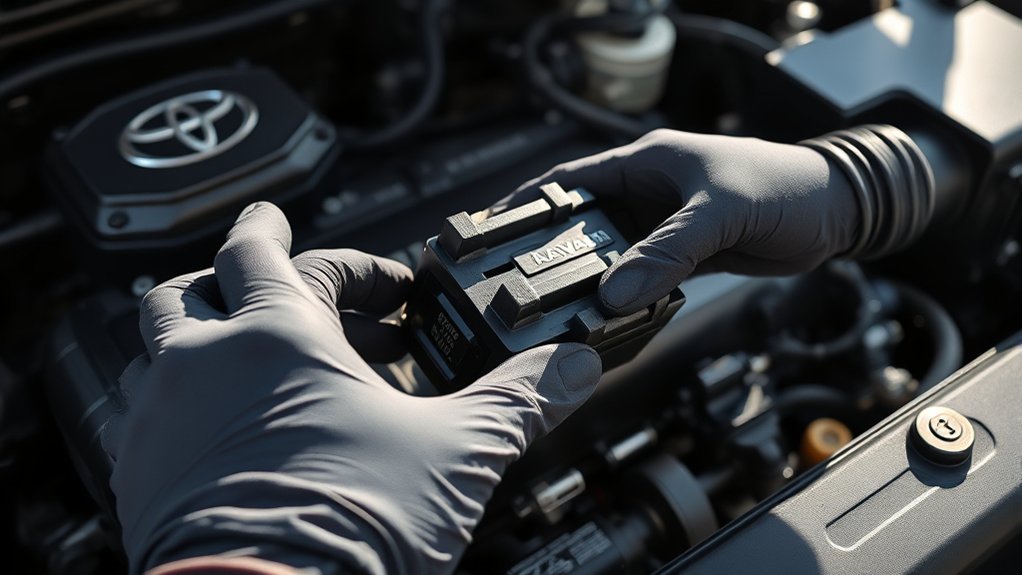
- Clear the codes with your scanner, then let the engine idle and listen for smooth running.
- Take a short drive with some acceleration and check that the light stays off.
- If the misfire returns on the same cylinder, recheck the plug and the connector, and check that the coil is fully seated.
- If the code moves to a different cylinder, that coil may also be weak. Some owners replace all coils on a high-mileage engine so they do not face the same job again.
Troubleshooting Common Problems
- The coil will not come out: The rubber boot can grip the plug. Twist it back and forth while pulling up.
- The bolt head is rounded: Use a six-point 10 mm socket and keep it square to the bolt.
- The connector is brittle: Heat makes plastic fragile on older engines. Replace a cracked connector rather than tape it.
- Oil in the plug well: Fix the leak, and replace the coil, because oil can damage the boot and cause another misfire.
When to Use a Shop
See a Toyota dealer or shop if the check engine light is flashing and the misfire does not clear after a plug or coil swap, if the V6 rear bank is not accessible to you, or if you find oil contamination you cannot trace. If the vehicle is under warranty, check the coverage terms before you start. The terms depend on model year and mileage.
Frequently Asked Questions
Can I replace just one coil?
Yes. If only one cylinder is misfiring, replace that coil and check its spark plug. Replacing all of them is a choice some owners make at high mileage, not a requirement.
Do I need dielectric grease?
A thin coating inside the coil boot helps the boot slide on and seal against moisture. Keep it off the electrical contacts of the connector unless the manufacturer says to use it there.
How much does the job cost?
Coil prices vary by engine, brand, and whether you buy original or aftermarket parts, so check current prices from a parts supplier. Shop labor varies by region.
Can I drive with a bad coil?
A mild misfire may let you drive a short distance, but repeated misfires can damage the catalytic converter. If the light is flashing, reduce speed and avoid hard acceleration until it is repaired.
Why does the misfire move when I swap coils?
That shows the coil itself is the fault. The misfire follows the faulty coil to its new cylinder.