
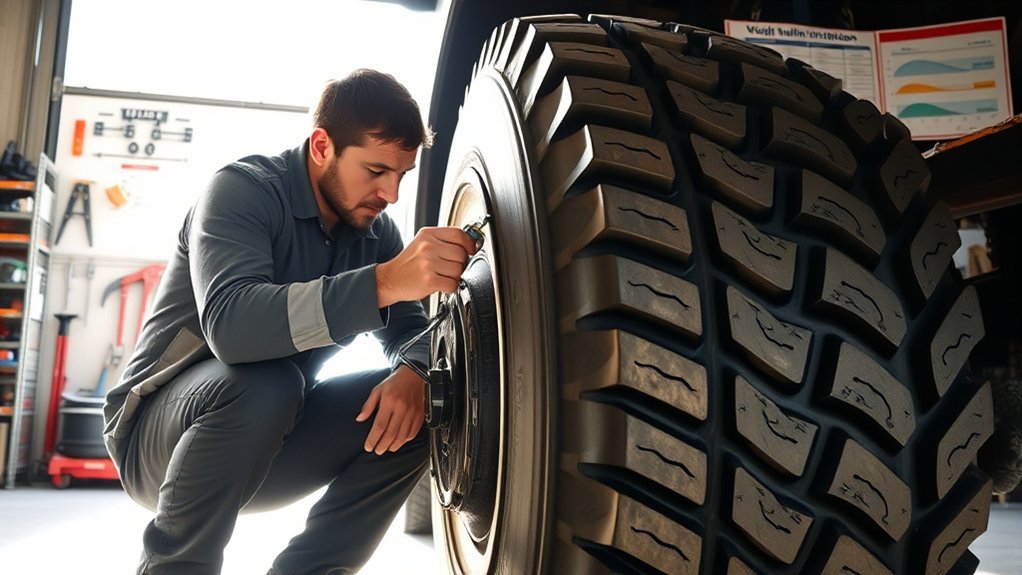
When you carry heavy cargo or tow a trailer, every tire must stay within its rated load and pressure limits. Start with the Tire and Loading Information placard (usually on the driver’s door jamb) and your owner’s manual. Many vehicles list a higher pressure for a full load or towing—use it when you’re loaded. For definitions like what counts as “cold,” plus best practices for checking pressure before heavy loads and towing, see the USTMA Tire Care and Safety Guide (PDF).
Key takeaways
- Use the door-placard cold PSI for your tow vehicle (or the placard’s loaded/towing PSI, if listed).
- For best accuracy, weigh the rig (ideally each axle end) and use your tire brand’s load/inflation chart.
- Check pressure cold (parked 3+ hours or driven under 1 mile). Don’t let air out of hot tires.
- Recheck at safe stops. TPMS helps, but still use a good gauge.
Quick answer: choosing PSI for towing heavy loads
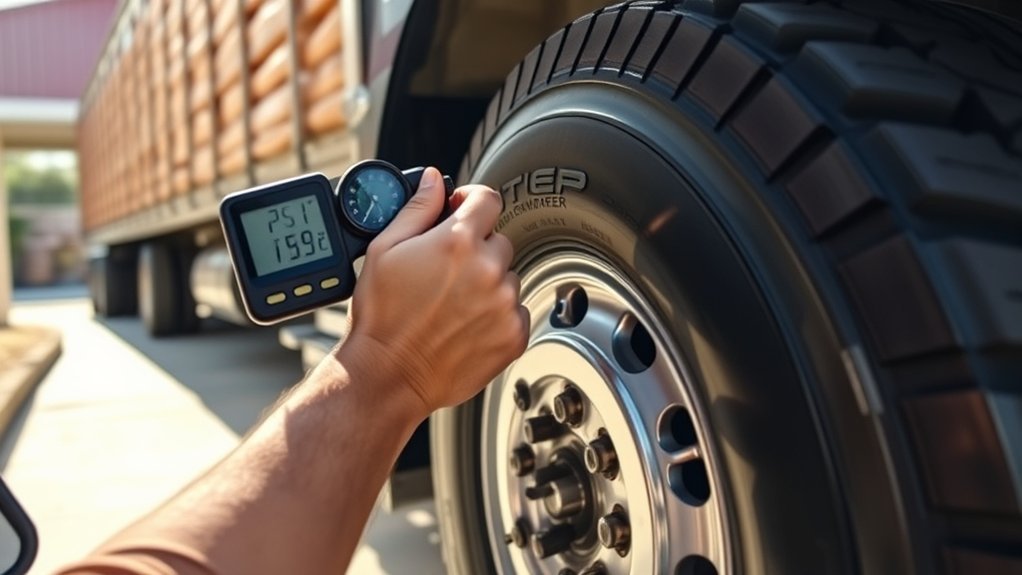
There isn’t one “right PSI” for every truck, SUV, and trailer. Use the pressure on your vehicle placard as your baseline. If the placard or manual shows a separate pressure for loaded driving or towing, use it when you’re hitched and loaded.
If you want PSI matched to real weights, weigh the vehicle and axles, then use your tire brand’s load/inflation chart to find the minimum cold PSI that supports the heaviest loaded wheel position. Stay within the tire and wheel limits.
Weigh the vehicle and axles
Total weight matters, but axle weights matter more. Your rear axle can gain a lot of load from cargo and trailer tongue weight. A public scale can give you the numbers you need to set pressure and confirm you’re within GVWR/GAWR.
[Products Worth Considering]

On-the-ground tandem axle group weight is displayed in pounds on an easy-to-read 3 ½" gauge

Multi-Purpose Hanging Scale – 110 lbs Capacity: Perfect for fishing, hunting, camping, archery, and travel, the H-110 digital hanging scale weighs up to 110 lbs (50 kg) with 0.05 lb precision. Ideal for luggage, game, gear, and more.

High Capacity & Precision Accuracy – Supports up to 7,000 lbs total (1,750 lbs per pad) with 0.5% accuracy to deliver precise corner weights, cross weights, bite, and total weight for accurate chassis setup.
Measure gross vehicle weight
Weigh the vehicle as you will actually drive it: passengers, fuel, cargo, and trailer attached. Record the total and each axle. If you’re over any rating, reduce load before you change PSI.
Check individual axle loads
For the most accurate result, weigh each axle end (left and right). Use the heavier end to pick the cold PSI from the load/inflation table. Then set both tires on the same axle to the same PSI for stable handling.
Use the placard, load ratings, and charts
The placard lists the recommended cold pressure for the original tire size. The “max PSI” molded on the tire sidewall is the highest cold PSI allowed for that tire. It is not a daily target for every vehicle. Use the placard first, and use a tire-maker chart when you need to match PSI to measured weight.
[Products Worth Considering]

Enhanced Visibility in Low Light: Features a green backlit LCD screen and integrated flashlight, allowing for clear reading of tire pressure even in dark or dimly light conditions.

1. LONG ZINC ALLOY DUAL HEAD DESIGN : Straight foot air chuck are deisghed for inner wheels or difficult reached valve as well as the 30°reverse chuck are for outer wheels.A good choice for testing your tire pressure also a great father's day gift

【EXTENDED REACH DUAL HEAD】LUMITECO 12" pencil-style pressure gauge is designed with the Integrated Straight foot air chuck and 30°reverse chuck. Ideal for dual wheels and other difficult reached valves. Your good choice for checking tire pressure as well as a great father's day gift.
Step-by-step: set tire pressure before towing
- Check cold PSI with a quality gauge. “Cold” means parked for at least 3 hours or driven less than 1 mile at moderate speed.
- Set a target PSI from the placard/owner’s manual (or from a load/inflation chart based on your weights).
- Inflate front and rear to the correct values. Many vehicles use different pressures front vs rear.
- Set trailer tires to the trailer placard (if present) or the tire maker guidance for your exact ST/LT tire.
- Recheck early in the trip at a safe stop. Don’t bleed air out of tires that are hot from driving.
| Action | What to set | Note |
|---|---|---|
| Read placards | Cold PSI values | Tow vehicle and trailer may differ |
| Weigh if needed | Axle (or axle-end) weights | Best for near-max loads |
| Inflate | Placard/Chart PSI | Stay within tire & wheel limits |
| Recheck | At safe stops | Use TPMS + a gauge |
[Products Worth Considering]

PROCESS LEVEL ACCURACY: Each ETENWOLF’s digital tire pressure gauge is calibrated manually to ANSI B40.7 Grade 2A(plus-minus 1 PSI).Presta valve adapter not included, if used for bicycles, it must be purchased separately

The WYNNsky tire gauge is designed specifically to provide precision measurements for low pressure readings that higher PSI gauges are unable to provide
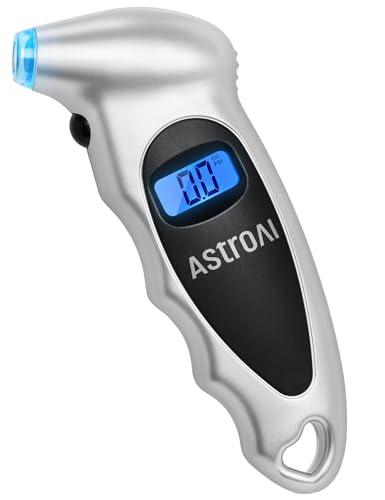
EXPERT-GRADE CALIBRATION: Each AstroAI Tire Pressure Gauge is calibrated with professional-grade tools, ensuring quick and accurate measurement results within plus-minus 1PSI. Stay prepared for any roadside emergency and travel with peace of mind.
How temperature and long trips affect tire PSI
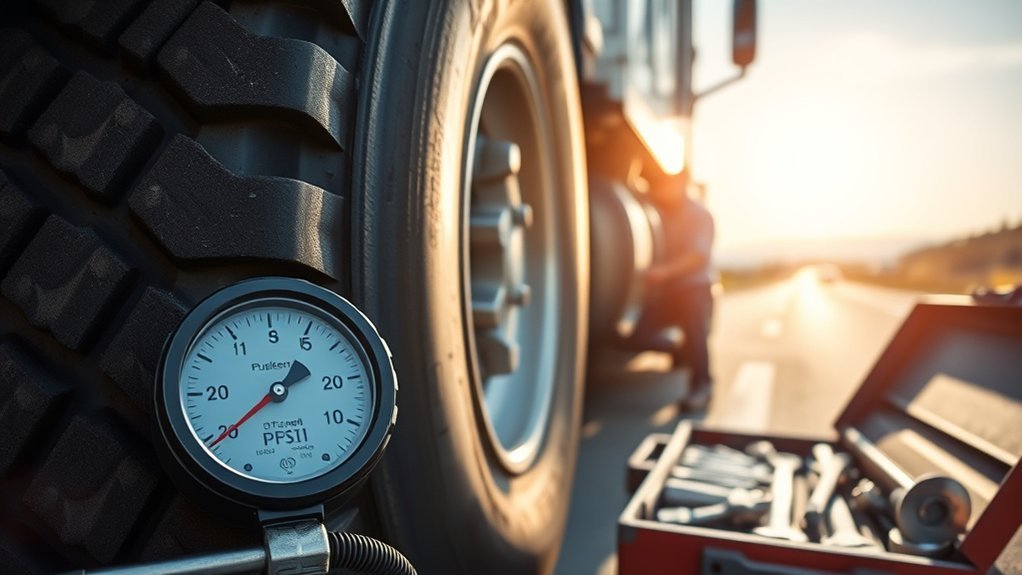
Pressure changes with temperature and time. Many passenger and light-truck tires can lose about 1–2 psi per month. Pressure can also drop about 1–2 psi for every 10°F drop in outside temperature. Set PSI cold, and expect pressure to rise during highway driving. That rise is normal.
Monitor tire PSI while towing
Check inflation at least monthly and before long trips, heavy loads, and towing. TPMS can warn you, but it may not alert until a tire is well below the recommended cold pressure. If you get an alert, stop when safe and confirm with a gauge.
Towing-specific safety checklist
- Cold tire pressures set to tow-vehicle placard (or its loaded/towing values, if listed)
- Trailer tires set to trailer placard or tire maker guidance
- Lug nuts torqued, hitch and safety chains secured, lights and brakes working
- Load balanced and within ratings (vehicle, hitch, and tires)
For a quick pre-trip checklist and a reminder that trailer weight can transfer to the tow vehicle, see the NHTSA Tire Safety checklist (PDF).
Frequently asked questions
Should I increase tire pressure for a heavy load?
Only if your placard/owner’s manual lists a higher “loaded” or towing pressure, or if a tire-maker load table calls for it based on your measured weights. Don’t guess.
Should I use the max PSI on the sidewall when towing?
Not by default. The sidewall number is the highest cold PSI allowed for that tire. Your tow vehicle may require less (placard). Some trailer tires are rated to carry their maximum load at the sidewall-listed cold PSI—follow the trailer placard and the tire maker guidance.
When should I check tire pressure “cold”?
Before you drive, or after the vehicle has been parked for at least 3 hours (or driven less than 1 mile at moderate speed).
What PSI for cargo trailer tires?
Use the trailer placard if it lists a cold PSI for your tire size. If it doesn’t, use the tire manufacturer’s recommendation for your exact ST/LT tire and your load.
Conclusion
Use the placard as your starting point. If you’re close to max weights or you changed tires, weigh the rig and use a load/inflation chart. Check PSI cold, don’t bleed hot tires, and act fast on any warning signs.







Leave a Reply