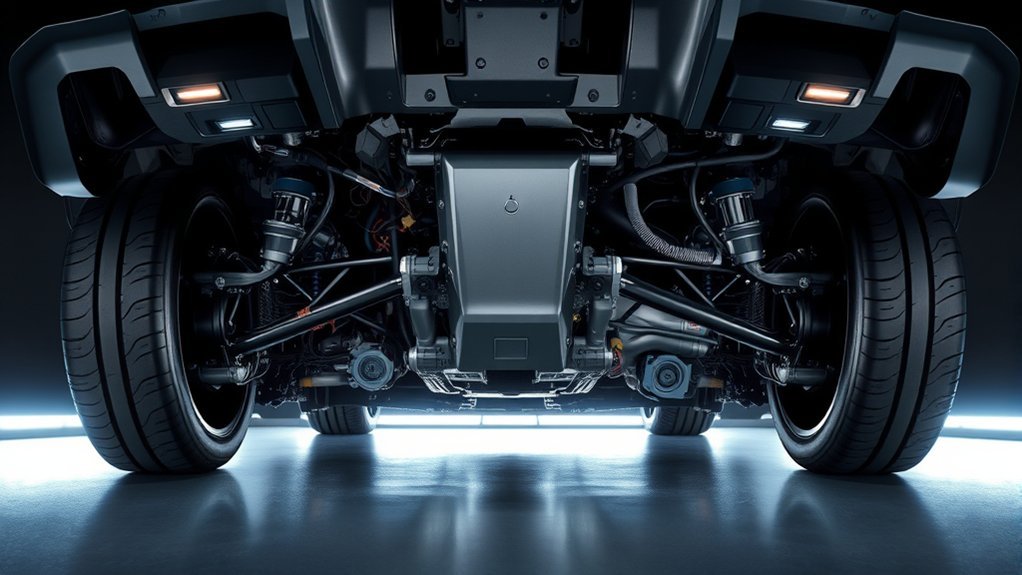
Traction control and stability control serve distinct yet complementary purposes. Traction control prevents wheel spin during acceleration, helping you maintain grip on slippery surfaces. Stability control, on the other hand, monitors vehicle dynamics to prevent skidding during sudden maneuvers, applying brakes to individual wheels as needed. Both systems enhance safety by improving vehicle control, especially in adverse conditions. To understand when to activate or deactivate these systems for peak performance, check out the following sections.
Understanding Traction Control vs. Stability Control: Key Differences

When it comes to vehicle safety systems, understanding the key differences between traction control and stability control is vital for any driver. Traction control primarily focuses on preventing wheel spin during acceleration, particularly in slippery conditions. It utilizes a traction control system that reduces engine power or applies brakes to spinning wheels, ensuring ideal traction. On the other hand, Electronic Stability Control (ESC) monitors overall vehicle dynamics. It activates during sudden maneuvers or when the system detects a loss of control, applying brakes to individual wheels to maintain stability. Both systems rely on wheel speed sensors and the Anti-lock Braking System (ABS) to function effectively. While traction control is vital for normal driving, especially on slick surfaces, stability control enhances safety during unpredictable driving scenarios. By grasping these differences, you can make informed decisions, maximizing your vehicle’s safety features and performance in varying conditions.
How Traction Control Keeps You Safe
Traction control greatly enhances your safety by preventing wheel spin during acceleration on slippery surfaces. By monitoring wheel speed and adjusting engine power or applying brakes, it guarantees ideal grip, especially in adverse weather conditions. This system allows for smoother acceleration, which helps you maintain better control and reduces the risk of skidding.
Enhanced Traction on Slippery Surfaces
As roads become slick with rain, snow, or gravel, maintaining control of your vehicle is essential for safety. Traction control activates when wheelspin is detected, utilizing wheel-speed sensors to monitor discrepancies in wheel speeds. By reducing engine power or applying brakes, the system guarantees optimal traction on slippery surfaces, preventing skidding. This safety system works in harmony with anti-lock braking, allowing for controlled wheelspin while enhancing overall vehicle stability. Since 2012, traction control has become standard in new cars sold in the U.S., reflecting its critical role in driver safety. With traction control, you can navigate challenging conditions confidently, knowing your vehicle adapts to maintain grip and control when it matters most.
Prevents Wheel Spin During Acceleration
Maintaining grip during acceleration is essential for safe vehicle operation, especially on slippery surfaces. Traction control serves this purpose effectively by monitoring each wheel’s speed with advanced sensors. When it detects wheel spin, it quickly applies brakes or reduces engine power to the spinning wheel, ensuring ideal grip where it’s needed most. This safety feature automatically engages during acceleration, providing immediate corrective action to prevent loss of control. Particularly on wet roads, snow, or gravel, traction control redistributes engine power to wheels with better traction, enhancing your driving stability. While it’s a standard feature in new cars since 2012, you can deactivate traction control for specific scenarios, allowing controlled wheel spin when necessary.
How Stability Control Works and Its Benefits
While maneuvering through challenging conditions, understanding how Stability Control, or Electronic Stability Control (ESC), functions can greatly enhance your driving experience. This advanced stability control system actively monitors steering input, wheel speed, and vehicle direction to maintain grip and guarantee proper vehicle trajectory. When it detects instability—like during sharp turns or evasive maneuvers—it automatically applies brake pressure to individual wheels, helping to prevent skidding. In adverse weather conditions, ESC markedly enhances overall safety by reducing the risk of accidents due to loss of control. Additionally, it may reduce engine power when necessary, guiding the vehicle back on its intended path. This proactive approach not only helps you stay in control but also boosts driver confidence, making it easier to tackle unpredictable driving situations. With the mandatory inclusion of ESC in new passenger vehicles since 2012, its role in modern automotive safety is undeniable.
Best Practices for Activating or Deactivating Traction Control
Understanding how to activate or deactivate traction control can greatly impact your driving experience, particularly in varying conditions. Always keep traction control activated during normal driving; this enhances safety and maintains peak vehicle stability. If you find yourself stuck in mud, sand, or snow, deactivate traction control to allow necessary wheel spin, helping you regain grip. Most vehicles feature a dedicated button for this purpose, often labeled “TC” or with a burnout icon, enabling quick access when needed.
However, exercise caution when turning off traction control during performance driving. Doing so can lead to loss of control if not managed in a controlled environment with proper training. Always consult your vehicle’s owner’s manual for specific guidelines regarding the activation or deactivation of traction control, as implementations can vary by model. Prioritize safety and make sure you adapt to changing road conditions effectively.
Optimal Scenarios for Engaging or Disengaging Stability Control

When you’re steering through off-road conditions, it’s often beneficial to disengage stability control to allow for more wheel slip and better traction on uneven surfaces. In performance driving scenarios, you might choose to turn off stability control to execute advanced maneuvers like drifting, where maximum vehicle responsiveness is vital. However, it’s important to understand the trade-offs, as this can greatly impact vehicle control.
Off-Road Driving Conditions
Off-road driving conditions often require a strategic approach to traction and stability control systems to optimize vehicle performance. In situations where wheel spin is necessary, like traversing loose sand or mud, you might consider disabling traction control without compromising your grip when accelerating. However, maintaining stability control can be essential for vehicle control during sudden maneuvers on uneven terrain, particularly in taller vehicles. When engaging specific terrain modes, sensors detect the conditions and adjust stability control accordingly. In moderate off-road scenarios, keep traction control on to prevent losing traction, but in extreme cases, disabling it can help regain grip. Always consult your vehicle’s manual to understand the best practices for effectively managing these systems while off-roading.
Performance Driving Scenarios
In performance driving scenarios, strategically managing stability control can greatly enhance your vehicle’s handling and responsiveness. Engaging stability control is essential on slippery surfaces or during emergency maneuvers, as it helps maintain vehicle control and corrects oversteer or understeer. However, turning off stability control allows for controlled drifting during high-speed cornering, giving you more freedom to maneuver. On racetracks, disabling traction control can enable controlled wheel spin, enhancing acceleration out of corners. When tackling loose surfaces like gravel or dirt, turning off both traction and stability control can optimize engine power distribution and improve handling characteristics. In autocross events, temporarily disabling stability control allows you to explore your vehicle’s limits without electronic interference.
Real-Life Scenarios: When to Use Each System?
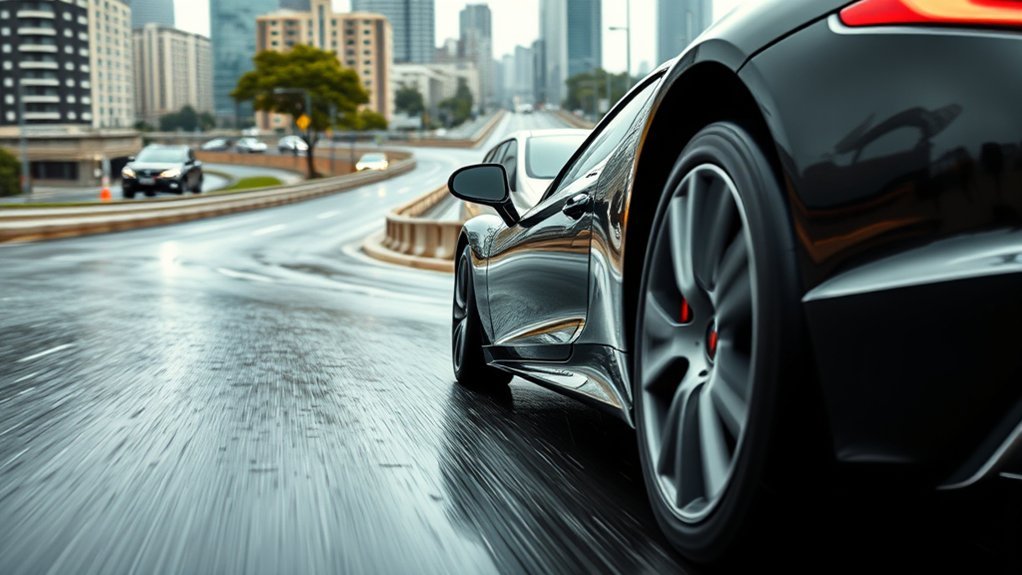
How can you determine the right system to use in varying driving conditions? Understanding the scenarios can help you optimize your vehicle’s performance. Here are key situations to evaluate:
- Traction Control: Engage this on rainy or snowy roads to prevent wheel spin, ensuring better grip on slippery surfaces. It’s also useful during gradual acceleration on loose dirt or gravel.
- Stability Control: Activate this when maneuvering high-speed corners or during emergency evasive maneuvers to prevent skidding and maintain your vehicle’s intended path.
- Switching Off Traction Control: If you find yourself stuck in mud or sand, disabling traction control allows for wheel spin, helping to free your vehicle.
Frequently Asked Questions
Is Stability Control the Same as Traction Control?
No, stability control isn’t the same as traction control. Stability control enhances vehicle handling during turns, while traction control improves performance driving by preventing wheel spin. Both systems are crucial safety features, especially under challenging weather conditions.
Why Do People Not Like Traction Control?
Many drivers dislike traction control due to its drawbacks in performance driving, off-road challenges, and technology limitations. User experiences reveal frustrations with system reliability, vehicle handling, and safety concerns under various weather conditions, impacting their preferences.
Can I Drive My Car if It Says Service Stabilitrak and Traction Control?
You shouldn’t drive your car with “Service Stabilitrak” and “Traction Control” warnings illuminated. Ignoring these warning lights can jeopardize your vehicle’s safety and performance, especially in adverse road conditions, leading to costly repairs and traction issues.
When Should I Not Use Traction Control?
You shouldn’t use traction control in off-road conditions like mud or snow, where wheelspin can enhance tire grip. It’s also best off during performance driving, allowing better engine power and control over vehicle dynamics.
Conclusion
In the intricate dance of driving, traction control and stability control serve as your partners, each guiding you through different challenges on the road. While traction control prevents wheel spin during acceleration, stability control helps maintain your vehicle’s path during sudden maneuvers. Knowing when to engage or disengage these systems can make the difference between a smooth ride and a precarious situation. By understanding their unique roles, you can navigate confidently, ensuring safety and performance in every drive.