
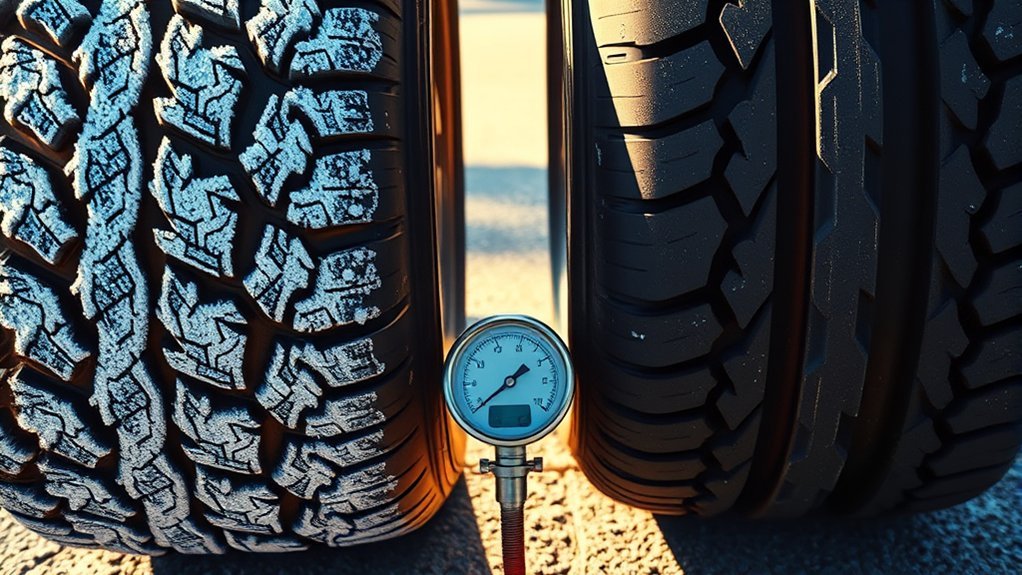
You should measure tire pressure cold, after at least three hours parked or less than a mile driven, because heat from driving makes the air inside expand and throws off your reading. Cold pressure gives you a repeatable baseline for handling, wear, and fuel efficiency. For most passenger tires, expect about 1 to 2 PSI of change for every 10°F shift in temperature (closer to 2 PSI for heavy-duty tires). After driving, readings often run 4 to 6 PSI higher than cold. Always follow the manufacturer’s cold-pressure specs on your door placard or owner’s manual. Below you’ll find practical checks and seasonal adjustment guidance.
Quick Takeaways: Cold Tire Pressure Rules
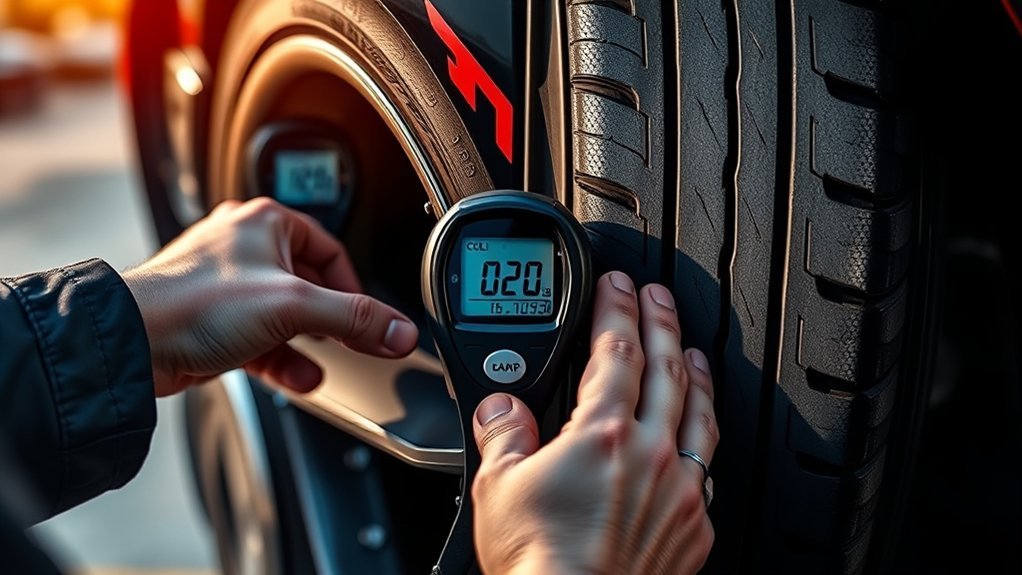
- Check cold: Wait at least three hours after parking (or drive less than one mile) before measuring. This is the baseline manufacturers use for safety and performance.
- Use the placard: Find the recommended PSI on your driver’s door jamb or in the owner’s manual, not on the tire sidewall.
- Warm readings mislead: Tire pressure rises 2 to 4 PSI after even a short drive, making warm measurements unreliable.
- Watch seasonal shifts: Cold weather drops pressure about 1 to 2 PSI for every 10°F decline. Check more often in fall and winter.
- Avoid extremes: Under-inflation reduces grip and speeds up wear. Over-inflation hurts ride quality and traction.
- Make it routine: Use a calibrated gauge, record your readings, and inflate to the manufacturer’s cold spec at least once a month.
What “Cold” Tire Pressure Means and Why It Matters
“Cold” tire pressure is simply the reading you get when a tire has sat idle for at least three hours (or been driven less than about one mile). At that point, the tire temperature matches the surrounding air, so the measurement isn’t inflated by heat from driving.
This cold reading is the baseline every vehicle manufacturer uses. The recommended PSI on your door jamb or in your owner’s manual assumes you’re checking cold. Measure before you drive, compare to that number, and adjust as needed.
Why does it matter so much? Under-inflation hurts handling, causes uneven tread wear, and lowers fuel economy. Over-inflation shrinks the contact patch, reducing traction and making the ride harsh. On top of that, temperature swings shift pressure constantly. Checking cold lets you catch those changes before they become a safety issue.
By treating cold pressure as your controlled variable, you get predictable vehicle behavior and avoid making adjustments based on misleading warm readings.
How Much Tire Pressure Changes With Temperature (PSI per 10°F)
Air inside a tire behaves a lot like any other gas: it expands when heated and contracts when cooled. For most light-duty passenger tires, that means about a 1 to 2 PSI change for every 10°F swing in temperature. Heavy-duty tires hold more air volume, so the effect is roughly double, around 2 PSI per 10°F.
This is a useful linear approximation (it stems from Gay-Lussac’s gas law, which describes how gas pressure rises with temperature in a fixed volume). A 20°F swing from night to day can shift pressure by 2 to 4 PSI in a standard passenger tire.
That predictable relationship is exactly why morning checks matter. Seasonal and daily temperature cycles will keep shifting your tire pressure. Rather than reacting after a TPMS warning, stay ahead by checking cold and adjusting intentionally. Use the 1 to 2 PSI per 10°F rule for passenger tires (or ~2 PSI per 10°F for heavy-duty) to predict how much correction you need.
Cold vs. Warm Readings: Typical Differences and Examples
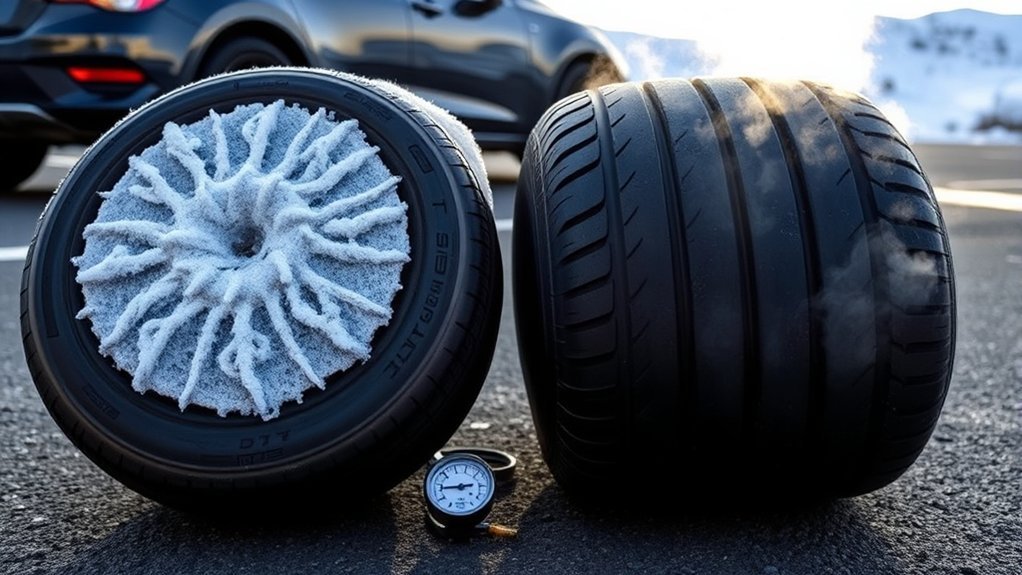
Tire pressure rises predictably with heat, but warm readings can be 4 to 6 PSI (or more) higher than cold, depending on driving intensity and sun exposure. A tire set to 35 PSI cold can easily read 39 to 41 PSI after aggressive driving or sitting in direct sunlight. Add in ambient temperature changes of about 1 to 2 PSI per 10°F, and you can see how quickly warm numbers become misleading.
Always use cold tire pressure as your control value.
| Condition | Example Cold PSI | Example Warm PSI |
|---|---|---|
| Shaded, ambient 70°F | 35 | 36.5 |
| Driven + hot soak | 35 | 39–41 |
| Monthly loss (idle) | 35 | 34 (–1 PSI) |
Check regularly, note the ambient temperature, and treat warm tire readings as temporary data, not your target.
When to Check Cold Tire Pressure (Exact Timing)
The best time is first thing in the morning, before your first drive. If that’s not possible, wait at least three hours after parking so the tires cool down and stabilize. These timing rules keep you clear of the 2 to 4 PSI bump that builds up after just 20 to 30 minutes of driving.
Morning Before First Drive
For the most accurate cold tire-pressure baseline, measure first thing in the morning, before you go anywhere. Overnight, the tires fully equalize to ambient temperature, giving you readings that reflect actual conditions rather than leftover driving heat.
In cold weather, low temperatures pull pressure down. Factor local conditions into your target rather than trusting warm-weather numbers. Use a calibrated gauge, write down your pressures consistently, and adjust to manufacturer specifications. This simple habit removes guesswork and keeps your vehicle responsive and efficient.
After Three Hours Parked
If you can’t check first thing in the morning, make sure the vehicle has been stationary for at least three hours (or driven less than one mile). That’s enough time for the tires to shed driving heat and give you a true cold reading.
You should check tire pressure after this interval to capture accurate readings that line up with manufacturer specifications, not temporary thermal effects. Precise cold measurements directly influence safety and performance, preventing uneven wear and protecting handling and fuel economy.
How to Measure and Set Cold Tire Pressure Correctly
Measure tire pressure when the tires are cold, after at least three hours of sitting or before you’ve driven more than a mile. Use a calibrated, quality gauge and record the reading for each tire along with the ambient temperature. Then adjust to the vehicle’s specified cold PSI listed on the door placard or in the owner’s manual.
[Products Worth Considering]

Digital Tire Pressure Gauge 2 Pack, Industrial Tire Gauge 3-200 PSI, Calibrated to ANSI B40.7 Grade 2A(plus-minus 0.5%), Air Pressure Gauge with Replaceable AAA Batteries

Enhanced Visibility in Low Light: Features a green backlit LCD screen and integrated flashlight, allowing for clear reading of tire pressure even in dark or dimly light conditions.

PROCESS LEVEL ACCURACY: Each ETENWOLF’s digital tire pressure gauge is calibrated manually to ANSI B40.7 Grade 2A(plus-minus 1 PSI).Presta valve adapter not included, if used for bicycles, it must be purchased separately
Check When Tires Are Cold
Tire pressure rises with heat, so only check after the car has sat for at least three hours or you’ve driven less than one mile. Early morning is ideal. Compare your measurements to the recommended pressure on the driver’s door placard or in the owner’s manual and adjust to match.
| Step | Action |
|---|---|
| Timing | Wait ≥3 hours or <1 mile driven |
| Reference | Use placard/owners manual |
A 2 to 4 PSI rise after a short drive is enough to throw off a warm reading. Stay on top of cold checks to keep grip, wear, and fuel efficiency where they should be.
Use a Reliable Gauge
Pick a calibrated, quality gauge, either digital or precision analog, for repeatable cold tire pressure readings. Confirm the vehicle has rested for at least three hours or been driven under one mile, then measure each tire.
Compare your readings to the recommended cold pressure on the driver’s door placard or owner’s manual. If a tire is off, adjust only while cold. Hot readings can be 4 to 6 PSI higher, which will mislead your correction.
Record values, double-check one tire to verify gauge consistency, and work through all four tires in order. Do this monthly or before any long trip. A consistent procedure takes the guesswork out of pressure checks.
Adjust for Ambient Temperature
Once you have a consistent cold-pressure routine, the next step is factoring in ambient temperature. Measure cold pressure after at least three hours of rest or under one mile of driving. Morning checks work best because overnight temps usually settle.
Apply the rule: about 1 to 2 PSI lost per 10°F drop. If you last inflated your tires on a warmer day, add 1 to 2 PSI for every 10°F difference to bring them back to the manufacturer’s cold specification.
This analytical approach saves you from reactive maintenance. During seasonal shifts, document conditions and apply small, precise increments to keep handling, fuel economy, and safety right where they belong.
Nitrogen vs. Air: Does It Matter for Cold Pressure?
You may have seen shops offering nitrogen tire fills instead of regular air. Nitrogen molecules are slightly larger than oxygen, so nitrogen-filled tires lose pressure a bit more slowly over time. However, the difference is small for most drivers, typically a matter of weeks before you’d notice a meaningful gap.
More importantly, nitrogen does not eliminate the need to check cold tire pressure. Temperature still affects nitrogen-filled tires at roughly the same rate (about 1 to 2 PSI per 10°F). The NHTSA still recommends monthly pressure checks regardless of what gas is in your tires. If nitrogen is free or cheap at your shop, it’s a small perk, but regular air with consistent cold checks works just fine.
[Products Worth Considering]
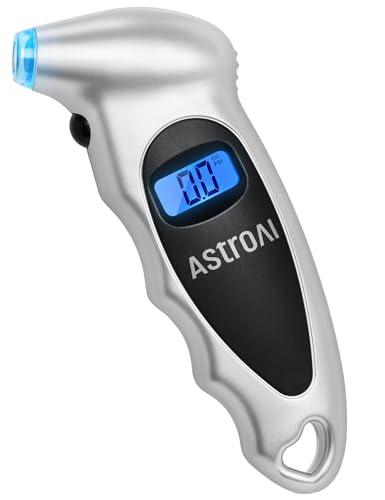
EXPERT-GRADE CALIBRATION: Each AstroAI Tire Pressure Gauge is calibrated with professional-grade tools, ensuring quick and accurate measurement results within plus-minus 1PSI. Stay prepared for any roadside emergency and travel with peace of mind.

PROCESS LEVEL ACCURACY: This heavy duty tire pressure gauge is calibrated manually to ANSI B40.1 Grade A (plus-minus 1% of span)
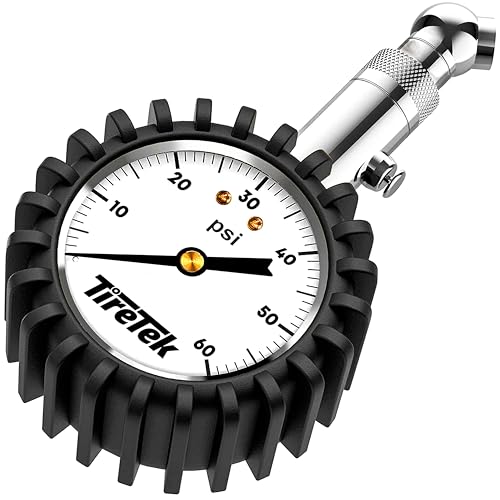
Professional Tire Pressure Gauge for Cars – This heavy duty mechanical tire pressure gauge is calibrated to ANSI B40.1 Grade A (2%) international accuracy standard so you get a precise, accurate pressure reading every time you use it. Makes great car accessories, car stuff, tire deflator, car stuff for men, cool car gadgets, car gifts for men, him, dad
TPMS Alerts and Sudden Pressure Swings: Troubleshooting
When a TPMS warning lights up or you spot a sudden pressure swing, treat it as an immediate signal. The system triggers when pressure drops roughly 25% below the manufacturer’s spec, and a rapid temperature change alone can shift tire pressure about 1 to 2 PSI per 10°F.
Start by verifying pressures with a calibrated gauge. Record cold readings and compare them to the placard values. If one tire is low while the others are fine, suspect a puncture, slow leak, valve stem issue, or wheel seal defect. If all four tires dropped equally after a cold snap, it’s likely just the ambient temperature change, and you can inflate back to spec.
After any repair or tire rotation, recalibrate TPMS according to the manufacturer’s procedure so the alerts stay accurate. Quick diagnosis, targeted fixes, and system recalibration keep you out of avoidable roadside trouble.
[Products Worth Considering]

[Accurate Real-time Monitoring & Multi-Alert System]: Tymate TM7 tpms sensor can be used to monitor your tires’ pressure and temperature data within robust accuracy of ±1.5 PSI or ±3°F (The units can be displayed as ℃ or ℉ & BAR or PSI). Designed with six distinct alarm modes: high/low pressure, fast leakage, high temperature, sensor low battery, and sensor signal lost. This system is a reliable tool for maintaining tire health, and it is especially beneficial for DIY enthusiasts and pre-owned vehicle markets, where constant vigilance on tire conditions is paramount for safety and vehicle longevity

HIGH ACCURACY: Every ETENWOLF's pencil tire gauge is calibrated to ANSI B40.1 Grade B, it is accurate to 2% of span in the middle 50% of range and 3% of span in the lower and upper 25% of range. Each of ETENWOLF pencil tire pressure gauge is manually calibrated and has its unique calibration number printed on the pencil

PROCESS LEVEL ACCURACY: Each ETENWOLF’s digital tire pressure gauge is calibrated manually to ANSI B40.7 Grade 2A(plus-minus 1 PSI).Presta valve adapter not included, if used for bicycles, it must be purchased separately
Seasonal Rules: Winter, Summer, Long Trips, and Heavy Loads
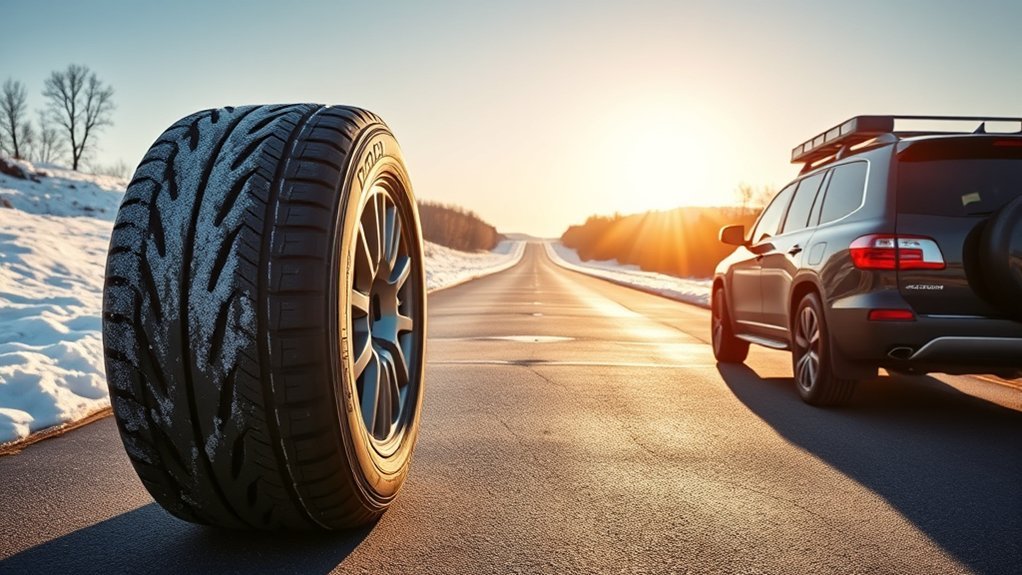
Temperature and load both change tire pressure directly. Set cold pressures to the manufacturer’s recommended range and recheck with a calibrated gauge after the vehicle has been sitting for several hours.
Winter: Monitor cold pressure frequently. A 10°F drop can cost you 1 to 2 PSI, which is enough to affect handling and fuel economy. Add pressure as needed to hold your target.
Summer: Expect warm-tire readings to climb into the high 30s or low 40s PSI. Always check cold to avoid overinflation mistakes.
Long trips: Verify pressures cold before you leave. After 20 to 30 minutes on the highway, expect a 2 to 4 PSI rise from driving heat, which is normal.
Heavy loads: When hauling extra weight, inflate toward the upper end of the manufacturer’s range to maintain stability and tire life.
Respond to seasonal changes methodically and you’ll keep your tires performing well year-round.
Frequently Asked Questions
Should You Measure Tire Pressure Hot or Cold?
Cold. Heat from driving expands the air and raises the reading, so a warm measurement won’t match the manufacturer’s baseline. Always check after the car has sat for at least three hours.
Why Does Tire Pressure Change When Cold?
Gas contracts as it cools, so the air inside your tire takes up less volume at lower temperatures. That contraction directly lowers the pressure reading. It’s basic physics, and it’s why consistent cold checks matter.
How Much Does PSI Change With Temperature?
About 1 to 2 PSI per 10°F for standard passenger tires. Heavy-duty tires can shift closer to 2 PSI per 10°F because they hold more air.
What Is the 3% Tire Rule?
The 3% tire rule is a guideline that says you should keep tire pressure within ±3% of the ideal target. Staying in that range helps prevent excess wear and keeps performance consistent.
Door Placard vs. Tire Sidewall: Which Pressure Should You Use?
Always go by the door placard (or owner’s manual). The number printed on the tire sidewall is the maximum pressure the tire can handle, not the ideal pressure for your vehicle. The placard number is set by the vehicle manufacturer for your specific car’s weight and handling characteristics.
Conclusion
Now you know the cold-pressure rule and why temperature skews readings. A few PSI can change handling, tire wear, and even safety margins. Check pressures cold, use the manufacturer’s spec, and adjust for load or seasonal extremes. If TPMS warnings or big swings show up, investigate leaks, valves, or sensor faults right away. Don’t wait, because one trip on incorrect pressure can lead to problems you didn’t expect.






Leave a Reply