Best Dash Cams With Supercapacitor 2026
Last Updated: June 2026
Affiliate disclosure: This article contains Amazon affiliate links. If you buy through these links, we may earn a commission at no extra cost to you.
A dash cam is only useful if it keeps recording when your car is parked in heat, cold, or daily stop-and-go driving. That is why many drivers now look specifically for the best dash cams with supercapacitor power instead of small lithium-battery models.
Supercapacitor dash cams are designed to handle temperature swings better than traditional battery-powered dash cams. They are especially useful for drivers who park outdoors, commute daily, drive rideshare, or want parking-mode protection without worrying about battery swelling in summer heat.
This roundup focuses on six dash cams that match the core buyer intent: vehicle dash cameras with supercapacitor power, practical recording features, and clear use-case differences. Before buying, always confirm the latest specs, included accessories, warranty details, and availability on the Amazon listing because product pages can change.
In a hurry? The top overall single-front-camera pick is the VIOFO A119M Pro 4K HDR because it combines 4K recording, Wi-Fi 6, GPS, and a supercapacitor design. For the strongest premium front-and-rear setup, the VIOFO A229 Pro is the better fit.
Check Premium Dual-Cam Price ➜
How We Chose These Supercapacitor Dash Cams
For this buyer guide, the main requirement is simple: each product must be a true dash cam that directly matches the keyword intent behind “best dash cams with supercapacitor.” Accessories, phone mounts, memory cards, and unrelated car gadgets do not belong in the main roundup.
The strongest picks were evaluated around the features that matter most for real drivers: front or dual-channel coverage, 2K or 4K resolution, night recording, GPS, Wi-Fi transfer speed, parking-mode support, storage capacity, installation complexity, and whether the product is suitable for daily vehicle use.
| VIOFO A119M Pro 4K HDR Dash Cam | 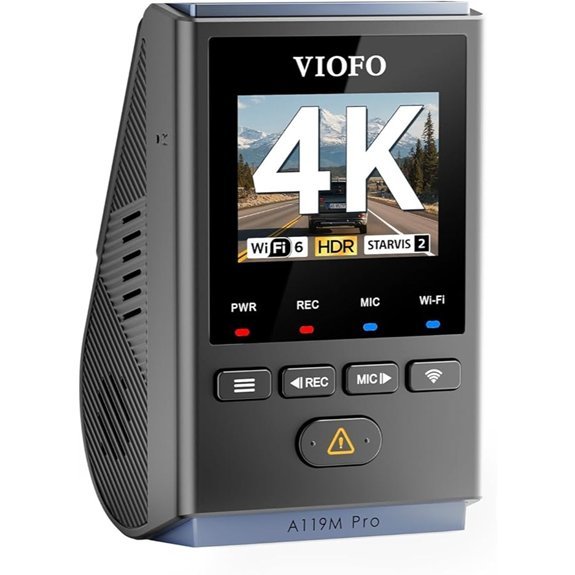 |
⭐ Best Overall 4K | Video Resolution: 4K 30FPS | Night Vision: Advanced Night Vision 2.0 | Parking Mode: 24/7 Three-Mode Parking | CHECK PRICE ON AMAZON → | Read Full Review ↓ |
| Dual Dash Cam Front and Rear with Night Vision | 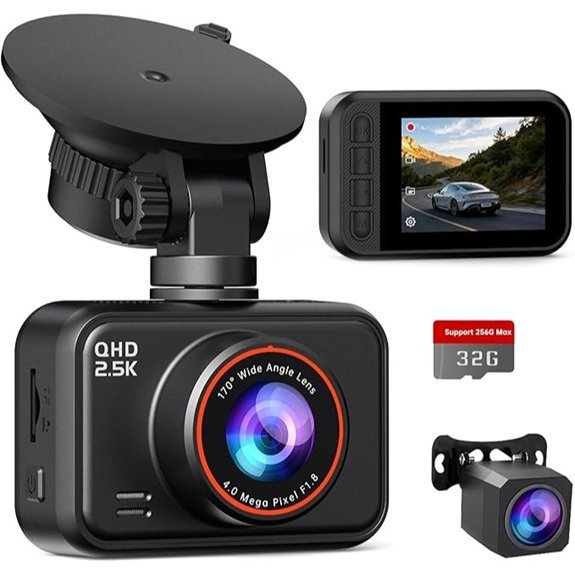 |
Best Plug-and-Play Setup | Video Resolution: 2.5K Ultra-HD | Night Vision: HDR Night Vision | Parking Mode: 24-Hour Parking Monitor | CHECK PRICE ON AMAZON → | Read Full Review ↓ |
| VIOFO A119 Mini 2 Dash Cam with GPS | 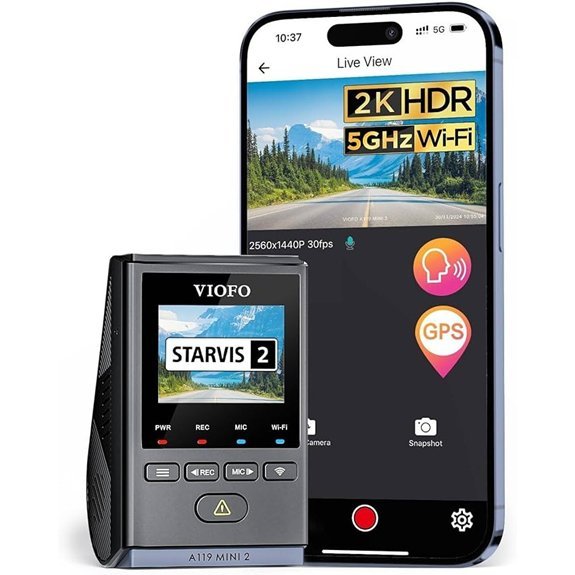 |
Best Compact Design | Video Resolution: 2K 60FPS / 2.7K 30FPS | Night Vision: DOL-HDR Technology | Parking Mode: Buffered Parking Mode | CHECK PRICE ON AMAZON → | Read Full Review ↓ |
| VIOFO A129 Plus Duo Dual Dash Cam | 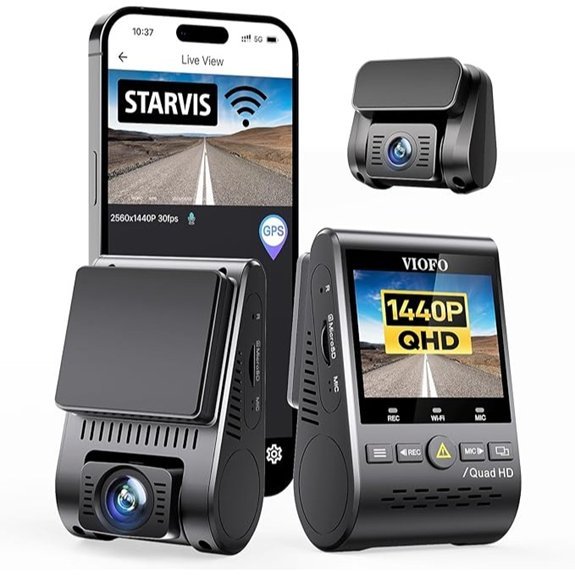 |
Best Front + Rear Combo | Video Resolution: 2K 60FPS (front) / 1080P (rear) | Night Vision: HDR Technology | Parking Mode: Three Parking Modes | CHECK PRICE ON AMAZON → | Read Full Review ↓ |
| 4K Dual Dash Cam with 5G WiFi & GPS | 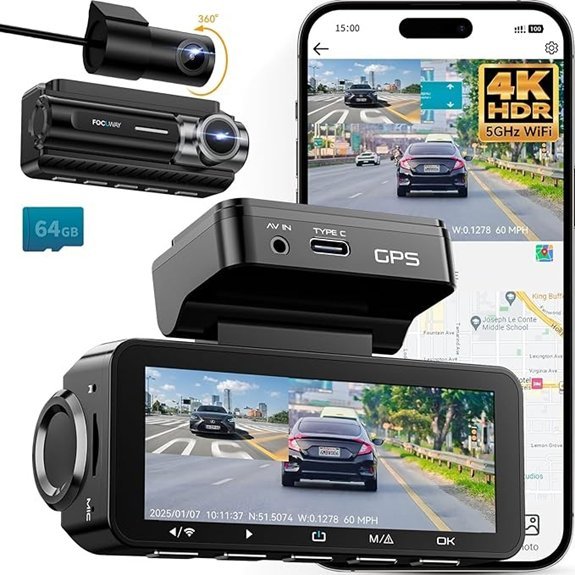 |
Best for Connectivity Features | Video Resolution: 4K Ultra HD (front) / 1080P (rear) | Night Vision: Super Night Vision | Parking Mode: 24-Hour Parking Monitoring | CHECK PRICE ON AMAZON → | Read Full Review ↓ |
| VIOFO A229 Pro 4K HDR Dash Cam | 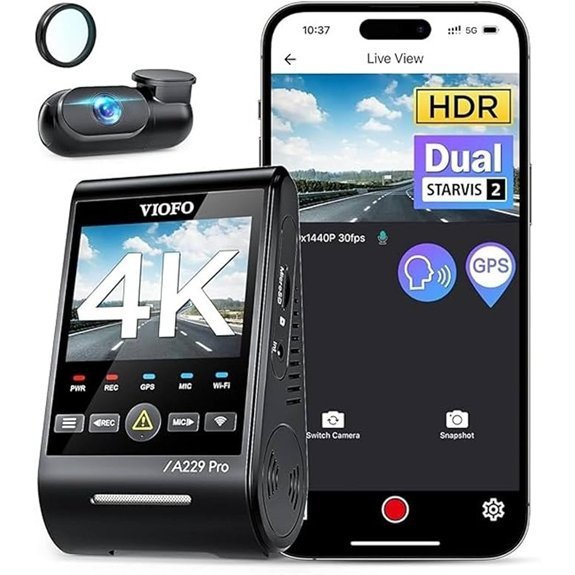 |
Best Premium Dual-Channel | Video Resolution: 4K 2160P (front) / 2K 1440P (rear) | Night Vision: Night Vision 2.0 | Parking Mode: Three Parking Modes | CHECK PRICE ON AMAZON → | Read Full Review ↓ |
Quick Buying Advice: Which One Should You Choose?
- Choose a front-only 4K dash cam if your main goal is capturing clear footage of the road ahead and readable details in daytime driving.
- Choose a dual-channel dash cam if rear-end collisions, parking-lot damage, or rideshare coverage matter to you.
- Choose GPS if you want speed, route, and timestamp data attached to your clips.
- Choose a built-in screen if you prefer checking the camera angle and playback without relying entirely on a phone app.
- Choose a hardwire kit if you want useful long-duration parking monitoring while the vehicle is off.
In-Depth Reviews: Our Top Supercapacitor Dash Cam Picks
-
1. VIOFO A119M Pro 4K HDR Dash Cam — Best Overall Supercapacitor Dash Cam
Who is this for? The VIOFO A119M Pro is the right pick for drivers who want sharp front-facing footage, fast wireless transfers, GPS logging, and a supercapacitor-powered design for hot and cold vehicle interiors.
The key reason to consider this model is the combination of 4K 30FPS recording, the STARVIS 2 IMX678 sensor, HDR support, and a compact front-only design. For drivers who mainly need evidence from the road ahead, that feature set is more focused than buying a lower-resolution dual-camera bundle just for the sake of having a rear lens.
The Wi-Fi 6 feature is also worth noting because large 4K clips can be slow to transfer on older 2.4GHz-only dash cams. The built-in Quad-Mode GPS logs route and speed data, which can be helpful if you ever need footage for an insurance claim or disputed incident.
The supercapacitor design is the main reason this model belongs in this roundup. It is better suited to a parked vehicle environment than a small internal lithium battery and is a practical choice for drivers who park outdoors in summer heat.
Who should skip it? Skip this model if you need rear coverage. It is a front-only dash cam, so drivers who want both front and rear documentation should compare the A229 Pro or A129 Plus Duo instead.
Bottom line: For pure 4K front-camera performance with supercapacitor reliability, the A119M Pro is the strongest single-lens option in this roundup.
✅ Pros- True 4K 30FPS with STARVIS 2 IMX678 front image sensor
- Wi-Fi 6 for faster wireless file transfers than older Wi-Fi setups
- Advanced Night Vision 2.0 + HDR for difficult lighting conditions
- Supercapacitor power design for vehicle temperature swings
- Supports up to 512GB microSD for longer loop-recording storage
- Hands-free multi-language voice control
- Front camera only — no rear coverage included
- No built-in screen; playback depends on app or card access
- Costs more than basic 1080P or 2K front-only dash cams
Editor’s Verdict: The VIOFO A119M Pro is the best fit if you want a high-clarity front-only dash cam with modern connectivity and supercapacitor power. It is not the right pick if rear coverage is non-negotiable.
- Video Resolution: 4K 30FPS
- Sensor: STARVIS 2 IMX678
- Night Vision: Advanced Night Vision 2.0 + HDR
- Parking Monitoring: 24/7 Three-Mode Parking (Auto Event, Low Bitrate, Time-Lapse)
- Storage Capacity: Supports up to 512GB microSD
- Power Supply: Supercapacitor
- Connectivity: Wi-Fi 6
- GPS: Built-in Quad-Mode GPS
- Additional Feature: Multi-language voice control
- Additional Feature: Buffered parking recording
- Additional Feature: Compact stealth design
-
2. Dual Dash Cam Front and Rear with Night Vision — Best No-Fuss Plug-and-Play Option
Who is this for? This dual dash cam is best for families, rideshare drivers, and daily commuters who want front-and-rear recording without dealing with advanced app settings or a more complex feature set.
The main appeal is simplicity. Based on the listed feature set, this is a straightforward front-and-rear setup built around 2.5K Ultra-HD recording, HDR night vision, 24-hour parking monitoring, and supercapacitor power. That makes it more beginner-friendly than feature-heavy models that require app setup, GPS configuration, or accessory planning.
The 24-hour parking monitor and impact-detection focus make sense for drivers who are mainly worried about parking-lot bumps, driveway incidents, or daily commuter protection. The supercapacitor design also fits the article topic because it is more appropriate for hot parked cars than battery-based dash cams.
Where it falls short: No Wi-Fi, no GPS, and no mobile app integration are meaningful trade-offs. If you want speed/location data or fast phone downloads, choose a VIOFO model with GPS and Wi-Fi instead.
✅ Pros- Simple front-and-rear coverage for drivers who do not want complicated setup
- 2.5K Ultra-HD recording is a step above basic 1080P-only models
- HDR night vision for mixed-light driving conditions
- 24-hour parking monitoring with impact detection
- Supercapacitor power design for parked vehicle environments
- Supports up to 256GB microSD storage
- No Wi-Fi or GPS — footage may lack location and speed data
- 2.5K resolution is less detailed than the 4K options in this list
- No app support for remote viewing or quick phone downloads
Editor’s Verdict: Choose this one if your priority is simple, reliable dual-camera coverage. Skip it if GPS stamping, Wi-Fi downloads, or app control are must-have features.
- Video Resolution: 2.5K Ultra-HD (front + rear)
- Night Vision: HDR Night Vision
- Parking Monitoring: 24-Hour Parking Monitor with Impact Detection
- Storage Capacity: Up to 256GB microSD
- Power Supply: Supercapacitor
- Connectivity: Plug & Play (no Wi-Fi)
- Additional Feature: Auto-start recording on power-up
- Additional Feature: Motion sensor impact detection
- Additional Feature: Short-clip security recording
-
3. VIOFO A119 Mini 2 Dash Cam with GPS — Best Compact Supercapacitor Dash Cam
Who is this for? The A119 Mini 2 is best for drivers who want a discreet front dash cam with GPS logging, strong 2K recording, and supercapacitor power without a bulky windshield footprint.
This is the compact pick in the lineup. The listed 2K 60FPS recording gives it a useful balance of clarity and smoother motion capture, while the 2.7K 30FPS mode gives drivers another resolution option depending on storage and playback preferences.
The 140° wide-angle lens is wide enough for multi-lane road coverage without making the camera feel oversized. DOL-HDR is especially useful for difficult lighting transitions such as sunrise, sunset, tunnels, parking garages, and shaded roads.
Built-in GPS is a major advantage for a compact model because route, speed, and timestamp data can make recorded footage more useful after an incident. The buffered parking mode is also valuable because it is designed to capture footage before and after a trigger instead of only recording the aftermath.
The trade-off: This is still a single front camera. It is not the right choice if you want rear recording or a screen built into the camera body.
✅ Pros- Compact design for discreet mounting behind the rearview mirror
- 2K 60FPS recording for smoother footage than many 30FPS models
- DOL-HDR for difficult backlit and mixed-light driving conditions
- Built-in GPS with route, speed, and timestamp logging
- Supercapacitor power design for hot and cold vehicle interiors
- Supports up to 512GB microSD
- 5GHz Wi-Fi for faster app-based file transfers than 2.4GHz-only models
- Front camera only — no rear recording capability
- No built-in screen; requires app or card reader for playback
- Buffered parking mode usually works best with a proper hardwire setup
Editor’s Verdict: The A119 Mini 2 is the best choice here for drivers who want a compact front dash cam with GPS, good recording options, and supercapacitor durability.
- Video Resolution: 2K 60FPS / 2.7K 30FPS
- Night Vision: DOL-HDR Technology
- Parking Monitoring: Buffered Parking Mode (15-sec pre-record)
- Storage Capacity: Up to 512GB microSD
- Power Supply: Supercapacitor
- Connectivity: 5GHz Wi-Fi
- GPS: Built-in GPS (route + speed logging)
- Field of View: 140° wide angle
- Additional Feature: Voice control (hands-free clip lock)
- Additional Feature: App compatibility for settings management
-
4. VIOFO A129 Plus Duo Dual Dash Cam — Best Front and Rear Coverage Under $150
Who is this for? The A129 Plus Duo is a good fit for drivers who need both front and rear coverage with GPS and Wi-Fi, but do not want to move all the way up to a newer flagship dual-channel model.
The front camera records at 2K 60FPS, while the rear camera records at 1080P. That gives you a practical dual-channel setup for daily commuting, rear-end collision documentation, and parking-related events. The 60FPS front recording is especially useful when reviewing fast-moving road incidents.
The Sony STARVIS sensor and HDR support help with low-light and high-contrast scenes. Built-in Wi-Fi lets you connect to the VIOFO app for clip preview and download, while GPS adds speed and route data to recorded footage.
Three parking modes give drivers more flexibility than a basic event-only setup. Depending on the situation, you can prioritize event recording, low-bitrate continuous recording, or time-lapse recording.
Honest note: This is not the newest premium option in the VIOFO lineup. If you want sharper rear footage, dual STARVIS 2 sensors, and a more advanced dual-channel setup, compare it against the A229 Pro.
✅ Pros- 2K 60FPS front + 1080P rear dual-channel coverage
- Sony STARVIS sensor for better low-light performance than basic sensors
- Built-in Wi-Fi + GPS with speed and route logging
- Three flexible parking modes
- Optional Bluetooth remote for hands-free clip locking
- Supercapacitor power design for reliable vehicle use
- Older model compared with newer flagship dual-channel options
- Rear camera is limited to 1080P rather than 2K
- Up to 256GB storage, while some newer models support up to 512GB
Editor’s Verdict: The A129 Plus Duo is the value pick for drivers who want proven front-and-rear coverage, GPS, Wi-Fi, and supercapacitor power without paying for the newest flagship model.
- Video Resolution: 2K 60FPS (front) / 1080P 30FPS (rear)
- Sensor: Sony STARVIS
- Night Vision: HDR Technology
- Parking Monitoring: Three Parking Modes (Auto Event, Low Bitrate, Time-Lapse)
- Storage Capacity: Up to 256GB microSD
- Power Supply: Supercapacitor
- Connectivity: Built-in Wi-Fi + GPS
- Additional Feature: Optional Bluetooth remote control
- Additional Feature: Real-time speed display
- Additional Feature: VIOFO app compatibility
-
5. 4K Dual Dash Cam with 5G WiFi & GPS — Best for Connectivity and Screen Convenience
Who is this for? This model is best for drivers who want a 4K front camera, rear coverage, GPS, Wi-Fi, and a built-in display for checking camera angle and playback without relying only on a phone.
The most useful differentiator is the built-in 3.39-inch IPS display. A screen can help with setup because you can confirm framing immediately after mounting, check recording status at a glance, and review clips while parked.
The listed 4K front camera and 1080P rear camera make this a practical dual-channel option, while the 170-degree wide-angle lens provides broader front coverage than narrower dash cam lenses. The included 64GB microSD card is convenient for first-time buyers, although frequent drivers should still consider upgrading to a higher-capacity high-endurance card.
The supercapacitor and 24-hour parking monitoring features keep it aligned with the core keyword intent. It is not just a general car gadget; it is a real dash cam built around the type of power system this article is about.
Where to be cautious: The brand support history may be less familiar to some buyers than VIOFO. Before buying, confirm the warranty, firmware support, app reviews, and exact included accessories on the live Amazon listing.
✅ Pros- 4K front camera + 1080P rear dual-channel coverage
- Built-in 3.39-inch IPS screen for setup and on-dash playback
- 170-degree field of view for wide road coverage
- 5G WiFi for faster clip transfers than basic 2.4GHz Wi-Fi
- Includes 64GB microSD card for out-of-box recording
- 24-hour parking monitoring with supercapacitor power
- Brand support may be less established than VIOFO for some buyers
- Screen adds bulk compared with compact front-only dash cams
- Included 64GB card may fill quickly with 4K recording
Editor’s Verdict: Choose this model if you want a screen-equipped dual dash cam with 4K front recording and broad front coverage. Choose a VIOFO model if long-term firmware support and brand familiarity matter more to you.
- Video Resolution: 4K Ultra HD (front) / 1080P (rear)
- Night Vision: Super Night Vision
- Parking Monitoring: 24-Hour Parking Monitoring
- Storage Capacity: Includes 64GB microSD (expandable)
- Power Supply: Supercapacitor
- Connectivity: Built-in 5G WiFi + GPS
- Display: 3.39-inch IPS Screen
- Field of View: 170-degree wide angle
- Additional Feature: Smart voice control
- Additional Feature: Flexible adhesive mounting pads
-
6. VIOFO A229 Pro 4K HDR Dash Cam — Best Premium Dual-Channel Supercapacitor Cam
Who is this for? The A229 Pro is for drivers who want the strongest front-and-rear image-quality setup in this roundup and are willing to pay more for higher-resolution dual-channel coverage.
The A229 Pro is positioned as the premium VIOFO dual-channel option here. The listed dual STARVIS 2 sensors support both front and rear recording, which matters because many dual dash cams use a stronger front camera and a noticeably weaker rear camera.
The front camera records at 4K 2160P, while the rear records at 2K 1440P. That rear-camera resolution is one of the main reasons to choose this model over a cheaper dual-channel dash cam with a 1080P rear unit.
Night Vision 2.0 and HDR are useful for dark roads, bright headlights, parking structures, and mixed-light conditions. CPL lens filter support is also worth considering if windshield glare is a frequent problem in your vehicle.
The buffered parking mode is another major strength. It is designed to capture footage before and after an impact trigger, which can be more useful than clips that begin only after the incident has already happened.
The trade-off is price. If budget is the priority, the A129 Plus Duo is the more affordable dual-channel choice. If maximum clarity from both lenses is the priority, the A229 Pro is the better fit.
✅ Pros- Dual STARVIS 2 sensors for stronger front and rear image quality
- 4K front + 2K rear coverage
- Night Vision 2.0 + HDR for difficult lighting conditions
- Buffered parking mode captures footage before an impact trigger
- CPL lens filter support can help reduce windshield glare
- 5GHz Wi-Fi for faster clip transfers
- Emergency lock helps prevent overwriting important footage
- Supports up to 512GB microSD
- Highest-priced option in this roundup
- Parking monitoring usually requires a hardwire kit for extended use
- No built-in display; playback depends on app or card access
Editor’s Verdict: The VIOFO A229 Pro is the premium pick for drivers who want the best dual-channel supercapacitor dash cam in this lineup. The stronger rear-camera resolution is the clearest reason to choose it over cheaper dual-camera models.
- Video Resolution: 4K 2160P (front) / 2K 1440P (rear)
- Sensors: Dual STARVIS 2 (Sony)
- Night Vision: Night Vision 2.0 + HDR
- Parking Monitoring: Three Parking Modes with 15-sec pre-buffer
- Storage Capacity: Supports up to 512GB microSD
- Power Supply: Supercapacitor
- Connectivity: 5GHz Wi-Fi + GPS
- Additional Feature: Dual flagship STARVIS 2 sensors
- Additional Feature: Emergency clip lock
- Additional Feature: Anti-glare CPL lens filter support
Supercapacitor vs. Battery Dash Cams: Why It Matters
Before choosing a model, it helps to understand why supercapacitor dash cams exist. A dash cam lives in a tougher environment than most electronics. It may sit behind glass in direct sun, then start recording again in cold weather, rain, or daily traffic.
Traditional small lithium-battery dash cams can struggle in those conditions. Heat can shorten battery life, and cold can reduce battery performance. A supercapacitor stores short bursts of energy through electrostatic charge instead of relying on the same kind of chemical battery storage.
The practical benefit is reliability. A supercapacitor is not meant to run the dash cam for hours by itself, but it helps the camera shut down properly, save the current clip, and tolerate vehicle temperature swings better than many battery-powered models.
If you live somewhere with hot summers, frequently park outdoors, or want a dash cam that is less dependent on a small internal battery, a supercapacitor model is the smarter direction.
How to Choose the Right Supercapacitor Dash Cam: Key Factors
All six cameras above use supercapacitor power, but they are not designed for the same buyer. Use the factors below to narrow the list based on your vehicle, driving habits, and evidence needs.
Video Resolution: What You Actually Need
Resolution ranges from 1080P to 4K across these models. The practical question is whether you need readable details such as license plates, road signs, and lane position in your footage.
At 1080P, plates are usually easiest to read in good light and at closer range. At 2K, you get more usable detail in typical driving conditions. At 4K, you get more pixels to work with, which can help when reviewing incidents, cropping footage, or checking details at a distance.
Frame rate matters separately. 60fps versus 30fps can produce smoother playback when reviewing fast-moving incidents. Models like the A119 Mini 2 and A129 Plus Duo offer 2K at 60fps, which is a strong balance of clarity and motion smoothness.
HDR helps balance bright and dark areas in the same scene. That matters when driving from a shaded road into bright sun, passing under bridges, or recording headlights at night.
Night Vision: The Spec That Separates Good Cams from Great Ones
Night vision quality is one of the biggest differences between basic dash cams and stronger models. Look for sensor quality, HDR support, lens aperture, and real sample footage on the product listing before buying.
STARVIS and STARVIS 2 sensors are commonly used in dash cams for low-light performance. In this roundup, the A119M Pro and A229 Pro are the models most focused on advanced sensor quality.
DOL-HDR, used in the A119 Mini 2, is designed to help with high-contrast scenes where one part of the frame is bright and another part is dark. This can be useful for sunrise, sunset, tunnel exits, and street-lit roads.
Installation: Match the Cam to Your Comfort Level
Some buyers want the simplest possible setup. Others are comfortable running a rear-camera cable or hardwiring parking mode. Decide which group you are in before choosing.
A basic 12V outlet setup is usually enough for normal driving footage. For parking monitoring beyond a short period, a hardwire kit is usually the better option because it supplies power while the vehicle is off and can include low-voltage protection.
Parking Monitoring: Understanding the Three Modes
Most supercapacitor dash cams in this roundup offer some form of parking surveillance. The exact modes vary by model, but the common options are:
- Auto Event Detection (Motion/Impact): The camera records only when it detects movement or a G-sensor impact. This is usually best for saving storage and power.
- Low Bitrate Continuous Recording: The camera records constantly at a reduced bitrate to create smaller files than normal driving footage.
- Time-Lapse Recording: The camera captures frames at intervals to create a condensed record of activity around the car.
The buffered parking mode on models like the A119 Mini 2 and A229 Pro is especially useful because it is designed to capture footage before an impact trigger as well as after it.
Storage Capacity: How Much Do You Actually Need?
Higher resolution uses more storage. A 4K dash cam will fill a card faster than a 1080P or 2K model, especially if you drive often or use parking mode.
For typical daily commuting, a 64GB card may be enough for basic loop recording. For road trips, rideshare driving, commercial driving, or 4K dual-channel footage, 256GB or 512GB storage support is much more useful.
Important: Use high-endurance microSD cards made for constant writing. Standard consumer cards can fail faster in dash cams because loop recording writes and overwrites footage repeatedly.
Connectivity: Wi-Fi, GPS, and What You Actually Use
Built-in Wi-Fi lets you connect directly to the dash cam from your phone to preview, download, and manage clips through a companion app. The practical difference between 2.4GHz, 5GHz, and Wi-Fi 6 is transfer speed, especially with large 4K files.
GPS adds time, route, speed, and location information to footage. That can be useful when another driver disputes what happened or when you need to provide clearer context for an insurance claim.
Temperature Resistance: Why Supercapacitors Excel Here
Supercapacitor dash cams are commonly chosen because they are better suited to heat and cold than small internal battery designs. This matters most for parked vehicles, outdoor parking, and drivers in hot or cold climates.
Always check the exact operating temperature range on the Amazon listing before purchase. The phrase “supercapacitor” is important, but the specific camera design, mounting location, power cable, and hardwire kit also affect real-world reliability.
Warranty and Support: What to Look For
Look for a clear warranty, accessible support, firmware-update history, and easy-to-find documentation. Dash cams are not set-and-forget products; firmware updates, app stability, and replacement parts can matter over time.
For less familiar brands, check return terms, support channels, and recent buyer feedback before ordering. For any model, confirm whether the listing includes the rear camera, GPS mount, memory card, CPL filter, or hardwire kit, because bundles can vary.
Common Buyer Mistakes to Avoid
- Buying a battery dash cam for a hot parked car: If you park outside often, prioritize supercapacitor models.
- Assuming parking mode works without extra power: Long parking-mode recording usually needs a hardwire kit.
- Using a standard microSD card: Continuous loop recording is hard on storage cards, so use high-endurance cards.
- Ignoring rear-camera resolution: Many dual dash cams have strong front specs but weak rear footage.
- Skipping sample footage: Always check real footage examples on the product page or from trusted reviewers before buying.
Frequently Asked Questions
What is a supercapacitor and how does it work in a dash cam?
A supercapacitor stores short bursts of energy using electrostatic charge instead of relying on a lithium battery. In a dash cam, that helps the camera shut down properly, save the current clip, and handle hot or cold vehicle interiors more reliably than many battery-powered models.
Are supercapacitors safer than traditional battery-powered dash cams?
For year-round in-car use, supercapacitor dash cams are generally the safer choice because they avoid the swelling and heat-stress issues associated with small lithium batteries in hot parked vehicles. They are especially useful for drivers who park outdoors in summer.
How long do supercapacitors last compared to batteries?
Supercapacitors are typically chosen because they tolerate more charge cycles and temperature swings than small dash cam batteries. Exact lifespan depends on the camera design, parking-mode use, power setup, and operating conditions, so confirm warranty details before buying.
Can I use a dash cam with a supercapacitor in extreme temperatures?
Yes, that is one of the main reasons to choose one. Supercapacitor dash cams are commonly marketed for better heat and cold resistance than battery-powered dash cams, but you should still check the specific operating temperature range on the Amazon listing before purchase.
Do I need to hardwire a dash cam with a supercapacitor?
Not for normal driving footage. Most models can run from a 12V outlet or USB power source while the vehicle is on. For long parking-mode coverage, a hardwire kit is usually needed because the supercapacitor itself is not meant to power the camera for hours after the car is off.
Is a front-only dash cam enough?
A front-only dash cam is enough if your main concern is documenting what happens in front of your vehicle while driving. Choose a dual-channel model if you want better protection against rear-end collisions, parking-lot damage, or incidents involving vehicles behind you.
Do I need GPS on a dash cam?
GPS is not required, but it can be useful. It can add route, speed, and timestamp information to your clips, which may make footage more helpful during insurance claims or disputes.
What microSD card should I use in a supercapacitor dash cam?
Use a high-endurance microSD card from a reputable brand and confirm the maximum supported card size for your specific dash cam. Higher-resolution models, especially 4K and dual-channel cameras, benefit from larger-capacity cards.
Which Supercapacitor Dash Cam Should You Buy?
After comparing all six models, the right choice depends on whether you want the best front-only footage, the strongest dual-channel coverage, the simplest setup, or the most compact design.
- Best overall single-lens 4K: VIOFO A119M Pro — Wi-Fi 6, STARVIS 2 sensor, and the sharpest front-only feature set in this roundup.
Check Price on Amazon ➜ - Best dual-channel premium: VIOFO A229 Pro — dual STARVIS 2 sensors, 4K front recording, and 2K rear coverage.
Check Price on Amazon ➜ - Best compact and discreet: VIOFO A119 Mini 2 — compact design, 2K footage, GPS built in, and supercapacitor power.
Check Price on Amazon ➜ - Best plug-and-play simplicity: Dual Dash Cam Front and Rear — front-and-rear protection with a simpler setup and fewer app-based features.
Check Price on Amazon ➜ - Best dual-channel value: VIOFO A129 Plus Duo — front-and-rear coverage with GPS, Wi-Fi, and a lower price than the premium A229 Pro.
Check Price on Amazon ➜ - Best with a built-in screen: 4K Dual Dash Cam with 5G WiFi & GPS — useful if you want on-camera playback, a display, and wide front coverage.
Check Price on Amazon ➜
For most drivers, the safest buying path is simple: choose the VIOFO A119M Pro if you only need front coverage, choose the VIOFO A229 Pro if you want the best front-and-rear setup, and choose the A129 Plus Duo if you want dual-channel value without paying flagship pricing.