Top Dash Cams for 2026 Perfect for Tinted Windows
Last Updated: February 2026
Affiliate Disclosure: As an Amazon Associate, we earn a commission from qualifying purchases at no extra cost to you. Our product selections are based on performance and suitability — not commission rates.
Tinted windows block anywhere from 20% to 70% of the light that reaches your dash cam’s sensor. In daylight, that’s manageable. At night, on a dark road, or in a rain-soaked parking lot — it’s the difference between footage that identifies a license plate and footage that’s too grainy to use. We evaluated five dash cams specifically suited for tinted windows, focusing on the specs that matter most in this context: sensor aperture, WDR capability, night vision technology, and real-world performance when light is artificially restricted by dark glass. Here are the five models that made the cut for 2026 — and which one is right for your specific setup.
⚡ Skip to Your Best Match:
- Best Overall / 4K Clarity: 4K Dual Dash Cam with 5G WiFi — sharpest front footage with fast wireless video transfers
- Best Night Vision Through Dark Tints: Dual Dash Cam 2.5K+1080P — Starlight sensor captures clear plates even through 35% VLT tint
- Best for Rideshare & Fleet Drivers: 3 Channel 4K Dash Cam — records front, rear, and interior cabin simultaneously
- Easiest to Set Up & Use: 4K+2.5K Touchscreen Dash Cam — touchscreen navigation, high-res on both cameras
- Maximum 360° Coverage: 360° Dash Cam with GPS (Zunfly W2) — four lenses, zero blind spots, GPS-tagged footage
| 4K Dual Dash Camera with 5G WiFi and Night Vision | 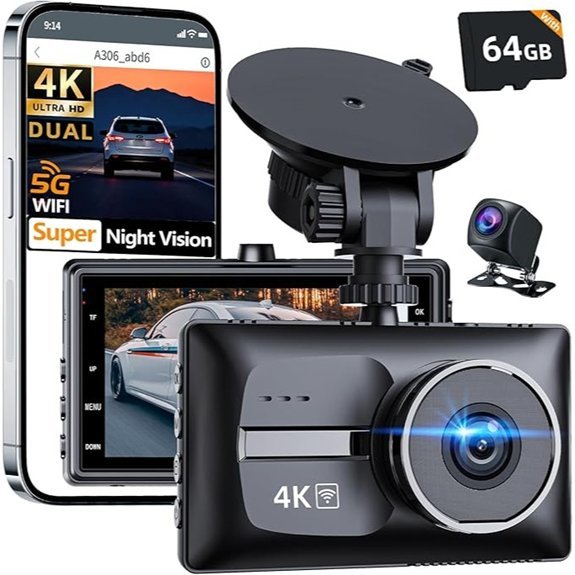 |
Best 4K Quality | Resolution: 4K UHD front, 1080P rear | Night Vision: Super Night Vision with WDR technology | Loop Recording: Yes, with automatic overwriting | CHECK PRICE ON AMAZON → | Read Our Full Review |
| Dual Dash Cam 2.5K+1080P with Night Vision | 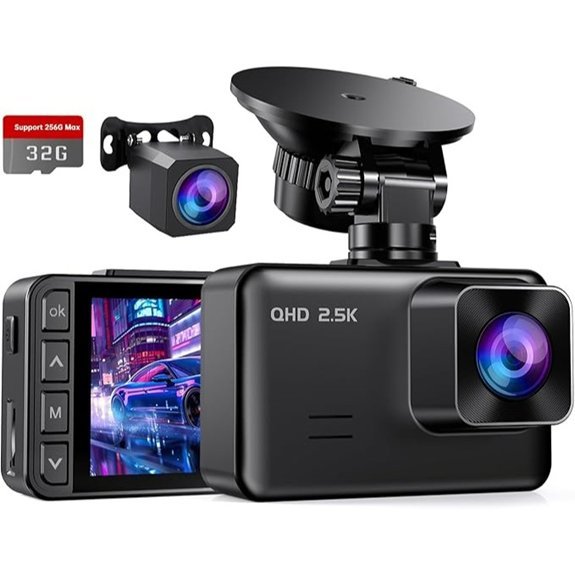 |
Best Night Vision | Resolution: 2.5K front, 1080P rear | Night Vision: Starlight night vision sensor | Loop Recording: Yes, automatically overwrites oldest videos | CHECK PRICE ON AMAZON → | Read Our Full Review |
| 3 Channel 4K Dash Cam with WiFi & APP Control | 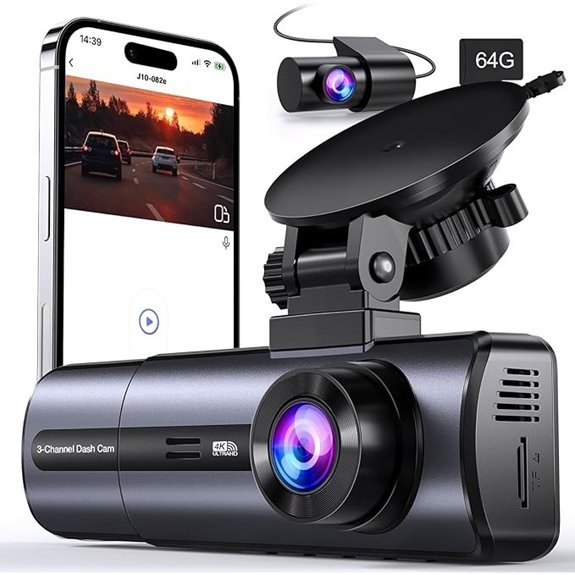 |
Most Versatile | Resolution: 4K front, 2.5K+1080P rear and inside | Night Vision: Night vision capability | Loop Recording: Yes, with automatic replacement of old files | CHECK PRICE ON AMAZON → | Read Our Full Review |
| Dash Cam Front and Rear 4K+2.5K with Touch Screen | 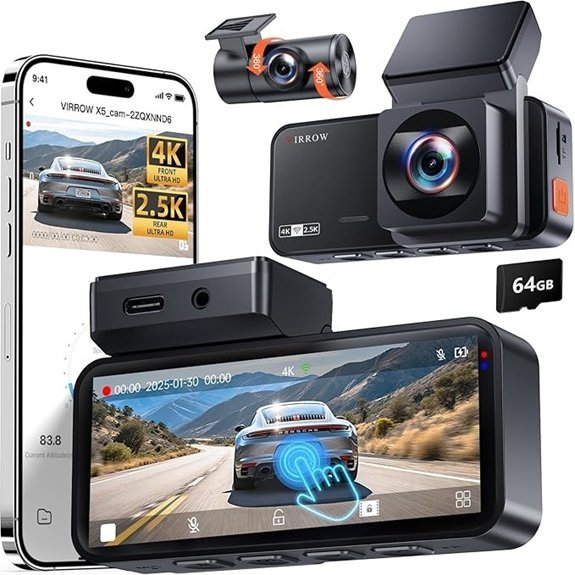 |
Best Touchscreen | Resolution: 4K front, 2.5K rear | Night Vision: Enhanced night vision with SC2336 sensor and WDR technology | Loop Recording: Yes, dual dashcam with continuous monitoring | CHECK PRICE ON AMAZON → | Read Our Full Review |
| 360° Dash Cam with Night Vision and WiFi | 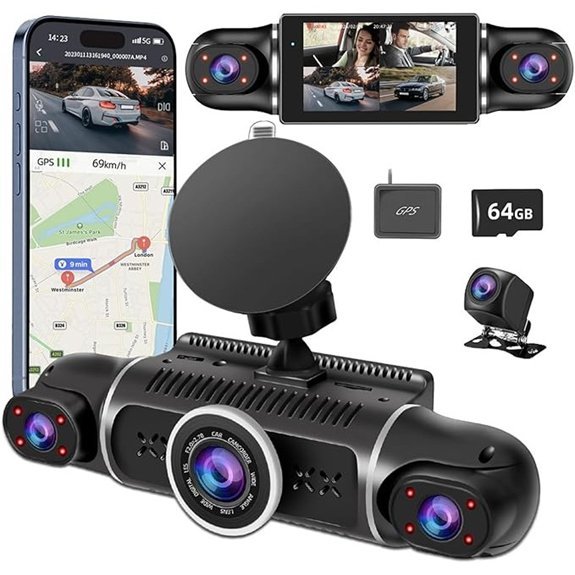 |
Ultimate 360° Protection | Resolution: 2K front, 1080P rear and sides, interior | Night Vision: Full-color night vision with WDR technology and infrared | Loop Recording: Yes, smart loop recording manages storage | CHECK PRICE ON AMAZON → | Read Our Full Review |
In-Depth Reviews — What Makes Each One Worth It for Tinted Vehicles
-
4K Dual Dash Camera with 5G WiFi and Night Vision — Best Overall for Tinted Vehicles
Who it’s for: Drivers who want the sharpest possible front-camera footage and need their dash cam to sit cleanly and discreetly behind a dark tinted windshield.
The front camera on this unit records at true 4K UHD — and the difference is immediately obvious when you pull footage to check a license plate or road sign at night. The Super Night Vision with WDR technology does the heavy lifting here: it balances the exposure between lit and dark zones in a single frame, which is exactly the compensation you need when a tinted windshield is restricting the light reaching your sensor. The 170° ultra-wide angle means you’re not losing edge coverage due to tint-reduced peripheral visibility either.
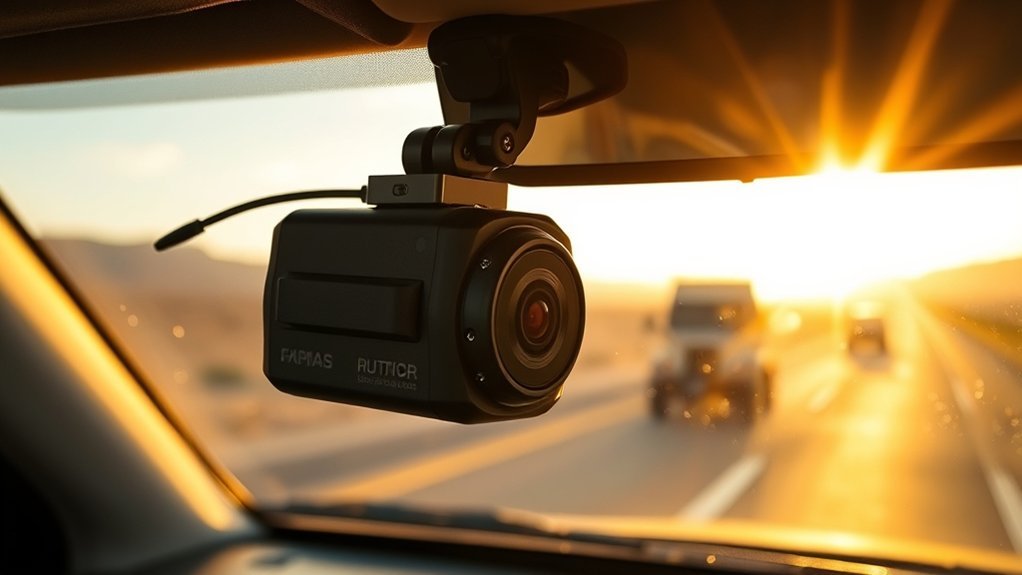
The 5G WiFi connection is a practical win — video files transfer to your phone quickly, so you’re not pulling the SD card every time you need a clip. The unit mounts compactly behind the rearview mirror, which matters specifically on tinted vehicles: a low-profile camera is far less visible from outside through dark glass. The included 64GB SD card gets you recording immediately without an additional purchase, and the 24-hour parking mode with G-sensor protection covers incidents while the vehicle is unattended.
The rear camera runs at 1080P rather than 4K — the expected trade-off at this price point. For most drivers, 1080P is still fully adequate for rear-incident footage. No GPS is included, so speed and location tagging are not available on this unit.
- Resolution:4K UHD front, 1080P rear
- Night Vision:Super Night Vision with WDR technology
- Loop Recording:Yes, with automatic overwriting
- G-sensor:Yes, detects collisions and locks footage
- Parking Mode:24-hour parking mode available
- Included Memory Card:64GB SD card included
- Additional Feature:Compact design for discreet mounting
- Additional Feature:3.0-inch IPS screen
- Additional Feature:Free app for video sharing
✅ Pros
- True 4K front resolution — license plates readable at distance in low light
- WDR compensates effectively for tint-reduced light transmission
- Compact, low-profile design hides cleanly behind rearview mirror
- 5G WiFi for fast, cable-free video transfers to your phone
- 64GB SD card included — ready to record straight out of the box
- 24-hour parking mode with G-sensor collision detection
❌ Cons
- Rear camera is 1080P only — not a 4K dual system
- 5G WiFi transfer requires a 5GHz-compatible smartphone
- No built-in GPS for speed or location tagging
⭐ Expert Verdict: Our top pick for tinted vehicle owners who prioritise front-camera image quality. The 4K resolution combined with WDR makes this the most capable option on this list for capturing readable plate numbers at night through a dark tinted windshield. The compact, low-profile build is a genuine bonus for drivers who want the camera invisible from outside. Check the current price on Amazon →
-
Dual Dash Cam 2.5K+1080P with Night Vision — Best for Dark Tints and Night Driving
Who it’s for: Drivers with darker tints — 30 to 35% VLT or below — who do a lot of night driving and need a dash cam that still produces clear, detailed footage when ambient light is severely restricted.
The headline feature here is the Starlight night vision sensor, and it genuinely deserves the attention. Unlike standard CMOS sensors that struggle once ambient light drops, the Starlight sensor is designed for exactly the kind of light-restricted environment that a dark tinted windshield creates. In low-light conditions, footage retains colour, maintains sharpness, and produces readable plate numbers where other cameras at this price bracket produce grey noise. If tinted windows at night are your core concern, this sensor type is the most direct solution to that problem.
The 2.5K front resolution is a step below 4K but more than sufficient for evidential use. The 170° wide angle paired with the Starlight sensor gives good peripheral coverage even when the tint is pulling your available light down. The 2-inch IPS display is compact and clear, and the adjustable suction cup mount allows more positioning flexibility when finding the clearest viewing point behind your tinted windshield.
The included 32GB card is on the smaller side — if you rely heavily on parking mode recordings, upgrading to 64GB is worth the additional cost. There is no built-in WiFi on this unit, so footage review requires the SD card or a direct cable connection.
- Resolution:2.5K front, 1080P rear
- Night Vision:Starlight night vision sensor
- Loop Recording:Yes, automatically overwrites oldest videos
- G-sensor:Yes, locks video during collision
- Parking Mode:24-hour parking monitor feature
- Included Memory Card:32GB memory card included
- Additional Feature:Adjustable suction cup mount
- Additional Feature:Screen saver function
- Additional Feature:User-friendly interface
✅ Pros
- Starlight sensor — strongest low-light performance on this list
- Specifically effective through dark tints at 30–35% VLT
- 170° wide angle minimises tint-related peripheral blind spots
- Adjustable suction mount allows precise positioning behind the tint
- Strong value for the night vision quality delivered
- 24-hour parking mode with G-sensor collision lock
❌ Cons
- No built-in WiFi — SD card or cable required for footage review
- 2-inch display is small for on-camera playback
- Only 32GB card included — smaller than competitors at this price
- No GPS tracking
⭐ Expert Verdict: If your primary concern is night-vision performance through a darker tinted windshield, this is the most targeted buy on this list. The Starlight sensor captures light that standard sensors simply miss — which is precisely the problem that dark tints create. It’s not the flashiest unit here, but it solves the core problem more directly than anything else at this price point. Check the current price on Amazon →
-
3 Channel 4K Dash Cam with WiFi & App Control — Best for Rideshare and Fleet Drivers
Who it’s for: Uber, Lyft, and taxi drivers with tinted vehicles who need front, rear, and interior cabin coverage from a single system — and anyone who wants complete 3-point recording with app-based control.
Three cameras. One system. That’s the core proposition here, and it delivers. The front records at 4K resolution, the rear at 2.5K, and the interior cabin camera at 1080P — all three running simultaneously. For rideshare drivers, that interior camera is the critical differentiator: it captures what’s happening inside the cabin, which no standard two-channel dash cam provides. When your tinted side windows mean passengers can’t see out easily, having a clear interior record becomes more important, not less.
The built-in 5G WiFi connects to the Viidure app, letting you review and download any of the three camera feeds wirelessly in real time. Parking monitoring activates on impact across all channels, so a knock in a parking lot while your tinted vehicle is unattended triggers recording on all three cameras simultaneously. The 64GB card is included, and tutorial videos are available to walk through the multi-camera cable routing, which is more involved than a standard two-channel setup.
The trade-off is installation complexity. Running three camera cables neatly requires patience and planning. But for rideshare operators and commercial fleet drivers who carry passengers in tinted vehicles, the coverage this unit provides is simply not available from any other option on this list.
- Resolution:4K front, 2.5K+1080P rear and inside
- Night Vision:Night vision capability
- Loop Recording:Yes, with automatic replacement of old files
- G-sensor:Yes, protects footage during collisions
- Parking Mode:Parking monitoring mode activates upon detecting impacts
- Included Memory Card:64GB SD card included
- Additional Feature:Switchable camera modes
- Additional Feature:Real-time video management app
- Additional Feature:Tutorial videos for installation
✅ Pros
- Front, rear, AND interior cabin recording simultaneously — essential for rideshare
- 4K front + 2.5K rear — high resolution on both external cameras
- Viidure app allows wireless real-time review of all three feeds
- Impact-triggered parking monitoring across all three channels
- 64GB card and installation tutorial videos included
❌ Cons
- Most complex installation of the two-channel alternatives — three cables to route
- Interior night vision specifications not explicitly detailed by manufacturer
- Larger cable management footprint across three camera positions
⭐ Expert Verdict: The clear choice for rideshare and fleet operators with tinted vehicles. No other camera on this list provides simultaneous interior cabin recording alongside 4K front and 2.5K rear footage. If you carry passengers commercially or manage a tinted fleet vehicle, this is the coverage level you need — and the Viidure app makes managing three feeds genuinely practical day-to-day. Check the current price on Amazon →
-
Dash Cam Front and Rear 4K+2.5K with Touch Screen — Easiest to Set Up and Use
Who it’s for: Drivers who want high-resolution recording on both cameras, prefer touchscreen controls over button menus, and want a dash cam they can configure for their specific tint level without relying on a smartphone app.
What makes this one stand out in a tinted window context is the sensor pairing. The SC2336 sensor combined with WDR technology handles mixed-light environments particularly well — lit intersections transitioning to dark stretches of road, or the kind of uneven lighting that a tinted windshield creates by filtering out parts of the visible spectrum. Footage through dark glass remains more colour-accurate and less blown-out in bright areas than you’d expect at this price point.
The 3.39-inch touchscreen is the biggest quality-of-life feature here. Adjusting exposure compensation, configuring parking mode sensitivity, and reviewing clips are all genuinely intuitive operations — no hunting through multi-level button menus while parked. That matters specifically for tinted window users, who often need to fine-tune brightness settings to compensate for their tint level rather than using default factory settings.
Both cameras deliver serious resolution: 4K front and 2.5K rear. That 2.5K rear is a meaningful step above the 1080P you’ll find on most competitors at this price. The adhesive tape mount provides a clean, vibration-free installation but limits repositioning — if you want to adjust the angle, you’ll need fresh adhesive. Wi-Fi and a 64GB card are included.
- Resolution:4K front, 2.5K rear
- Night Vision:Enhanced night vision with SC2336 sensor and WDR technology
- Loop Recording:Yes, dual dashcam with continuous monitoring
- G-sensor:Yes, detects collisions and locks emergency footage
- Parking Mode:Motion sensor monitoring in parking mode
- Included Memory Card:64GB memory card included
- Additional Feature:3.39-inch touchscreen
- Additional Feature:Time-lapse mode feature
- Additional Feature:Adhesive tape installation
✅ Pros
- SC2336 sensor + WDR — strong mixed-light performance through tinted glass
- 4K front AND 2.5K rear — high resolution on both channels
- 3.39-inch touchscreen makes settings adjustment fast and intuitive
- Time-lapse mode extends parking recording duration on limited storage
- 64GB card included; Wi-Fi for wireless video downloads
❌ Cons
- Adhesive-only mount — repositioning after installation requires new tape
- No GPS for speed or location data on recordings
- No interior cabin camera channel
⭐ Expert Verdict: If you want high-res footage on both cameras and a user experience that doesn’t require an app or a manual to operate, this is the pick. The SC2336 sensor and WDR combination handles tinted window light reduction effectively, and the touchscreen makes it straightforward to dial in settings for your specific tint level. Our recommended choice for everyday drivers who want a capable, set-and-forget dual dash cam. Check the current price on Amazon →
-
360° Dash Cam with Night Vision and WiFi (Zunfly W2) — Maximum Coverage for Fully Tinted Vehicles
Who it’s for: Drivers with fully tinted vehicles — including tinted rear and side windows — who want complete 360° coverage with GPS location tagging and are comfortable with a more involved installation process.
Four lenses. No blind spots. The Zunfly W2 doesn’t just cover front and rear — it captures the sides and interior simultaneously, which addresses a real vulnerability for drivers with heavily tinted side windows where no two-channel camera has any coverage at all. For a vehicle that is dark on all sides, this is the only complete solution on this list.
The full-color night vision, combining WDR technology with smart IR switching, is the most advanced night vision system in this roundup. Critically, it maintains colour accuracy in low light rather than switching to monochrome infrared — a meaningful difference when tinted side windows are further limiting the ambient light entering the cabin. Colour footage retains more evidential detail than greyscale IR footage in most incident scenarios.
The built-in GPS is a feature that none of the other cameras here include. Every recording is tagged with speed and location data, which strengthens evidential value significantly if footage is ever needed for insurance or legal purposes. Parking Mode Pro combines time-lapse monitoring and impact detection across all four channels, providing thorough protection when the vehicle is unattended. The 64GB card comes pre-installed and the 5GHz WiFi handles wireless transfers quickly.
The trade-offs are straightforward: installation is the most complex on this list, requiring four camera channels to be routed cleanly. The front camera runs at 2K rather than 4K — a step below the top units here. And it carries the highest price point of the five. If the coverage it delivers is what you need, those trade-offs are worth it.
- Resolution:2K front, 1080P rear and sides, interior
- Night Vision:Full-color night vision with WDR technology and infrared
- Loop Recording:Yes, smart loop recording manages storage
- G-sensor:Yes, locks collision footage
- Parking Mode:Parking Mode Pro with time-lapse and impact detection
- Included Memory Card:64GB card pre-installed
- Additional Feature:4-channel recording capability
- Additional Feature:Built-in GPS for speed and location tagging
- Additional Feature:Dual parking protection modes
✅ Pros
- 4-channel 360° coverage — front, rear, both sides, and interior
- Full-color night vision — colour-accurate footage in low light, not monochrome IR
- Built-in GPS with speed and location tagging on every clip
- Parking Mode Pro with impact detection and time-lapse across all channels
- 64GB card pre-installed — records immediately out of the box
❌ Cons
- Most complex installation — four camera channels to route and position
- Front camera is 2K, not 4K — lower than competitors
- Highest price point in this roundup
⭐ Expert Verdict: The Zunfly W2 is the right choice when you need complete vehicle coverage and your tinted windows extend beyond the front windshield to the sides and rear. The full-color night vision, built-in GPS, and 360° four-channel recording put it in a different category from anything else on this list. If you can invest in the installation and the price premium, this delivers the most thorough protection available for a fully tinted vehicle in 2026. Check the current price on Amazon →
Side-by-Side Comparison: All 5 Dash Cams for Tinted Windows
Not sure which model fits your setup? This table shows the key specs at a glance — the factors that matter most when your camera is shooting through dark tinted glass.
| Feature | 4K Dual (5G WiFi) |
2.5K+1080P Starlight |
3-Channel 4K |
4K+2.5K Touchscreen |
360° Zunfly W2 |
|---|---|---|---|---|---|
| Front Resolution | 4K UHD | 2.5K | 4K | 4K | 2K |
| Rear Resolution | 1080P | 1080P | 2.5K | 2.5K | 1080P |
| Night Vision Type | WDR | Starlight + WDR | Night Vision | SC2336 + WDR | Full-Color + IR |
| WiFi | ✅ 5G | ❌ No | ✅ 5G | ✅ Yes | ✅ 5GHz |
| Built-in GPS | ❌ No | ❌ No | ❌ No | ❌ No | ✅ Built-in |
| Camera Channels | 2 | 2 | 3 | 2 | 4 |
| Interior Camera | ❌ No | ❌ No | ✅ Yes | ❌ No | ✅ Yes |
| Included Memory | 64GB | 32GB | 64GB | 64GB | 64GB |
| Best For | 4K clarity + compact fit | Dark tints + night driving | Rideshare / fleet | Ease of use | Full 360° coverage |
What to Look For: Choosing a Dash Cam That Works With Tinted Windows
Picking a dash cam for a tinted vehicle is not the same as picking one for a standard car. The tint changes the equation on several key specs — and buying without understanding those differences means spending money on a camera that underperforms in exactly the conditions you need it most.
Why Night Vision Is the Most Critical Spec for Tinted Window Dash Cams
Tinted windows reduce light transmission to your camera sensor by anywhere from 20% to 70%, depending on your tint’s VLT (Visible Light Transmission) percentage. That reduction is most damaging after dark. A camera with adequate night vision in a standard vehicle can produce near-unusable footage through a dark tinted windshield on an unlit road.
Look for cameras equipped with WDR (Wide Dynamic Range), which balances exposures between bright and dark zones in a single frame. For darker tints, a Starlight sensor or full-color night vision system delivers meaningfully better results. Aperture size matters too — lenses with F1.6 or F1.8 apertures let significantly more light through than F2.0 or narrower. Do not buy a dash cam for a tinted vehicle without confirming these three specs.
How Wide-Angle Lenses Compensate for Tinted Window Blind Spots
A wide field of view matters for any dash cam, but it carries extra weight for tinted vehicles. Darker tints can reduce peripheral visibility through the glass, meaning a camera with a narrow angle may miss important edge-of-frame events that a wider lens would capture. Look for a minimum of 150°, and ideally 170° or above. Combined with a front and rear camera system, this eliminates the blind spots that tinted glass can introduce on both ends of the vehicle.
For drivers with tinted rear and side windows, a 360° four-channel system is the only complete solution — no amount of wide-angle compensation on a two-channel camera covers side-window blind zones.
How to Choose a Dash Cam Display That’s Readable Through Dark Tints
Tinted windshields can make glare a persistent problem when viewing your camera’s on-screen display. A 3-inch or larger screen provides better visibility in bright sunlight. Models with IPS panels handle off-axis viewing more effectively than standard LCD, which matters when the camera is positioned behind a darkly tinted section of glass. A touchscreen interface adds intuitive navigation without small buttons.
If your tint is on the darker end and in-cabin glare is consistent, look specifically for models with anti-reflective screen coating. For tinted vehicles in hot climates, a screen with a higher brightness rating (nits) will be readable in direct sunlight even through dark glass.
Low-Light Recording Quality: The Non-Negotiable for Dark Tinted Vehicles
This is the specification most buyers underestimate until they pull their first night clip and find it too dark to read a plate number. Tinted windows act as a filter that removes the same light wavelengths camera sensors depend on. Many cameras marketed as “night vision capable” are tested without any window obstruction — their real-world performance behind dark tinted glass is significantly lower.
For tinted vehicles, prioritise: Starlight sensor technology (designed for light-restricted environments), WDR with a large aperture of F1.6 to F1.8, and 6-layer glass lens construction which reduces internal reflections and chromatic aberration in low light. A minimum 30fps frame rate also matters — lower frame rates produce motion blur in low light that makes plate numbers impossible to read at speed.
Installing a Dash Cam on Tinted Windows: What You Need to Know
The tint itself is not the installation problem — the mounting surface is. Some window tints, particularly ceramic and metallic films, create surface textures that cause suction cup adhesion to weaken over time, especially with temperature cycling in hot climates. An adhesive mount provides a more reliable long-term bond on tinted glass than a suction cup.
Position the camera where it looks through the clearest section of the windshield — typically the unobstructed strip directly behind the rearview mirror, above the point where the tint strip begins at the top of the windshield. Check local regulations on windshield mounting before installation, as obstruction laws vary by state and can affect where the camera is legally permitted to sit.
Lens Quality and Heat Durability Inside Tinted Vehicles
Tinted vehicles absorb and retain significantly more heat than standard cars in direct sunlight — interior temperatures can reach well above ambient air temperature. Dash cams mounted behind tinted glass face this heat daily. Look for units that use a supercapacitor instead of a lithium battery for internal power storage: supercapacitors handle temperature extremes far better and have a longer operational lifespan in hot-vehicle environments.
For lens quality, 6-layer glass construction produces less chromatic aberration and internal glare than cheaper 4-layer alternatives. Paired with a wide aperture of F1.6 or F1.8 and WDR technology, these three specifications form the complete low-light lens profile worth checking for any tinted vehicle dash cam purchase.
Compact Dash Cam Designs That Hide Discreetly Behind Tinted Windows
One practical advantage of tinted windows is that they help conceal your dash cam from outside the vehicle. A compact, low-profile design that tucks cleanly behind the rearview mirror maximises that benefit. Larger display units are more visible as a silhouette against dark tinted glass than they are against a clear windshield — worth considering if discretion matters.
Verify that your chosen mount type is compatible with your tint’s surface before committing. For adhesive mounts, confirm the bonding surface is clean and residue-free from the tinting installation. A wide-angle lens of 170° or more remains essential regardless of how compact the form factor is — coverage cannot be sacrificed for size.
Frequently Asked Questions
Can I Use a Dash Cam With a Tinted Windshield?
Yes — and millions of drivers do. The key is matching your camera choice to your tint level. For lighter tints above 50% VLT, most modern dash cams perform well without any special consideration. For darker tints below 35% VLT, you need a camera with WDR technology and a wide aperture (F1.6 or F1.8) to compensate for the reduced light reaching the sensor. Every camera on this list was selected with tinted windows specifically in mind — all five are suitable choices at varying tint levels.
Will Tinted Windows Affect Dash Cam Video Quality?
Yes, particularly at night. Tinted windows reduce the light transmission to the sensor, which darkens footage and increases grain in low-light conditions. How much depends on your tint’s VLT percentage — a 20% VLT tint cuts far more light than a 70% VLT tint. A camera with a Starlight sensor, WDR technology, or full-color night vision will offset most of this effect. During daylight hours, a quality dash cam handles tinted glass well with minimal degradation to image quality.
Are There Legal Restrictions on Dash Cams in My State?
Laws vary by state and country. In the US, most states permit windshield-mounted dash cams provided they do not obstruct the driver’s sightline — the standard compliant position is behind the rearview mirror. Audio recording is a separate legal issue: several states including California, Florida, and Illinois require all-party consent before recording passengers or anyone inside the vehicle. Check your state’s specific laws on both dash cam mounting and audio recording before installation.
How Do I Install a Dash Cam on Tinted Windows?
Start by cleaning the mounting surface with isopropyl alcohol — this removes any residue left by the tinting film and ensures the mount bonds properly. Use an adhesive mount for a long-term, vibration-free fit; suction cups can lose grip on some tint surfaces over time, particularly with temperature cycling in hot climates. Position the camera directly behind the rearview mirror so it shoots through the clearest section of windshield, above the tint strip. Route the power cable along the headliner and down the A-pillar to the OBD port or cigarette lighter socket for a clean, wire-hidden installation.
Do Dash Cams Void My Vehicle Warranty?
Simply mounting a dash cam will not void your warranty. In the US, the Magnuson-Moss Warranty Act prevents manufacturers from voiding warranties for aftermarket accessories unless the accessory directly caused the specific damage being claimed. The only scenario where a dash cam installation could affect warranty coverage is hardwiring to the fuse box — and only if that installation caused electrical damage. If you want to eliminate any risk, use a cigarette lighter plug adapter rather than hardwiring, or consult your dealer before a hardwired installation.
Which Dash Cam Should You Buy for Tinted Windows? Our Final Verdict
Tinted windows create a specific and predictable set of challenges for dash cams: reduced sensor light, adhesion complications on some tint surfaces, and the need for sensors and apertures calibrated for restricted-visibility conditions. The five cameras on this list were selected because they address those challenges directly — not just because they produce good footage in optimal conditions.
For most drivers, the 4K Dual Dash Camera with 5G WiFi delivers the best overall combination of image quality, WDR night vision, and compact low-profile design for tinted vehicles. If your tint is on the darker end and night performance is the priority, the Starlight sensor model is the more targeted choice. Rideshare and commercial drivers should go straight to the 3-channel 4K unit for interior cabin coverage. Drivers who want the simplest setup and high-res footage on both cameras will be well served by the 4K+2.5K touchscreen model. And for anyone with a fully tinted vehicle who needs zero blind spots and GPS-tagged footage, the Zunfly W2 360° system is the comprehensive solution.
Check the current prices on Amazon — all five are strong picks, and the right one comes down to your tint level, your driving situation, and the coverage you need.