
Can A Toyota RAV4 A Toyota RAV4 Be Flat Towed Behind A Motorhome? (answered)
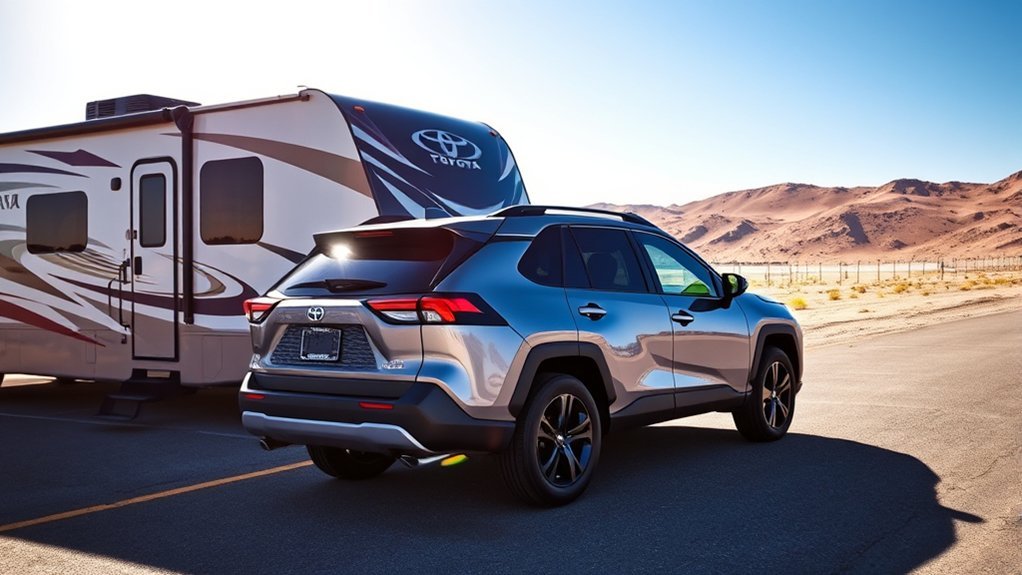
No, you can’t flat tow a Toyota RAV4 behind a motorhome, especially if you own an AWD model from 2018 or newer due to transmission design limitations. FWD RAV4s can be towed with a tow dolly, but you must follow specific guidelines. Ignoring these limitations could lead to costly transmission damage. If you want to learn about safe towing methods and the best practices for your RAV4, keep exploring further.
Can the Toyota RAV4 Be Flat Towed? A Guide to Towing Options
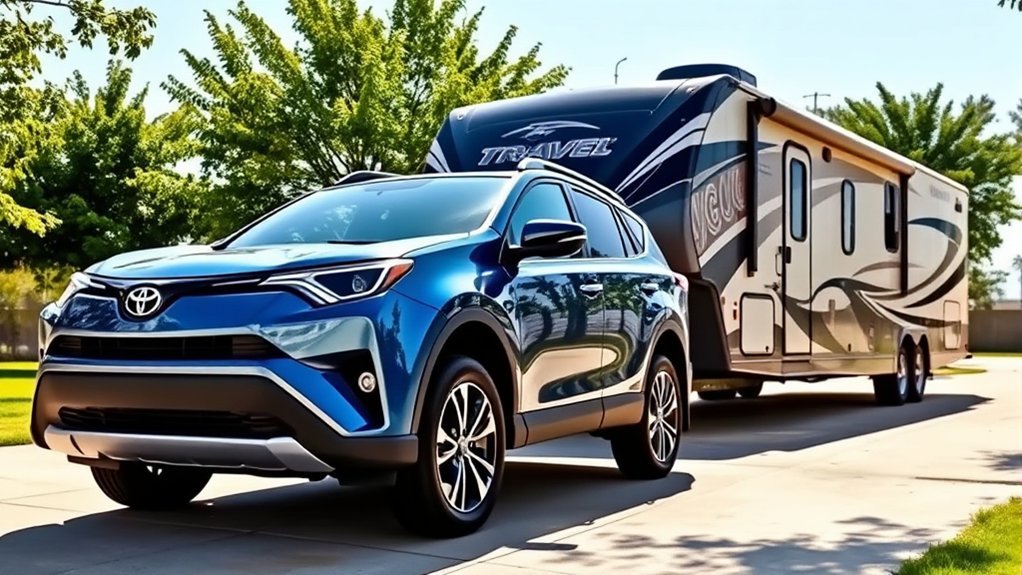
Wondering if you can flat tow a Toyota RAV4 behind your motorhome? Unfortunately, if you own a 2018 or newer model, you can’t flat tow it due to design limitations. For all-wheel-drive (AWD) RAV4s, using a trailer is a must, as their transmission isn’t built for flat towing without risking damage. However, if you have a front-wheel-drive (FWD) RAV4, you can safely use a tow dolly, as long as you follow the manufacturer’s speed and distance limits. Be sure to consult your owner’s manual for specific towing guidelines to guarantee you’re towing safely. While modifications like a Remco Lube Pump might offer alternative towing options, they could void your warranty and require diligent maintenance. To enjoy your adventures without worry, stick to the manufacturer’s recommendations to keep your RAV4 in top shape while hitting the road.
Understanding Towing Limitations for the RAV4
When it comes to towing your Toyota RAV4, understanding the limitations specific to your model is vital. For instance, the 2018 RAV4 AWD cannot be flat towed due to its driveshaft connection, which means you’ll need a trailer instead. Flat towing an all-wheel drive vehicle like the RAV4 can lead to serious transmission damage if proper methods aren’t followed. On the other hand, FWD models can be towed using a tow dolly, which lifts the front wheels off the ground, making it a viable option. Always check your owner’s manual for vital information regarding your specific model’s towing capabilities. This guide is important to avoid costly damages and guarantee a smooth towing experience. By knowing these limitations, you empower yourself to make informed decisions, keeping your adventures enjoyable and stress-free.
Recommended Towing Methods for AWD vs. FWD RAV4 Models
Understanding the recommended towing methods for your Toyota RAV4, whether it’s an AWD or FWD model, is essential for protecting your vehicle and ensuring a hassle-free experience. If you own an AWD RAV4, like the 2018 or 2021 models, you can’t flat tow it. Instead, these models require a trailer due to their driveshaft connection. On the other hand, FWD RAV4s can be towed using a tow dolly, which lifts the front wheels off the ground—making towing straightforward and safe. Always refer to your owner’s manual for specific towing instructions and guidelines. Remember, while aftermarket modifications might allow for some towing capabilities, they can void warranties and introduce risks. Stick to the recommended methods to keep your RAV4 in top shape and enjoy your adventures worry-free!
Safety Tips for Towing Your RAV4
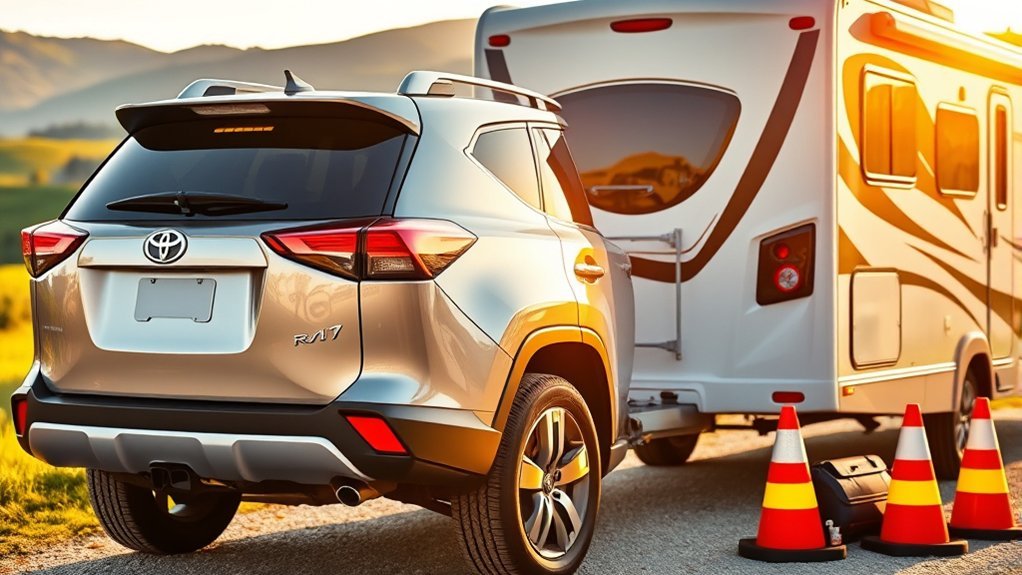
When towing your RAV4, regular maintenance checks are key to ensuring everything runs smoothly. Always follow the manufacturer’s guidelines to prevent any damage during transit. Using quality towing equipment also plays an essential role in keeping your vehicle safe and secure on the road.
Regular Maintenance Checks
To guarantee a safe and smooth towing experience with your Toyota RAV4, it’s important to perform regular maintenance checks before hitting the road. Start by regularly checking your owner’s manual for specific towing guidelines and maintenance requirements. Before towing, inspect the transmission fluid levels and verify the transmission is in neutral to prevent damage. Conduct thorough pre-trip checks on your tires, brakes, and lighting systems to confirm they’re in good working order. After towing, let the engine idle for at least three minutes for proper lubrication of the transmission before driving again. Don’t forget to monitor the condition of any aftermarket towing equipment, like lube pumps or drive shaft disconnects, to avoid potential mechanical failures during your adventure.
Follow Manufacturer Guidelines
Performing regular maintenance checks sets the foundation for safe towing, but following manufacturer guidelines is just as important. If you own a 2018 Toyota RAV4 AWD, keep in mind it can’t be flat towed due to its transmission design. Instead, consult the owner’s manual for proper transportation methods. Meanwhile, front-wheel drive models can be towed using a tow dolly, but again, stick to the guidelines laid out in the owner’s manual to avoid damage. Towing with the transmission in gear or bypassing recommended setups risks severe vehicle damage. Always check your towing equipment and adhere to the speed and distance limitations specified. This guarantees your adventures remain liberating and your RAV4 stays safe on the road.
Use Quality Towing Equipment
Quality towing equipment is vital for guaranteeing a safe and smooth journey with your Toyota RAV4. If you’re planning to use a tow, verify you’ve got the right setup based on your model. Remember, the 2018 AWD RAV4 can’t be flat towed and must be transported on a trailer, while the FWD models can use a tow dolly like the Demco Kar Kaddy X. Always consult your owner’s manual for specific guidelines. It’s important to select quality towing equipment that matches your RAV4’s weight and dimensions. Regularly check your connections and lighting to confirm everything functions properly. By prioritizing quality, you enhance safety on the road and protect your vehicle during transport.
How to Modify Your RAV4 for Safe Towing
To safely modify your RAV4 for flat towing, you’ll need to install essential equipment like a Remco Lube Pump and a Drive Shaft Disconnect. Regular maintenance and safety checks on these systems are vital to prevent transmission damage during towing. Always refer to your owner’s manual to guarantee you’re following the right guidelines for your specific RAV4 model.
Necessary Equipment Installations
When you’re looking to modify your Toyota RAV4 for safe towing behind a motorhome, there are a couple of essential installations you’ll need to contemplate. Here’s a quick list of necessary equipment to get your RAV4 flat towed without issues:
- Remco Lube Pump: This keeps your transmission lubricated while towing, preventing damage.
- Drive Shaft Disconnect: It allows towing without risking your transmission and drivetrain.
- Transmission in Park: Always verify your vehicle’s transmission is in park before towing, as outlined in your owner’s manual.
- Consider Warranty: Keep in mind that these modifications might void your vehicle’s warranty, so weigh the risks.
Maintenance and Safety Checks
Although modifying your Toyota RAV4 for flat towing can enhance your travel experience, it’s crucial to prioritize maintenance and safety checks to guarantee everything operates smoothly. Regular maintenance checks on equipment like the Remco Lube Pump and Drive Shaft Disconnect are critical. Always consult your owner’s manual for specific towing guidelines and instructions to avoid damage.
| Maintenance Check | Frequency |
|---|---|
| Inspect Lube Pump | Before each trip |
| Check Drive Shaft Disconnect | Monthly |
| Verify Towing Equipment | Before towing |
| Confirm Vehicle is in Neutral | Before towing |
These proactive steps will protect your RAV4 and ensure safe adventures on the road. Enjoy the freedom of the open road!
What Myths About Towing a RAV4 Should You Ignore?
Ever wondered what myths about towing a RAV4 you should toss aside? It’s crucial to separate fact from fiction to protect your vehicle. Here are four myths you can ignore:
- All RAV4 Models Can Be Flat Towed: Only front-wheel-drive versions can use a tow dolly; all-wheel-drive (AWD) models require a trailer.
- Social Media Advice is Reliable: Don’t trust random tips online. Stick to the owner’s manual for accurate towing guidelines.
- AWD Vehicles Can Be Flat Towed: Most AWD vehicles, including the RAV4, lack the necessary engineering for safe flat towing without engine power.
- Towing is the Same for All Vehicles: Each model has unique limitations and requirements, clearly outlined in the owner’s manual.
Stay informed and follow proper guidelines to avoid transmission damage when towing your RAV4.
Frequently Asked Questions
Can a Toyota RAV4 Be Flat Towed Behind a Motorhome?
No, you can’t flat tow a Toyota RAV4 behind a motorhome. Consider alternatives like towing a different vehicle. Always follow towing safety tips and check compatibility to guarantee a smooth travel experience.
What Year Can a Toyota RAV4 Be Flat Towed?
You can flat tow certain older RAV4 models, like the 2001 version, while newer models generally lack towing compatibility. Check year specifications and towing capacity to guarantee your RAV4 meets the necessary requirements for towing.
Does Toyota Have Any Vehicles That Can Be Flat Towed?
Yes, Toyota offers vehicles like the Tacoma that can be flat towed, particularly certain 4WD models. Hybrid models generally aren’t compatible for flat towing, so check towing capacities and owner experiences for specific details.
What Is the Easiest Vehicle to Flat Tow Behind an RV?
The easiest vehicle to flat tow is often the Jeep Wrangler. With RV towing tips and the right flat towing equipment, you’ll enjoy smooth travels. Consider tow vehicle comparisons for the best flat tow vehicles available.
Conclusion
In summary, flat towing your Toyota RAV4 is definitely possible, but it depends on your specific model and setup. It’s essential to follow the guidelines to guarantee safe towing. Did you know that nearly 70% of RV owners prefer flat towing their vehicles for convenience? This statistic highlights how many people enjoy the freedom of exploring the open road without sacrificing mobility. So, prepare your RAV4 properly, and get ready for your next adventure!