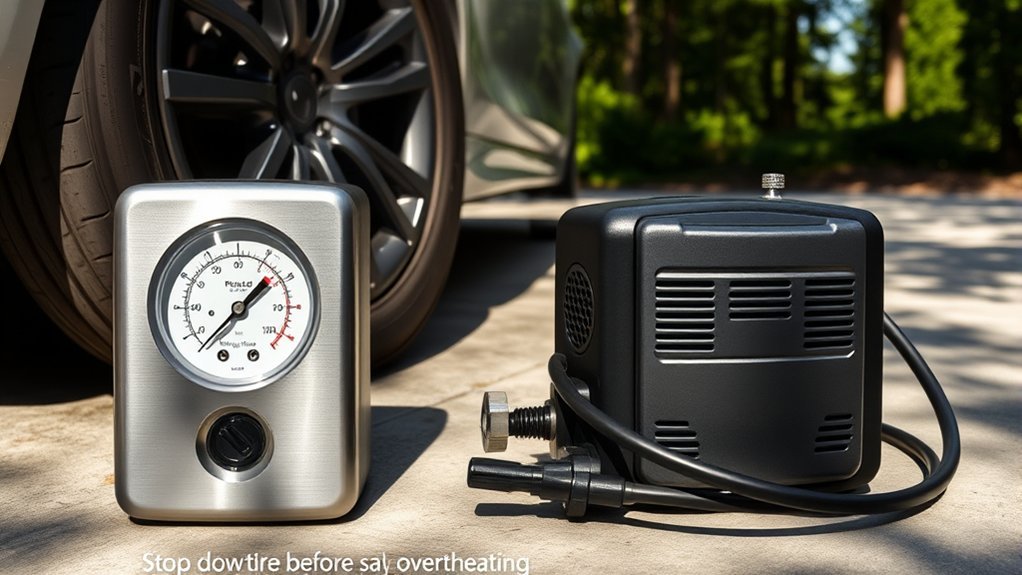
Signs Your Tire Inflator Needs Replacement: What to Watch For
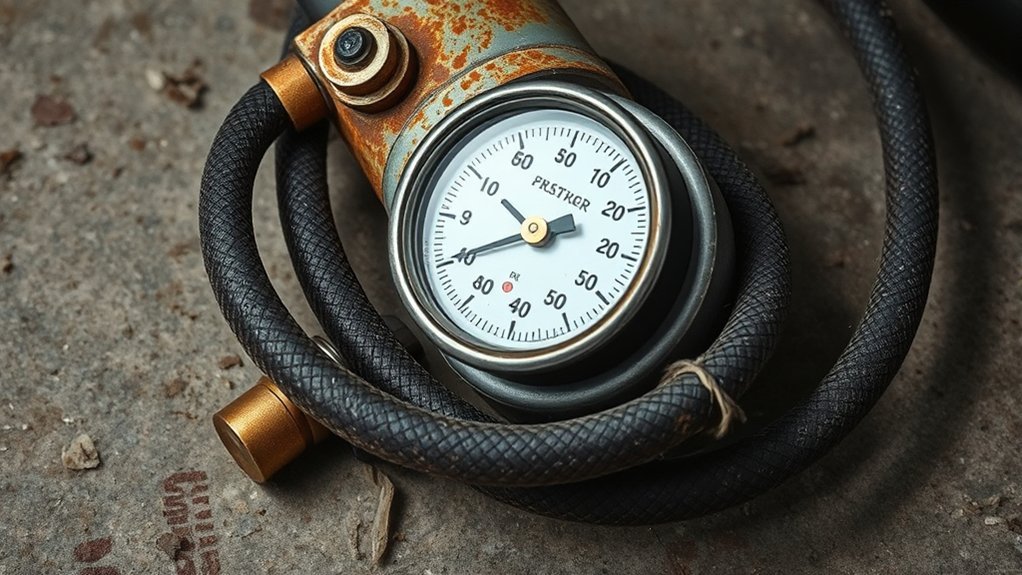
You should replace your tire inflator if it gives inconsistent or zero PSI, hisses or leaks at fittings, takes much longer than it used to to reach pressure, or produces grinding noises, a burning smell, or an overheated case. Also swap it out for visible cracks, rusted fittings, frayed hoses, or a battery that won’t hold charge. Minor hose or valve fixes are okay, but persistent internal faults mean replacement—and below you’ll find how to test and choose a new unit.
Quick Triage: Can You Fix a Faulty Tire Inflator or Replace It?
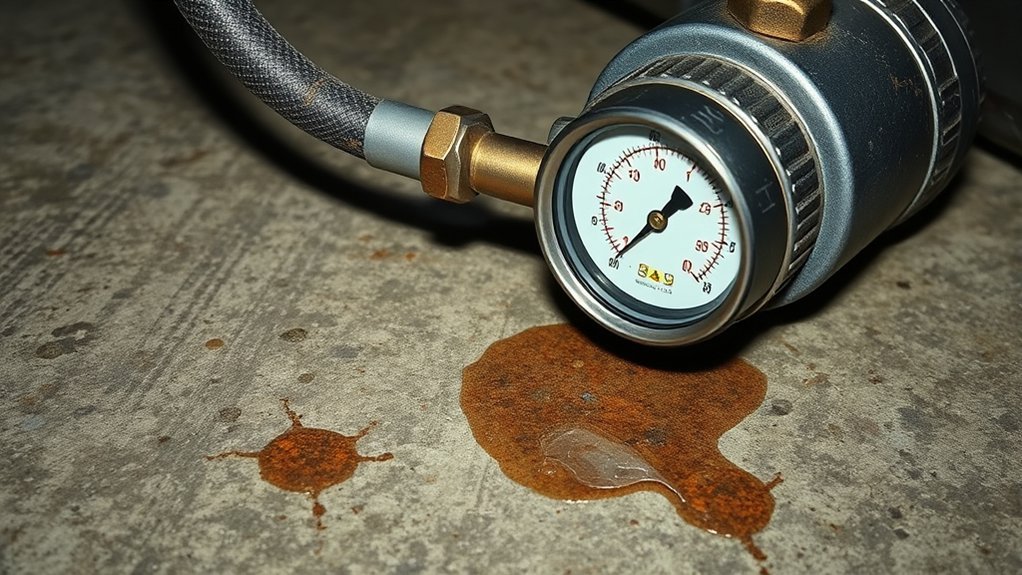
How can you tell whether to repair a faulty tire inflator or replace it? You’ll run a quick triage: if the unit won’t power on after you’ve verified the power source and battery, that’s a strong indicator to replace rather than repair. Check for common issues like inaccurate pressure readings; if recalibration doesn’t fix the gauge, reliability’s compromised and replacement is wiser. Note signs of wear such as frayed hoses, damaged connectors, or visible burns—these often mean replacement is more practical than patching. If the inflator overheats, shuts down, or emits unusual smells during use, internal damage is likely and repairs won’t restore safe operation. Frequent breakdowns or painfully slow inflation times signal deeper mechanical failure; continuing to repair will cost you time and freedom. Choose replacement when safety, consistent pressure readings, or durable components can’t be restored—doing so preserves your independence on the road.
Inflator Reads 0.00 or Inconsistent PSI : How to Test and Rule Out Leaks
If your inflator reads 0.00 or jumps around, first check for external leaks by inspecting hose connections, fittings, and the hose for cracks or blockages. Then perform a simple functional test: inflate a tire and compare the inflator’s reading to a known-good tire pressure gauge to spot discrepancies. If readings stay at zero or remain inconsistent despite tight connections and calibration, the internal pressure sensor may need inspection or manufacturer support.
Check For External Leaks
Start by applying a soapy-water solution to the inflator’s hose, fittings, and nozzle while it’s pressurized; watch closely for steady bubbles, which pinpoint escaping air and explain a 0.00 or fluctuating PSI. To check for external leaks, inspect the air hose end-to-end for cracks, splits, or loose clamps that let pressure escape. Tighten connections and reseat threads or quick-connects; loose fittings often mimic faulty pressure readings. If you can’t see a leak, run the inflator and listen for hissing along seams and around the nozzle — sound locates leaks your eyes miss. Make this part of routine maintenance so you stay free of roadside surprises. Replace damaged hoses or fittings promptly to restore accurate pressure and reliable inflation.
Test Internal Sensor Integrity
When your inflator shows 0.00 PSI or jumps around, verify the sensor itself after you’ve ruled out external causes: secure all connections, inspect the hose and fittings for cracks or blockages, then compare the inflator’s reading to a known-good gauge on the same tire. If the inflator still disagrees, perform a controlled test: pressurize the tire to a set value with the known gauge and watch the inflator’s response. Note steady, drifting, or no reading. Check hose integrity again—blockages mimic sensor failure. If pressure readings remain inconsistent despite clear connections and a verified source, the internal sensor likely failed. At that point, decide between professional calibration (if available) or replacement, especially for out-of-warranty units.
Noises, Burning Smells, or Overheating : Signs of Internal Failure
Although a faint rattle or sudden grinding might seem minor, those noises often point to loose components or a failing motor inside your tire inflator and deserve immediate attention. You’ll want to act fast when noises, burning smells, overheating, or other signs of internal failure appear, because they foreshadow bigger performance issues and loss of freedom on the road.
- Grinding, rattling, or hissing: check for loose parts or a failing motor; stop use if sounds worsen.
- Burning smell during or after use: indicates overheating, electrical faults, or scorched components—disconnect and inspect.
- Frequent shutdowns or hot casing: suggest inadequate ventilation or worn internals that need replacement.
Diagnose by observing odor, heat, and sound patterns; test brief runs with rest intervals. Don’t ignore repeated symptoms—addressing them preserves your autonomy and safety. If problems persist after basic checks, replace the unit to avoid complete breakdown.
Slow Inflation and Long Run-Times : Worn Parts vs. Repairable Problems
Noises, smells, and overheating can signal internal failure, but slow inflation and long run-times are a different—and often more gradual—warning that parts are wearing out or leaks are reducing performance. If you notice slow inflation compared to the manufacturer’s benchmark, measure run-times and note deviations. Consistently prolonged inflation times point to worn parts—degraded hoses, weak seals, or damaged internal components—that reduce airflow and efficiency.
Diagnose by isolating variables: test with a known-good hose, check connections, and listen for steady hisses that suggest air leaks. If swapping consumables restores speed, replace those parts; if not, you’re likely facing underlying mechanical issues in the motor or valves. Keep in mind extended cycles stress cooling systems; repeated long runs can worsen damage and make replacement more economical than repair. Track inflation speed over several uses; when performance steadily declines despite simple fixes, choose replacement to reclaim reliable, liberating mobility.
Visible Damage and Air Leaks That Make the Unit Unsafe
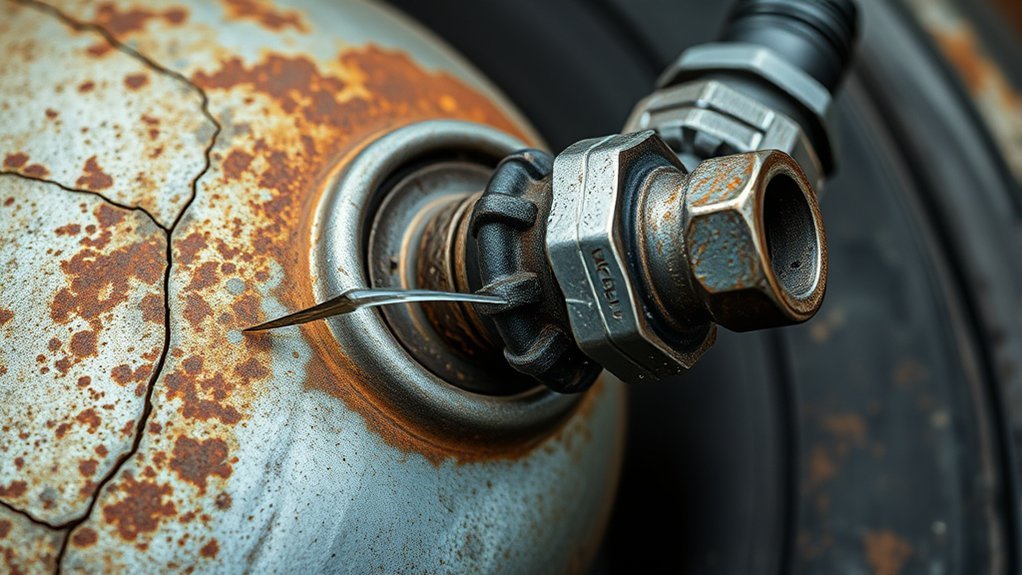
If you spot cracks, frays, dents, rust, or loose fittings, stop using the inflator and inspect it closely—those visible defects often cause air leaks that undermine performance and create safety risks. You want gear that frees you, not ties you down; visible damage is a clear limit on reliability. Check hoses, fittings, and the case for compromises. Listen for hissing; that sound usually signals an active air leak and reduced pressure during use.
Spot visible cracks, frays, dents, rust, or loose fittings—stop using the inflator and inspect for leaks immediately.
- Inspect the air hose for cracks or frays that cause leaks and lower performance.
- Test connections and look for loose or damaged fittings that raise safety risks.
- Watch for dents or rust on the unit indicating internal issues needing replacement.
Prioritize proper maintenance: minor fixes won’t mask structural flaws. If pressure drops considerably during inflation or you detect leaks you can’t safely repair, replace the inflator to protect yourself and restore dependable performance.
Cordless Tire Inflator: Battery and Power Problems That Justify Replacement
Several clear power-related signs mean you should stop relying on a cordless tire inflator and consider replacing it. If the unit won’t turn on despite a fully charged battery, you’re facing an internal power failure that undermines safe, independent use. Don’t wait for a roadside emergency.
If pressure readings jump around or stay inaccurate, the internal sensor or electronics are compromised; that unreliable feedback makes inflating tires risky and justifies replacement. Overheating during normal cycles—whether from the battery or motor—signals declining performance and potential hazard, so replace rather than gamble.
When charging takes longer and runtime shrinks, the battery has degraded; persistent slow charging or weak output means the inflator no longer supports consistent inflating tires sessions. Finally, if airflow is weak or you detect persistent leaks after checking hoses and connectors, internal damage is likely irreparable. Choose replacement to regain dependable, liberating mobility.
Replacement Checklist: What to Buy Next (CFM, Size, Noise, Battery Life)
What should you prioritize when replacing a cordless tire inflator? Focus on function and freedom: pick a model that matches your inflation needs so you’re not tethered by slow performance or frequent recharges. Check CFM first — it determines how quickly tires reach pressure. Match CFM to your vehicle type for efficient fills.
Consider these quick selection points:
- Size: choose a compact, portable unit that fits your storage and on-the-go lifestyle.
- Noise: target models under 70 dB for quieter operation and less disruption.
- Battery life: aim for at least 30 minutes continuous use to handle multiple inflations without stopping.
Also review customer feedback and expert ratings to confirm durability and value. Factor in regular maintenance ease — accessible filters, replaceable parts, and clear manuals free you from unnecessary dependence. Buy an inflator that’s powerful enough, small enough, quiet enough, and long-lasting so you can move confidently, independently, and without compromise.
Frequently Asked Questions
How Do I Know When My Air Compressor Needs Replacing?
You’ll know when it’s time: persistent compressor noise issues, visible signs of wear, frequent repairs despite compressor maintenance tips, reduced output after troubleshooting steps, rising replacement cost projections — trust those diagnostics and reclaim freedom from unreliable gear.
Why Does My Portable Tire Inflator Keep Shutting Off?
Like a canary in a coal mine, your tire inflator issues usually stem from overheating problems, power supply failures, clogged hoses or internal faults; follow maintenance tips, check connections, and monitor inflation speed so you can regain freedom.
What to Look for in a Tire Inflator?
You should prioritize tire inflator features like reliable gauges, max PSI, auto shut-off, and LED; follow inflator maintenance tips, review portable inflator comparisons, heed inflator safety guidelines, and set tire inflation frequency to free yourself from roadside dependence.
How Do You Know if Your Car Air Compressor Is Bad?
You’ll know it’s bad when inconsistent pressure, compressor noise, overheating, or increased energy use cause performance issues; check tire inflator maintenance, signs of wear and safety concerns, and act to repair or replace for freedom.
Conclusion
When your inflator reads 0.00, smells burned, drags on forever, or leaks air despite your best troubleshooting, don’t gamble with duct tape and hope — replace it. You’ve checked for hose leaks, tried another gauge, and tested the battery; persistent inconsistency, overheating, visible damage, or poor CFM mean the unit’s unsafe or ineffective. Buy a replacement that matches required CFM, size, and battery life, and pick a quieter, reliable model that won’t let you down.