How to Use a Presta Valve Adapter: Step-by-Step Guide
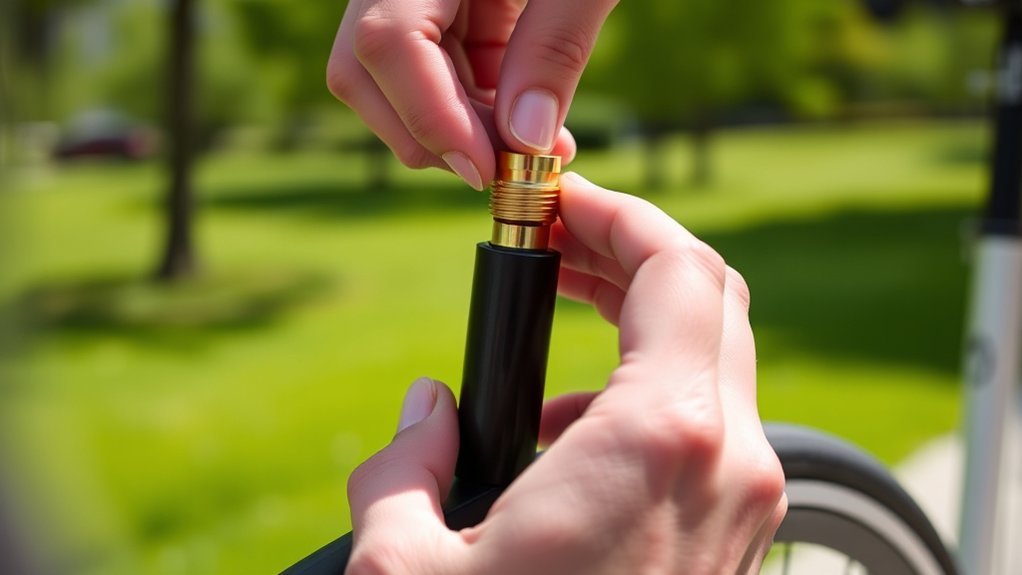
A Presta-to-Schrader adapter is a small fitting that lets you use a Schrader-only pump, air chuck, or pressure gauge on a bicycle tire with a Presta valve. The job is simple, but the thin valve tip can bend if the pump or adapter is forced sideways. Use finger pressure, support the valve, and stay within the tire and rim pressure limits.
Quick Answer
Remove the valve cap, fully loosen the small Presta tip, and press it once to confirm airflow. Screw the Presta-to-Schrader adapter on finger-tight, connect the Schrader pump, and inflate carefully. Remove the pump and adapter, then gently tighten the Presta tip. Never exceed the lower pressure limit set by the tire or rim maker.
Key Takeaways
- Open the Presta valve first: Unscrew the small knurled tip counterclockwise before fitting the adapter.
- Use only finger pressure: Thread the adapter on straight and snug. Pliers can damage the valve or adapter.
- Support the valve: Hold the pump head or hose steady so the narrow Presta tip is not bent sideways.
- Choose pressure carefully: Use the bike, tire, and rim manufacturers’ guidance, and never exceed the lowest stated maximum.
- Remove the adapter after inflation: This makes it easier to close the Presta tip and reinstall the valve cap.
At a Glance
| Time Required | About 2 to 5 minutes |
| Difficulty | Easy |
| Tools Needed | Presta-to-Schrader adapter, Schrader-compatible pump, and an accurate pressure gauge |
| Cost | Usually a few dollars for an adapter; no added cost if you already own one |
What a Presta Valve Is and When You Need an Adapter
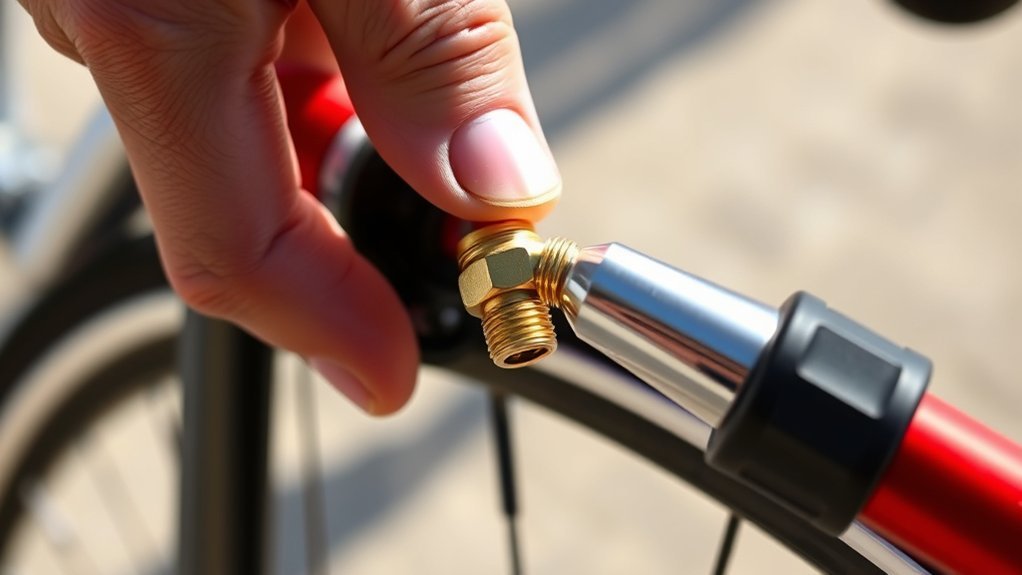
A Presta valve, also called a Sclaverand or French valve, is the narrow valve used on many road, gravel, mountain, and tubeless bicycle wheels. It has a small threaded tip with a knurled nut that must be loosened before inflation. Schwalbe notes that the Presta valve is narrower than common car-style valves and that the thin top pin can bend if a pump connector is attached carelessly.
A Presta-to-Schrader adapter converts the outside connection to the wider Schrader format used by many car pumps, workshop inflators, and pressure gauges. It does not permanently convert the valve or change how the Presta core works. It simply gives a Schrader chuck the shape and threads it needs to connect.
Note: You do not need an adapter when your pump head already supports Presta valves. Many modern floor and hand pumps use a dual head, reversible insert, or automatic head that fits both Presta and Schrader valves.
Tools to Check First: Pump Type, Adapter, and Pressure Limits
Before starting, identify the pump head and inspect the parts you will use. A quick check prevents most leaks and protects the narrow valve tip.
- Presta-only pump: Connect it directly to the open Presta valve. No adapter is needed.
- Dual-head or universal pump: Select the Presta opening or follow the pump maker’s instructions.
- Schrader-only pump: Fit a Presta-to-Schrader adapter before attaching the pump.
- Adapter condition: Check for damaged threads, dirt, cracks, or a missing O-ring if your adapter model uses one.
- Valve condition: Do not inflate through a badly bent, cracked, loose, or leaking valve stem.
- Pressure limit: Check the tire, rim, and bicycle guidance before pumping. Use the lowest applicable maximum.
Adapter designs differ. Some are simple one-piece brass fittings, while others include a rubber O-ring. Do not assume every adapter has removable seals or multiple parts. Replace the adapter if it will not thread smoothly or seal reliably.
Prepare the Presta Valve
Air cannot pass through a closed Presta tip. Prepare the valve before installing the adapter.
1. Remove the Valve Cap
Unscrew the plastic or metal cap and set it aside. Wipe dirt from the valve threads so grit does not enter the pump head or damage the adapter threads.
2. Unscrew the Knurled Tip
Turn the small nut at the top of the valve counterclockwise until it reaches the end of the threaded pin. Do not try to remove it. Briefly press the tip. A short hiss confirms that the valve can open and also helps free a tip that has stuck after sitting.
3. Support the Valve Stem
If the tire is nearly flat, press the valve gently outward from the tire side so it does not disappear into the rim. Hold the stem near the rim while connecting the adapter, especially when using a tight pump chuck.
Warning: Do not use pliers on the Presta tip or adapter. Excess force can bend the valve pin, loosen a removable valve core, damage threads, or tear an inner-tube valve at its base.
Attach a Presta Valve Adapter Correctly
Place the adapter over the open Presta valve and turn it clockwise by hand. Keep it straight so the fine threads engage cleanly. Stop when it is finger-tight and no longer wobbles.
| Step | Action | Correct Result |
|---|---|---|
| 1 | Align the adapter with the valve | It sits straight, not tilted |
| 2 | Turn clockwise using your fingers | Threads engage without binding |
| 3 | Stop when snug | The adapter is stable without excessive force |
If the adapter binds after part of a turn, remove it and start again. Forcing a cross-threaded adapter can damage both parts.
Inflate the Tire With the Adapter
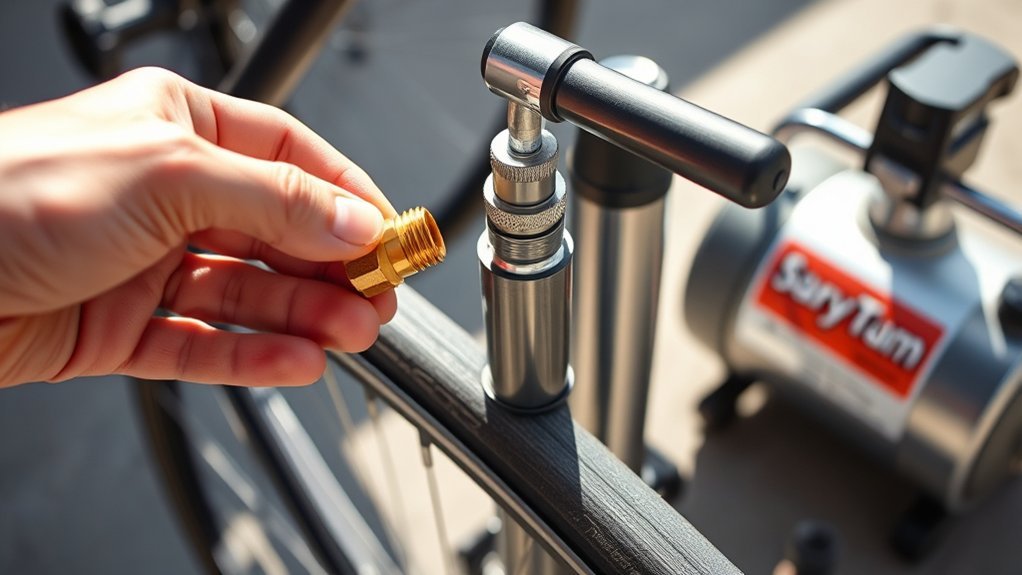
1. Attach the Pump Head
Push or thread the Schrader pump head onto the adapter according to the pump design. If the head has a locking lever, move it only after the head is fully seated. Lever direction varies by pump, so follow the markings or manual rather than assuming that up or down always means locked.
2. Inflate in Controlled Strokes
Pump while watching the gauge. Use the pressure range or setup guidance supplied by the bicycle, tire, or rim manufacturer. The tire sidewall or packaging may list a permitted range or a maximum, but that number is not automatically the best pressure for every rider, load, rim, and surface.
When the tire and rim list different maximum pressures, follow the lower limit.
3. Remove the Pump and Adapter
Release the pump lock, pull the head off straight, and unthread the adapter counterclockwise. A brief hiss from air trapped in the pump head is normal. Gently turn the Presta tip clockwise until finger-tight, then replace the valve cap.
Pro Tip: With a short hand pump, hold the pump head and valve area steady instead of rocking the pump against the stem. A flexible hose reduces sideways stress on the thin Presta tip.
Using a Gas-Station Compressor
A Presta-to-Schrader adapter can let some gas-station air chucks connect to the valve, but a bicycle pump with a readable gauge is safer and easier to control. Station compressors may deliver air quickly, and their gauges may not be ideal for small bicycle tires.
Warning: Use a station compressor only when you can control the airflow and verify pressure. Add air in very short bursts, check frequently with a bicycle gauge, and never exceed the lower maximum stated by the tire or rim manufacturer. Stop immediately if the tire bead lifts, the valve bends, or the gauge behaves unpredictably.
How to Choose the Correct Bicycle Tire Pressure
There is no single correct PSI for every bicycle tire. The safe and useful setting depends on tire size, rim type, rider and cargo weight, road or trail conditions, and the limits set by the component makers.
- Start with the bicycle, tire, and rim manufacturers’ pressure guidance.
- Never exceed the lowest maximum listed for the tire-rim combination.
- For hookless rims, follow the rim maker’s pressure cap carefully because it may be lower than the tire’s limit.
- Use a lower pressure only within the approved range and only when it still prevents rim strikes, instability, and tire damage.
- Check pressure before riding, especially when a narrow tire or tubeless system loses a noticeable amount of air between rides.
Continental advises checking both tire and rim requirements and using the lower value when their maximum pressures differ. Its bicycle maintenance guidance also recommends staying within the manufacturer’s range and adjusting for the rider’s needs.
Troubleshoot Presta Adapter Problems
| Problem | Likely Cause | What to Do |
|---|---|---|
| No air enters | The Presta tip is still closed or stuck | Remove the adapter, loosen the tip fully, press it once, and reconnect |
| Air leaks around the adapter | Cross-threading, dirt, damage, or a missing O-ring on an adapter that uses one | Clean and rethread it straight; replace damaged parts |
| Pump head will not stay on | Wrong chuck opening, unlocked lever, worn pump seal, or poor alignment | Confirm the Schrader side is selected and inspect the pump-head seal |
| Valve core turns or comes loose | A removable core was loose, or a threaded connector gripped it | Deflate safely, tighten the removable core with the correct core tool, and check for leaks |
| Valve tip is bent | Sideways force from the pump or adapter | Stop using it. Replace the tube or valve core if it cannot operate smoothly and seal reliably |
| Tubeless valve has poor airflow | Dried sealant may be blocking the valve core or stem | Deflate the tire, remove and clean or replace the removable core, then reinflate within the approved limits |
If the tire loses substantial pressure soon after inflation, use soapy water to check the valve, tire, bead, and rim area for bubbles. An adapter cannot repair a damaged tube, leaking tubeless valve, puncture, or failed rim-tape seal.
Maintain and Replace Adapters and Seals
Keep the adapter clean and dry. Wipe dirt from the threads before storing it in a saddle bag, repair kit, or small container. Inspect it when inflation becomes difficult or when you hear air leaking at the connection.
- Replace an adapter with damaged or badly worn threads.
- If the model uses an O-ring, replace the adapter or seal when the ring is cracked, flattened, or missing.
- Do not lubricate the valve or adapter with oily products that can attract grit or harm rubber parts.
- Carry a spare on longer rides if your backup pump is Schrader-only.
You can temporarily leave an adapter on the valve, but removing it after inflation is usually better. It lets you close the Presta tip, reinstall the original cap, and avoid extra weight or dirt on the stem.
Alternatives: Pumps and Adapters That Avoid These Issues
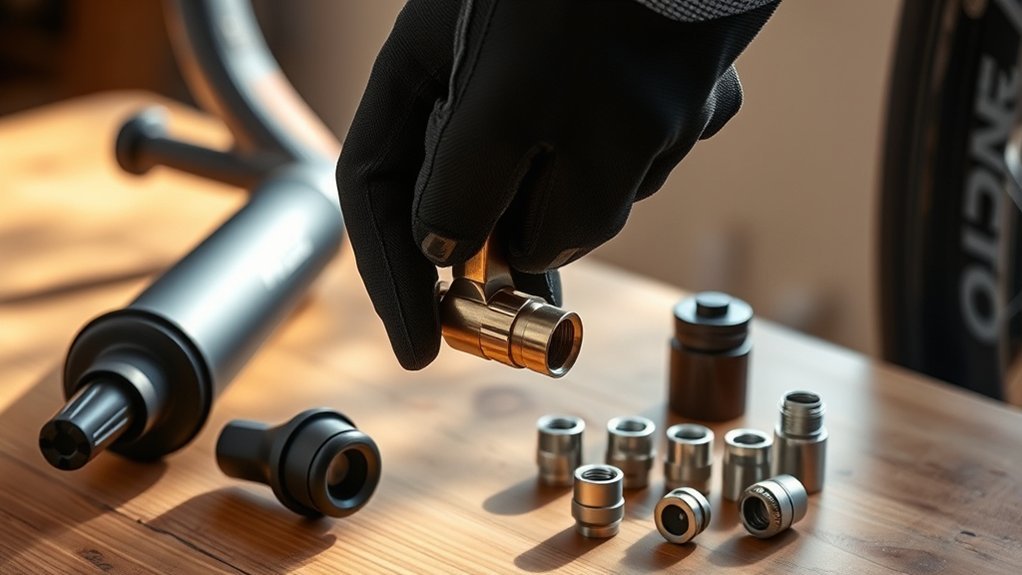
A dedicated Presta pump or universal pump head removes one connection from the process and is often the simplest choice for regular use. Common options include:
- Floor pump with a universal head: Easy to use at home and usually includes a large gauge.
- Compact pump with a flexible hose: Reduces sideways load on the valve during roadside inflation.
- Dual-head pump: Provides separate openings for Presta and Schrader valves.
- Tubeless booster or high-volume pump: Stores and releases a fast burst of air for seating some tubeless tire beads.
A tubeless bead may need a strong initial airflow, but that is different from routine pressure adjustment. Follow the tire and rim makers’ mounting instructions, and use only tubeless-compatible components.
Frequently Asked Questions
How do I use a Presta valve adapter?
Remove the cap, loosen the small Presta tip, press it once, and screw the adapter on finger-tight. Attach the Schrader pump, inflate within the approved pressure limits, remove the pump and adapter, then gently close the Presta tip.
Can you inflate a Presta valve with a regular pump?
Yes. A pump with a Presta or universal head connects directly. A Schrader-only pump needs a Presta-to-Schrader adapter.
How do I pump up a bike tire with a Presta valve?
Open the small valve tip, connect a compatible pump or adapter, and inflate while reading the gauge. Remove the connector straight, close the tip by hand, and replace the cap.
Can I leave a Presta-to-Schrader adapter on the valve?
You can leave it on temporarily, but removing it after inflation is usually better. Removal lets you tighten the Presta tip, use the original cap, and keep dirt and unnecessary load off the valve stem.
Does the adapter change the tire pressure?
No. The adapter only changes the pump connection. A small hiss during removal usually comes from the pump head or hose, although careless removal can release some tire air.
Can I use a Presta adapter on a tubeless valve?
Usually, yes, when the tubeless valve has standard external Presta threads. However, dried sealant can restrict airflow, and bead seating may require a high-volume pump or booster rather than a basic adapter.
Conclusion
A Presta valve adapter is a simple backup tool when the available pump fits only Schrader valves. Open the Presta tip, install the adapter straight and finger-tight, support the stem, and inflate with a reliable gauge. Remove the adapter afterward, close the valve tip gently, and stay within the tire and rim manufacturers’ pressure limits.
Sources
- Schwalbe: Bicycle Tire Valves — Presta valve dimensions, operation, rim nuts, and valve-tip cautions.
- Slime: Presta Valve Adapters — Presta-to-Schrader conversion and O-ring-equipped adapter design.
- Continental: Bike Tire Maintenance — manufacturer pressure ranges and routine tire checks.
- Continental: Tire and Rim Combinations — tire-rim compatibility and maximum-pressure limits.
- Schwalbe: Tubeless Technology — tubeless inflation, valve-core airflow, leaks, and pressure safety.
- Park Tool: Tire Pressure Gauge and Presta Converter — use of a Presta-to-Schrader converter with a Schrader gauge.