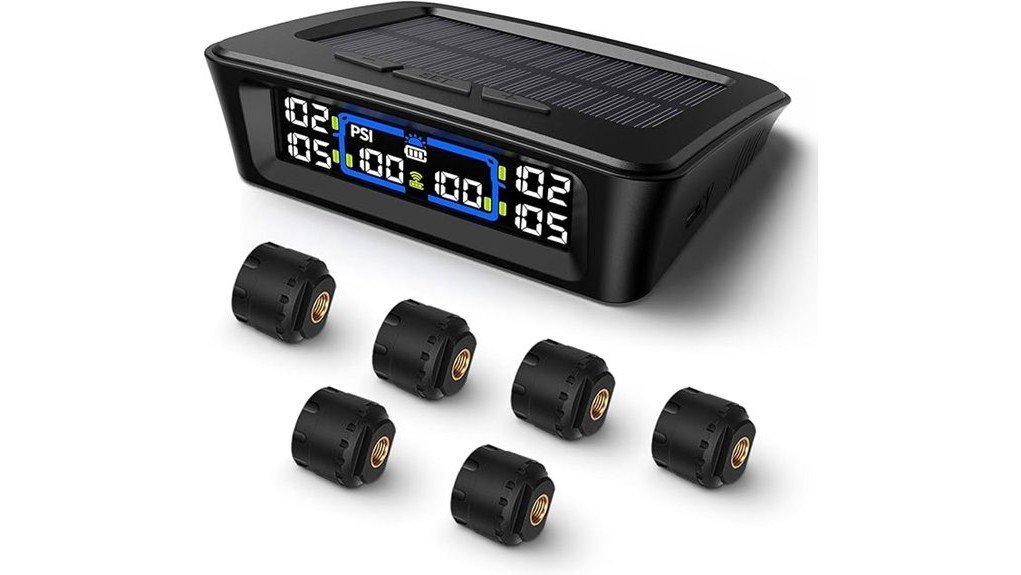
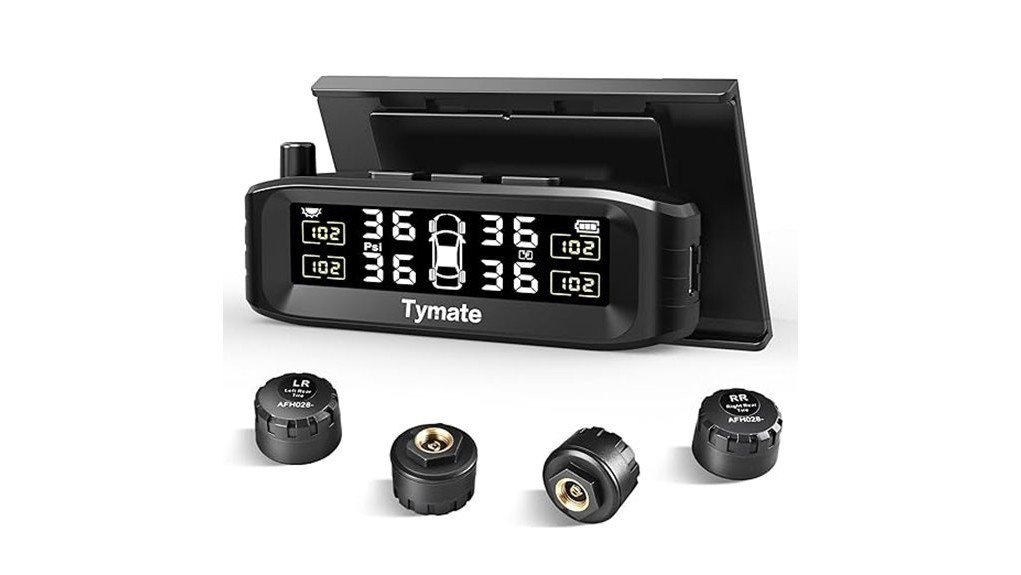
The Tymate TM8 is a wireless TPMS with four external sensors, a solar-powered main display, and support for 0–87 PSI, making it fit RVs, SUVs, sedans, MPVs, and trucks. It tracks pressure and temperature in real time, with ±1.5 PSI or ±3°F accuracy, and six alerts for leaks, heat, low battery, and signal loss. Installation is simple, the color LCD is easy to read, and power options add convenience, with more useful details ahead.
Key Takeaways
- Tymate TM8 monitors up to four tires in real time with pressure and temperature readings.
- It supports 0–87 PSI, making it suitable for sedans, SUVs, RVs, MPVs, and trucks.
- The color LCD display is easy to read, and solar charging helps reduce frequent manual charging.
- Six alerts warn of high/low pressure, rapid air loss, high temperature, low battery, and signal loss.
- Installation is straightforward with external sensors, and support materials help with pairing and troubleshooting.
What the Tymate TM8 Includes
The Tymate TM8 Tire Pressure Monitoring System includes a wireless solar-powered main display unit and four external sensors, giving you a complete setup for monitoring up to four tires at once.
It supports 0-87 PSI, so it fits RVs, sedans, SUVs, MPVs, and trucks. The external sensors are built for sensor durability, helping the system stay dependable over regular road use.
For the user experience, the layout is straightforward, and the components are designed for quick pairing and clear daily use.
This setup gives you practical control, so you can move with more confidence and less dependency on guesswork.
Tymate TM8 Features and Alerts
A useful safeguard for tire monitoring, the Tymate TM8 provides real-time pressure and temperature tracking with a stated accuracy of ±1.5 PSI or ±3°F, so the driver can see changes before they become a problem.
Its sensor accuracy supports steady reading across the 0-87 PSI range, and the color LCD keeps data readable at a glance.
Six alert types cover high and low pressure, rapid air loss, high temperature, low sensor battery, and lost signal, giving direct notice when freedom from roadside trouble is at risk.
Units switch between PSI or BAR, Celsius or Fahrenheit.
How to Install the TM8
Mounting the Tymate TM8 starts with placing the color LCD display in a clear, easy-to-see spot on the windshield, where it can be viewed without blocking the driver’s line of sight.
Next, attach each of the four external sensors to the valve stems, matching wheel positions carefully, then tighten them by hand for a secure fit.
Attach the four external sensors to the valve stems, matching each wheel position, and tighten them by hand.
Follow the included installation tips, and pair the system through the menu. The process usually takes about 5 minutes, which helps keep setup simple and free.
If a sensor fails to register, consult the troubleshooting guide for position checks and signal resets.
TM8 Power, Charging, and Display
Power and visibility are where the Tymate TM8 shows one of its most practical strengths. The system uses solar charging, a USB port, or a cigarette lighter adapter, so power stays available with little interruption.
Solar efficiency helps reduce dependence on manual charging, and that supports steady use on long drives. The color LCD improves display clarity, presenting tire pressure and temperature data in a form that is easy to read in daylight or shade.
For drivers seeking freedom from constant maintenance, this setup keeps information accessible, reliable, and visible without adding clutter to the cabin.
TM8 Compatibility, Sensors, and Support
When it comes to setup and long-term use, the Tymate TM8 keeps things simple for the driver. It uses four external sensors, and sensor compatibility is centered on Tymate TS3 replacements, which limits mix-and-match options but keeps matching straightforward.
Each sensor supports the system’s 0 to 87 PSI range, giving clear coverage for cars, SUVs, trucks, and RVs. If a sensor signal drops or battery power runs low, the alerts help you stay informed.
Support options include a detailed manual, video guides, and professional assistance, so help is available when freedom from guesswork matters most.
Frequently Asked Questions
How Accurate Is the TM8 Compared With Professional Tire Gauges?
The TM8 appears close to professional gauges, typically within ±1.5 PSI after sensor calibration. User experiences suggest it is dependable for everyday monitoring, though absolute precision may still trail top laboratory-grade tire instruments.
Can the TM8 Monitor Multiple Vehicle Tire Sets?
Yes, but only one vehicle’s tire set at a time; like a single spotlight, it tracks four tires through external sensors. Sensor compatibility limits replacements, while installation ease keeps switching straightforward for liberated drivers.
Does the System Work in Extreme Hot or Cold Weather?
It appears capable in extreme heat or cold, though performance may depend on sensor durability and temperature sensitivity. Its real-time alarms and temperature tracking help, but harsh climates could still challenge long-term consistency and accuracy.
How Often Do the Sensors Need Maintenance or Replacement?
They usually need little upkeep; sensor lifespan depends on use and conditions, while maintenance tips include checking seals, cleaning threads, and monitoring battery alerts. Replacement is needed only when signal loss, damage, or battery fade appears.
Will the Display Remain Readable in Direct Sunlight?
Yes, the display should remain readable in direct sunlight, thanks to its color LCD and strong sunlight visibility. Its display durability supports clear viewing, offering drivers practical, hands-free freedom without distraction.
Conclusion
To sum up, the Tymate TM8 offers a practical balance of coverage, visibility, and alert protection for drivers who want basic TPMS monitoring without a complicated setup. Its 87 PSI limit is useful for many cars, SUVs, and RVs, and the six alert modes help catch problems early. Since only 1 in 4 drivers regularly checks tire pressure, this kind of real-time monitoring can make a noticeable difference in safety and convenience on the road.