Intercooler Function: Complete Toyota Supra Guide
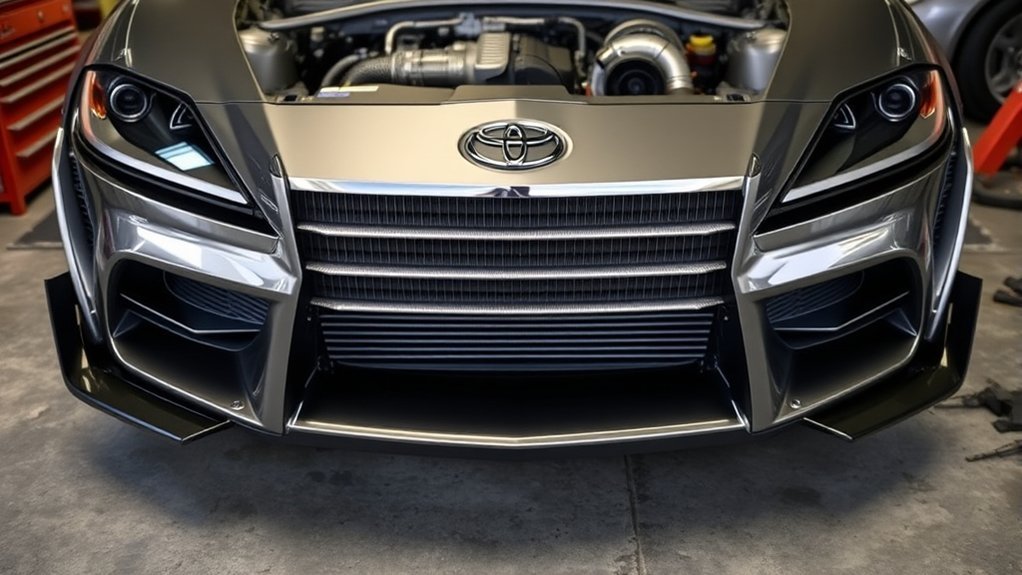
The intercooler in your Toyota Supra plays an essential role in optimizing turbocharged engine performance. It cools hot intake air from the turbocharger, enhancing air density for better combustion and efficiency. By preventing overheating, it reduces the risk of engine knock. Understanding the types of intercoolers—air-to-air and air-to-water—as well as proper installation and maintenance techniques is vital for maximum performance. There’s more to explore, including installation tips and upgrade options to enhance your vehicle.
Understanding the Role of the Intercooler in Turbocharged Engines
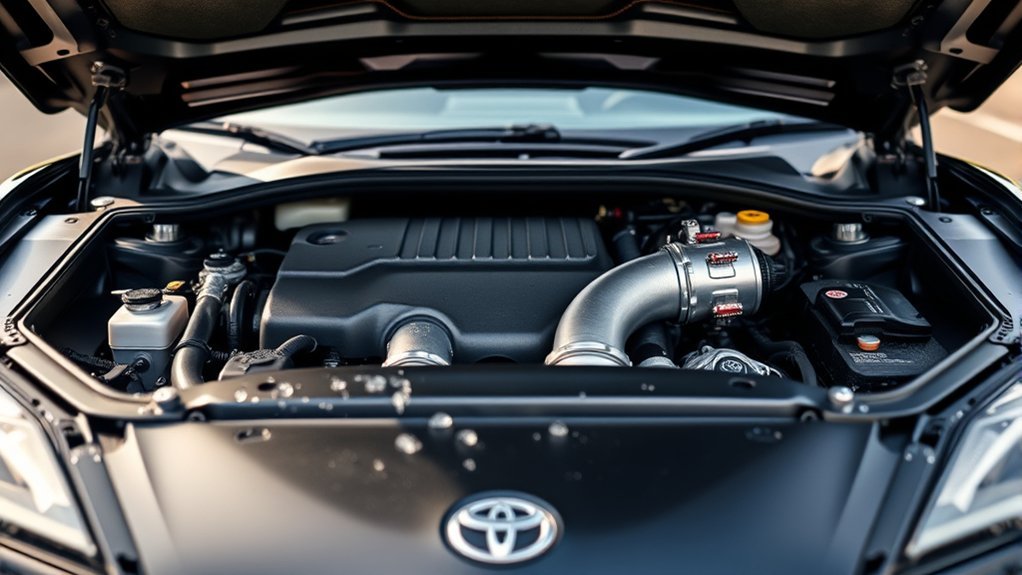
When you boost your engine with a turbocharger, the intake air heats up considerably, which can negatively impact performance. That’s where the intercooler comes into play. It cools the hot intake air generated by the turbo, enhancing engine efficiency by increasing air density and oxygen content. As ambient air flows through the intercooler core, heat exchange occurs, effectively lowering the temperature of the charge air before it enters the combustion chamber.
A well-designed intercooler can drastically reduce intake air temperatures, preventing overheating and minimizing the risk of engine knock or damage. The efficiency of your intercooler hinges on its core design, including fin arrangement, core size, and ideal airflow routing. To maintain peak performance, proper installation and unobstructed airflow are critical, especially during high-performance driving. By understanding the role of the intercooler, you can access the full potential of your turbocharged engine.
Types of Intercoolers: Air-to-Air vs. Air-to-Water
Choosing the right type of intercooler is essential for optimizing your turbocharged engine’s performance, especially since each type offers distinct advantages and disadvantages. Air-to-air intercoolers leverage ambient air for cooling, making them lighter and simpler, ideal for most performance setups. Conversely, air-to-water intercoolers utilize water as a heat sink, enhancing cooling capabilities, particularly in confined spaces with limited airflow.
Here’s a comparison of both types:
| Type | Advantages |
|---|---|
| Air-to-Air | Lighter, less complex, suitable for various applications |
| Air-to-Water | Superior cooling efficiency, minimizes heat soak |
Ultimately, the effectiveness of air-to-air systems depends on size and airflow, while air-to-water setups require additional components, yet maintain lower intake temperatures, vital for engine reliability under high boost conditions. Your choice may hinge on specific vehicle requirements and intended use.
Which Intercooler Type Is Right for Your Setup?
When choosing the right intercooler for your setup, consider whether an air-to-air or air-to-water design aligns better with your performance goals. The core size is critical; larger intercoolers can manage higher airflow, but may necessitate modifications for proper fitment. Analyze your engine’s requirements and airflow routing to guarantee peak cooling efficiency and performance.
Air-To-Air vs. Air-To-Water
As you evaluate your intercooler options for the Toyota Supra, understanding the differences between air-to-air and air-to-water systems is essential for optimizing performance. Air-to-air intercoolers are typically lighter and less complex, making them ideal for street applications. However, if space is limited in your engine bay, air-to-water systems shine by utilizing water’s high specific heat capacity for superior heat absorption. This can lead to considerably lower intake air temperatures, vital for turbocharged setups under sustained boost. In competitive scenarios, air-to-water intercoolers excel in combating heat soak, ensuring consistent performance. Ultimately, your choice should align with your performance goals, vehicle layout, and intended use, as each type offers distinct advantages based on cooling requirements.
Core Size Considerations
Determining the ideal core size for your Toyota Supra’s intercooler involves balancing cooling efficiency with airflow dynamics specific to your setup. Here are four key considerations:
- Cooling Capacity: Larger core sizes enhance heat exchanger performance, crucial for high-boost applications.
- Pressure Drop: Thicker cores often improve thermal efficiency but may increase pressure drop, affecting overall airflow.
- Intercooler Type: Air-to-water intercoolers generally occupy less space and are more efficient, while air-to-air options simplify installation.
- End Tank Design: A well-designed end tank minimizes turbulence, ensuring maximum airflow and cooling performance.
Essential Components of an Intercooler: Understanding Cores, End Tanks, and Connections
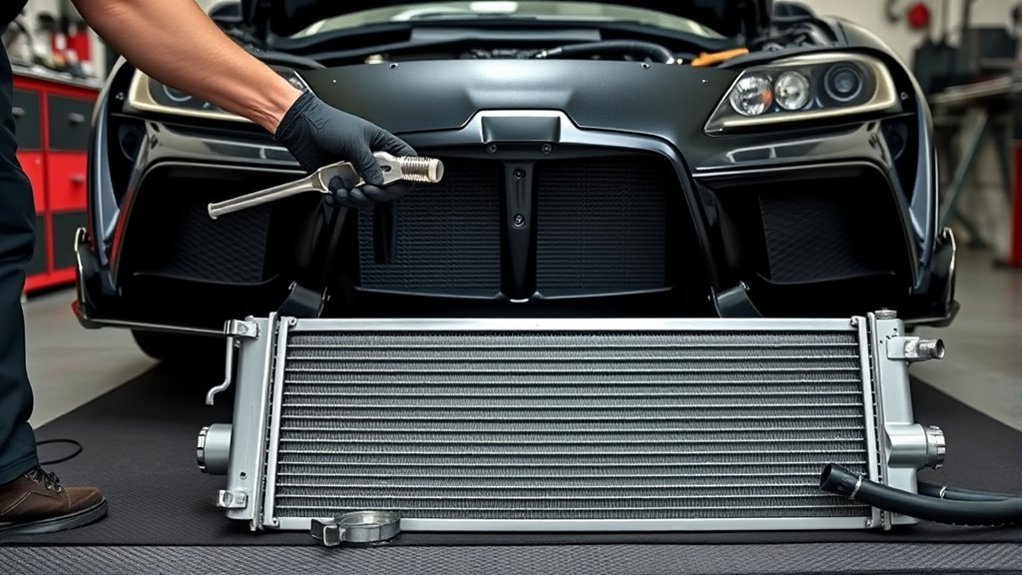
To understand the intercooler’s performance, you need to examine its core design, end tanks, and connection types. The core efficiently cools intake air through its fin structure, while the end tanks facilitate pressure management and airflow. Additionally, the connections, often secured with silicone hoses and clamps, play a critical role in maintaining the system’s integrity and performance.
Intercooler Core Design
The intercooler core is an essential component in the cooling system of your Toyota Supra, designed to lower the temperature of intake air before it enters the engine. It plays a critical role in enhancing performance by cooling the charged air. Consider these four key aspects of intercooler core design:
- Fins Configuration: Alternating fins improve airflow and heat exchange efficiency.
- Core Material: Lightweight, high-conductivity materials like aluminum maximize cooling potential.
- Size and Surface Area: Larger cores increase air density, promoting better combustion.
- Airflow Routing: Proper component placement optimizes cooling and prevents turbocharged system overheating.
Function of End Tanks
While the intercooler core plays an essential role in cooling intake air, the function of end tanks is equally important in guaranteeing efficient airflow and maintaining ideal performance in your Toyota Supra. End tanks serve as critical connection points, directing hot intake air from the turbo into the cooler core and allowing chilled air to exit. Typically welded to the core, they’re engineered to withstand high-pressure conditions, providing secure connections for intake and outlet pipes. Optimized end tank designs enhance the cooling system’s efficiency, promoting better airflow and minimizing pressure drops. High-quality aluminum construction, often CNC machined, assures durability and precise fitment. Some aftermarket options even feature multi-louvered fin designs, greatly improving heat exchange efficiency.
Connection Types Overview
Understanding the connection types in your intercooler system is vital, as these components directly impact the efficiency of airflow and the overall performance of your Toyota Supra. The quality and design of the connections, particularly where they meet the end caps, are significant for peak functionality. Consider these connection types:
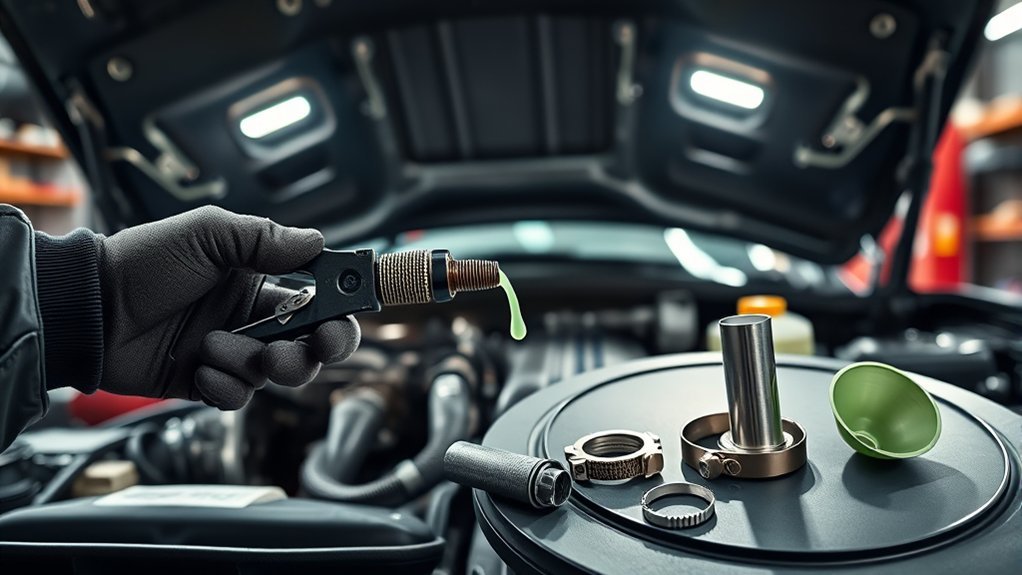
- Silicone Hoses – Flexible and durable, allowing for movement without breaking.
- Clamps – Secure the hoses tightly to prevent leaks, vital for maintaining pressure.
- Hard Piping – Used for a rigid connection, minimizing airflow restrictions.
- Flanged Connections – Provide a robust interface between parts, ensuring a tight seal.
Proper installation of these connections is paramount; any leaks or obstructions can severely reduce your intercooler’s performance and ultimately your engine’s efficiency.
What to Keep in Mind When Installing Your Supra’s Intercooler?
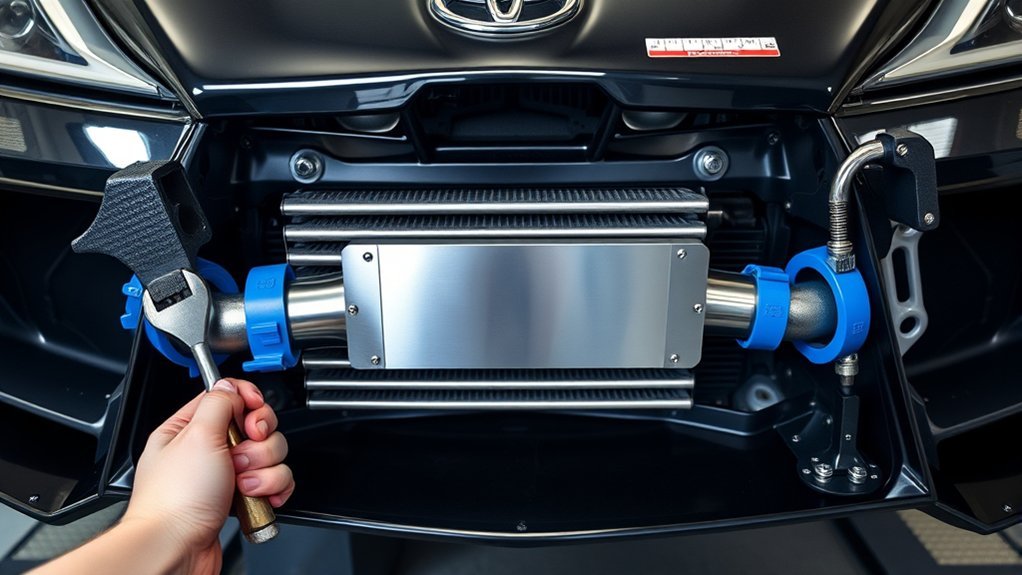
When installing your Supra’s intercooler, it’s important to guarantee proper mounting in rubber suspensions to minimize shocks and vibrations, which can considerably affect performance. Make sure that the mounting brackets are securely fastened and allow for slight movement to absorb impacts. It’s critical that ambient air can flow unobstructed through the intercooler core, as this enhances cooling efficiency and maintains peak engine performance. Use high-quality silicone hoses and clamps for secure, leak-free connections between the intercooler and intake system, preventing any pressure loss. If necessary, evaluate potential modifications for relocating components, such as the coolant reservoir, to fit the intercooler without sacrificing the vehicle’s aesthetics or functionality. Finally, always perform thorough pressure testing post-installation to confirm the integrity of the intercooler system. This step is essential to prevent leaks during high-performance conditions and guarantee your setup operates flawlessly.
Optimizing Performance Through Tuning and Adjustments
To achieve ideal performance in your Toyota Supra, fine-tuning your engine management system is essential. Proper adjustments enhance cooling efficiency and optimize intake air dynamics, maximizing performance. Here are key steps to take into account:
- JB4 Tuning System: Start with Map1 for beginners, adding +3psi boost while modifying MAP and TMAP sensor readings.
- Ethanol Blending: Use up to E25 for stock maps to improve octane levels, enabling higher boost and reducing knock.
- Data Logging: Perform data logging in 3rd gear from 2500 RPM to redline to analyze metrics like boost pressure and ignition timing.
- Wastegate Control: Fine-tune wastegate settings, especially with catless downpipes, to maintain desired boost levels effectively.
Maintaining a boost safety of 2-3psi above maximum levels is vital for protecting engine components while achieving liberated performance on the road.
Essential Maintenance Tips for Your Intercooler’s Longevity and Efficiency
Maintaining your intercooler is crucial for guaranteeing its longevity and efficiency in the Toyota Supra. Regularly inspect and clean the intercooler to prevent debris buildup, which can obstruct airflow and diminish cooling efficiency. Tighten all connections and hoses to eliminate leaks; even minor leaks can greatly impact performance and lead to overheating.
During operation, monitor your intake air temperatures (IAT); persistently high IATs may signal a malfunctioning intercooler or inadequate airflow. Using high-quality coolant is important—confirm proper flow through the intercooler system to maintain ideal temperature regulation.
If you’re seeking enhanced performance, consider upgrading to a high-performance intercooler featuring efficient core designs. This can improve cooling capacity and support higher boost levels, ultimately liberating your Toyota Supra’s potential. By following these critical maintenance tips, you’ll guarantee your intercooler operates at peak efficiency, prolonging its life and enhancing your driving experience.
Frequently Asked Questions
How Do You Know What Size Intercooler You Need?
To determine intercooler sizing, assess your performance upgrades and horsepower goals. Aim for a core volume that cools intake air effectively, ensuring ideal airflow and preventing heat soak, especially with high-boost turbochargers.
What Is Special About a Toyota Supra?
The Toyota Supra’s legendary status stems from its perfect blend of performance features—like the powerful B58 engine and agile chassis. It’s like a finely tuned instrument, playing symphonies of speed and engineering excellence.
What Is the Power of the Supra JB4?
The Supra JB4 system offers significant power upgrades, potentially adding up to 100 horsepower through performance tuning. By adjusting boost levels and optimizing parameters, you can release your vehicle’s full potential with precision and control.
What Is the Compression Ratio of the Toyota Supra?
The Toyota Supra boasts a compression ratio of 10.2:1, releasing engine efficiency and delivering performance benefits. This ratio enhances combustion, empowering you with exhilarating power while minimizing the risk of knock during your driving adventures.
Conclusion
In the world of turbocharged engines, the intercooler acts as the heartbeat, cooling and sustaining peak performance. Just as a vigilant guardian, it guarantees ideal air density for your Toyota Supra, transforming potential energy into kinetic power. By choosing the right type, diligently maintaining it, and fine-tuning your setup, you’ll reveal the full potential of your ride. Treat your intercooler with the care it deserves, and it’ll reward you with the thrill of the open road.