Adaptive Suspension Vs Fixed Suspension: Everything You Need to Know
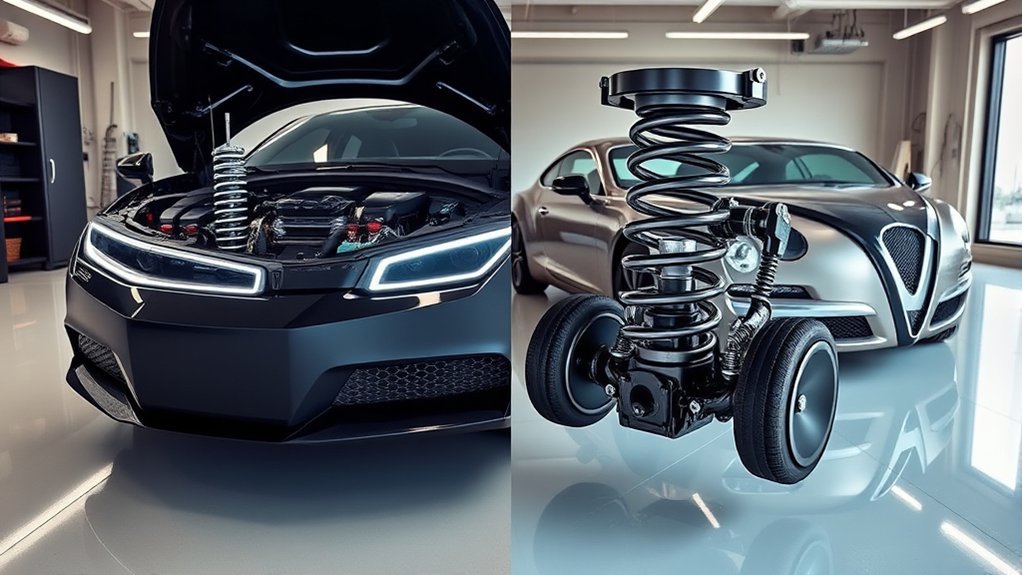
Adaptive suspension uses real-time adjustments for ride comfort and handling, offering customizable driving modes. It’s ideal for performance but comes with higher costs and maintenance complexity. In contrast, fixed suspension provides a consistent experience and is simpler in design and maintenance, making it more cost-effective. Your choice should consider your driving style and budget. Continue on to explore each system’s benefits and how they stack up in popular vehicles.
What Is Adaptive Suspension and How Does It Work?
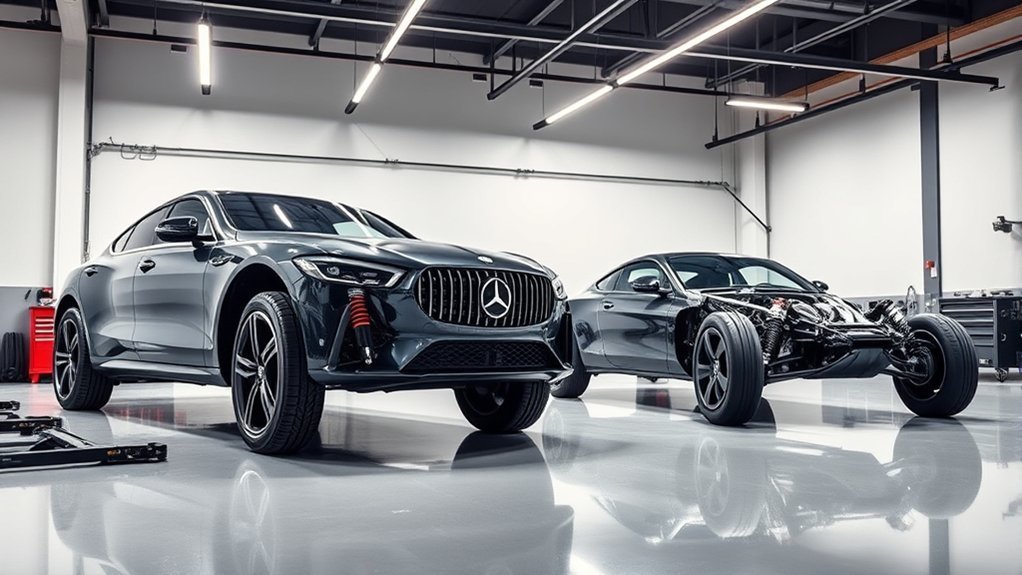
While you might think of suspension merely as a system to absorb bumps, adaptive suspension takes this concept further by actively modifying its characteristics based on real-time conditions. An adaptive suspension system employs electronic sensors and actuators to continuously adjust damping characteristics, optimizing ride comfort and handling. This technology includes features like electronic damper control, which fine-tunes damping force as road conditions change, enhancing both comfort and performance.
Moreover, adaptive air suspension replaces traditional coil springs with inflatable membranes, enabling adjustable ride height and improved load handling. Many manufacturers, such as Audi and Porsche, integrate these advanced suspension technologies to enhance ride quality and minimize body roll during cornering. With the flexibility to select different driving modes, you can tailor your driving experience—whether you crave comfort, sportiness, or off-road capability—transforming how you interact with your vehicle and the road.
The Advantages of Adaptive Suspension Compared to Fixed Suspension
Adaptive suspension systems offer significant advantages over fixed suspension by providing real-time adjustments that enhance ride quality and handling. With the ability to modify damping levels based on current driving conditions, these systems deliver a tailored experience that fixed suspensions simply can’t match. You can choose different driving modes, such as Comfort or Sport, allowing you to optimize vehicle performance based on your preferences and the environment.
Moreover, adaptive suspensions minimize body roll during cornering, improving stability and enhancing your confidence in turns. This contrasts with fixed systems, which may lead to excessive body movement, compromising handling. Additionally, the capability to adjust ride height and stiffness not only improves aerodynamics but also enhances load management, further elevating your driving experience. Overall, the dynamic adaptability of these systems makes them a superior choice for those seeking both performance and comfort in their vehicles.
Challenges and Limitations of Adaptive Suspension Systems
When considering adaptive suspension systems, you’ll encounter significant cost and complexity issues due to the advanced technology involved. Maintenance can also become a challenge, as specialized training and equipment are often required, which can drive up overall expenses. Additionally, while these systems aim for real-time adaptability, their reliance on electronic components can lead to reliability concerns that may affect performance over time.
Cost and Complexity Issues
Although the benefits of adaptive suspension systems are clear, their cost and complexity present significant challenges. The reliance on advanced electronic components often results in higher initial costs compared to fixed systems. Additionally, the complexity of these systems can lead to longer repair times and increased expenses when issues arise.
| Aspect | Adaptive Suspension Systems |
|---|---|
| Initial Costs | Higher due to advanced components |
| Complexity | Requires specialized tools and knowledge |
| Maintenance | More demanding than fixed systems |
| Long-term Ownership Costs | Potentially increased due to reliability issues |
Maintenance and Reliability Concerns
As vehicles increasingly integrate advanced technologies, maintenance and reliability concerns surrounding adaptive suspension systems become more pronounced. Unlike fixed suspension setups, adaptive systems incorporate electronic sensors and actuators, leading to higher maintenance requirements. These intricate designs often necessitate specialized tools and training for repairs, resulting in elevated service costs. In addition, the wear and tear on electronic components can cause reliability issues that aren’t as prevalent in traditional systems, potentially leading to expensive repairs. Additionally, some adaptive suspensions consume more power, impacting overall vehicle efficiency and operational costs. While the enhanced performance may be appealing, the higher initial and long-term maintenance costs warrant careful consideration for budget-conscious buyers seeking a balance between technology and practicality.
Limited Real-Time Adaptability
While adaptive suspension systems enhance ride quality and handling, their limited real-time adaptability presents notable challenges. You may find that these systems don’t continuously adjust to road conditions, impacting responsiveness during dynamic driving situations. Here are some key limitations to take into account:
- Reliability Issues: Electronic components may require specialized maintenance and can fail over time.
- Pre-set Modes: Many adaptive suspensions rely on modes like Comfort or Sport, lacking continuous adaptation.
- Power Consumption: High energy use from electronics can lower overall fuel efficiency.
- Extreme Conditions: Under challenging driving conditions, fixed suspension systems may deliver more consistent performance.
Understanding these limitations is essential for aligning your driving needs with the right suspension system.
How Do Fixed Suspension Systems Work and Their Benefits?
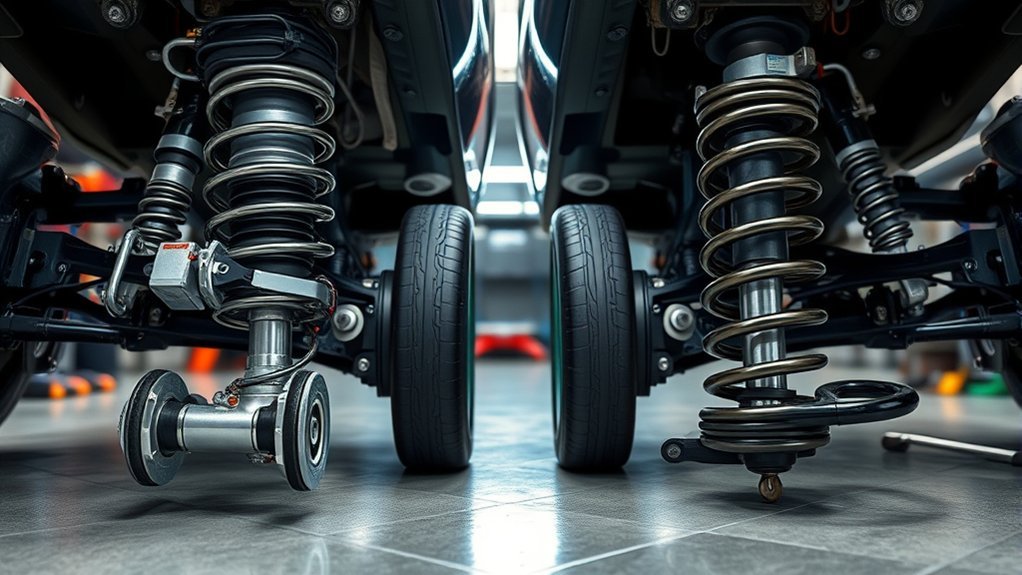
Fixed suspension systems operate using a combination of mechanical components, primarily springs and dampers, that deliver a consistent ride quality across various driving conditions. These systems lack real-time adjustment capabilities, resulting in a straightforward design that often translates to lower manufacturing costs and maintenance requirements. As a result, you benefit from reliable performance and proven technology, ideal for regular driving without extensive customization needs.
The simplicity of fixed suspension systems makes them easier to repair, as they don’t depend on electronic components that can complicate maintenance. While they provide dependable ride quality, it’s essential to note that fixed systems may compromise comfort and handling, especially on uneven or rough surfaces. Ultimately, the benefits of fixed suspension systems lie in their reliability and cost-effectiveness, making them a practical choice for everyday driving scenarios.
Choosing Between Adaptive and Fixed Suspension for Your Vehicle
When selecting a suspension system for your vehicle, understanding the differences between adaptive and fixed systems is vital. Your choice hinges on your driving needs and preferences for ride comfort and performance.
- Ride Comfort: Adaptive suspension offers real-time adjustments, enhancing comfort over various terrains.
- Versatility: Switch between modes, like Comfort and Sport, to tailor your driving experience.
- Cost Considerations: Fixed suspension is generally more cost-effective and easier to maintain.
- Driving Style: Choose adaptive if you seek a customizable experience; opt for fixed if simplicity and reliability matter more.
Ultimately, if you value enhanced ride comfort and versatility, an adaptive suspension system is ideal. However, if your priority is budget and maintenance ease, a fixed suspension system might be the better choice. Always align your decision with your unique driving habits and lifestyle to guarantee satisfaction.
Comparing Adaptive and Fixed Suspension in Popular Cars
When comparing adaptive and fixed suspension in popular cars, you’ll notice distinct trade-offs between performance and comfort. Adaptive systems provide customization options that allow you to adjust ride settings based on your preferences, while fixed suspensions typically offer lower costs and simpler maintenance. Understanding these differences can help you make an informed decision that aligns with your driving style and budget.
Performance Versus Comfort Trade-offs
While choosing between adaptive and fixed suspension systems, you’ll find that the trade-offs in performance and comfort can greatly impact your driving experience. Adaptive suspension offers a dynamic balance, allowing you to switch between modes that enhance ride comfort and performance. In contrast, fixed suspension systems provide a consistent but less customizable experience.
- Real-time damping adjustments improve handling.
- Enhanced cornering capabilities in performance-oriented cars.
- Fixed systems may compromise ride comfort on rough surfaces.
- Adaptive air suspension offers adjustable ride height for better aerodynamics.
Ultimately, selecting the right suspension depends on your priorities; if you seek versatility and superior handling, adaptive suspension may be the way to go.
Customization Options Available
In comparing customization options between adaptive and fixed suspension systems in popular cars, you’ll notice significant differences in flexibility and performance. Adaptive suspension systems, like Audi’s Magnetic Ride Control and Volkswagen’s DCC, let you switch between various driving modes—such as Comfort and Sport—tailoring ride comfort and handling to your preferences and conditions. This real-time adaptability enhances your driving experience. Conversely, fixed suspension systems, common in budget or older vehicles, lack these customization options, offering a one-size-fits-all setup that compromises ride comfort and handling. While some performance-focused models feature manually adjustable suspensions, they don’t match the sophisticated adaptability of fully electronic adaptive systems, limiting your ability to fine-tune your vehicle’s dynamics effectively.
Cost and Maintenance Differences
Although adaptive suspension systems offer advanced technology and adjustable ride quality, they come with higher initial costs and complex maintenance requirements compared to fixed suspension systems. Here’s what you need to take into account:
- Initial Costs: Adaptive systems are pricier due to electronic components.
- Maintenance Complexity: They require specialized training or equipment, increasing service costs.
- Long-Term Reliability: The potential for electronic failures can lead to higher maintenance expenses over time.
- Cost-Effectiveness: Fixed suspensions are simpler, requiring less maintenance and providing reliable performance in standard conditions.
Ultimately, understanding these cost and maintenance differences can help you make an informed choice between adaptive and fixed suspension, aligning with your driving preferences and budget.
Frequently Asked Questions
Does Adaptive Suspension Make a Difference?
Yes, adaptive suspension greatly enhances ride quality, offering superior performance enhancement and terrain adaptability. You’ll experience improved handling and comfort, tailoring your driving experience to varying conditions, unlike the limitations of fixed suspension systems.
What Is the Difference Between Adaptive Suspension and Normal Suspension?
Adaptive suspension employs advanced damping technology for real-time performance tuning, offering customizable ride quality. In contrast, normal suspension relies on fixed settings, potentially compromising comfort and responsiveness in varying driving conditions. You’ll feel the difference.
Is Adaptive Variable Suspension Worth It?
Yes, adaptive variable suspension’s worth it, but weigh the cost analysis against installation challenges. The performance benefits can greatly enhance your driving experience, offering comfort and control that fixed systems simply can’t match.
Which Suspension Gives the Smoothest Ride?
An adaptive suspension system provides the smoothest ride, as it dynamically adjusts to road conditions, enhancing comfort level comparison. Fixed systems struggle with ride quality factors, often compromising smoothness on uneven surfaces. Choose adaptability for best experiences.
Conclusion
In the end, choosing between adaptive and fixed suspension is like selecting the right tool for a job. Picture yourself gliding effortlessly over potholes with adaptive suspension or enjoying the solid, predictable handling of a fixed system on a smooth highway. Each has its strengths, tailored to different driving experiences. By understanding their mechanics and benefits, you can steer your decision wisely, ensuring your vehicle’s suspension complements your driving style and enhances your journey.