
How To Lift Toyota RAV4
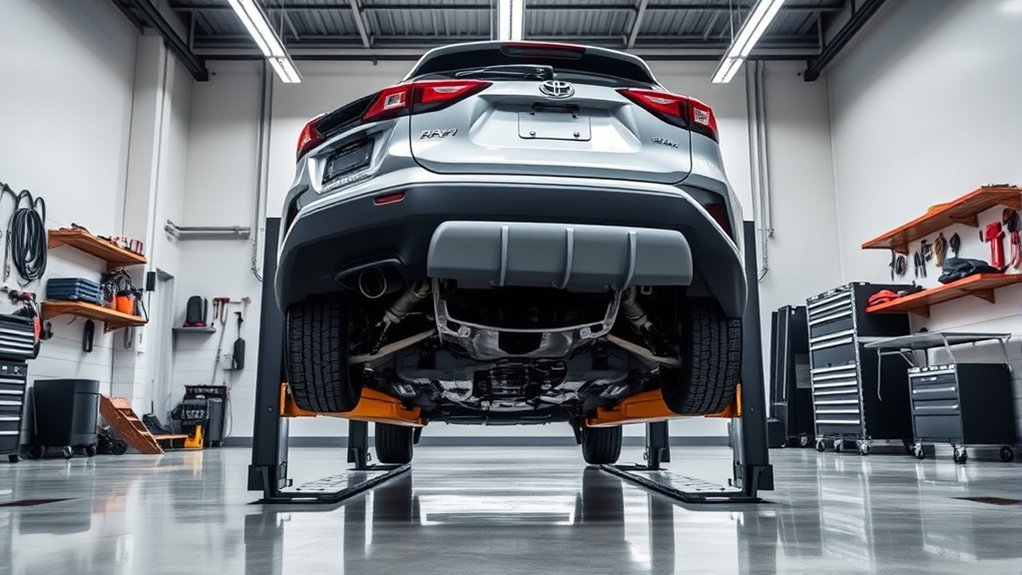
To lift your Toyota RAV4, locate the designated lifting points: the front center point and the side jack points. Use a floor jack rated for at least 2 tons, along with axle stands rated for 3,000 kg or more for safety. Lift gently, ensuring even weight distribution, and double-check jack positioning before applying weight. After lifting, check wheel alignment and suspension components for damage. There’s more to know about safe lifting and maintenance practices, ensuring your vehicle’s integrity.
Understanding the RAV4’s Lifting Points
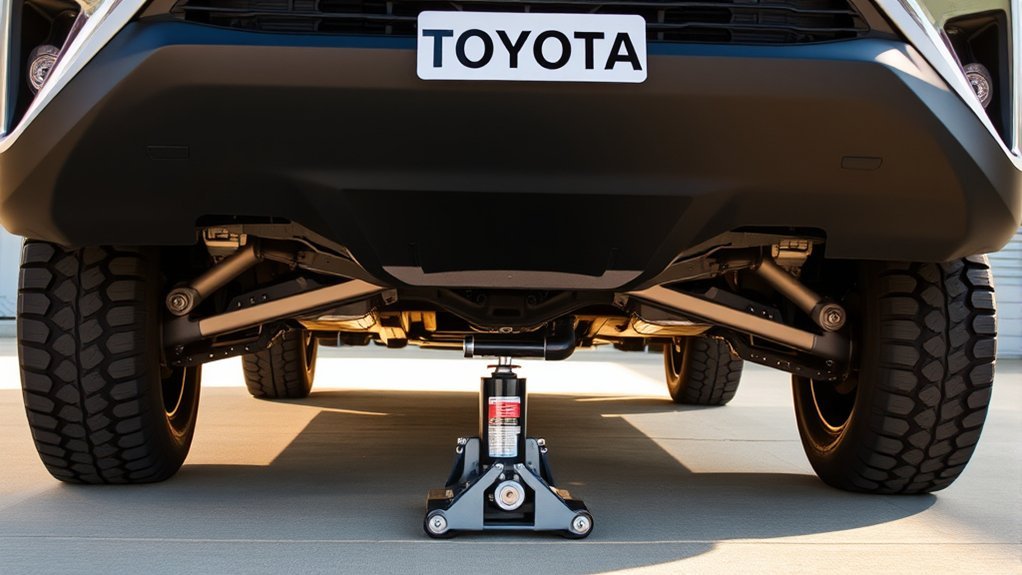
When lifting your Toyota RAV4, understanding the designated lifting points is crucial for safety and efficiency. The 2019 RAV4 Hybrid features specific jack points outlined in the Toyota manual. The primary lifting areas are the front center point and the side jack points. Be cautious with the rear jack points located behind the rear tires, as they may complicate lifting with a four-arm hoist. It’s advisable to avoid using the front center jack point for hoisting, since it might not align with certain lifting equipment. Always refer to the Toyota manual—pages 628 for the gas model and 648 for the hybrid model—for detailed lifting point guidance. Confirm proper placement of jack stands on the sides post-lift to maintain stability and safety during maintenance.
Choosing the Right Equipment for Lifting Your RAV4
Choosing the right equipment for lifting your Toyota RAV4 is essential for ensuring safety and efficiency during maintenance. Start with a floor jack rated for at least 2 tonnes to guarantee stability while lifting. A trolley jack with a rubber pad protects your vehicle’s jack points, especially on the lower control arms and side steps. Always refer to your vehicle manual for specific jack points, as using a four-arm hoist may not be suitable at the center jack point. After lifting, immediately place axle stands rated for a minimum of 3,000 kg to securely support your RAV4 during maintenance. For ideal performance and safety, invest in quality equipment from reputable brands, as this can greatly affect your lifting experience.
Step-by-Step Guide for Safely Lifting the Front of Your RAV4
To safely lift the front of your RAV4, start by identifying the front center jack point, marked by a cut-out in the plastic splash shield. Use a floor jack rated for at least 2 tons, ensuring it’s positioned under the subframe for maximum stability. After lifting, always place jack stands on the side jack points for added safety before performing any maintenance.
Identify Front Jack Points
Identifying the front jack points of your Toyota RAV4 is essential for safe lifting and maintenance. The front jack point is typically located at the center of the front subframe, marked by a cut-out in the plastic splash shield for easy access. Follow these steps to guarantee safety:
- Always consult your vehicle manual for specific instructions.
- Use a floor jack that securely reaches the front jack point.
- Lift the vehicle slowly and carefully to avoid sudden drops.
- Place jack stands on the side jacking points for stability.
- Double-check the jack’s positioning before applying full weight.
Proper Equipment Utilization
Once you’ve pinpointed the front jack points of your Toyota RAV4, it’s time to gather and utilize the proper equipment for lifting. Begin with a floor jack rated for at least 2 tons, making sure it’s robust enough for your vehicle’s weight. Position the jack securely under the center front lift point, accessible through the cut-out in the plastic splash shield. After lifting, immediately place jack stands on the sides for added support and stability. This step is vital for maintaining safety during any maintenance tasks. Before starting work, double-check that both the jack and jack stands are firmly in place. This thorough approach guarantees a secure environment while you liberate your RAV4 for essential repairs.
How to Lift the Rear of Your RAV4 Safely
When lifting the rear of your RAV4, it’s crucial to use the correct jack points to prevent any damage. Follow these steps to lift safely:
- Position your floor jack under the rear jack point, located on the lower control arms or the reinforcing rib under the belly pan.
- Confirm the jack can reach the necessary height; if not, use wooden blocks to elevate it.
- Lift the vehicle gently, making sure the weight is distributed evenly throughout.
- Once lifted, place axle stands under the heavy chassis sections for added stability.
- Finally, lower the vehicle carefully onto the axle stands, confirming they’re properly engaged before starting any maintenance work.
This method guarantees a secure and safe lifting process for your RAV4.
Safety Measures Before Lifting Your RAV4
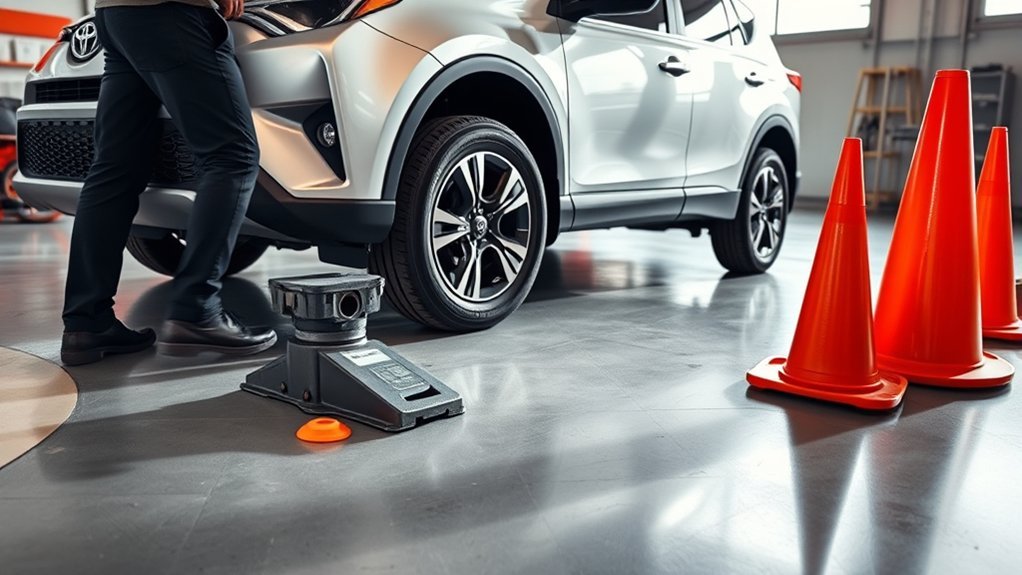
Before lifting your RAV4, inspect your lifting equipment thoroughly to guarantee it’s in good condition. Make sure the vehicle is parked on level ground and the parking brake is engaged to prevent any unintended movement. Finally, use proper jacking techniques to secure the vehicle safely before performing any maintenance tasks.
Inspect Lifting Equipment Thoroughly
To guarantee a safe lifting process for your Toyota RAV4, it’s crucial to thoroughly inspect all lifting equipment beforehand. A proper inspection guarantees your safety and protects your vehicle. Here are key points to check:
- Weight Capacity: Verify your lifting equipment can handle the RAV4’s weight.
- Component Condition: Inspect for wear and damage, including hydraulic fluid levels and rust on hoists.
- Lifting Points: Verify compatibility of lifting points as specified in the manual.
- Protection Pads: Use rubber pads or adapters to shield the frame and improve stability.
- Pre-lift Safety Check: Confirm the vehicle is on a flat surface, the parking brake is engaged, and wheel chocks are in place.
Secure Vehicle on Level Ground
After verifying your lifting equipment is in ideal condition, the next step is securing your Toyota RAV4 on level ground. This prevents rolling or shifting during the lifting process. Start by engaging the parking brake firmly to secure the vehicle in place. To enhance stability, place wheel chocks behind the rear wheels.
| Step | Action | Purpose |
|---|---|---|
| Secure Vehicle | Engage parking brake | Prevent accidental movement |
| Level Surface | Park on flat ground | Verify stability during lift |
| Additional Stability | Use wheel chocks | Further prevent rolling |
Always inspect your lifting equipment for wear and use appropriate personal protective equipment (PPE) like gloves and safety glasses to enhance safety during this process.
Use Proper Jacking Techniques
Using proper jacking techniques is essential for safely lifting your Toyota RAV4. Follow these steps to guarantee your safety and the integrity of your vehicle:
- Consult the owner’s manual for specific jack points; check pages 628 and 648 for the 2019 RAV4 Hybrid.
- Use a trolley jack with at least a 2-tonne lifting capacity for adequate support.
- Protect jack points with rubber pads or hockey pucks to avoid undercarriage damage.
- Position axle stands under the heaviest chassis sections after lifting, and lower the vehicle gently onto them for stability.
- Conduct a visual inspection of the vehicle and secure all equipment before starting any maintenance work to prevent accidents.
Avoid These Common Mistakes When Lifting Your RAV4
When lifting your Toyota RAV4, it’s important to be aware of common mistakes that can lead to damage or safety hazards. Always refer to your vehicle’s manual for the correct jacking and lifting points; using incorrect points can compromise stability and cause structural damage. Avoid lifting solely by the rear differential or subframe, as these areas aren’t designed to bear the vehicle’s weight. Verify your jacks and axle stands are rated for your RAV4’s weight to prevent accidents. If using a hoist, be careful with the rear jack points, as they may complicate positioning. Always use axle stands after lifting to create a stable support base; never rely on jacks alone for extended maintenance or repairs.
What to Check After Lifting Your RAV4
Once you’ve lifted your RAV4 and confirmed you’ve avoided common mistakes, it’s time to conduct a thorough inspection to verify everything is in order. Here’s what you should check:
- Alignment: Verify your wheels are aligned to prevent uneven tire wear and improve handling.
- Suspension: Confirm that all suspension components are securely fastened and show no signs of damage.
- Brake Lines: Inspect brake lines and undercarriage parts for stretching or tension caused by the lift.
- ADAS Functionality: Check that your Advanced Driver Assistance Systems are functioning correctly post-lift.
- Stability Test: Drive at various speeds to assess stability and handling, especially during turns or sudden stops.
These steps will help verify your RAV4 performs safely and effectively after the lift.
Recalibration Considerations After Modifications
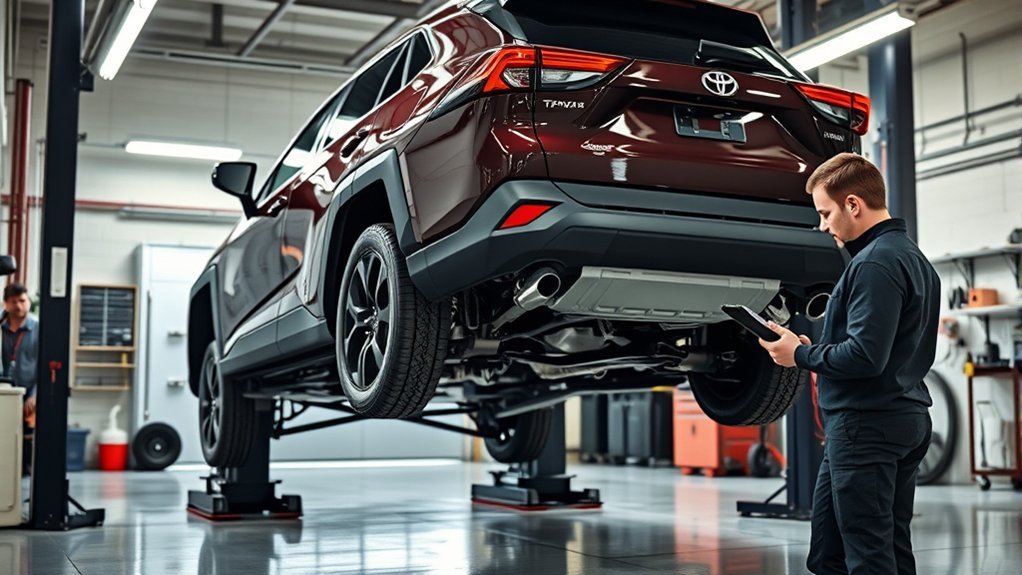
Recalibrating your Toyota RAV4 after modifications is essential to guarantee that all Advanced Driver Assistance Systems (ADAS) function accurately and safely. Changes in vehicle height, such as suspension adjustments, can affect system performance, making recalibration vital for safety.
| Modification Type | Recalibration Needed |
|---|---|
| Suspension Change | Yes |
| Tire Size Change | Yes |
| Weight Distribution | Yes |
| No Modifications | No |
It’s recommended to have recalibration performed by a certified technician familiar with your modified RAV4. The need for recalibration varies based on modifications, so consult your vehicle manual and follow manufacturer guidelines. Neglecting recalibration can lead to incorrect system readings, compromising safety and performance.
When to Seek Professional Help for Vehicle Lifting?
Modifications to your Toyota RAV4, especially those affecting the suspension and height, can impact vehicle safety and performance, making professional help a wise choice. Here are some situations when you should seek professional assistance for vehicle lifting:
- You’re unfamiliar with the vehicle’s structure or lack experience using jacking equipment.
- The manual doesn’t specify compatible lift points for your RAV4 model.
- You notice signs of suspension damage, like uneven tire wear or unusual noises.
- You’re unsure about necessary adjustments, such as alignment or ADAS recalibration, post-lift.
- You lack appropriate tools, like a high-quality jack or rated axle stands.
In these cases, it’s safer and smarter to rely on a professional service for lifting.
Frequently Asked Questions
Can You Lift a Toyota RAV4?
Yes, you can lift a Toyota RAV4 using suspension kits. Explore various lifting options for off-road benefits. Follow installation tips to guarantee safety, and always check alignment post-installation for ideal performance and handling.
How to Jack up a Toyota RAV4?
To jack up your Toyota RAV4 safely, follow these procedures: use a hydraulic jack on flat surfaces, guarantee stability with axle stands, and keep wheel alignment considerations in mind for peak performance during maintenance.
What Are the Drawbacks of Lifting a RAV4?
Lifting your RAV4 can lead to suspension impact, handling issues, and increased rollover risks. You’ll also face warranty concerns and potential cost considerations due to component wear and the need for recalibrating advanced systems.
What Year of RAV4 to Stay Away From?
If you’re seeking a reliable ride, steer clear of 2001-2003 and 2006-2008 RAV4 models. Their engine problems and transmission failures tarnish reliability, while safety ratings may not inspire confidence in your journey ahead.
Conclusion
In conclusion, lifting your Toyota RAV4 requires careful attention to detail and safety. Think of it as raising a bridge—you need strong supports to guarantee stability. By understanding the lifting points, using the right equipment, and following the outlined steps, you can confidently elevate your vehicle for maintenance or modifications. Always prioritize safety, avoid common pitfalls, and check everything post-lift to keep your RAV4 running smoothly. If in doubt, don’t hesitate to seek professional assistance.