How To Fix Toyota RAV4 Rear Windshield Washer Nozzle
If the rear washer on your Toyota RAV4 dribbles or does nothing, the cause is usually one of four things: a clogged nozzle, an empty reservoir, a kinked or disconnected hose, or a pump or fuse problem. Work through them in that order, because the first two take a few minutes and cost nothing. This guide covers the checks, how to clear a nozzle, how to tell a dead pump from a blocked line, and when to hand the job to a dealer.
Start With the Simple Checks
- Check the fluid. Open the washer reservoir cap and look at the level. The RAV4 uses one reservoir for the windshield and the tailgate glass, so if the front washer also fails, the problem is almost certainly fluid or a shared part.
- Compare front and rear. Run the front washer, then the rear. If the front sprays well and the rear does not, the fault is in the rear line, nozzle or rear pump circuit, not in the reservoir.
- Look at the spray. Note whether the rear jet is weak, off-target, or completely dry. A weak or sideways spray points to a partial clog. No fluid at all points to a hose, pump or fuse problem.
- Listen at the reservoir. With the switch on, put your ear near the reservoir. A faint whirring means the pump is running, so look for a blockage or a disconnected hose. Silence means you should check power.
Clear a Clogged Rear Washer Nozzle
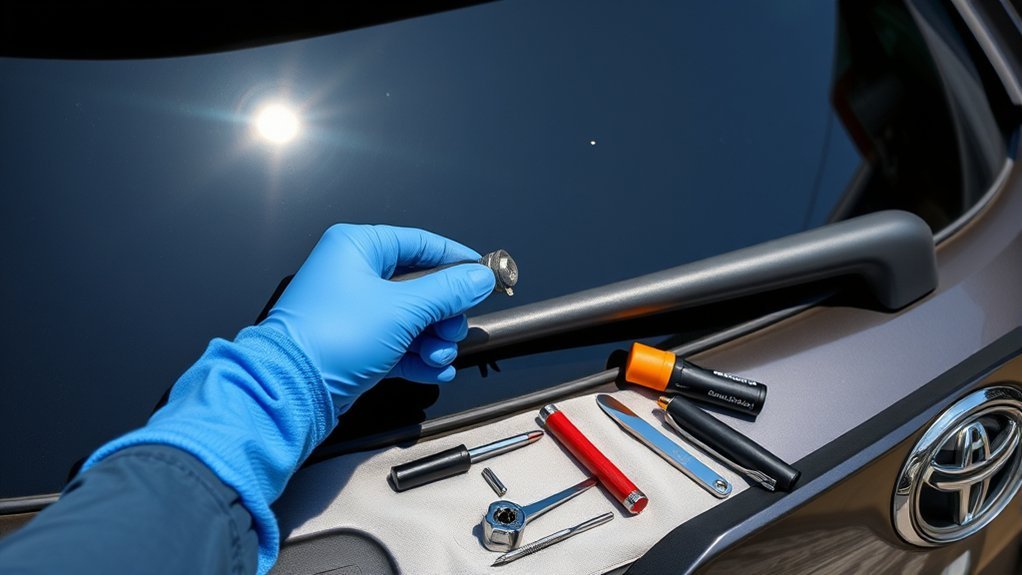
Dried washer fluid, wax, dust and small debris build up in the tiny outlet of the nozzle, which sits on the tailgate near the rear glass. You can usually clear it without removing anything.
- Wipe the area around the nozzle with a damp cloth so dirt does not fall into the opening.
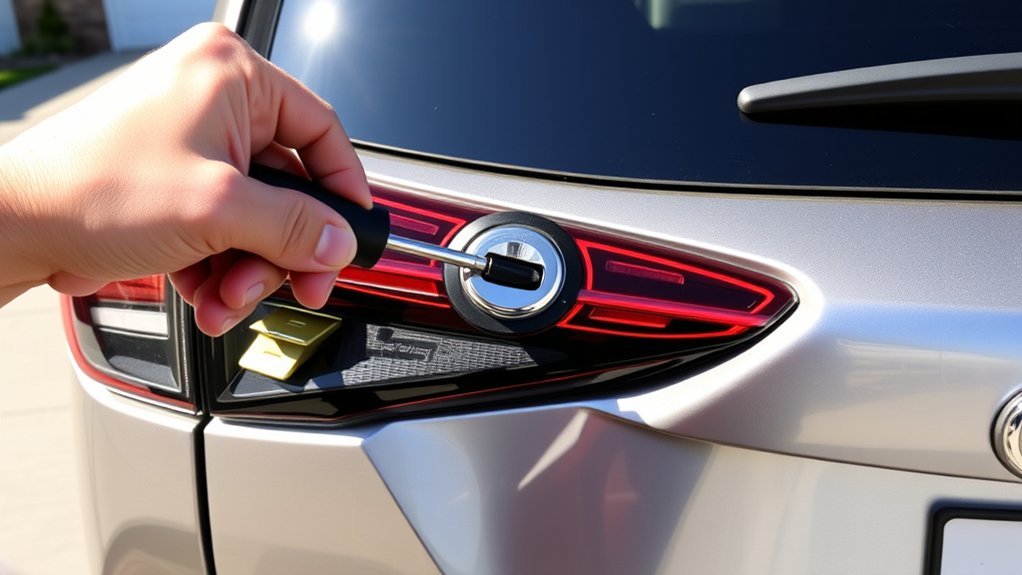
- Gently push a fine sewing needle or a straightened pin into the outlet and wiggle it. Do not force it, and do not enlarge the hole. A bigger opening gives a weak, unfocused spray.
- Run the washer and watch the jet. Repeat once or twice if the spray is still uneven.
- If the outlet is scaled over, apply a small amount of white vinegar with a cotton swab, wait a few minutes, then rinse by running the washer. Wipe away any excess so it does not sit on the paint or rubber.
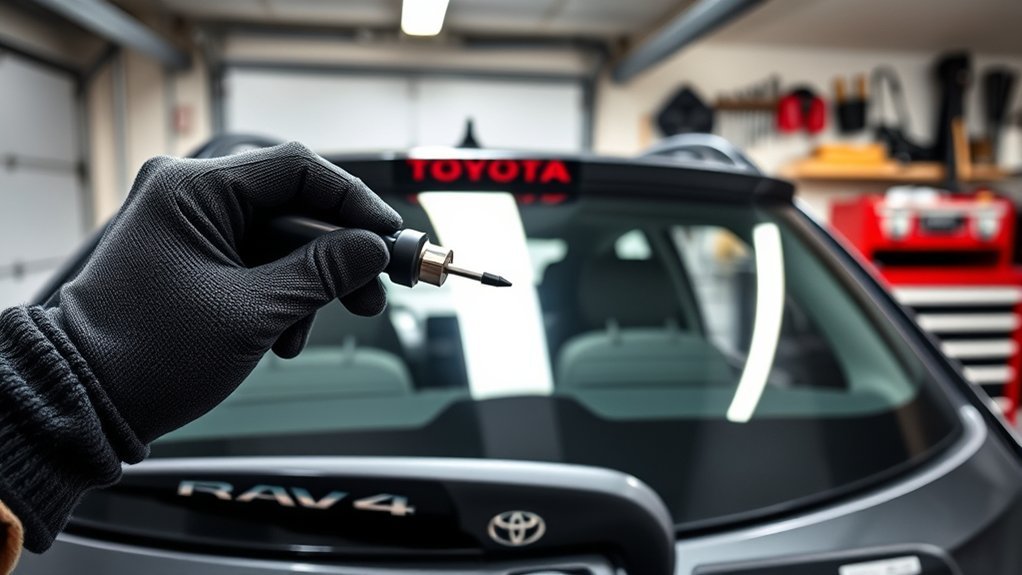
If the nozzle is fixed in place and cannot be removed, do not soak it. Clean it in place as described above. The nozzle aim on many vehicles is set by a tiny ball or fixed tip, so poking it with a needle can shift the pattern. If the spray now misses the glass, tilt the tip slightly with the needle in small steps. Some designs are not adjustable at all, so stop if the tip does not move easily.
Check the Hose and Connections
The rear washer hose runs from the engine-bay reservoir, along the body, and through the tailgate to the nozzle. The flexible section between the body and the tailgate bends every time you open the tailgate, so it is a common place for cracks, pinches and loose joints on hatchbacks and SUVs generally.
- Look for wet spots or fluid dripping under the car after you run the rear washer. A leak means the hose or a joint has failed.
- Look for kinks where the hose enters the tailgate and along the trim.
- If you can reach a joint near the nozzle, pull the hose off and run the washer. Fluid coming out of the hose proves the pump and the line up to that point work, and the blockage is at the nozzle or the last short section.
- Blow low-pressure air through a disconnected hose to clear a blockage, or replace a section that is cracked. Use hose of the same inside diameter.
Reaching the nozzle itself usually means removing the tailgate interior trim panel, and on some model years also the rear spoiler or other exterior parts. The fasteners, clip positions and any bolts differ by generation, so use the repair procedure for your exact model year rather than a general guess. Use a plastic trim tool to avoid cracking clips.
Note: Fuse names, numbers and locations change between model years. One owner answer on iFixit for 2013 and later RAV4s points to a 15A fuse under the instrument panel for the rear washer, but other sources list the wiper and washer circuits differently. Use the fuse diagram in your owner’s manual for your year.
Check the Fuse and Pump
If you hear nothing from the reservoir, check the electrical side. On 2019 and later RAV4s, fuse diagrams published by third parties list a WIPER fuse of 30A in the engine compartment box (covering wipers and washers of the windshield and tailgate glass) and a WASHER fuse in the cabin fuse box under the dashboard. If the windshield washer also works, the fuse is unlikely to be the cause. Fuse locations on older generations differ, so confirm in your manual.
- Switch the ignition to off and find the fuse box named in your owner’s manual.
- Pull the fuse labelled for the wiper or washer circuit with the fuse puller in the box, and look at the metal strip inside. A broken strip means a blown fuse.
- Replace it only with a fuse of the same amperage. A larger fuse can overheat the wiring.
- If the new fuse blows again, stop. Something in the circuit is shorted, and it needs a proper diagnosis.
The RAV4 has separate pumps for the front and rear washers on the shared reservoir, based on a 2013 and later owner discussion, so a failed rear pump can leave the front working. To test it, have a helper operate the rear washer switch while you listen for the pump or, with a multimeter, check for roughly 12 volts at the pump connector. Voltage present but no pump noise points to a dead pump. No voltage points to the switch, the wiring or the fuse.
Quick Diagnosis Table
| Symptom | Likely cause | What to do |
|---|---|---|
| Weak or sideways spray, pump audible | Partly clogged nozzle | Clear with a fine needle, rinse with the washer |
| No spray, pump audible | Blocked or kinked hose, or hose off a joint | Check hose at the tailgate and nozzle end |
| No spray, no pump sound, front works | Rear pump or its wiring | Check for power at the rear pump connector |
| Neither front nor rear works | Low fluid, frozen fluid or fuse | Check level, thaw the car, check fuse |
| Wet patch under car after using washer | Leaking hose or joint | Find and repair the leak |
Prevent It Coming Back
- Use washer fluid rated for your winter temperatures. Plain water can freeze in the lines and crack fittings or freeze the nozzle shut.
- Do not top up with tap water in hard-water areas. Mineral scale is a common cause of blocked outlets.
- Keep wax and sealant off the nozzle when you polish the tailgate.
- Fill the reservoir through its own cap only, and keep the filler neck clean so dirt does not reach the pump inlet.
- Test the rear washer every few months so a problem shows up before you need it in bad weather.
When to See a Dealer
Go to a Toyota dealer or a qualified shop if the fuse keeps blowing, the pump has power but will not run, you find chafed or damaged wiring in the tailgate, or you are not comfortable removing trim on the tailgate. If the vehicle is under warranty, ask about coverage before repairing it yourself, because the terms depend on your model year and mileage.
Frequently Asked Questions
Why is my RAV4 rear washer dribbling instead of spraying?
Usually a partial blockage in the nozzle outlet. Clear it with a fine needle, then run the washer to flush it. If it still dribbles, check the hose for a kink or a small leak that loses pressure before the nozzle.
Does the rear washer share fluid with the front washer?
Yes. According to RAV4 owner discussion for 2013 and later models, both use the same reservoir, with separate pumps. Check your owner’s manual if you want confirmation for your generation.
Can I use vinegar in the washer reservoir?
It is better to avoid pouring vinegar into the reservoir. Use it only as a small, local cleaner on a stubborn nozzle, and rinse it off afterward. Use proper washer fluid in the tank.
Is the nozzle adjustable?
Some nozzles can be aimed by tilting the tip slightly, others are fixed. If the tip does not move with gentle pressure, leave it and check the hose or nozzle for a fault instead.
How do I know if it is the pump or the fuse?
If the pump runs quietly when you use the switch, the fuse is fine. If there is no sound at all and no fluid, check the fuse first, then test for voltage at the pump connector.