Does The Toyota RAV4 The Toyota RAV4 Have A 6 Cylinder Engine? (explained)
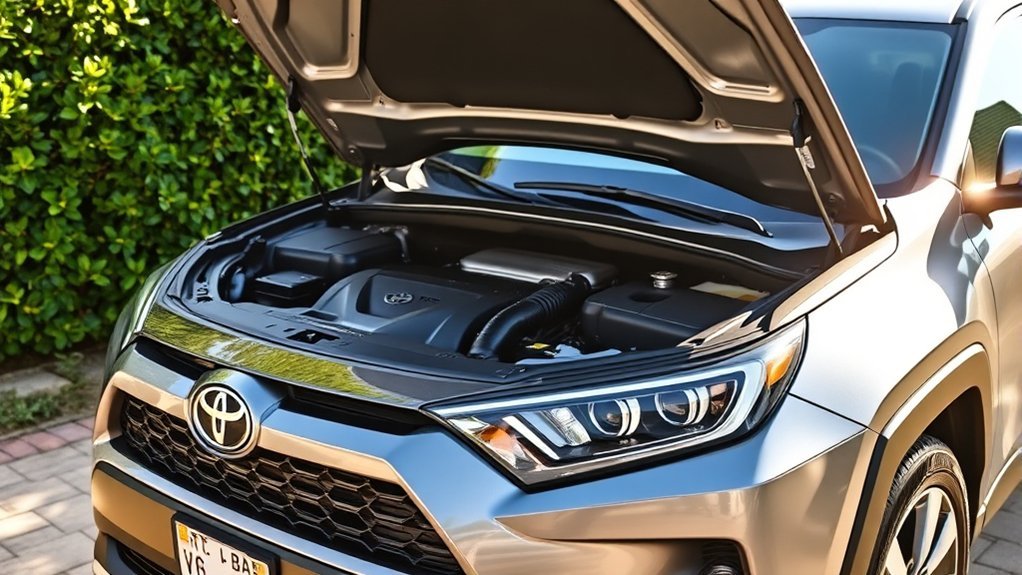
Why Toyota Dropped the V6 From the RAV4
What’s in This Article
- The Transition From V6 to Hybrid Powertrains
- Reasons Behind the RAV4’s V6 Discontinuation
- Why Toyota Replaced the V6 With More Efficient RAV4 Powertrains
- How Does the V6 Stack Up Against the New Hybrid Options?
- The Impact of Regulatory Standards on Engine Options
- Do Any RAV4 Competitors Still Offer a V6?
- 2026 Toyota RAV4 Powertrain Options
- What This Means for Future RAV4 Models and Consumers
If you remember the old Toyota RAV4 V6, the newer lineup can feel like a big change. Toyota no longer offers a V6 engine in the RAV4. Instead, the 2026 RAV4 uses hybrid and plug-in hybrid powertrains to focus on fuel efficiency, lower emissions, and stronger everyday torque.
Quick Answer
Toyota dropped the RAV4 V6 after the 2012 model year because buyers, fuel rules, and the compact SUV market moved toward better fuel economy. The 2026 RAV4 now uses a hybrid-only strategy in the U.S., with 226 horsepower in front-wheel-drive hybrid form and 236 horsepower with all-wheel drive. The RAV4 Plug-in Hybrid raises output to 324 net combined horsepower and offers an EPA-estimated 54 miles of all-electric range on the SE trim.
Key Takeaways
- The 2012 Toyota RAV4 was the last model year with an available V6 engine.
- The old 3.5-liter V6 made 269 horsepower and gave the RAV4 strong towing power for its class.
- The 2026 RAV4 uses hybrid power as standard, so gas-only RAV4 models no longer lead the lineup.
- The 2026 RAV4 Hybrid can reach up to 44 mpg manufacturer-estimated combined rating in front-wheel-drive form.
- The RAV4 Plug-in Hybrid now gives you the strongest output in the lineup, with 324 net combined horsepower.
The Transition From V6 to Hybrid Powertrains
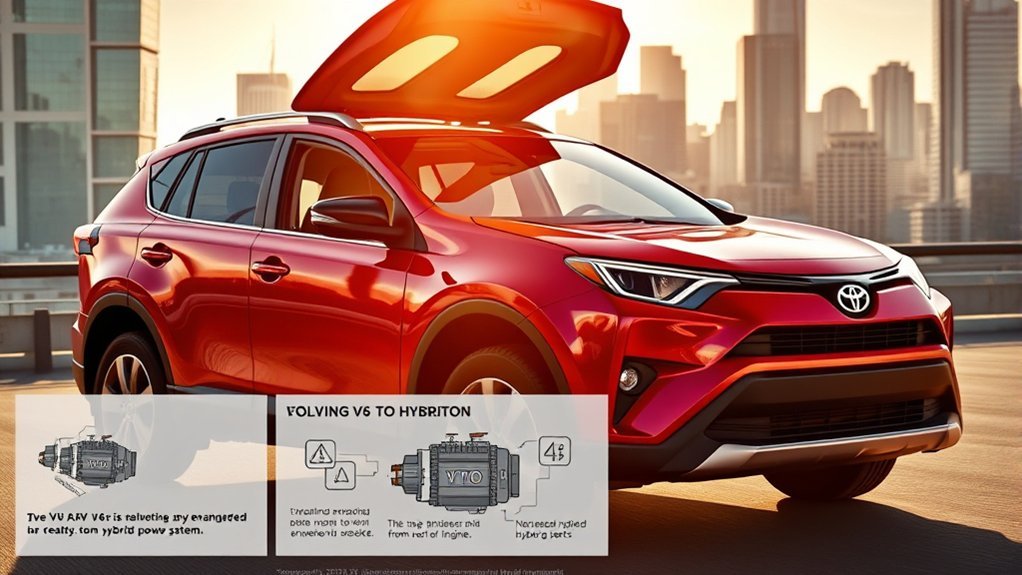
Toyota moved the RAV4 away from the once-popular V6 engine as the compact SUV market changed. Drivers started asking for lower fuel costs, fewer emissions, and better daily efficiency. Toyota answered that demand with hybrid powertrains instead of larger gas engines.
The old RAV4 V6 used a 3.5-liter engine and delivered 269 horsepower in the 2012 model year. It felt quick, strong, and useful for towing. But it also used more fuel than newer hybrid systems.
The 2026 RAV4 now focuses on a 2.5-liter four-cylinder hybrid setup. Toyota says the 2026 RAV4 Hybrid makes 226 horsepower with front-wheel drive and 236 horsepower with all-wheel drive. The RAV4 Plug-in Hybrid raises output to 324 net combined horsepower.
This shift gives you a different kind of power. Instead of the old V6 feel, you get electric motor response at low speeds and better fuel economy during daily driving.
Reasons Behind the RAV4’s V6 Discontinuation
The RAV4’s V6 engine disappeared after the 2012 model year. Toyota redesigned the RAV4 for the next generation and moved the model toward four-cylinder engines. That decision matched the market at the time, as compact SUV buyers began to value fuel economy more than extra cylinders.
The V6 had clear strengths. It gave the RAV4 strong passing power and up to 3,500 pounds of towing capacity when properly equipped. But its fuel economy could not match newer four-cylinder and hybrid systems.
EPA-style figures for the 2012 RAV4 V6 commonly landed around 21 to 22 mpg combined, depending on drivetrain and trim. By comparison, Toyota says the 2026 RAV4 Hybrid can reach up to 44 mpg manufacturer-estimated combined rating in front-wheel-drive form.
Toyota also had to balance buyer demand with tighter fuel economy and emissions standards. A smaller hybrid system helps Toyota keep the RAV4 competitive while still giving you enough power for normal driving.
Why Toyota Replaced the V6 With More Efficient RAV4 Powertrains
The RAV4 has always served families, commuters, and light-adventure drivers. That audience now cares more about fuel savings than the sound or feel of a six-cylinder engine. Toyota built the modern RAV4 around that change.
Shift Toward Smaller Engines
Toyota first replaced the RAV4 V6 with four-cylinder engines. That move helped reduce fuel use and kept the RAV4 aligned with other compact SUVs. Later, Toyota expanded hybrid options as buyers became more open to electrified powertrains.
| Powertrain | Output | Efficiency Focus |
|---|---|---|
| 2012 RAV4 V6 | 269 hp | Power and towing |
| 2026 RAV4 Hybrid FWD | 226 hp | Up to 44 mpg combined rating |
| 2026 RAV4 Hybrid AWD | 236 hp | More traction with hybrid power |
| 2026 RAV4 Plug-in Hybrid | 324 net combined hp | Strong output plus electric driving range |
This table shows the real tradeoff. The V6 gave you old-school engine strength. The newer hybrid models give you lower fuel use and more flexible daily performance.
Emphasis on Hybrid Options
The 2026 RAV4 puts hybrid power at the center of the lineup. Toyota’s standard hybrid system pairs a 2.5-liter engine with electric motors. This setup gives you more efficiency than the old V6 while still keeping enough power for most daily trips.
The RAV4 Plug-in Hybrid goes further. Toyota lists it at 324 net combined horsepower and an EPA-estimated 54-mile all-electric range on the SE trim. That means you can handle many short drives on electric power, then use the gas engine for longer trips.
How Does the V6 Stack Up Against the New Hybrid Options?
The old V6 RAV4 still wins on simple engine feel. It delivered quick acceleration, smooth power, and strong towing numbers for a compact SUV. If you like a traditional gas engine, you may still prefer how it drives.
The newer hybrid options win on fuel savings and low-speed response. Electric motors help the RAV4 move smoothly from a stop, especially in city traffic. You also spend less time thinking about fuel costs.
Note: Horsepower numbers do not tell the full story because hybrids deliver some torque from electric motors right away.
If you tow often, you should compare the exact trim, drivetrain, and tow rating before you buy. The RAV4 Plug-in Hybrid can still tow up to 3,500 pounds on certain trims, according to Toyota, but not every RAV4 setup has the same capability.
The Impact of Regulatory Standards on Engine Options
Regulatory standards also pushed automakers toward smaller engines and hybrid systems. The U.S. Environmental Protection Agency announced multi-pollutant standards for light-duty and medium-duty vehicles starting with model year 2027. The National Highway Traffic Safety Administration also finalized fuel economy standards for future passenger cars and light trucks.
These rules do not ban V6 engines. They do make efficiency more important across each brand’s full vehicle lineup. Automakers can meet those goals more easily when popular models use hybrids, plug-in hybrids, or smaller turbocharged engines.
- Fuel economy standards push brands to reduce fleet-wide fuel use.
- Emissions rules encourage cleaner powertrains in high-volume models.
- Hybrid systems help automakers keep power while improving efficiency.
- Buyer demand rewards SUVs that cost less to fuel.
The RAV4 sells in high volume, so its powertrain matters to Toyota’s broader strategy. By making the RAV4 hybrid-focused, Toyota can improve efficiency in one of its most important models.
Do Any RAV4 Competitors Still Offer a V6?
If you want a new compact SUV with a V6, your choices have become very limited. The Honda CR-V uses a 1.5-liter turbocharged engine or a hybrid system. The Nissan Murano also moved away from its old V6 and now uses a VC-Turbo four-cylinder engine.
The Ford Edge once offered strong V6 power in some versions, but Ford now marks the Edge as retired in the U.S. market. That makes it a used-market option, not a current new-vehicle rival.
The 2026 Chevrolet Blazer still offers an available 3.6-liter V6 on the RS trim. Chevrolet lists that engine at 308 horsepower and 270 lb-ft of torque. If you want a current two-row SUV with a V6, the Blazer remains one of the clearer options.
You can also find V6 engines in larger three-row SUVs, such as the Honda Pilot and Nissan Pathfinder. Those models sit above the RAV4 in size, price, and purpose, so they are not direct compact SUV replacements.
2026 Toyota RAV4 Powertrain Options
The 2026 Toyota RAV4 no longer gives you several gas engine choices. It gives you two main powertrain families: a standard hybrid and a plug-in hybrid. Toyota then spreads those powertrains across different trims and drive layouts.
- The RAV4 Hybrid uses a 2.5-liter four-cylinder engine with electric motor support.
- The front-wheel-drive hybrid makes 226 net combined horsepower.
- The all-wheel-drive hybrid makes 236 net combined horsepower.
- The RAV4 Plug-in Hybrid makes 324 net combined horsepower.
- The RAV4 Plug-in Hybrid SE has an EPA-estimated 54-mile all-electric range.
This setup gives you more ways to choose efficiency, traction, and power. You do not get the old V6 feel, but you do get a more modern powertrain range.
What This Means for Future RAV4 Models and Consumers
The RAV4’s move to a hybrid-focused lineup shows where Toyota sees the compact SUV market going. You can expect future RAV4 models to keep pushing efficiency, software, safety tech, and electrified power. A return to a traditional V6 looks unlikely.
Engine Options Evolution
The RAV4 changed from a simple gas SUV into a hybrid-led model. The older 3.5-liter V6 served drivers who wanted strong acceleration and towing confidence. The newer hybrid systems serve drivers who want lower fuel costs and smoother city driving.
This change also helps Toyota compete with hybrid versions of the Honda CR-V, Kia Sportage, Hyundai Tucson, and Ford Escape. The market now rewards SUVs that balance power and fuel use.
Consumer Power Preferences
Some former V6 owners still miss the old engine. That makes sense. A V6 can feel more direct and more familiar than a hybrid system.
But many buyers now judge power in a different way. They want quick response, strong fuel economy, and enough torque for daily use. The RAV4 Plug-in Hybrid serves those buyers best because it gives the lineup its strongest output.
Pro tip: Test-drive both the RAV4 Hybrid and Plug-in Hybrid because they feel different at low speeds and highway speeds.
Market Trends Reflection
The RAV4’s V6 exit reflects a wider market shift. Smaller engines, hybrid systems, and plug-in hybrids now handle jobs that once required larger engines. That change does not please every driver, but it helps automakers meet efficiency goals.
For you, the key question is simple. Do you value the old V6 feel more, or do you want better fuel economy and newer technology? Your answer will shape whether a used V6 RAV4 or a newer hybrid RAV4 makes more sense.
Nostalgia for the V6 RAV4: What Will You Miss?
The old V6 RAV4 gave drivers something rare in a compact SUV. It had strong acceleration, good towing capacity, and a simple gas-engine feel. That combination still explains why many used V6 RAV4 models have loyal fans.
You may miss the sound, the quick highway passing power, and the confidence the 3.5-liter engine gave you with a loaded cabin. You may also miss the way the V6 made the RAV4 feel closer to a larger SUV.
Still, the newer RAV4 lineup has its own strengths. You get much better efficiency, more available electric driving, and updated safety and tech features. For many buyers, those benefits outweigh the loss of two cylinders.
Could Toyota Bring Back a V6 RAV4?
A V6 RAV4 comeback looks unlikely. Toyota has already moved the 2026 RAV4 into a hybrid-only direction in the U.S. That strategy gives Toyota better fuel economy numbers in a model that sells in large volume.
Toyota also has larger SUVs for buyers who need more towing power or more cabin space. If you want a Toyota with more muscle than a RAV4, you will likely shop a bigger model instead of waiting for a V6 RAV4 return.
Frequently Asked Questions
Which RAV4 has a 6-cylinder engine?
The third-generation Toyota RAV4 offered an available 3.5-liter V6 engine through the 2012 model year. Newer RAV4 models use four-cylinder, hybrid, or plug-in hybrid powertrains depending on year and trim.
What was the last year of the RAV4 V6?
The 2012 Toyota RAV4 was the last model year with an available V6 engine. Toyota redesigned the next RAV4 generation without a V6 option.
How much horsepower did the RAV4 V6 have?
The 2012 RAV4 V6 used a 3.5-liter engine rated at 269 horsepower. That made it one of the stronger compact SUVs of its time.
Is the 2026 RAV4 Hybrid more powerful than the old V6?
The standard 2026 RAV4 Hybrid is not more powerful than the old V6. It makes 226 horsepower with front-wheel drive and 236 horsepower with all-wheel drive. The 2026 RAV4 Plug-in Hybrid is stronger, with 324 net combined horsepower.
Should you buy a used V6 RAV4 or a newer RAV4 Hybrid?
Choose a used V6 RAV4 if you want the old engine feel and can accept higher fuel use and older tech. Choose a newer RAV4 Hybrid if you want better fuel economy, newer safety features, and lower daily running costs.
Conclusion
Toyota dropped the RAV4 V6 because the compact SUV market moved toward fuel savings, lower emissions, and hybrid power. The old V6 still has a strong fan base, especially among drivers who value towing and quick acceleration. But the newer hybrid and plug-in hybrid models give you better efficiency and more modern performance. If you miss the V6, shop carefully in the used market. If you want the strongest new RAV4, start with the 2026 RAV4 Plug-in Hybrid.
References
- The Next Adventure Begins: 2026 RAV4 Arrives this Winter — Toyota USA Newsroom, 2025
- 2026 RAV4 Plug-in Hybrid — Toyota Motor Sales, U.S.A., 2026
- 2012 Toyota RAV4 V6 specifications — Toyota Canada, 2012
- 2012 Toyota RAV4 specs and fuel economy — Cars.com, 2012
- Regulations for Greenhouse Gas Emissions from Passenger Cars and Trucks — U.S. Environmental Protection Agency, 2026
- Final Rule: CAFE Standards for Model Years 2027-2031 — National Highway Traffic Safety Administration, 2024
- 2026 Chevrolet Blazer engine options — Chevrolet, 2026
- 2026 Honda CR-V engine information — Honda Automobiles, 2026