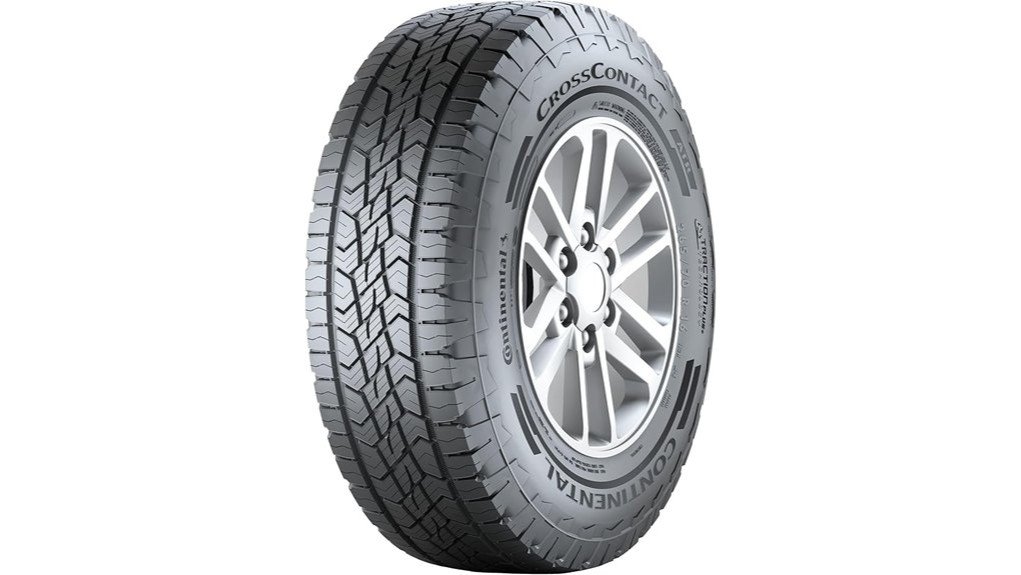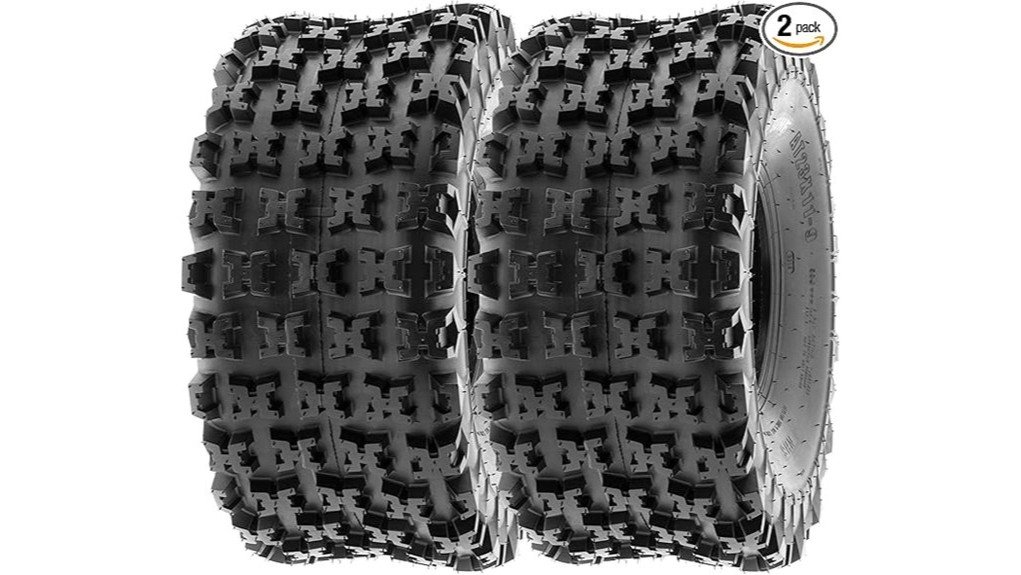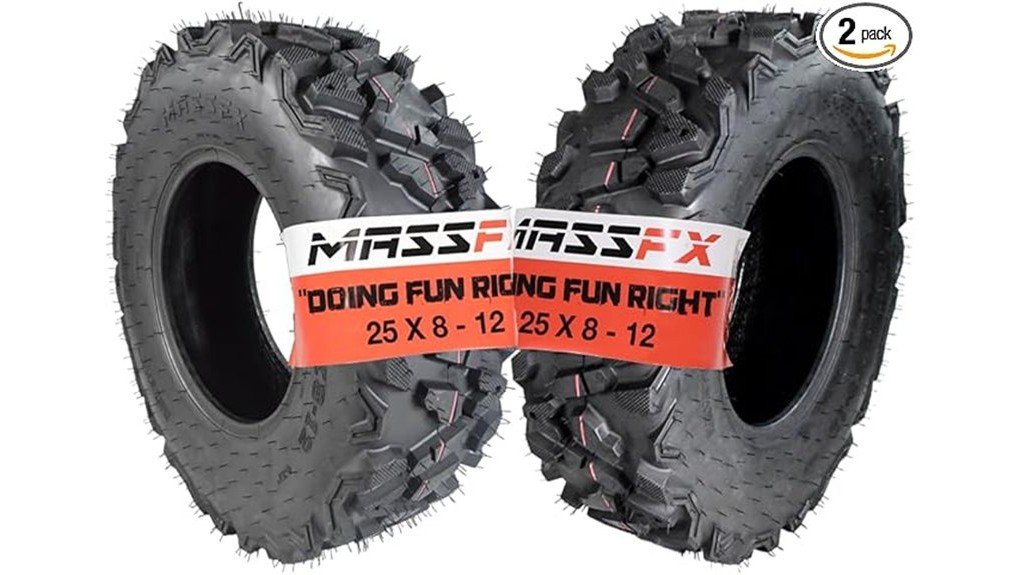
21×7-10 and 22×10-10 Tire Review
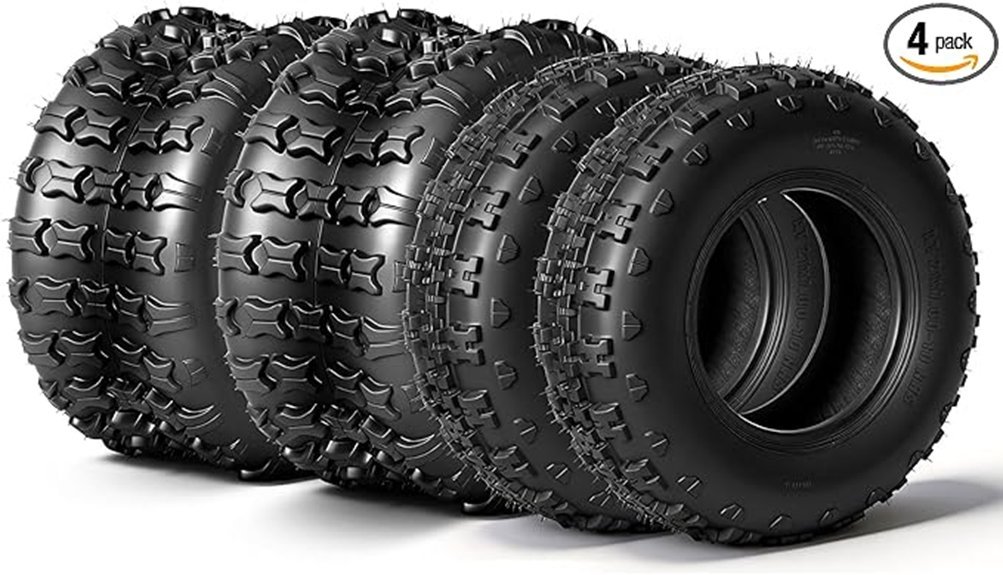
Choose 21×7-10 vs 22×10-10? 21×7-10 is typically for the front, on a 5.5-inch rim, rated 205 lbs at 14 PSI, with 15 mm tread. 22×10-10 fits the rear on an 8-inch rim, rated 374 lbs at 14 PSI, with 11 mm tread. Puncture resistance: 4/6-ply casing helps defend sidewalls on gravel and rough trails. Traction: non-directional split knobs grip mud, dirt, and sand. Tubeless: confirm 10-inch rim compatibility, seat the bead, then check pressure for best value—keep going to compare fit and setup details.
Key Takeaways
- Compare fitment: 21×7-10 is typically front on a 5.5-inch rim, while 22×10-10 is typically rear on an 8-inch rim.
- Review core specs: both share a 10-inch diameter, run 14 PSI, but have different max loads and tread depths.
- Note load ratings: 21×7-10 supports 205 lbs; 22×10-10 supports 374 lbs for heavier rear use.
- Evaluate puncture resistance: 4/6-ply casing improves protection for rough trails, gravel, and mixed debris.
- Assess traction: the split-knob, non-directional tread helps grip in mud, dirt, gravel, and sand with stable shoulder contact.
Choose 21×7-10 Vs 22×10-10: Front or Rear?
Which Tire Fits Where: 21×7-10 or 22×10-10?
For clear buyer guidance, the 21×7-10 size is typically the front choice, while the 22×10-10 size is typically the rear choice.
The front 21×7-10 matches a 5.5-inch rim, 10-inch diameter, and supports 205 lbs, helping balance and control.
The front 21×7-10 matches a 5.5-inch rim, 10-inch diameter, and supports 205 lbs for balanced, controlled handling.
The rear 22×10-10 fits an 8-inch rim, 10-inch diameter, and supports 374 lbs for carrying weight.
This pairing supports tire longevity and practical performance upgrades by placing grip where it matters most.
Quick takeaways
- Front: 21×7-10, 205 lbs max
- Rear: 22×10-10, 374 lbs max
- Same rim diameter: 10-inch compatibility
21×7-10 Vs 22×10-10: PSI, Load & Tread
Takeaways:
- Front: 21×7-10, 205 lbs, 15 mm.
- Rear: 22×10-10, 374 lbs, 11 mm.
4/6-Ply Casing: Puncture Resistance Explained
A 4/6-ply casing is designed to improve puncture resistance, which matters most when the tires are driven on rough trails, gravel, and mixed debris.
Buyers should treat this construction as puncture prevention in real use, not a promise. The extra casing layers help protect the sidewall and tread area from sharp rocks and repeated impacts, supporting casing durability over time.
How it helps
- Reduces risk of cuts during trail and utility work
- Better resistance to abrasion from sand, debris, and edges
- Fits 21×7-10 and 22×10-10 tubeless setups for off-road confidence
Choose it if
You expect puncture-prone routes and want longer service life.
Traction Test: Mud, Dirt, Gravel & Sand
When evaluating traction for an off-road tire set, buyers should focus on how well the non-directional tread and split-knob pattern grips on common surfaces like mud, dirt, gravel, and sand without feeling unstable.
In mud, the 21×7-10 and 22×10-10 sizes (14 PSI, 4/6-ply casing) tend to keep bite with steady shoulder contact.
On dirt and packed trails, the tread clears small debris to improve tire performance and traction efficiency.
For gravel, staggered knobs help maintain control on slick edges.
On sand, wider contact and predictable forward roll reduce wandering.
Quick takeaways
- Best for ATV/UTV and utility off-road use
- Stable grip across mixed terrain
- Not for highway driving
Tubeless On 10-In Rims: Fit & Installation Notes
Before purchase and installation, buyers should confirm the tires’ tubeless setup matches their 10-inch rims, since both the front (21×7-10) and rear (22×10-10) tires are designed specifically for 10-inch rim diameter and will be supplied as tires only, with rims not included.
Fit check
They match 5.5-inch front rim width and 8-inch rear rim width, both rated 14 PSI, tubeless.
Installation tools
They should gather tire levers, a quality bead sealer, an air source, and an appropriate valve stem.
Quick tire maintenance tips
After install, they should verify bead seating, check pressure, and inspect for punctures to support reliable trail use and long service life.
Frequently Asked Questions
Are These Tires Suitable for Lawn Mower or Garden Tractor Use?
Yes, these tires can suit lawn mower and garden tractor use if the machines accept 21×7-10 front and 22×10-10 rear sizes.
They’re tubeless, 4/6-ply, and built for rough terrain. Tire performance and traction comparison show strong grip on dirt, gravel, sand, and trails, with stable handling.
They are not for highway use.
Buyer takeaways: check rim widths 5.5″ and 8″, and confirm PSI 14, load ratings.
What’s the Expected Tread Life at 14 PSI on Rough Trails?
Tread wear on rough trails at 14 psi depends on surface and load, like erosion slowly shaping a path.
Expected life: a typical range is about 300–800 operating hours for these 21×7-10 and 22×10-10 tires, given their 4/6-ply casing and non-directional split-knob tread.
Terrain impact: higher rocks and mud shorten life, smoother dirt can extend it.
Takeaways:
- Check tread depth regularly (15 mm front, 11 mm rear)
- Keep PSI near 14 for steadier wear
- Replace when traction drops noticeably
Can I Use These Tires in Light Snow or Icy Conditions?
Yes, he can use these tires in light snow, but not for icy or hard-packed conditions.
For tire performance, the non-directional split-knob tread helps snow traction on loose dirt and light powder. They are tubeless, 4/6-ply, and run at 14 PSI.
Fit-wise they’re 21×7-10 front and 22×10-10 rear, rim 10 in.
Takeaways:
- Good: light snow, mixed trails
- Limited: ice, wet glare
- Best: non-highway use
Do These Tires Replace Worn Tires With Different Tread Depths Easily?
These tires can replace worn ones with different tread depths with reasonable tread compatibility and installation ease.
Hex “as simple as matching shapes” helps check fit: front is 21×7-10 (5.5 in rim, 10 in diameter), rear is 22×10-10 (8 in rim, 10 in diameter).
Both are tubeless, 14 PSI, 4/6-ply, speed index F.
Quick takes:
- Match sizes front vs rear
- Rims not included
- Suitable for ATVs/UTVs and select utility vehicles
How Do I Know if My Rim Width Fits 5.5 and 8 Inches?
[How can the buyer confirm rim width fit?] He can check rim compatibility by measuring.
Use measuring width with a tape measure across the rim bead seat, in inches. The front tire needs a 5.5-inch rim width, the rear needs 8.0 inches.
He should also verify the rim’s stamped size or model spec. If dimensions match, fit for ATV/UTV and utility use is likely.
Takeaways
- Measure bead-seat width.
- Confirm 5.5″ front, 8.0″ rear.
- Use rim markings if available.
Conclusion
Conclusion: Which Tire Fits Your Ride?
Choosing between the 21×7-10 and 22×10-10 comes down to position and load. The 21×7-10 front size supports steadier control, while the 22×10-10 rear size handles heavier demands. Both use a non-directional split-knob tread and a 4/6-ply casing for puncture and abrasion resistance—good for mud, dirt, gravel, and sand. For tubeless use on 10-in rims, confirm PSI needs first, or performance can drop like a rock.
Quick takeaways
- Front: 21×7-10 for control
- Rear: 22×10-10 for load capacity
- Both: off-road focus, not highway use