433MHz TPMS Sensor Review: Essential for Your Vehicle
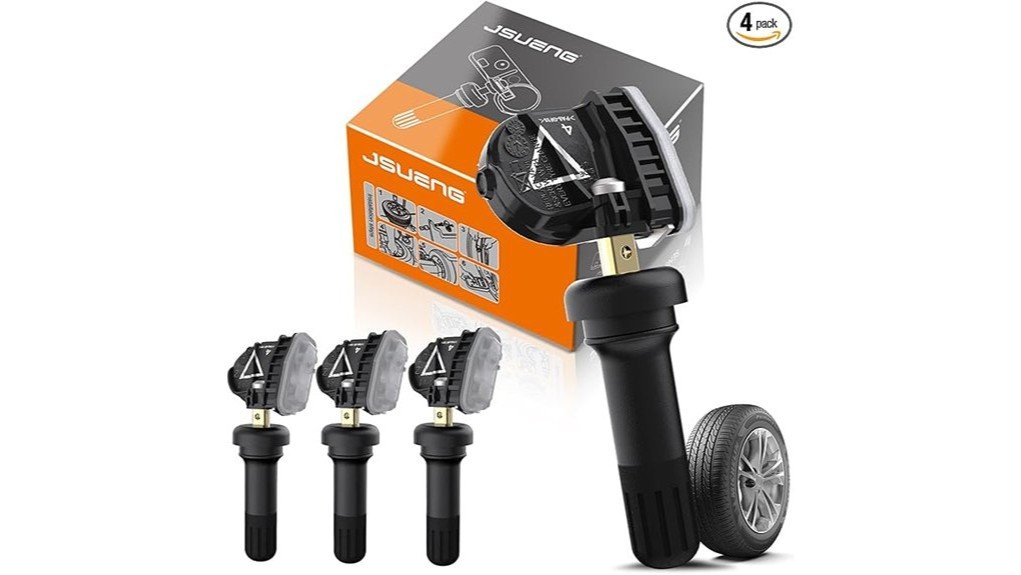
The 433MHz TPMS sensor is an OEM-style replacement for many GM vehicles, including Chevrolet, Buick, GMC, and Cadillac models. It matches OE references 13598773 and 13512347, works on a 433MHz signal, and handles up to 900Kpa, or 130.53psi. It monitors tire pressure in real time, sends alerts when pressure drops, and supports safer driving. With a CR2032 battery rated for 5-8 years and a 1-year warranty, it looks practical, and more details follow below.
Key Takeaways
- Compatible with many GM vehicles, including Chevrolet, Buick, GMC, and Cadillac, with OE references 13598773 and 13512347.
- Uses a 433MHz signal and supports up to 900Kpa, providing reliable tire pressure monitoring across GM platforms.
- Measures tire pressure in real time and alerts the vehicle when pressure drops, improving driving safety.
- Features a CR2032 battery with an expected 5–8 year lifespan and durable performance in extreme temperatures.
- Requires proper installation and OBDII relearn, including sensor activation and a short drive to ensure stable operation.
433MHz TPMS Sensor Compatibility
The 433MHz TPMS Sensor is built for a wide range of GM vehicles, and its compatibility is one of its strongest points.
This unit fits many Chevrolet, Buick, GMC, and Cadillac vehicle models, including Malibu, Silverado, Regal, LaCrosse, and Escalade. It supports several sensor types used across GM platforms, so the reader can match replacements with confidence.
OE references such as 13598773 and 13512347 help confirm fitment. With a 433MHz signal, 900Kpa pressure capacity, and CR2032 power, it offers practical range, durability, and a clear path to vehicle control.
How to Install and Relearn the 433MHz TPMS Sensor
Installing the 433MHz TPMS sensor is a straightforward process, but it works best when the vehicle is prepared carefully and the relearn steps are followed in order.
Begin by mounting the sensor securely and checking tire pressure against the placard value. These sensor installation tips help prevent false alerts and uneven readings.
Mount the sensor securely and verify tire pressure against the placard to prevent false alerts and uneven readings.
Next, use the relearn process with an OBDII tool, then activate each wheel sensor in sequence. After data transfer, drive at 28 mph for at least 5 minutes.
The sensor uses a CR2032 battery, handles 900Kpa, and supports reliable operation from -40°C to +125°C.
What the 433MHz TPMS Sensor Does
Working as a tire pressure monitoring component, the 433MHz TPMS sensor measures air pressure inside each tire and sends that data wirelessly to the vehicle’s monitoring system, so the driver can see whether pressure stays within a safe range.
- Sensor functionality keeps readings current.
- It supports tire safety by alerting the system when pressure drops.
- It uses a 433MHz signal for clear communication.
- It helps the driver maintain freedom from guesswork, because the dash shows conditions in real time.
This straightforward setup gives practical control, and it helps prevent unsafe driving caused by underinflated tires.
433MHz TPMS Sensor Performance and Lifespan
Built for dependable day-to-day use, the 433MHz TPMS sensor pairs a high-performance CR2032 battery with a pressure capacity of 900Kpa, or 130.53psi, so it can monitor tire conditions with steady accuracy over time.
Its sensor accuracy stays consistent through temperature swings from -40°C to +125°C, giving you clear readings when roads change.
Battery longevity is designed for 5 to 8 years under normal use, which supports long, freer stretches between replacements.
Durable testing for pressure, heat, and mechanical stress helps the unit keep working cleanly, while the 433MHz signal supports stable communication after relearning.
Is the 433MHz TPMS Sensor Worth It?
Whether the 433MHz TPMS sensor is worth it depends largely on fitment, reliability, and how much value the reader places on long-term maintenance savings. For many drivers, it is a practical upgrade that supports liberated, self-directed vehicle care.
- Fits many Buick, Cadillac, Chevrolet, and GMC models.
- Uses a CR2032 battery, with 900Kpa capacity and -40°C to +125°C range.
- Supports 5-8 years of normal service, with 1-year warranty.
- Sensor reliability is strengthened by strict testing, while user experiences often note easier monitoring after relearn.
It can be worth it when safe, steady tire tracking matters.
Frequently Asked Questions
Does This Sensor Require a TPMS Tool for Pairing?
Yes, pairing typically requires a TPMS tool and OBDII relearn for sensor compatibility. Installation tips: set pressures correctly, activate each tire, then drive briefly. The process frees the vehicle from warning-light uncertainty.
Can I Install This Sensor Without Removing the Tire?
No, installation usually requires tire removal for access to the valve stem. Proper tire maintenance supports sensor longevity, while a professional can preserve freedom from guesswork and guarantee the system is paired correctly afterward.
What Is the Sensor’s Exact Battery Type?
Its exact battery type is a high-performance CR2032 coin cell, supporting battery longevity and sensor compatibility. This choice helps drivers maintain freedom from frequent replacements while preserving reliable tire monitoring across compatible vehicles.
Does the Sensor Work With Aftermarket Rims?
Yes, if the aftermarket compatibility gods smile. Proper rim selection matters, and matching valve-stem fitment and sensor clearance is essential. The liberated driver should verify dimensions before trusting freedom to a tire shop.
Is Professional Programming Recommended After Installation?
Yes, professional programming is recommended after installation; it offers reliable programming benefits and follows practical installation tips. A technician can complete relearn procedures efficiently, helping the vehicle move toward safer, freer, and trouble-free driving.
Conclusion
In the end, the 433MHz TPMS sensor appears to meet the needs of many Chevrolet, Buick, GMC, and Cadillac owners, with broad fitment, 433MHz operation, and OE-number compatibility. Its durable battery, temperature resistance, and standard relearn process suggest dependable daily use. Yet the final question remains in the details of your vehicle’s exact TPMS system, because the right match determines whether this replacement performs smoothly, quietly, and with lasting value.