Masoll TPMS Sensor Review: Reliability for GM Vehicles
Disclosure: As an Amazon Associate, we earn from qualifying purchases. If you click a link on this page and make a purchase, we may receive a small commission at no extra cost to you.
Masoll TPMS Sensor Kit Review: External Sensors with EL-50448 Relearn Tool for GM Vehicles
Tire pressure monitoring helps you catch underinflation early, which supports better handling, fuel efficiency”)). and tire life on your GM vehicle. When the TPMS warning light appears, many owners look for an affordable way to restore full monitoring without a trip to the dealership.
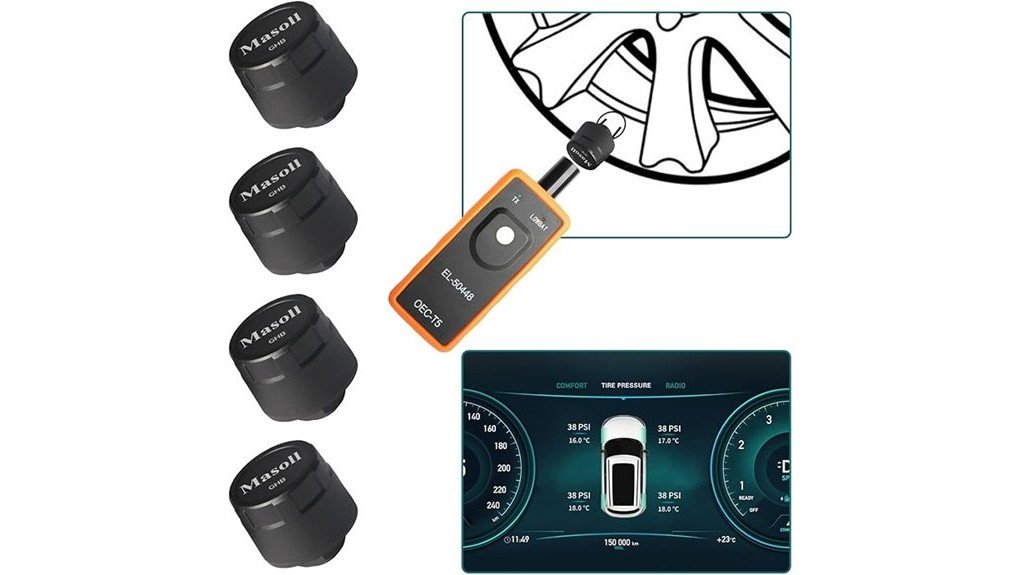
The Masoll TPMS Sensor Kit bundles four external sensors with the EL-50448 relearn tool, targeting post-2006 Chevy, Buick, Cadillac, GMC, and Pontiac models. This review examines the kit’s compatibility, claimed accuracy, installation steps, and overall value for DIY-minded GM owners.
Our Verdict
Rating: 7.5/10
Best For: Owners of post-2006 GM vehicles who want an affordable DIY TPMS solution with an included relearn tool.
Bottom Line: The kit provides four external sensors with ±1.5 PSI accuracy and the EL-50448 tool for straightforward GM resets. You must verify vehicle compatibility first, and external sensors trade some protection and appearance for easier installation.
| Specification | Detail |
|---|---|
| Brand | Masoll |
| Model | TPMS Sensor Kit (Gen 2) |
| Number of Sensors | 4 external sensors |
| Accuracy | ±1.5 PSI |
| Battery | Replaceable, approximately 2 years |
| Installation | External valve-stem mount |
| Compatibility | Post-2006 Chevy, Buick, Cadillac, GMC, Pontiac |
| Included | 4 sensors + EL-50448 relearn tool |
What Is the Masoll TPMS Sensor Kit?
The Masoll TPMS Sensor Kit includes four external tire pressure sensors and one EL-50448 relearn tool. It is designed as an aftermarket option for many General Motors vehicles from 2007 onward.
Each sensor mounts on the valve stem outside the wheel. This external placement keeps installation simple compared to internal sensors that require tire dismounting and professional tools. The kit targets drivers who want to handle TPMS maintenance themselves.
The Gen 2 design focuses on improved signal transmission. Combined with the dedicated relearn tool, the bundle aims to give GM owners a complete, self-contained path to restoring accurate tire pressure monitoring.
Masoll TPMS Sensor Compatibility with GM Vehicles
Compatibility stands as one of the kit’s main considerations. The sensors support a wide range of post-2006 GM vehicles, including many Chevy, Buick, Cadillac, GMC, and Pontiac models.
Because fitment can vary by exact year, trim, and wheel setup, you should always cross-check your vehicle against the seller’s fitment guide or Amazon’s vehicle selector before ordering. Using the wrong sensors can lead to communication issues with your vehicle’s TPMS receiver.
The included EL-50448 relearn tool is intended for GM’s common reset procedures. It activates each sensor in sequence so the vehicle recognizes the new IDs and clears the warning light.
Why the Masoll TPMS Sensor Provides Reliable Accuracy
The sensors are rated for ±1.5 PSI accuracy. This level of precision works well for everyday monitoring and catching significant pressure drops before they affect handling or fuel economy.
Low-power electronics help limit battery drain and reduce reading drift over time. The design emphasizes stable signal transmission from the external sensors to the vehicle’s receiver.
Each sensor uses a replaceable battery estimated to last around two years under normal driving conditions. When the battery eventually weakens, you can swap it without replacing the entire sensor unit.
How to Install the Sensors and Use the Relearn Tool
Installation begins with screwing each external sensor onto the valve stem by hand and tightening it securely. A proper seal helps maintain consistent signal performance.
After mounting and inflating the tires to the recommended PSI listed on the driver’s door jamb, you use the EL-50448 relearn tool to complete the process.
The typical GM relearn sequence involves:
- Starting the vehicle and placing it in relearn mode if required by your model.
- Activating each sensor in a specific order (usually left front, right front, right rear, left rear) using the tool.
- Waiting for the horn chirp or dash confirmation that each sensor was learned.
Once complete, the TPMS light should turn off. Always recheck pressures after the procedure and monitor for any new warnings during the first few drives.
How the Masoll TPMS Kit Performs in Real Use
Daily Driving
On regular commutes, the sensors give you quick visibility into pressure changes caused by temperature swings or slow leaks. You can spot issues early and add air before a warning light appears, supporting consistent tire performance and safety.
Highway and Long Trips
Before longer drives, confirming all four tires are properly inflated helps optimize fuel efficiency and reduces the chance of heat-related pressure problems on the road. The ±1.5 PSI tolerance provides enough confidence for most drivers.
Seasonal Tire Changes
If you swap between summer and winter wheels, the external sensors make it easier to transfer or replace sensors yourself. The included relearn tool lets you complete the setup at home rather than paying for a shop service each time.
Pros and Cons
Pros
- External valve-stem design allows quick installation without removing tires or visiting a shop
- Includes the EL-50448 relearn tool specifically for GM vehicle reset procedures
- ±1.5 PSI accuracy supports reliable routine pressure monitoring
- Gen 2 sensors target stronger signal coverage across the vehicle
- Replaceable batteries offer roughly two years of service before maintenance
Cons
- Compatibility is restricted to post-2006 GM models only; fitment must be verified per vehicle
- External sensors sit outside the wheel and can be more exposed to damage or theft than internal sensors
- Basic feature set without tire temperature monitoring or app-based alerts
Is the Masoll TPMS Sensor Kit Worth the Price?
The Masoll kit positions itself as an affordable aftermarket solution for GM owners who want to restore or add TPMS capability themselves. The combination of four sensors plus the relearn tool delivers practical value for DIYers who would otherwise pay for separate parts and labor.
Because prices fluctuate, focus on whether the feature set matches your needs. If your vehicle is compatible and you value simple external installation with included reset support, the kit offers strong value for the price. Owners who prefer fully integrated OEM-style sensors or professional installation may find other options better suited.
Amazon’s return policy provides a reasonable window to test fitment and function, which lowers the risk for most buyers who confirm compatibility first.
How It Compares to Alternatives
If you want a more seamless factory-like integration, consider having your dealership install genuine GM sensors, though this usually costs more and may not include a take-home relearn tool. Universal TPMS kits from other brands can offer broader vehicle coverage but often require separate purchase of a compatible relearn tool or OBD tool for GM models.
The Masoll kit remains a sensible choice for owners of supported GM vehicles who prioritize easy external mounting and a complete DIY bundle at a lower price point.
Frequently Asked Questions
How long does the battery in each Masoll sensor typically last?
Each sensor uses a replaceable battery rated for approximately two years of normal daily driving. Actual life can vary with driving conditions and temperature extremes, but the low-power design helps extend service intervals.
Can I replace the battery in the Masoll TPMS sensors myself?
Yes, the batteries are designed to be user-replaceable. When a sensor stops reporting or shows low battery behavior, you can open the sensor housing, swap in a new battery of the correct type, and continue using the same unit.
Will the Masoll TPMS sensors work on my specific GM vehicle?
The kit supports many post-2006 Chevy, Buick, Cadillac, GMC, and Pontiac models, but compatibility is not universal across all years and trims. Always use Amazon’s fitment tool or contact the seller with your exact year, make, model, and wheel size before purchasing.
How do I use the included EL-50448 relearn tool?
After installing and inflating the tires, follow your vehicle’s TPMS relearn procedure (often started via a menu or key sequence). Then use the EL-50448 tool to activate each sensor in the correct wheel order until the vehicle accepts the new sensor IDs and the warning light clears.
Are the external sensors durable enough for everyday driving?
The sensors are built for regular road use, but because they mount externally on the valve stem, they can be more susceptible to curb rash, debris, or deliberate removal than internal sensors. Regular visual checks during tire inflation help catch any issues early.
The Bottom Line
The Masoll TPMS Sensor Kit offers a practical, budget-friendly way for owners of compatible post-2006 GM vehicles to add or refresh tire pressure monitoring with minimal hassle. Its external sensors and included EL-50448 relearn tool make DIY installation and reset straightforward, while the ±1.5 PSI accuracy meets the needs of most routine drivers.
If your vehicle appears on the compatibility list and you prefer handling maintenance yourself, this kit represents a solid choice. Drivers with incompatible vehicles or those wanting internal sensors and advanced features should explore other options.
Ready to Buy?