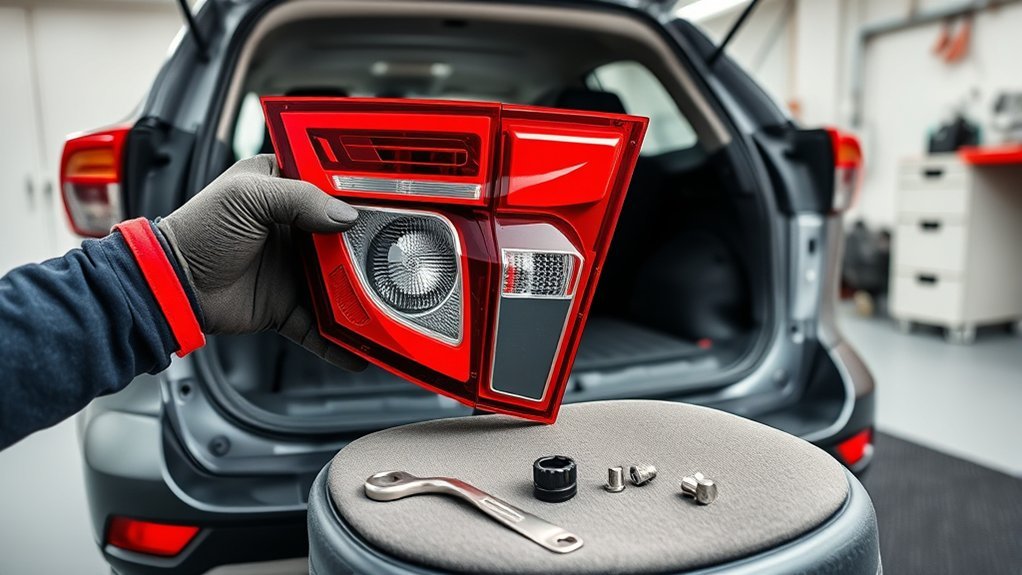
On most Toyota RAV4 models, you replace a tail light by opening the tailgate, prying off the small trim cover on the inner edge of the lamp, removing two 10 mm bolts, and pulling the lamp assembly straight back off the body. A burnt-out bulb can then be changed by turning its socket a quarter turn. The exact layout varies by generation and trim, so confirm the details against your owner’s manual.
Which RAV4 does this apply to?
The general method below matches what Toyota’s owner’s manual describes for the 2013-2018 RAV4 (XA40): open the back door, remove the bolts, and pull the lamp assembly directly backward. A published step-by-step for 2019-2023 models (XA50) shows the same basic approach with a trim cover and two 10 mm bolts. Older RAV4s (2006-2012) and the newest generation (2026 and later) are built differently, so use the procedure for your year rather than assuming it is identical.
| Model years | Generation | What to expect |
|---|---|---|
| 2013-2018 | XA40 | Toyota’s manual lists stop/tail lights, rear turn signals, back-up lights and license plate lights as owner-replaceable bulbs. Remove the bolts and pull the lamp straight back. |
| 2019-2023 | XA50 | Pry off the trim cover on the inner edge of the lamp, remove two 10 mm bolts, pull the housing off, then twist out the bulb socket. |
| 2024-2025 | XA50 (updated) | Same platform as 2019-2023, but lamp design and bulb type can differ by trim. Check the manual for your exact trim. |
| Other years | Earlier or newer generations | Procedures differ. Follow the manual for your model year. |
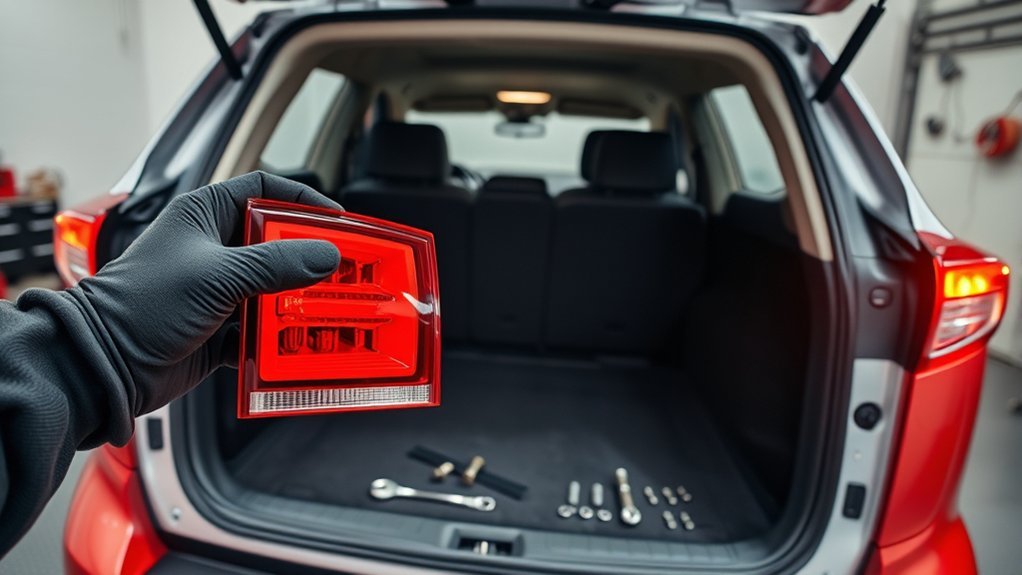
Why a failed tail light should not wait
The rear lamps show other drivers when you brake, turn, reverse and when your vehicle is on the road at night. A dead bulb means part of that signal is missing, and in most places a burnt-out lamp can earn a citation or a failed inspection. Rules vary by state and country, so check your local requirements. A cracked lens also lets water into the housing, which can corrode bulb sockets and connectors.
Before you buy parts, confirm what has actually failed. Have someone stand behind the vehicle while you press the brake, run the turn signals and shift into reverse. If only one function is dead on one side, the bulb is the likely cause. If several functions are out on that side, or the lamp has a cracked lens or water inside, the whole assembly is the better repair.
What you need
- A 10 mm socket with a small ratchet, or a 10 mm wrench
- A plastic trim pry tool (a flathead screwdriver can mark or crack the trim, so avoid it if you can)
- The correct replacement bulb, or a complete replacement lamp assembly if the lens is cracked
- Clean gloves or a clean cloth, because Toyota’s manual says not to touch the glass part of a bulb with bare hands
- Optional: dielectric grease for the socket contacts, and a flashlight
Bulb type
A published guide for 2019-2023 RAV4 rear turn signals lists the original bulb as a 12V 21W amber WY21W (also sold as 7440A). Bulb numbers differ by position, year and trim, and some RAV4 lamps use LEDs. Match the bulb to your owner’s manual or to the old bulb before buying.
Step-by-step: remove the old tail light
- Park on level ground, switch off the lights and the vehicle, and let any recently used bulb cool. Toyota warns that bulbs become very hot.
- Open the tailgate fully.
- On 2019-2023 models, use a plastic pry tool to gently lift off the black trim cover on the inner edge of the tail light housing. Set it aside.
- Loosen the two bolts holding the lamp with a 10 mm socket and set them somewhere safe.
- Pull the lamp assembly straight back from the body. If it sticks, work a plastic pry tool gently between the lamp and the body panel. Do not use force, especially in cold weather when plastic is more brittle.
- Turn the bulb socket counterclockwise about a quarter turn and pull it out of the lamp.
Replace the bulb
- Pull the old bulb straight out of the socket and compare it with the new one.
- Push the new bulb in without touching the glass. If you did, wipe it with a clean cloth.
- Turn the socket back into the lamp clockwise until it seats.
- Before you reinstall the lamp, have someone press the brake or switch on the hazards so you can confirm the bulb lights.
Install a new tail light assembly
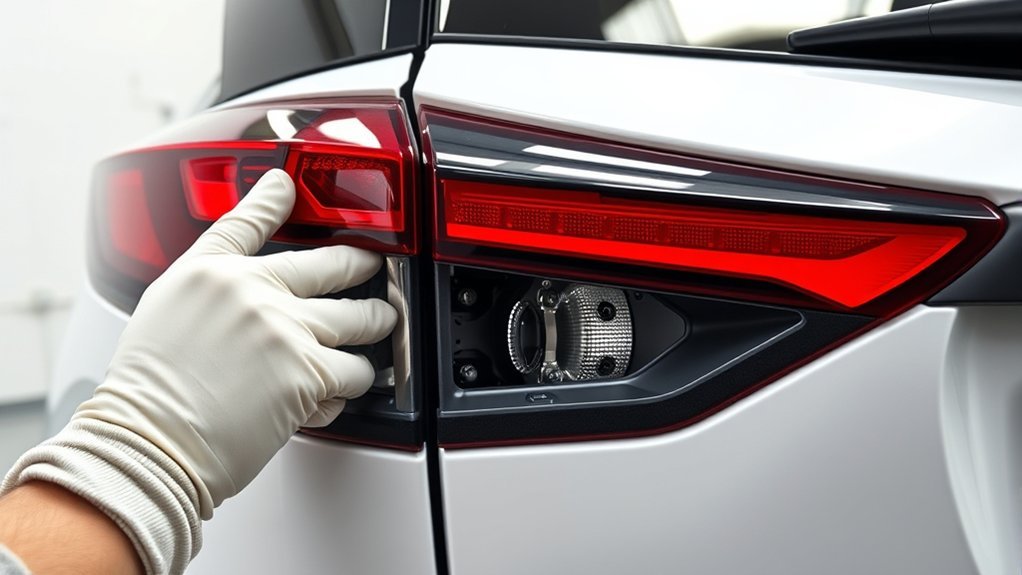
If you are replacing the whole lamp, move the bulb sockets and wiring from the old unit to the new one, or connect the new lamp’s wiring if it comes complete. Before fitting it, check that the foam or rubber gasket around the lamp is present and sits flat, because this seal keeps water out of the lamp and the cargo area.
- Line up the lamp’s locating features with the mounting points on the body and slide it forward until it sits flush with the body panel.
- Start both 10 mm bolts by hand, then tighten them until snug. Do not over-tighten, because the lamp housing is plastic and can crack.
- On models with a trim cover, press it back until the clips click.
- Check that the gap between the lamp and the body is even on both sides of the vehicle.
Note: Toyota does not publish a torque figure for the tail light bolts in the owner’s manual. Snug is enough for a plastic housing, so a torque wrench is not needed for this job.
Test every function
With the lamp installed, check each function before you close up and drive:
- Tail lights: switch on the headlights or parking lights and confirm both rear lamps glow.
- Brake lights: press the brake pedal while someone watches from behind.
- Turn signals: run both the left and right signals, plus the hazards.
- Reverse lights: with the brake pressed, shift into reverse.
A turn signal that flashes very fast usually means one bulb on that side is out or not seated. After a few days, look inside the lamp for moisture or fogging, which points to a seal problem.
Troubleshooting
- New bulb does not light: the socket may not be fully seated, or the contacts may be corroded. Clean them and try again. If you fitted an LED bulb, some are polarity sensitive, so rotating it 180 degrees can make it work.
- Bulb keeps burning out: look for water in the housing, corroded contacts or a loose socket.
- Lamp will not release: confirm both bolts are fully out and that you are pulling straight back rather than sideways.
- Several lights out at once: check the fuses and wiring before replacing lamps. The fuse locations and ratings are in your owner’s manual.
When to see a dealer
Toyota’s 2013-2018 manual states that the side turn signal lights and high-mounted stoplight use LEDs and should be replaced by a Toyota dealer if they fail. If your RAV4 has LED tail lamps, a failed LED generally means replacing the lamp assembly, which a dealer or body shop can do. Also get professional help if the wiring is damaged or the lights fail repeatedly without a clear cause.
Frequently asked questions
Can I replace a RAV4 tail light myself?
Yes, in most cases. Toyota’s 2013-2018 manual lists the rear bulbs as owner-replaceable, and the job needs only a 10 mm socket and a trim tool. Allow about 30 minutes for a first attempt.
How do I remove the tail light on a 2019 RAV4?
Open the tailgate, pry off the trim cover on the inner edge of the lamp, remove the two 10 mm bolts and pull the lamp straight back. Then turn the bulb socket a quarter turn to reach the bulb.
Do I need to replace both tail lights at once?
Not necessarily. You only need to replace the failed one. Bulbs of the same age tend to wear out at similar times, so you may prefer to replace both and keep the brightness even.
Why is my new tail light bulb too dim or flashing fast?
A poorly seated bulb or corroded contacts can cause a dim light. A rapid flash on a turn signal normally means one bulb on that side is not working. LED replacement bulbs may also need a compatible flasher or load resistor, depending on your vehicle.
What should I do if water gets into the lamp?
Remove the lamp, dry it, and check the gasket and lens for cracks. If the housing or seal is damaged, replace the assembly. A cracked lamp cannot be sealed reliably.
Summary
Open the tailgate, remove the trim cover where fitted, take out the two 10 mm bolts, and pull the lamp straight back. Change the bulb or the assembly, check the gasket, tighten the bolts until snug, and test the tail, brake, turn and reverse lights. Keep your owner’s manual handy for your model year’s exact details.