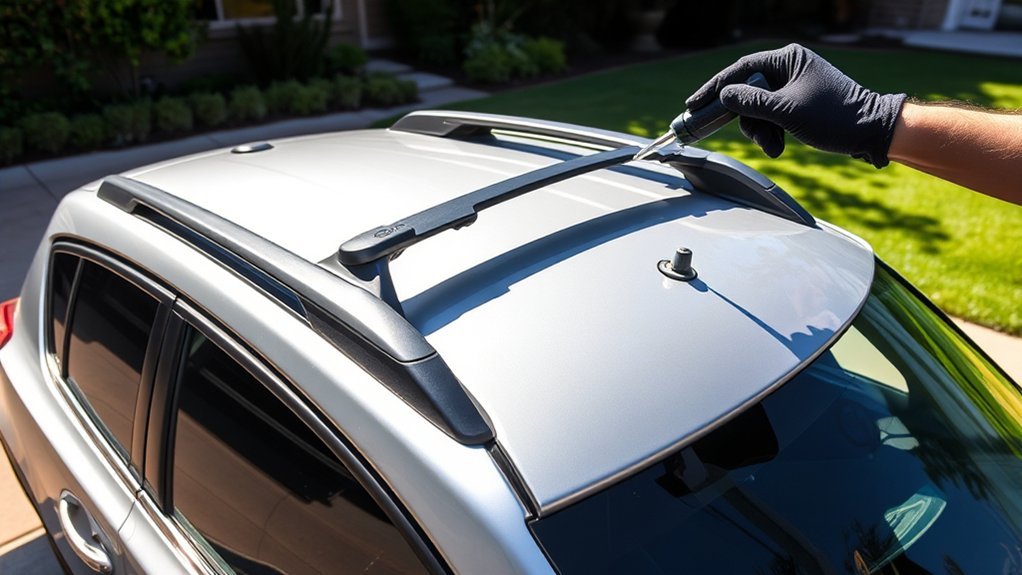
Adding roof rails to a Toyota RAV4 can expand your cargo options, but only when the parts match the vehicle’s exact model year, trim, roof style, and market. The first step is to confirm whether you need side rails, crossbars, or a complete roof-rack system. That distinction changes the parts, tools, sealing work, installation time, and level of risk.
Quick Answer
You can install compatible roof rails on many Toyota RAV4 models, but the method is not universal. Verify the kit by VIN, model year, trim, and roof type. Use only the supplied seals and hardware, follow the kit-specific torque values, and use a professional installer when drilling, headliner removal, or unclear mounting points are involved.
Key Takeaways
- Confirm whether you need side rails or crossbars; they are different parts with different installation methods.
- Match the kit to the full RAV4 model year, trim, powertrain, roof style, production market, and preferably the VIN.
- Never guess a drilling location, bolt size, sealant type, or torque value.
- Inspect and seal every roof penetration exactly as the rail maker specifies, then perform a careful leak check.
- Use the lowest load limit listed for the vehicle, rails, crossbars, mounts, and cargo accessory.
At a Glance
| Time Required | About 30–60 minutes for crossbars on existing rails; roughly 1–3 hours for a straightforward side-rail kit. Drilling or headliner work can take longer. |
| Difficulty | Easy for compatible crossbars; moderate to advanced for side rails, roof drilling, or interior-trim removal. |
| Tools Needed | Socket set, inch-pound or foot-pound torque wrench as specified, Phillips screwdriver, plastic trim tools, measuring tape, towels, and kit-specific sealing materials. |
| Cost | Varies widely by generation, OEM or aftermarket kit, missing roof hardware, and labor. Crossbars generally cost less than converting a bare roof to side rails. |
How to Install Roof Rails on Your RAV4: Start With the Right System
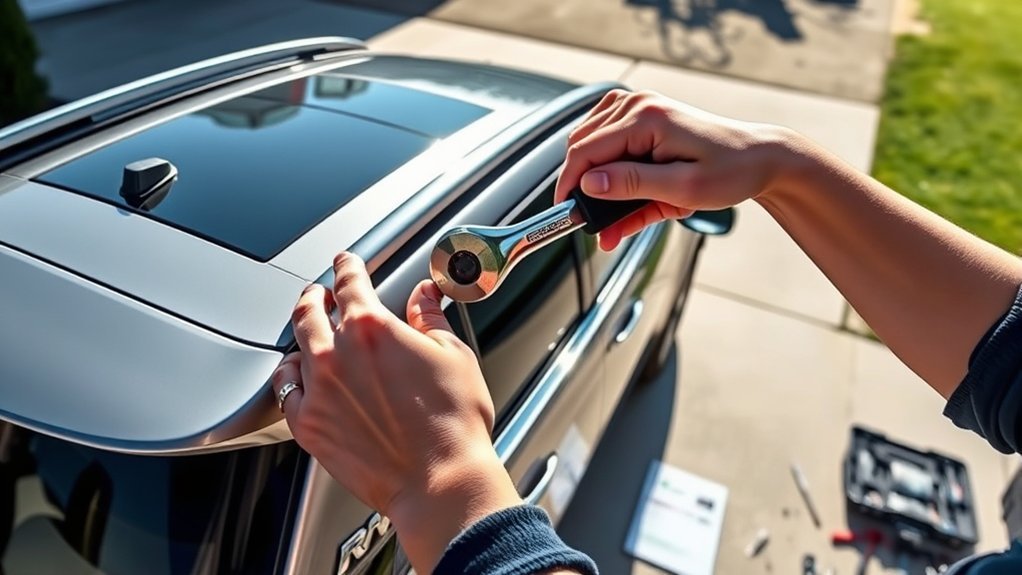
Before opening a tool kit, identify what is already on the roof. Many owners use the terms roof rails, crossbars, and roof rack as if they mean the same thing, but they do not.
| Part | What It Does | Typical Installation |
|---|---|---|
| Side rails | Run front to rear along the roof and provide mounting points for crossbars. | May use factory roof openings, clips, studs, brackets, interior nuts, seals, or model-specific trim. |
| Crossbars | Run left to right and support cargo boxes, bike trays, ski mounts, baskets, and other accessories. | Usually clamp or bolt to existing side rails or approved factory mounting points. |
| Complete roof-rack system | Combines feet, towers, crossbars, and sometimes tracks or side rails. | Varies from simple clamping to advanced permanent mounting. |
If your RAV4 already has factory side rails and you only want bars across the roof, follow the crossbar procedure later in this guide. If the roof is bare or covered by long ditch moldings, adding side rails can require more disassembly and sealing than the original article suggested.
Understanding Roof Rail Compatibility for Your RAV4
Roof rail fit depends on the RAV4 generation, exact model year, trim, powertrain, roof design, production market, and sometimes the factory where the vehicle was built. Do not shop by the words “Toyota RAV4 roof rails” alone. Use the VIN whenever the Toyota parts catalog, dealer, or rack maker offers a VIN-based fit check.
Check the Model Year and Generation
Parts do not automatically transfer between RAV4 generations. This matters even more now because the 2026 RAV4 is an all-new generation. A side-rail or crossbar kit designed for a 2019–2025 fifth-generation RAV4 should not be assumed to fit the redesigned 2026 model.
Trim-based shortcuts are also unreliable. For example, older LE models may have needed optional rails before Toyota crossbars could be installed, while Toyota lists low-profile roof rails on the 2026 LE. Adventure, TRD Off-Road, Woodland, panoramic-roof, and raised-rail versions may use different hardware or bar shapes.
Confirm the Trim Level and Roof Style
Look at the roof before ordering:
- Bare roof or ditch moldings: No visible side rails. A conversion kit may need factory mounting holes, replacement moldings, clips, brackets, or interior access.
- Flush or low-profile rails: Rails sit close to the roof. Crossbars usually require model-specific feet or bolts.
- Raised or bridge-style rails: There is open space beneath the rail. These often accept clamp-style crossbars, but the bar still must be approved for the rail shape.
- Panoramic moonroof: Check bar position, cargo clearance, and the rail maker’s restrictions before operating the glass.
Use a Model-Specific Compatibility Check
Before buying or installing, confirm all of the following:
- Full model year and trim
- Gas, hybrid, or plug-in hybrid powertrain
- Factory roof type and moonroof option
- Left- and right-side part numbers
- All brackets, clips, pads, gaskets, washers, bolts, and covers
- Written installation instructions for that exact kit
- Dynamic load rating for the vehicle and rack components
If the seller cannot provide a clear fit guide or installation document, choose a different kit. A rail that appears to line up can still have the wrong base shape, seal geometry, fastener length, or load rating.
Warning: Do not drill into the roof, enlarge a factory hole, cut a roof brace, or remove the headliner unless the instructions for your exact kit require it and identify the approved locations. Hidden wiring, airbags, drain paths, roof braces, and glass can be damaged.
Before You Begin Installing RAV4 Roof Rails
Park on level ground in a clean, dry, well-lit area. Wash and dry the roof so dirt cannot scratch the paint or prevent a gasket from sealing. Lay thick towels around the work area and keep all hardware in labeled containers.
Read the full installation guide before removing any trim. Confirm the torque units as well as the number. Confusing inch-pounds with foot-pounds can strip threads or crush the rail base. Also check whether the sealant needs a cure period before water exposure.
Photograph the roof, moldings, clips, and hardware as you disassemble them. These photos help confirm orientation and provide a record if a leak or fit problem appears later.
Tools and Materials Needed for Roof Rail Installation
Essential Tools
- Socket and ratchet set in the sizes listed by the rail maker
- Calibrated torque wrench covering the required torque range
- Phillips screwdriver or driver bit, if specified
- Plastic trim-removal tools
- Measuring tape and low-tack painter’s tape
- Clean microfiber towels and protective blankets
- Plastic pick or non-marring tool for old gasket material, if required
- Flashlight for inspecting mounting points and interior trim
Required Installation Materials
Use the supplied or specifically approved mounting brackets, bolts, washers, clips, pads, gaskets, and covers. Do not substitute thicker washers, longer bolts, generic foam tape, household silicone, or threadlocker unless the instructions approve that product.
If a gasket, pad, clip, or sealing washer is torn, flattened, hardened, or missing, replace it before installation. Reusing damaged sealing parts can create a leak even when the rail feels tight.
Safety Gear and Work Protection
| Item | Purpose | When to Use It |
|---|---|---|
| Gloves | Protect hands from sharp trim and metal edges | During trim and hardware removal |
| Safety glasses | Protect eyes from debris and dropped particles | Whenever working overhead |
| Towels or blankets | Prevent paint and glass scratches | Around every roof work area |
| Stable step platform | Provides safe reach without leaning on the roof | When the center of the roof is hard to reach |
| Torque wrench | Applies the specified fastener load | During final tightening only |
RAV4 Roof Rail Installation Steps
The following process is a safe general sequence for a compatible side-rail kit that uses approved factory mounting points. Your kit’s instructions take priority because clip styles, fastener locations, tightening order, seal design, and access method vary.
- Verify the kit one last time. Match the part number, left and right rails, model year, trim, roof type, and VIN fit information.
- Inventory the hardware. Compare every bolt, washer, clip, gasket, pad, bracket, and cover with the parts list. Stop if anything is missing.
- Protect and mark the roof. Cover nearby paint and glass. Use low-tack tape to mark front and rear orientation without scratching the finish.
- Remove only the specified covers or moldings. Use plastic trim tools and release clips in the direction shown by the instructions. Do not pry blindly.
- Inspect the mounting area. Check for corrosion, bent metal, damaged paint, water staining, old adhesive, broken clips, or deformed seals. Correct these issues before covering the area.
- Install new seals and pads. Clean the contact surface as directed. Place each gasket, sealing washer, pad, or approved sealant exactly where the guide shows.
- Position the rails. Confirm the front and rear ends, then lower each rail straight onto the mounting points without sliding the gasket out of place.
- Start every fastener by hand. Turn each bolt several threads before tightening. If a fastener binds, back it out and correct the alignment instead of forcing it.
- Snug the hardware in sequence. Bring the rail down evenly using the order in the instructions. Do not fully tighten one corner while the others are loose.
- Torque each fastener to the listed value. Use the specified unit and tightening sequence. Do not add “a little extra” after the wrench clicks.
- Install the trim covers. Confirm every tab and clip is fully seated and that no gasket edge is pinched or exposed.
- Inspect and test the installation. Check alignment, rail movement, moonroof clearance, and sealing before fitting crossbars or cargo.
Pro Tip: Start all rail fasteners by hand and keep them loose until the rail sits naturally on every mount. This reduces the chance of cross-threading a bolt or pulling the rail sideways against a gasket.
If You Are Installing Crossbars on Existing Rails
Crossbar installation is usually simpler because it does not open the vehicle roof. Use this general sequence:
- Confirm the bars fit the exact rail style and note which bar is front and rear.
- Clean the rail contact areas and inspect the rubber feet or pads.
- Position the bars at the locations shown in the crossbar instructions. Do not place them where they block the moonroof unless the maker permits it.
- Engage the clamps, pins, or mounting screws evenly on both sides.
- Tighten each side gradually to the specified torque or tool setting.
- Lock the covers, shake-test both bars, and confirm equal left-right overhang where applicable.
Toyota’s current low-profile crossbars, for example, mount directly to designated points on compatible roof rails. That is different from adding side rails to a bare roof and normally does not require roof sealant.
How to Prevent Roof Leaks and Water Damage
Leaks usually develop when a gasket is missing, displaced, reused after damage, installed over dirt, crushed by over-tightening, or paired with the wrong clip or rail base. Applying extra sealant around the outside is not a reliable substitute for installing the correct sealing parts.
Owners of certain 2019–2021 RAV4 and RAV4 Hybrid vehicles and certain 2021 RAV4 Prime vehicles should know about Toyota’s roof-rail water-entry documentation. Toyota issued Technical Service Bulletin T-SB-0016-23 and Customer Support Program 22TE05 for verified leaks from roof-rail garnish clips on covered vehicles.
Note: If a 2019–2021 RAV4 has water stains near the A-, B-, or C-pillars or headliner, check eligibility by VIN with Toyota before removing or resealing the rails. The support program is not the same as a safety recall, and coverage depends on the vehicle and verified condition.
Perform a Careful Leak Check
Follow the sealant maker’s cure time first. Then use a gentle, low-pressure stream of water over one rail area at a time while a second person inspects the headliner, pillars, grab-handle areas, and cargo-area trim. Do not aim a pressure washer directly at the rail bases, and do not flood an uncured seal.
Dry the vehicle and recheck it after rain. A slow leak may appear as a faint stain, damp smell, fogging, or wet trim before visible dripping begins.
Tips for Securing a Proper Fit During Installation
- Set both rails on the roof before final tightening so you can compare their position.
- Measure from fixed roof or body reference points rather than relying only on appearance.
- Keep the rail base flat; a rocking rail usually indicates trapped trim, a shifted gasket, or mismatched hardware.
- Use the written torque specification, not hand feel.
- After installation, check every cover, end cap, and locking tab.
- Reinspect the system after the first short drive and again before the first loaded trip.
A rail should not move, click, lift, or reveal a changing gap when you pull on it by hand. Stop using the rack if movement appears after installation.
Top 5 Installation Mistakes to Avoid for Roof Rails
| Mistake | What Can Happen | Better Approach |
|---|---|---|
| Confusing rails with crossbars | Wrong parts, missing mounts, or an installation method that does not match the roof | Identify the existing roof system before ordering |
| Buying by model name only | Rail bases, clips, covers, or holes do not align | Verify year, trim, roof style, market, and VIN fit |
| Reusing damaged seals or adding random silicone | Water intrusion, trapped moisture, and difficult future repairs | Use new approved pads, gaskets, clips, and sealant |
| Guessing the torque | Loose rails, stripped threads, crushed gaskets, or cracked trim | Use a calibrated torque wrench and the kit’s units |
| Loading the rack before testing it | Movement, wind noise, leaks, or cargo loss appears on the road | Shake-test, leak-test, road-test empty, and recheck hardware |
The most serious errors involve compatibility, drilling, sealing, and torque. Pause the job whenever a mounting point does not align naturally or the instructions do not match what you see on the vehicle.
Choosing the Best Roof Rack for Your RAV4 Roof Rails
Choose crossbars and accessories through the rack maker’s vehicle fit guide. Confirm the bar or foot pack is approved for raised rails, flush rails, fixed points, or a bare roof, whichever your RAV4 has.
Then compare the load ratings for the vehicle roof, side rails, crossbars, towers, clamps, and cargo accessory. The usable limit is the lowest number in that chain, and the weight of the rack hardware itself may count toward the roof load.
A higher rating on one component never raises the limit of a lower-rated vehicle, rail, crossbar, mount, or cargo accessory.
Understand RAV4 Roof Load Limits
Load limits vary by model year and equipment. As one current example, the 2025 U.S. RAV4 owner’s manual lists a maximum of 176.4 lb. (80 kg) of cargo on the roof luggage carrier, while a Toyota Genuine crossbar kit for certain older RAV4 applications lists 100 lb. evenly distributed across both bars. In that setup, the lower 100 lb. crossbar rating controls. Always check the owner’s manual for the exact model year and the label or instructions for every rack component.
The driving limit is a dynamic load. Do not assume it is a parked or static rooftop-tent rating. Toyota does not publish one universal rooftop-tent capacity for every RAV4, so a tent installation requires written approval from the rack and tent manufacturers for the exact vehicle and mounting system.
What Roof Racks Work Best With Your Roof Rails?
- Everyday cargo: Low-profile crossbars approved for the factory rail style.
- Bikes: A tray or fork mount that fits the bar shape and leaves hatch clearance.
- Kayaks or paddleboards: Saddles or padded supports with approved bow and stern tie-downs.
- Skis and snowboards: Locking carriers sized for the equipment and positioned clear of the liftgate.
- Cargo boxes: A box whose clamps fit the bars and whose length allows the rear hatch to open.
Do not mix feet, clamps, bars, or locks from different systems unless the manufacturer explicitly approves the combination. Remove unused crossbars and accessories when practical because roof-mounted equipment increases aerodynamic drag. Research from U.S. national laboratories has found that roof-rack configurations can increase fuel use, especially at highway speed.
Troubleshooting After Installation
The Rail Moves or Clicks
Unload the roof immediately. Check for a loose fastener, wrong spacer, unseated bracket, compressed pad, stripped thread, or rail base that is not sitting flat. Do not keep tightening beyond the specified torque to hide a fit problem.
A Water Stain or Damp Headliner Appears
Remove cargo and keep the interior dry. Photograph the stain, note when it appeared, and check Toyota campaign eligibility if the vehicle is within the documented 2019–2021 group. A leak may require clip, pad, gasket, headliner, or water-damaged-part inspection rather than an exterior bead of sealant.
The Crossbars Whistle or Hum
Confirm the front edge faces forward, rubber channel strips are fully installed, end caps are seated, and the bars are in the approved positions. A backward aerodynamic bar or an open channel can create noticeable noise.
The Moonroof or Liftgate Hits the Rack
Stop operating the glass or hatch until the bars and accessory are repositioned according to the fit guide. Check both an empty rack and the fully mounted cargo box, bike tray, or other accessory.
A Cover or End Cap Lifts After Driving
Inspect the locking tab, screw, clip, and rail alignment. Replace damaged retainers rather than using glue or tape that can hide an unsecured mount.
Frequently Asked Questions
Can I install roof rails myself?
Yes, when the kit is confirmed for your exact RAV4 and uses accessible factory mounting points with clear instructions. Use professional installation if the job requires drilling, headliner removal, airbag-area trim removal, corrosion repair, or mounting points that do not align naturally.
What year of RAV4 should I stay away from?
There is no single model year every buyer should avoid. For roof-rail concerns, certain 2019–2021 RAV4 and RAV4 Hybrid vehicles and certain 2021 RAV4 Prime vehicles have Toyota support coverage for verified roof-rail water leaks. Check the VIN, service history, recalls, campaigns, and a pre-purchase inspection rather than rejecting every vehicle from a model year.
Can you add roof racks to a RAV4?
Yes. Many RAV4 models accept crossbars on factory rails or fixed points, while a bare-roof vehicle may need a complete model-specific system. Confirm the fit and use the lowest load rating among the vehicle, rails, crossbars, mounts, and accessory.
What is the biggest issue with the Toyota RAV4?
There is no universal “biggest issue” across every RAV4 generation. For this topic, the important documented concern is roof-rail water entry on certain 2019–2021 vehicles. For a specific RAV4, review its VIN-based recall and campaign status, maintenance records, inspection results, and model-specific service information.
Do roof rails affect gas mileage?
Bare low-profile rails may have a small effect, but crossbars, baskets, bikes, kayaks, and cargo boxes add more aerodynamic drag. The effect grows with speed and accessory size. Remove unused crossbars and attachments when the maker allows it.
How much weight can RAV4 roof rails hold?
The limit depends on model year, market, roof equipment, crossbars, and accessory. The 2025 U.S. owner’s manual gives 176.4 lb. (80 kg) as the roof-luggage-carrier cargo limit, but some crossbars are rated lower. Use the lowest applicable rating and include the rack or accessory weight when required.
What is the difference between roof rails and crossbars?
Roof rails run front to rear along the sides of the roof. Crossbars run left to right and support the cargo accessory. Installing crossbars on existing rails is usually simpler than adding side rails to a bare roof.
Do I need to drill holes to add RAV4 roof rails?
Not always. Some kits use approved factory holes or mounting points, while others may require permanent mounting. Never drill unless the exact instructions identify the location, bit size, corrosion protection, sealing method, and interior-clearance steps.
Can I put a rooftop tent on RAV4 roof rails?
Do not rely only on the normal driving load limit. A rooftop tent adds dynamic, static, and concentrated loads. Use one only when the vehicle, rail, crossbar, and tent manufacturers approve the exact combination in writing and all published limits are followed.
Conclusion
A safe RAV4 roof setup begins with the correct definition and the correct fit. Confirm whether you need side rails or crossbars, match every part to the exact vehicle, preserve the factory sealing system, and tighten hardware only to the kit-specific specification. Test the empty system for movement, leaks, clearance, and noise before adding cargo, then stay within the lowest published load limit.
Sources
- Toyota 2025 RAV4 Owner’s Manual: Cargo and Luggage — roof-load warnings, cargo securement, and the 80 kg roof-luggage-carrier limit for that model year.
- Toyota USA Newsroom: 2026 RAV4 — confirms the all-new generation and current roof-rail equipment examples.
- Toyota Genuine Roof Rack Cross Bars PT278-42151 — fit restrictions and the 100 lb. evenly distributed crossbar rating for applicable vehicles.
- Toyota Genuine RAV4 Low-Profile Cross Bars PT278-42250 — current example of bars that attach to designated roof-rail mounting points.
- Toyota T-SB-0016-23, hosted by NHTSA — service information for water entry from roof-rail garnish clips on certain vehicles.
- Toyota Customer Support Program 22TE05, hosted by NHTSA — eligibility scope and coverage details for verified roof-rail water leaks.