
How to Close the Hood on a Toyota RAV4 Safely
A hood that looks closed can still sit on the safety catch. That small gap can turn into a real risk once you start driving. Use the steps below to close your Toyota RAV4 hood with the right amount of force and a quick safety check.
Estimated time: 1 minute.
Quick Answer
To close a Toyota RAV4 hood, remove tools or rags from the engine bay, return the support rod to its clip if your model uses one, then lower the hood near the latch. Let it drop from a short height so the latch can catch. After it closes, check that the front edge sits flush and does not lift when you test it gently.
Key Takeaways
- Return the support rod to its clip before you close the hood.
- Lower the hood first, then let it drop from a short height near the latch.
- Check that the hood sits flush before you drive.
- Stop and inspect the latch if the hood needs force or keeps popping up.
Before You Begin
Park your RAV4 on level ground and shift into Park. Let the engine area cool if you just drove, since hot parts can burn your hands.
- Remove tools, rags, bottles, and loose parts from the engine bay.
- Keep your fingers away from the latch area and front edge.
- Return the support rod to its clip if your RAV4 uses one.
- Stand centered in front of the hood so it lowers evenly.
According to Toyota owner manual guidance, you should return the support rod to its clip before closing the hood. Closing the hood with the rod still up can bend the hood.
How Your RAV4 Hood Latch Works
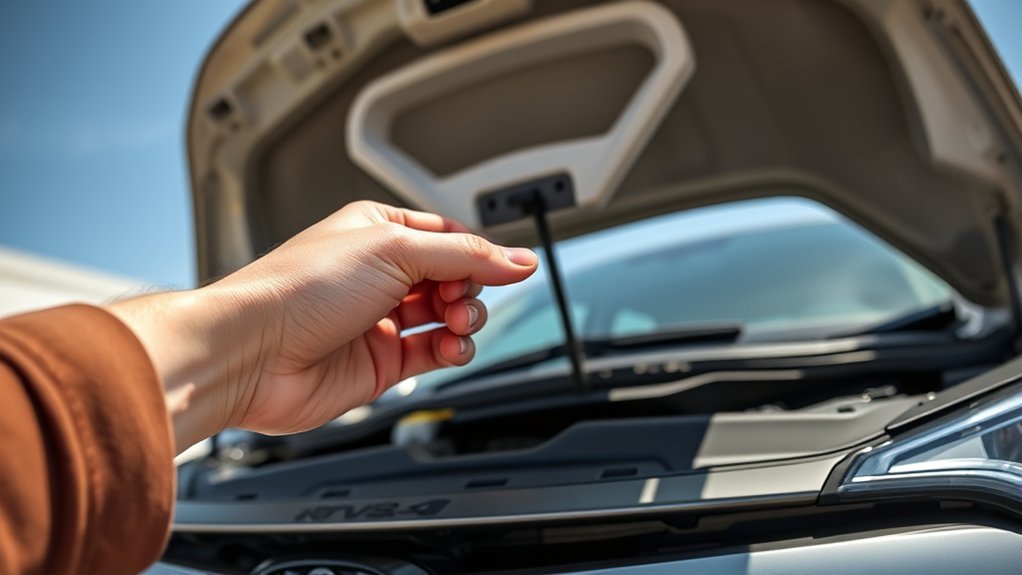
Your Toyota RAV4 hood uses a primary latch at the front of the vehicle. The latch must catch fully before the hood can stay closed during normal driving.
The secondary catch helps keep the hood from opening fully if the main latch does not hold. You use that catch when you open the hood, not when you close it.
Federal Motor Vehicle Safety Standard No. 113 sets hood latch system requirements for passenger cars, multipurpose passenger vehicles, trucks, and buses. That rule helps explain why a secure latch matters before you drive.
Steps to Close Your Toyota RAV4 Hood Properly
Use a smooth, controlled motion. You do not need to slam the hood, and you should not force it shut if something blocks it.
- Hold the front edge of the hood with one hand.
- Lower the hood until it sits about a foot above the latch area.
- Release the hood from that short height so the latch can catch.
- Check that the hood sits even with both front fenders.
- Press gently on the front edge only if the hood rests on the latch but has not clicked closed.
- Test the front edge with a light upward pull to help confirm it has latched.
Warning: Do not drive if the hood sits high, moves when you pull it, or shows a warning on the dashboard.
What Not to Do When Closing the Hood
Do not slam the hood from a high position. Too much force can affect alignment, stress the latch, or damage the panel.
Do not push hard in the middle of the hood. Thin hood panels can dent when you press in the wrong spot.
Do not close the hood over a raised support rod, tools, or loose items. Clear the engine bay first, then close the hood with a controlled drop.
Troubleshooting Common Hood Closure Issues
If your RAV4 hood will not close, start with the easiest causes. Check the engine bay for tools, rags, leaves, or loose plastic trim that may block the hood.
Next, look at the latch. Make sure it sits open and can move freely before you try to close the hood again. If the interior release lever feels stuck, move it back to its resting position and try again.
Check the hood alignment from the front of the vehicle. Uneven gaps can point to a bent hinge, shifted latch, or previous impact damage.
Pro tip: If the latch looks dry but not damaged, a small amount of proper automotive lubricant can help it move smoothly.
How to Check That the Hood Is Secure Before Driving

A secure hood should sit flush with the front body panels. You should not see a raised edge or a wide gap above the grille.
A quick hood check helps protect your view, your engine bay, and other drivers on the road.
- Look across the front edge for even gaps.
- Pull up gently on the front edge after it latches.
- Listen for odd rattles after you start driving.
- Stop safely if the hood moves, bounces, or looks loose.
- Use the vehicle identification number (VIN) to check for open recalls if you suspect a safety issue.
NHTSA and Toyota both offer recall lookup tools that use your VIN or vehicle details. Use those tools if you want to check whether your specific RAV4 has an open safety recall.
When to Call in the Pros for Hood Issues
Call a qualified technician if your hood will not close after you remove obstructions and reset the release lever. A damaged latch, bent striker, stretched cable, or misaligned hinge can keep the hood from locking.
Get service before you drive if the hood sits high or pops back up after it closes. A loose hood can block your view if it opens on the road.
You should also book an inspection if you see rust, broken springs, missing bolts, or crash damage near the latch. A technician can adjust or replace the latch parts and confirm safe operation.
Frequently Asked Questions
How do you close a Toyota RAV4 hood without slamming it?
Lower the hood until it sits about a foot above the latch, then let it drop with its own weight. If it does not latch, check for an obstruction or latch issue instead of slamming it harder.
What should you do if your RAV4 hood won’t close?
Check for tools, rags, loose trim, or debris in the engine bay. Then inspect the latch, release lever, and hood alignment. If the hood still will not close, have a technician inspect it before you drive.
Why do you have to slam your hood to close it?
You may have a dry latch, stuck release lever, weak latch spring, or misaligned hood. A hood should not need heavy force every time. Repeated slamming can create more alignment problems.
Does a RAV4 hood problem mean your vehicle has a recall?
Not every hood problem means your RAV4 has a recall. Use the NHTSA or Toyota recall lookup tool with your VIN to check your exact vehicle. If the hood will not latch, treat it as a safety issue even when no recall appears.
Safety Disclaimer: This article is for informational purposes only and does not replace your Toyota owner’s manual or professional vehicle service. If the hood does not latch securely, do not drive until a qualified technician checks it.
Conclusion
The safest way to close your Toyota RAV4 hood is to clear the engine bay, store the support rod, lower the hood, and let the latch catch with a controlled drop. Check that the hood sits flush before you drive.
If the hood needs force, pops up, or looks uneven, stop and inspect it instead of guessing. A small latch issue can become a major safety risk on the road. Handle it early, and you can drive with more confidence.
References
- Toyota RAV4 Owner’s Manual — Toyota Motor North America
- 49 CFR § 571.113, Standard No. 113, Hood latch system — Electronic Code of Federal Regulations
- Check for Recalls — National Highway Traffic Safety Administration
- Toyota Safety Recalls and Service Campaigns Lookup — Toyota