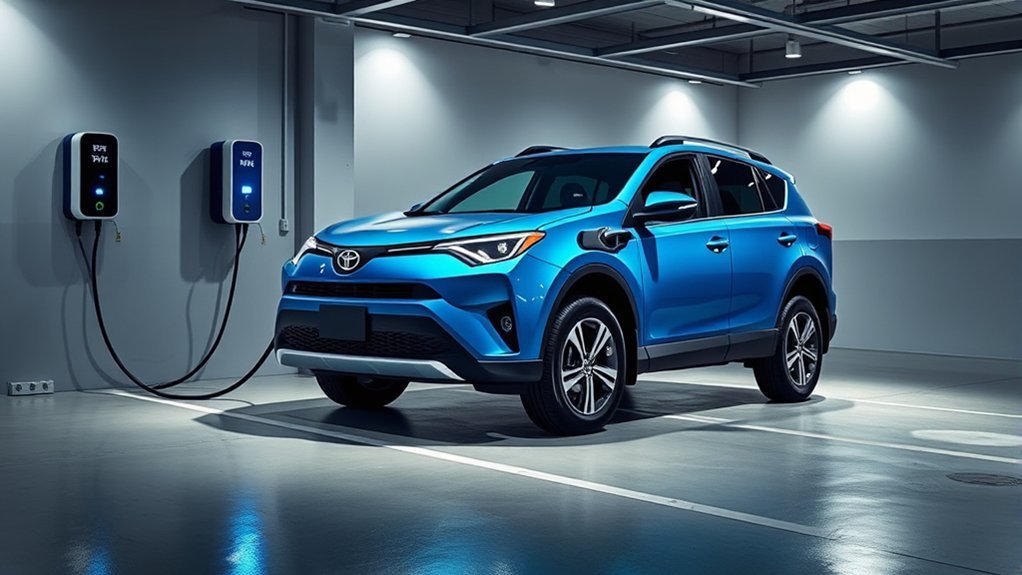
How Many kWh Does It Take to Charge a Toyota RAV4 Prime?
What’s in This Article
- Understanding the Battery Capacity of the Toyota RAV4 Prime
- How Many kWh Does It Take to Fully Charge Your RAV4 Prime?
- Level 1 vs. Level 2 Charging Time for the RAV4 Prime
- Charging Costs for Your RAV4 Prime: What to Expect
- Key Differences Between Level 1 and Level 2 Charging
- Understanding Charging Efficiency and Its Impact on Costs
- How Regional Electric Rates Affect Your Charging Costs
- Tips for Efficient Charging of Your RAV4 Prime
- RAV4 Prime Name and 2026 Model Note
- Frequently Asked Questions
A full Toyota RAV4 Prime charge uses less energy than the battery’s full 18.1 kWh rating suggests. For most 2021 to 2024 RAV4 Prime models, plan on about 15 kWh from the wall when charging from empty to full. Your final number can change with temperature, charger type, battery state of charge, and charging losses.
This guide explains the battery size, usable energy, home charging time, and real charging cost. It also shows how newer RAV4 Plug-in Hybrid models may differ from older RAV4 Prime models.
Quick Answer
A Toyota RAV4 Prime usually takes about 15 kWh from the wall for a full charge from empty. The battery pack is rated at 18.1 kWh, but Toyota keeps part of that capacity as a buffer. At the March 2026 U.S. average residential electricity rate of 18.83 cents per kWh, a full charge costs about $2.85 before taxes and local fees.
Key Takeaways
- Use about 15 kWh as a practical full-charge estimate for most RAV4 Prime models.
- Expect about 42 miles of EPA-rated electric range on 2021 to 2024 RAV4 Prime models.
- Choose Level 2 charging if you want a full charge in about 2.5 to 4.5 hours.
- Multiply your local electricity rate by about 15.1 kWh to estimate one full charge.
- Check your model year because 2026 RAV4 Plug-in Hybrid specs differ from older Prime models.
Understanding the Battery Capacity of the Toyota RAV4 Prime
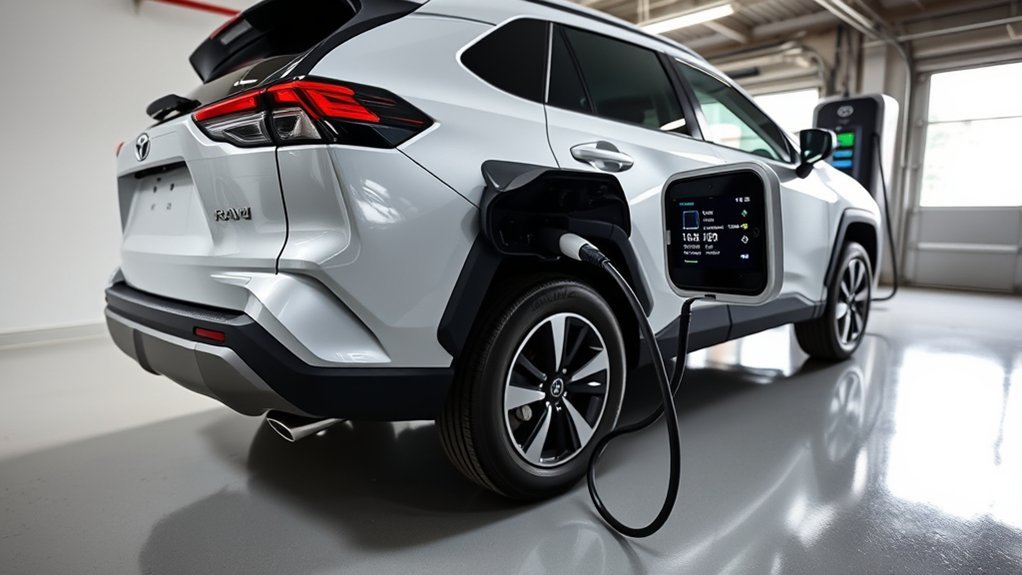
The 2024 Toyota RAV4 Prime uses an 18.1 kWh lithium-ion battery pack. A kilowatt-hour (kWh) measures energy, not charging speed. In simple terms, it tells you how much electricity the battery can store.
You won’t use the full 18.1 kWh for normal electric driving. Toyota protects the battery with a hidden reserve, so drivers commonly see about 14.5 kWh of usable electric-driving energy. The EPA rates the 2024 RAV4 Prime at 42 miles of all-electric range and 36 kWh per 100 miles.
That EPA energy use gives you a helpful wall-energy estimate. If you multiply 36 kWh per 100 miles by 42 miles, you get about 15.1 kWh. That makes 15 kWh a more useful full-charge estimate than the full battery-pack rating.
Note: Toyota now uses the RAV4 Plug-in Hybrid name for newer U.S. models, while many owners still call older models the RAV4 Prime.
How Many kWh Does It Take to Fully Charge Your RAV4 Prime?
To charge a RAV4 Prime from empty to full, use about 15 kWh from your home outlet or charger as a real-world planning number. The exact amount can move slightly above or below that figure.
The battery’s usable capacity sits below the 18.1 kWh pack rating because the vehicle keeps a buffer. That buffer helps protect battery health and keeps the hybrid system working as intended. Your charging session also loses some energy as heat while power moves from the wall into the vehicle.
Usable Battery Capacity
The RAV4 Prime gives you about 42 miles of EPA-rated electric range when you start with a full charge. Your actual range can change based on speed, weather, tire pressure, road grade, and climate-control use.
Use these numbers for simple planning:
- Battery pack rating: 18.1 kWh
- Practical full-charge estimate: about 15 kWh from the wall
- EPA electric range: 42 miles on 2024 RAV4 Prime models
- EPA electricity use: 36 kWh per 100 miles
These numbers help you compare home charging costs with gasoline use. They also make it easier to decide if overnight Level 1 charging gives you enough range.
Charging Efficiency Losses
Charging losses explain why wall energy and usable battery energy don’t match exactly. The charger, cable, onboard electronics, and battery temperature all affect the final number.
For everyday budgeting, you don’t need a perfect lab figure. Multiply about 15.1 kWh by your local electricity rate, then add any taxes, delivery fees, or public charging fees. That gives you a realistic cost estimate for a full home charge.
Level 1 vs. Level 2 Charging Time for the RAV4 Prime
Your charging time depends on the outlet and onboard charger. Toyota states that the 2024 RAV4 Prime can charge in about 12 hours on a standard 120-volt household outlet under ideal conditions. With a Level 2 charger, Toyota lists about 2.5 hours under ideal conditions when using the 6.6 kW onboard charger.
Here’s a clear charging-time breakdown:
- Level 1 charging at 120 volts: about 12 hours for a full charge under ideal conditions.
- Level 2 charging at 240 volts with 3.3 kW charging: about 4.5 hours on many earlier configurations.
- Level 2 charging at 240 volts with 6.6 kW charging: about 2.5 hours under ideal conditions.
- Public charging: Level 2 stations can work well, but rates and parking fees can change the cost.
Level 1 charging works well if you park overnight and drive short daily trips. Level 2 charging works better if you need faster turnaround between drives.
Warning: Ask a licensed electrician before installing a 240-volt circuit or Level 2 home charger.
Charging Costs for Your RAV4 Prime: What to Expect
Your charging cost depends on your electricity rate. The formula stays simple: multiply your kWh used by your price per kWh. For a full RAV4 Prime charge, use about 15.1 kWh as the energy amount.
The U.S. Energy Information Administration reported an average U.S. residential electricity price of 18.83 cents per kWh for March 2026. At that rate, a full RAV4 Prime charge costs about $2.85 before taxes and local fees.
| Example Rate Area | Residential Cost per kWh | Estimated Full Charge Cost |
|---|---|---|
| Low Rate Example, North Dakota | $0.1195 | $1.80 |
| U.S. Average, March 2026 | $0.1883 | $2.85 |
| High Rate Example, California | $0.3335 | $5.04 |
| Highest Rate Example, Hawaii | $0.4223 | $6.38 |
Your bill may list delivery charges, taxes, or time-of-use rates. Check the total cost per kWh on your bill for the most accurate estimate.
Key Differences Between Level 1 and Level 2 Charging
Level 1 and Level 2 charging both fill the same battery. The main difference comes down to speed, convenience, and installation needs.
- Level 1 uses a standard household outlet: It works without a special charger, but it usually takes overnight charging.
- Level 2 uses a 240-volt circuit: It charges much faster, but it may require professional installation.
- Level 1 suits short daily drives: It can add enough range if you park for long periods.
- Level 2 suits busy driving schedules: It helps if you need to recharge between trips.
If you plan to buy a full electric vehicle later, a Level 2 charger can also prepare your home for longer-range EV charging. If you only drive a few miles each day, Level 1 may already meet your needs.
Understanding Charging Efficiency and Its Impact on Costs
Charging efficiency affects how much electricity your home meter records. Your RAV4 Prime may store one amount of energy, while your utility bill shows a slightly higher amount drawn from the wall.
Charging Losses Explained
Charging losses happen because electricity passes through charging equipment and onboard electronics before it reaches the battery. Heat, cold, cable length, and battery temperature can all change the result.
- The RAV4 Prime battery pack carries an 18.1 kWh rating.
- The EPA lists 36 kWh per 100 miles for the 2024 RAV4 Prime.
- A full 42-mile electric range works out to about 15.1 kWh from the wall.
- Real charging sessions can vary based on weather, charger type, and battery condition.
Efficiency Variability Factors
You can’t control every charging-efficiency factor, but you can control some of them. Stable temperatures, sound wiring, and a proper outlet help reduce wasted energy.
| Factor | What It Affects | What You Can Do |
|---|---|---|
| Outside Temperature | Battery and cabin energy use | Park in a garage when practical |
| Charger Type | Charging speed and convenience | Use Level 2 when faster charging matters |
| Driving Style | Miles per kWh | Drive smoothly and avoid hard acceleration |
| Tire Pressure | Electric range | Check tire pressure regularly |
How Regional Electric Rates Affect Your Charging Costs
Regional electric rates can change your full-charge cost by several dollars. In March 2026, EIA state data showed residential rates from 11.95 cents per kWh in North Dakota to 42.23 cents per kWh in Hawaii.
Use your own bill for the best estimate. Many utilities also offer time-of-use plans, which charge different rates based on the time of day. Charging late at night can cost less in some areas, but not every utility offers a cheaper off-peak rate.
- Check the full delivered rate on your bill, not just the energy-supply rate.
- Look for time-of-use pricing before setting a charging schedule.
- Compare home charging with public charging if you use paid stations often.
- Watch for seasonal rate changes during high-demand months.
Tips for Efficient Charging of Your RAV4 Prime
You can make RAV4 Prime charging easier and more predictable with a few simple habits. Start by charging at home when possible, since home charging often costs less than public charging.
- Charge during lower-rate hours if your utility offers a time-of-use plan.
- Use Level 2 charging when you need a faster full charge.
- Keep your tires inflated to the pressure listed on the door placard.
- Precondition the cabin while plugged in when the weather feels very hot or cold.
- Track Level 1 charging with a plug-in energy meter, or use charger-app data for Level 2 charging.
These habits won’t change the battery size, but they can improve your cost and range. They also help you spot unusual energy use before it becomes a bigger issue.
RAV4 Prime Name and 2026 Model Note
Toyota now markets the plug-in RAV4 as the RAV4 Plug-in Hybrid in the United States. The older RAV4 Prime name still matters because many 2021 to 2024 models on the road use it.
For 2026, Toyota lists the RAV4 Plug-in Hybrid with an EPA-estimated 54-mile all-electric range on the SE trim. That new model can have different charging needs, battery specs, and charge times than earlier RAV4 Prime models.
Before you plan charging costs, confirm your model year and trim. Your owner’s manual and charging screen give the most useful numbers for your exact vehicle.
Frequently Asked Questions
How Much Does It Cost to Charge a RAV4 Prime Battery?
A full RAV4 Prime charge costs about $2.85 at the March 2026 U.S. average residential rate of 18.83 cents per kWh. Your cost can drop below $2 in low-rate states or rise above $6 in very high-rate states.
How Many kWh Does It Take to Charge an Electric Car?
The amount depends on battery size. A plug-in hybrid like the RAV4 Prime may use about 15 kWh for a full charge, while many full electric cars can use 50 to 100 kWh or more.
How Do You Charge a RAV4 Prime at Home?
You can plug the RAV4 Prime into a standard 120-volt outlet with the supplied charging cable. You can also use a 240-volt Level 2 charger for much faster charging.
How Many kWh Is a RAV4 Prime Battery?
The 2024 RAV4 Prime uses an 18.1 kWh lithium-ion battery pack. The practical energy you use for electric driving is lower because the vehicle protects part of the pack as a reserve.
Should You Charge a RAV4 Prime Every Night?
You can charge it every night if you use electric range daily. If you don’t drive much, plug in when the battery drops or when your rate plan gives you cheaper charging hours.
Conclusion
A Toyota RAV4 Prime usually takes about 15 kWh from the wall for a full charge from empty. That estimate gives you a better planning number than the full 18.1 kWh battery-pack rating.
Check your local electricity rate, multiply it by about 15.1 kWh, and you’ll get a close estimate for one full home charge. Use your model year and trim as the final guide, especially if you own a newer RAV4 Plug-in Hybrid.
With the right charging setup and rate plan, your RAV4 Prime can deliver low-cost electric miles for daily driving.
References
- Plug and Play with the 2024 RAV4 Prime, Toyota Newsroom, 2023
- 2024 Toyota RAV4 Prime 4WD Fuel Economy, U.S. Department of Energy and U.S. Environmental Protection Agency, 2026
- Average Price of Electricity to Ultimate Customers by State, U.S. Energy Information Administration, March 2026 data
- Electricity Prices and Factors Affecting Prices, U.S. Energy Information Administration, 2026
- All-Electric and Hybrid Battery Warranty, Toyota, 2026
- 2026 Toyota RAV4 Plug-in Hybrid, Toyota, 2026