
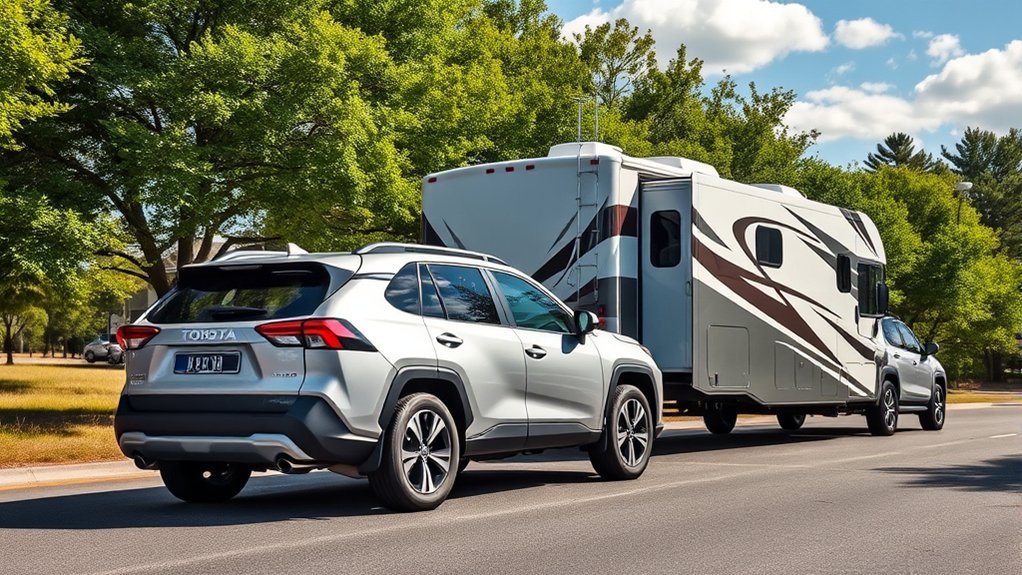
You can tow a Toyota RAV4 behind a motorhome, but the method depends entirely on your specific model. You cannot flat tow AWD RAV4s. Instead, you must transport them on a flatbed trailer. You can dolly tow front-wheel-drive (FWD) models, which gives you more flexibility. Always check your owner’s manual for detailed towing guidelines to prevent severe transmission damage. You should also be careful with aftermarket modifications that could void your warranty. Let us look at the rules for towing your RAV4 effectively and safely.
Quick Answer
- AWD and Hybrid RAV4s: You must tow these on a flatbed trailer with all four wheels off the ground.
- FWD RAV4s: You can safely dolly tow these models by lifting the front wheels off the ground.
- Flat Towing Restrictions: Modern automatic RAV4s cannot be flat towed. Only older manual transmission models support this method.
Understanding Towing Capabilities of the RAV4
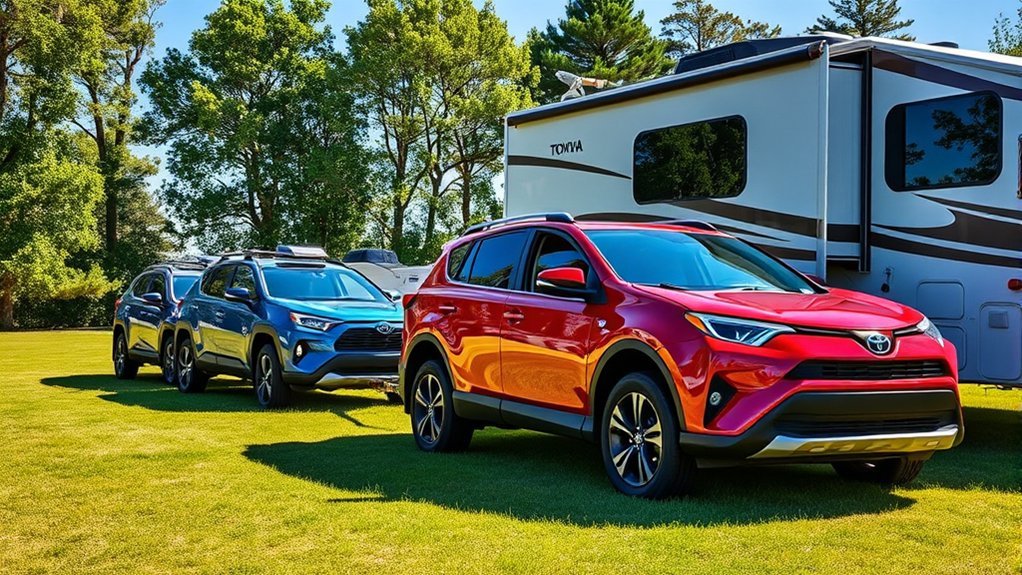
To tow safely, you must understand your RAV4’s specific limits. The Toyota owner’s manual clearly states that AWD and Hybrid models need all four tires off the ground during transport. You cannot flat tow these vehicles because turning the wheels will damage the complex drivetrain. Instead, you must load them onto a flatbed trailer. Non-Hybrid FWD models have different rules. You can usually dolly tow them with the front drive wheels raised. Always check your specific manual to avoid costly mistakes. Following these rules helps you make smart choices for your RV trips.
[Products Worth Considering]

5500 lbs Towing Capacity: Ready for some serious towing? Whether you're on a wild adventure or at a bustling work site, our tow bar pulls its weight (and then some)! With a powerful 5500 lbs towing capacity, heavy-duty vehicles? No problem!

Tow Bar Equiped with Quick Connect Brackets,allow for Easy Installation and Removal
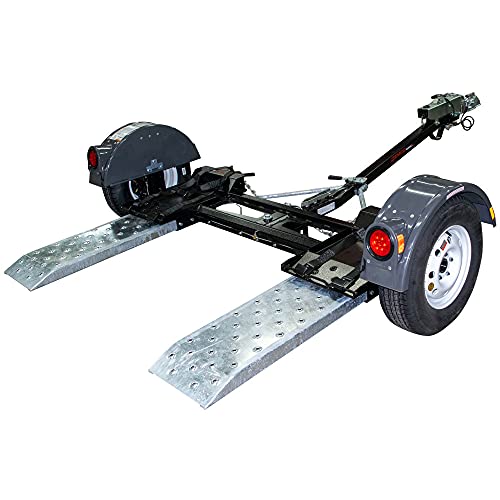
Towed vehicle tread width 42” minimum, 78” maximum
Recommended Towing Methods for RAV4 Models
You must use the right towing method for your RAV4 model. If you have an all-wheel-drive (AWD) RAV4, flat towing is not an option. The driveshaft connection makes it unsafe. You must transport AWD models on a trailer. If you have a front-wheel-drive (FWD) model, you can use a tow dolly. This lifts the front drive wheels off the ground and protects the transmission. Improper towing causes major damage. Always read your owner’s manual before you hook up the vehicle. Some owners look into aftermarket lube pumps to allow flat towing. These modifications carry high risks and usually void your warranty. Sticking to factory methods ensures your RAV4 stays safe.
[Products Worth Considering]

Trailer dolly features a strong 800-pound capacity that allows you to easily move a wide variety of trailers with a hitch ball size of 1.88 inch that works for 1.88 inch coupler or larger

【STRONG BUILD】Constructed of heavy-duty and thick steel plate that is powder-coated,the Heavy Duty Tire Wheel Dolly is durable and rust-resistant,it will not bend or damage easily during use even with heavy objects on it.

ATV hitch attachment effectively reduces the load on your ATV, resulting in easier towing and reduced strain on your vehicle; Capable of holding up to 800 pounds
Evaluating Modifications for Flat Towing: Benefits and Drawbacks
In the past, RV owners used modifications like a lube pump or drive shaft disconnect to flat tow vehicles. These aftermarket parts keep transmission fluid moving while the engine is off. This prevents overheating and transmission failure during transport.
However, modifying a modern RAV4 comes with big drawbacks. These parts are complex to install. They will also void your Toyota powertrain warranty. Regular maintenance is required to keep these systems working safely. If a pump fails while you are driving, your transmission will be destroyed. For most RAV4 owners, the financial risks of these modifications outweigh the benefits. Using a flatbed trailer or tow dolly is a much safer choice.
[Products Worth Considering]

Robbor Tow Dolly Basket Strap with Twisted Snap Hook(2 Pack) Capacity 3,333 Lbs.Break Strength 10,000 Lbs. The Strap Offers Heavy Duty Snap Hooks Providing a Reliable Connection to any Anchor Point.

【Professional-Grade Tow Dolly Straps – 2 Pack】KJE heavy duty tow dolly straps are engineered for maximum security during transport. This set of two features a durable full-basket design to fully cradle and protect 14" to 19" tires, making them essential car dolly straps for your car hauler or trailer.

Easy to Use: The wheel straps with flat hooks are designed for holding the wheels snug and prevent the sliding use on wheel lifts and tow dollies, which can be easily attached to the rear side of the trailer and secure the loose end of the strap
Avoid These Common Mistakes When Towing Your RAV4
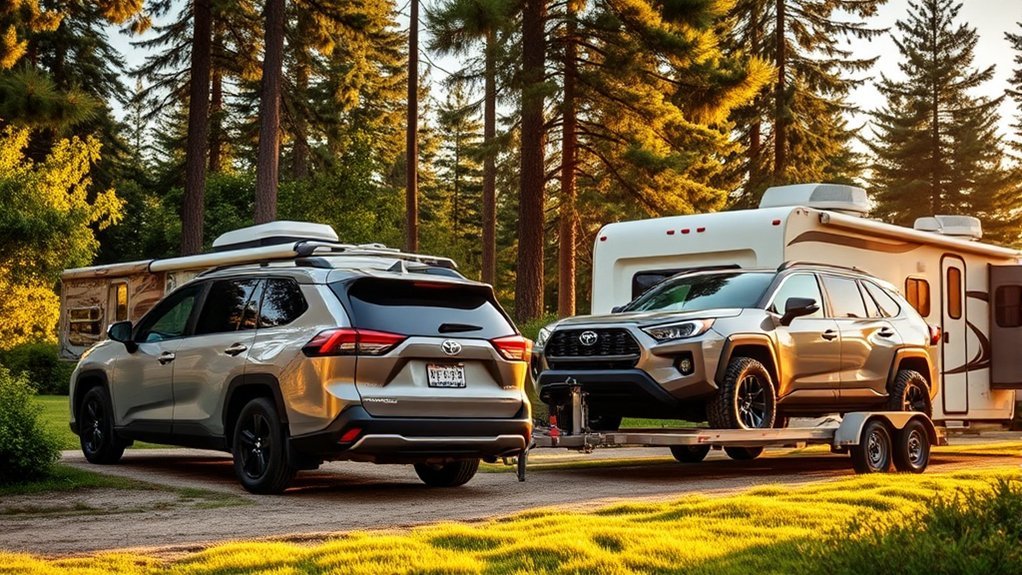
What common mistakes should you avoid when towing your RAV4? First, never guess your vehicle’s capabilities. Always read your owner’s manual for specific instructions. Make sure your transmission is set up exactly as the manufacturer requires. Disconnect the battery or remove specific fuses if the manual requires it to prevent electrical drain.
Here are some major pitfalls to avoid:
| Mistake | Consequence |
|---|---|
| Flat towing all-wheel drive RAV4s | Drivetrain damage |
| Ignoring speed limits | Overheating and potential vehicle failure |
| Forgetting to check the manual | Towing mishaps due to improper setup |
| Not taking breaks every 200 miles | Increased risk of vehicle overheating |
Owners of FWD RAV4s must remember that keeping the rear wheels on the ground is only safe on a tow dolly. Avoid these common errors to ensure a smooth trip.
What Happens If You Tow a RAV4 Incorrectly?
Incorrect towing can destroy your RAV4. If you flat tow an automatic RAV4 without proper setup, the transmission will not get any lubrication. This leads to severe internal damage in just a few miles. AWD models suffer massive drivetrain damage if towed with any wheels on the ground. Automatic transmissions need the engine running to pump transmission fluid properly. Ignoring these rules will overheat the system. You will void your warranty and face repair bills costing thousands of dollars. Always verify your towing setup before hitting the highway to protect your vehicle.
Frequently Asked Questions
Can a Toyota RAV4 Be Towed Behind a Motorhome?
Yes, you can tow a RAV4 behind a motorhome. However, you must match the towing method to your vehicle. Flat towing is not safe for modern models. Use a flatbed trailer for AWD models or a tow dolly for FWD models.
What Year Can a Toyota RAV4 Be Flat Towed?
Older RAV4 models with manual transmissions are your best bet for flat towing. For example, you can safely flat tow a manual 2001 RAV4. Always check the manual for specific instructions and RV compatibility to avoid expensive repairs.
What Is the Easiest Vehicle to Flat Tow Behind an RV?
If you want an easy vehicle to flat tow, look at a Jeep Wrangler or a newer Ford Bronco. These vehicles are designed for RV compatibility. They offer simple setup processes and reliable braking systems.
Does Toyota Have Any Vehicles That Can Be Flat Towed?
Most modern Toyota vehicles do not support flat towing. Some older manual transmission models, like certain years of the Tacoma, could be flat towed. Always check the manufacturer guidelines and require towing accessories before planning your trip.
Conclusion
Towing your Toyota RAV4 behind a motorhome is completely doable if you follow the rules. You just need to understand your vehicle’s specific drivetrain. Use a flatbed trailer for AWD models and a tow dolly for FWD models. Proper preparation prevents severe transmission damage. Check your owner’s manual, use the right equipment, and you will enjoy a stress-free journey on the open road.







Leave a Reply