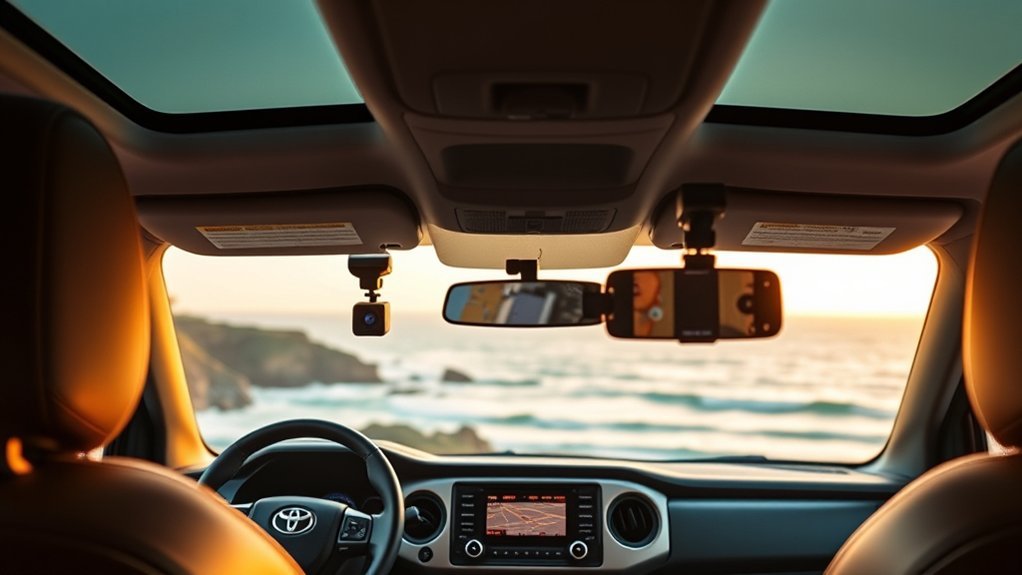
Best Dash Cams for 3rd Gen Toyota Tacoma (2024–2026)
Installing the wrong dash cam on a 3rd gen Tacoma is a genuine headache — the 2024–2026 redesign changed the windshield angle, interior trim lines, and mirror mount points enough that units built for older Tacomas (2018–2023) often don’t fit cleanly or sit flush against the glass. After going through the market and evaluating mounting configurations, video quality, and parking-mode reliability, the picks below are specifically selected for OEM-fit compatibility, real-world 4K clarity, dependable parking surveillance, and low-voltage protection that won’t flatten your battery overnight.
The short version: for zero-fuss OEM mirror integration go with the Fitcamx 4K. For complete 360° coverage — particularly useful if you carry passengers or park in unmonitored lots — the PRUVEEO 4-Channel is the standout pick. Full breakdowns, specs, and honest tradeoffs for all seven options are below.
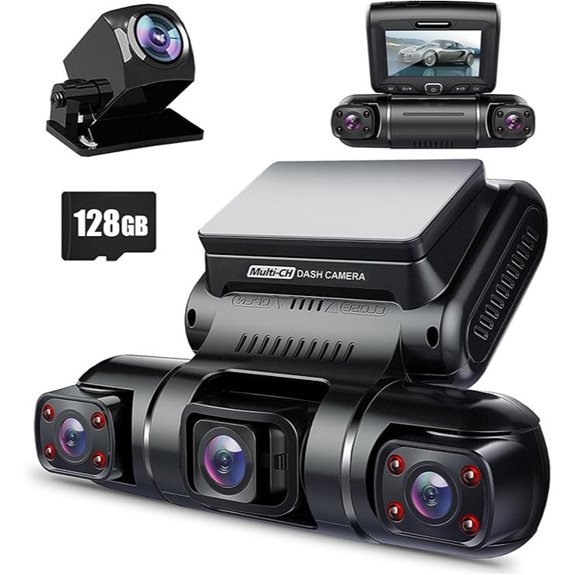
Most dash cams protect you from one angle. The PRUVEEO 360° 4-Channel covers all four simultaneously — front, rear, left, and right — which makes a real difference when you’re parked on a trail, squeezing through a tight lot, or hauling passengers who open doors into traffic. The four 1080P lenses give genuine all-around coverage including the cabin interior, GPS logs your speed and route for evidence, and built-in Wi-Fi means you can pull clips on your phone without ever opening the glove box. Night vision comes via an F1.8 aperture plus four infrared LEDs, time-lapse mode keeps storage manageable on long trips, and the G-sensor locks collision footage automatically. The supercapacitor design handles summer heat better than battery-based units, and it comes with a 128GB card included — a nice touch at this price.
Video Resolution:Front/overall FHD 1080P (4-channel)
Bottom Line: The best all-around choice for Tacoma owners who want complete situational awareness — especially useful for overlanding, rideshare use, or parking in unmonitored areas. The 1080P resolution across all four channels is the only real tradeoff versus dual-4K setups. See current price on Amazon →
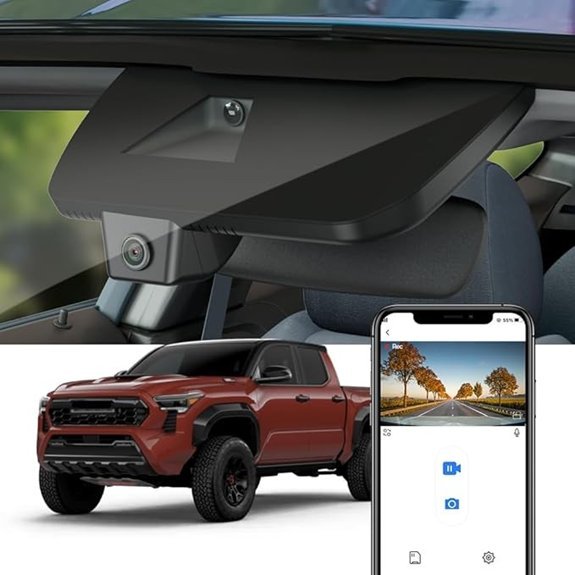
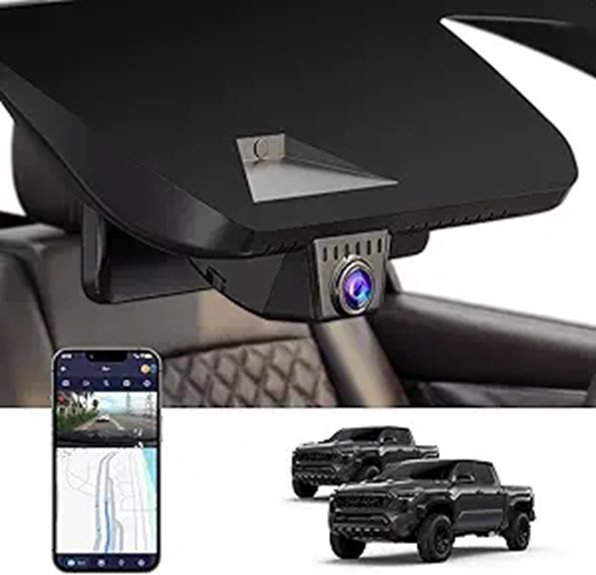
The Fitcamx is the cleanest install you’ll find for the 2024–2026 Tacoma. It clips directly over your existing rearview mirror — hiding all wiring, preserving your sightlines, and leaving the cab looking completely stock. No suction cups, no adhesive pads, no cable runs across the headliner. It’s built specifically for these model years including Hybrid SR, TRD Sport, and TRD Pre-Runner trims, which means the fit is snug rather than approximate. Video quality is genuinely strong at 4K 2160P/30fps, the f/1.6 aperture with HDR pulls solid night detail, and the FITCAMX app gives you real-time viewing over Wi-Fi without touching the SD card. It won’t conflict with CarPlay or Bluetooth — a common dealbreaker with universal mounts — and FITCAMX’s customer support has a reputation for actually responding.
Video Resolution:Front 2160P (4K) at 30fps
Dual/Multiple Channels:Single front replacement mirror (front-focused OEM-style)
Night/Low-light Performance:f/1.6 aperture + HDR night enhancement
GPS:Not included — route logging via Wi-Fi app only
Additional Feature:Wide operating temperature range
Bottom Line: The top pick for Tacoma owners who want invisible installation and clean 4K footage without modifying their interior. The front-only coverage is the tradeoff — pair it with a separate rear cam if blind-spot recording matters to you. See current price on Amazon →
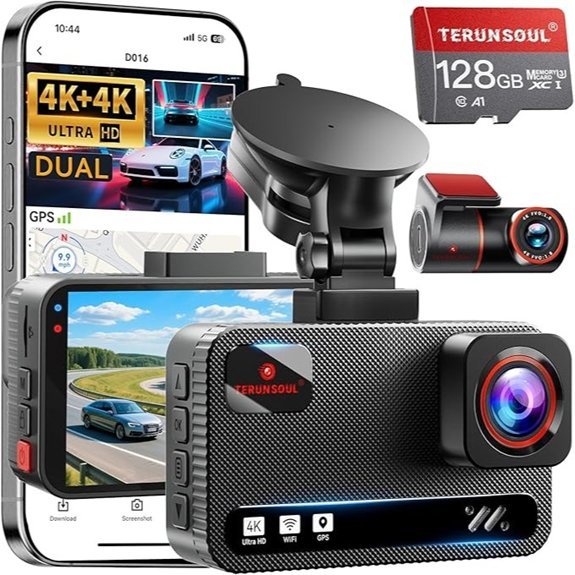
Clear night footage is where most dash cams disappoint — and this 4K front-and-rear setup with GPS is built specifically not to. The Super Starlight Night Vision system combined with an F1.5 front aperture and F1.8 rear produces noticeably brighter low-light footage than the F1.8-only setups on most competing cameras. Front resolution is a full 3840×2160, the 170° wide angle covers multi-lane highway scenarios cleanly, and GPS embeds your speed and route directly into the video file — useful when you need to dispute a ticket or support an insurance claim. The 5.8GHz Wi-Fi makes file transfers fast enough to be practical, and it arrives with a 128GB card preinstalled (expandable to 512GB). One honest caveat: parking mode requires a hardwire kit that’s sold separately, so factor that into the total cost.
Video Resolution:Front/Rear 3840×2160P (4K)
Dual/Multiple Channels:Dual-channel (front and rear)
Night/Low-light Performance:Super Starlight Night Vision; F1.5 front, F1.8 rear
Bottom Line: The strongest option for night driving and evidence-grade footage. If your Tacoma spends time on unlit roads or you frequently drive in low-light conditions, the Super Starlight sensor and F1.5 aperture combination is genuinely above average. Note: budget for the hardwire kit if you want parking mode. See current price on Amazon →
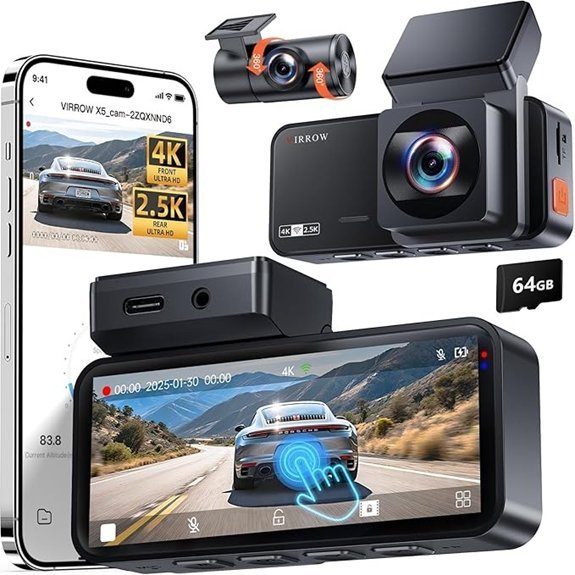
The X5 hits a practical sweet spot: 4K front and 2.5K rear resolution in a package that’s genuinely easy to install and even easier to live with day-to-day. The 3.39″ touchscreen means you can review footage directly on the unit without pulling out a phone or laptop — something that matters when you’re at a trailhead and need to check a clip quickly. The F1.8 aperture, SC2336 sensor, and WDR processing deliver reliable low-light performance, and the ultra-wide 170° front and 165° rear coverage takes care of blind spot scenarios on highway merges. Setup uses adhesive tape and comes with a pry tool for tucking cables, a 64GB card is included, and 24/7 motion-activated parking mode is supported — though, like most on this list, it needs a hardwire kit for sustained power. The 18-month warranty is a reassuring signal from a newer brand.
App/Wi‑Fi Connectivity:Free app for video downloads; 3.39″ on-device touchscreen
Additional Feature:3.39″ touchscreen
Additional Feature:Included 64GB card
Additional Feature:Pry tool included for cable management
Bottom Line: A strong everyday choice for Tacoma owners who want solid dual-channel coverage without overthinking setup. The touchscreen is a genuine convenience upgrade. If GPS logging matters to you, step up to the 4K/GPS model above. See current price on Amazon →
The FUVYMYT mirrors what the Fitcamx does — a front-only, Tacoma-specific design that clips behind your mirror for a factory look — but positions itself at a different price point worth considering. You get 4K 2160P/30fps capture with an f/1.6 lens and CMOS sensor; HDR handles the high-contrast scenes that trip up cheaper cameras, like driving into direct sunrise or through tunnel exits. Loop recording keeps the card clean continuously, the G-sensor locks collision files automatically, and the 64GB TF card included is expandable to 256GB. The FUVYMYT app handles quick clip sharing, and a separate parking harness (sold as an add-on) enables 24-hour surveillance. One useful tip from user reports: disable cellular or Bluetooth on your phone during the initial app connection if pairing is slow — it resolves the handshake delay.
Video Resolution:Front 2160P (4K) at 30fps
Dual/Multiple Channels:Front-only (designed for Tacoma)
Night/Low-light Performance:f/1.6 aperture + HDR for night visibility
GPS:Not included
Loop Recording / G-sensor:Loop recording; G-sensor locks files on collision
App/Wi‑Fi Connectivity:FUVYMYT app; Wi‑Fi for clip transfer
Additional Feature:Plug-and-play harness
Additional Feature:Includes card reader
Additional Feature:12-hour customer support response time
Bottom Line: A solid front-only alternative to the Fitcamx for owners who want Tacoma-specific OEM fit at a lower entry price. No GPS or rear cam — this is a straightforward, clean-install front recorder and nothing more. See current price on Amazon →
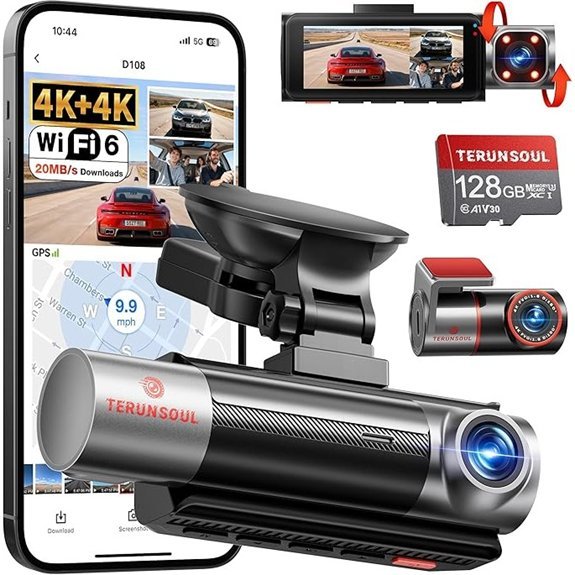
Running passengers, rideshare, or just want the Tacoma’s cab and all quadrants documented simultaneously? The 3-channel setup here covers front, cabin, and rear at the same time — and does it in full 4K front and rear, with 1080P for the interior. Wide angles (170° front, 150° cabin and rear) produce near-complete coverage with minimal blind spots. What sets it apart from the 4-channel 360° options is the focus on clarity over pure coverage: the Super Starlight night vision system and Auto IR cabin LEDs mean low-light footage — both interior and exterior — is genuinely usable. GPS logs speed and routes, the 128GB card is expandable to 512GB, and WiFi 6 keeps transfers noticeably faster than older 2.4GHz implementations. The 18-month warranty and 24/7 support matter more with a 3-camera wiring job than with a single-unit clip-on.
Video Resolution:Front/Rear 3840×2160P (4K); cabin 1080P
Bottom Line: The right call for family haulers, rideshare drivers, or anyone who needs cabin documentation alongside road footage. The 4K front-and-rear quality combined with a proper interior cam is a step up from the PRUVEEO 4-channel in pure resolution — though the PRUVEEO covers left and right flanks as well. See current price on Amazon →
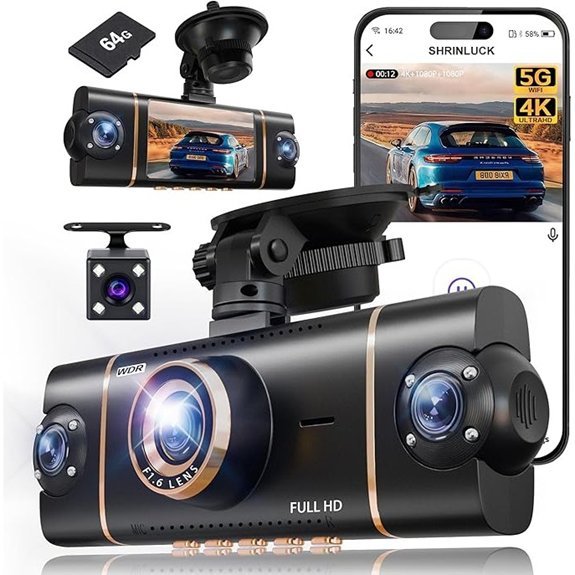
The four-camera setup in this 360° unit makes it the most complete parking-lot protection option on this list — a 4K front lens paired with three 1080P lenses eliminates virtually every blind spot around the truck. That matters most if your Tacoma sits overnight in apartment lots, work sites, or anywhere with limited supervision. The G-sensor locks collision clips automatically, and 24-hour motion-triggered parking surveillance (via hardwire kit) means a door ding at 2am gets recorded, not just the drive home before it. Night coverage uses 8 IR LED lamps, WDR, and an F1.6 aperture — the IR count is notably higher than most on this list. Dual-band 5GHz Wi-Fi and the viidure app keep clip retrieval fast, GPS traces your route, and the 18-month guarantee covers the complexity of a 4-camera install.
Video Resolution:Front 4K; other three lenses 1080P
Dual/Multiple Channels:4-channel (front + three additional lenses)
Night/Low-light Performance:F1.6 aperture, 8 IR LEDs, WDR
GPS:Built-in GPS (traces vehicle path and locations)
Bottom Line: The most surveillance-focused option here — built for owners who prioritize what happens to the Tacoma when they’re not in it. The 1080P on the three secondary lenses is an acceptable tradeoff for the all-around coverage and 8 IR LEDs. Hardwire kit required for full parking mode functionality. See current price on Amazon →
Pros
4K front lens with three 1080P lenses
24-hour motion-triggered parking surveillance
G-sensor locks collision clips automatically
Cons
Parking surveillance requires a hardwire kit
Only the front lens records in 4K
Factors to Consider When Choosing a Dash Cam for 3rd Gen Tacoma
When choosing a dash cam for your 3rd Gen Tacoma, consider fit and compatibility so it mounts neatly without blocking your view or airbags. Think about video resolution and night vision performance to guarantee clear daytime and low-light footage, and check parking mode power options for reliable surveillance when you’re away. Finally, plan installation and wiring so the unit looks clean and gets steady power without draining your battery.
Fit and Compatibility
The most critical compatibility check is verifying the dash cam is made for 2024–2026 Toyota Tacoma models, since units designed for 2018–2023 Tacomas may not fit or work correctly due to the redesigned windshield and interior trim. You’ll want a unit that mimics the OEM look — mirror-style mounts keep the windshield tidy and reduce visual obstruction. Check dimensions and mounting style so the camera won’t interfere with airbags, sensors, or sightlines. Prefer plug-and-play designs if you don’t want complex wiring; they simplify installation and preserve interior trim. Confirm whether features like 24-hour parking monitoring need extra harnesses or accessories, since those affect compatibility and installation effort. Before buying, compare mounting points, cable routing options, and required adapters to verify seamless fit and operation.
Video Resolution Needs
Because the Tacoma’s windshield scene can be busy, choose a dash cam resolution that actually captures usable detail — 4K front-facing units reveal license plates and signs far better than 1080P, while good low-light sensors and HDR keep night footage readable. You’ll want 4K front footage if you need clear evidence for claims or disputes; it’s considerably sharper and shows finer details. If you run a dual-channel setup, balance total resolution — 4K front plus 1080P rear gives reliable coverage without overloading storage or processing. Also check field of view: wider angles reduce blind spots and give more context, but extremely wide lenses can distort details at the edges. Prioritize a high-quality sensor and lens over marketing pixel counts alone.
Night Vision Performance
Clear night footage comes down to a few specific things — not just megapixels. Prioritize larger apertures like f/1.6 or f/1.8 so more light reaches the sensor, yielding brighter and sharper low-light recordings. Pair that with HDR to balance highlights and shadows — this is what lets you read license plates under oncoming headlights instead of losing them to glare. Advanced sensors and fast image-processing matter too: they reduce noise and sharpen contrast when light is scarce. If you regularly drive unlit rural roads at night, prioritize Super Starlight Night Vision or equivalent sensor technology. For interior or near-vehicle illumination during parking mode, IR-equipped dash cams use invisible LEDs to capture useful detail without affecting other drivers. Together, these specs determine whether nighttime footage is usable — or just a blurry orange smear.
Parking Mode Power
When you park your 3rd-gen Tacoma, parking mode lets your dash cam keep watch without wasting the battery — but only if you set it up correctly. Choose a cam that supports low-power monitoring and has configurable time-lapse or motion-triggered modes to reduce storage and power draw when nothing is happening. Most units need a hardwire kit to access constant power for parking mode — confirm compatibility before buying. Make sure the cam’s G-sensor reliably detects bumps and impacts and auto-saves clips so minor incidents don’t get overwritten. Most importantly, verify the cam’s low-voltage protection threshold and set an appropriate cutoff — this is what prevents the camera from draining your truck’s battery during extended parking periods. Some units let you set this cutoff manually; take the time to dial it in.
Installation and Wiring
Choose a dash cam whose installation and wiring suit your 3rd-gen Tacoma’s interior so it looks factory and stays out of the way. Units made for clean OEM-style mounting avoid windshield obstruction and preserve the factory interior aesthetic. For simplicity, plug-and-play units eliminate complex rewiring and get you set up quickly. For 24-hour parking mode, plan for hardwire kits or harnesses — confirm compatibility with your Tacoma’s fuse box before committing. Route cables using the included accessories and manufacturer instructions to tuck wires behind trim, away from airbags and controls. That keeps the cab tidy and prevents interference with safety systems. Double-check all connection points and fuse taps before your first extended recording session.
Frequently Asked Questions
Will a Dash Cam Void My Tacoma’s Warranty?
No, a dash cam typically won’t void your Tacoma’s warranty unless its installation damages vehicle wiring or components. Use a professional installer, keep OEM parts intact, and document the installation to avoid disputes with the dealer. The Magnuson-Moss Warranty Act generally protects consumers from warranty voidance unless the manufacturer can prove the aftermarket part caused a specific failure.
Can Hardwiring Affect My Truck Battery Long-Term?
Yes — if the cam draws power while parked without a low-voltage cutoff engaged, it can drain your battery over time. Install a low-voltage cutoff set to an appropriate threshold (typically 11.8V–12.0V for a standard 12V system), use a proper fuse tap rated for your circuit, and configure the cam’s parking mode timeout. If you’re frequently parking for multiple days, a supercapacitor-based unit with conservative cutoff settings is the safest approach.
Are There Legal Restrictions for Dash Cam Placement in My State?
Many states restrict windshield-mounted camera placement that obstructs the driver’s view. States like California and Minnesota have specific laws limiting the size and mounting zone of windshield-attached devices. Check your state’s DMV guidelines before mounting — some specify unobstructed zones measured in inches from specific windshield edges, while others require adhesive-free mounts. OEM mirror-replacement styles like the Fitcamx typically sidestep these restrictions by design.
How Do Dash Cams Handle Extreme Heat and Cold?
Lithium battery dash cams can fail, swell, or give degraded performance when a truck cab hits 140°F+ in summer sun — a real scenario for a blacked-out Tacoma parked in direct sunlight. Supercapacitor-based models handle temperature extremes significantly better than battery-based units; they’re rated for wider operating ranges and won’t degrade the way batteries do over repeated heat cycles. If you live in a hot climate or a region with sub-freezing winters, prioritize a supercapacitor unit — the PRUVEEO 4-Channel on this list uses one.
Can I Sync Dash Cam Footage With My Phone Automatically?
Yes — most of the cams on this list sync footage via Wi-Fi to a companion app on your phone. For automatic event-based uploads (not just manual transfers), you’ll want a model that supports background syncing over a mobile hotspot or has native LTE capability. The 3-Channel WiFi 6 model offers notably faster transfer speeds than older 2.4GHz units, which matters when you’re pulling 4K files. Check the companion app reviews before buying — transfer reliability varies more than specs suggest.
Conclusion
The right dash cam for your 3rd gen Tacoma depends on one question you should answer first: what’s the primary risk you’re protecting against? If it’s on-road incidents — accidents, near-misses, evidence for insurance — a clean 4K front-and-rear setup like the 4K Front and Rear with GPS or the OEM-fit Fitcamx 4K covers you well. If the bigger concern is parking — unmonitored lots, overnight storage, or overlanding campsites — go with the PRUVEEO 4-Channel or the 4-Channel 360° with 64GB for all-around surveillance. And if you carry passengers or run the Tacoma for rideshare or family duty, the 3-Channel 4K WiFi6 is the one to have. Whatever you pick, set the low-voltage cutoff before your first parking session — it takes two minutes and saves your battery. Any of the seven options above will be a solid upgrade over driving unprotected.
Brian Keller founded Backpack-and-Gear to make gear shopping less of a guessing game. He sets the site’s editorial standards, decides which categories get covered, and edits buying guides before they go live. His own writing leans toward packs, travel kit, and the trade-offs between budget and mid-range gear.