Autel TPMS Sensors Review: Performance and Ease
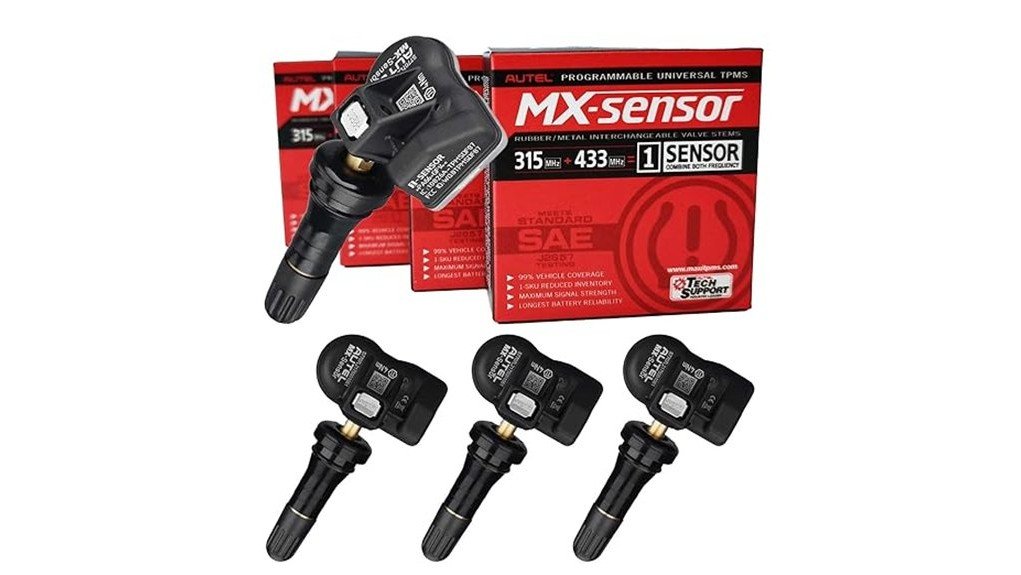
Autel MX-Sensors use 315MHz and 433MHz dual-frequency support, OE-level programming, and a light 11g body, so they fit many TPMS jobs with less hassle. They work with TS508, TS408, TS608, MS906TS, ITS600, and other Autel tools, and up to 20 sensors can be cloned or batch programmed wirelessly. Installation is quick, reliability is strong, and the 24-month, 24,000-mile warranty adds confidence, with more details below.
Key Takeaways
- Autel MX-Sensors support both 315MHz and 433MHz, giving broad TPMS compatibility across many vehicles.
- They are easy to install and program with Autel tools, including quick cloning and batch programming.
- Lightweight 11g construction helps maintain wheel balance and reliable in-wheel performance.
- Dual-frequency design and OE-level signal delivery improve communication stability and reduce interference.
- A 24-month or 24,000-mile warranty adds confidence for routine sensor replacement and service.
What Are Autel MX-Sensors?
Autel MX-Sensors are dual-frequency TPMS sensors, designed to operate at both 315MHz and 433MHz, and they are built for OE-level programming in a wide range of tire pressure monitoring service work.
This sensor technology supports quick cloning and reliable signal delivery, so tire maintenance becomes more efficient and less restrictive for the driver.
Each unit is lightweight at 11g, which helps stability inside the wheel, and its design aims to match OE battery performance.
For readers seeking practical freedom from repeated relearning, the MX-Sensor offers a straightforward replacement path, with strong compatibility across routine TPMS service tasks.
Which Autel Tools and Vehicles Are Compatible?
When the focus moves from the sensor itself to real-world use, the next question is which Autel tools and vehicles can work with it.
Autel lists sensor compatibility with TS508, TS408, TS508WF, TS608, MS906TS, ITS600, and MS906PRO-TS, so readers can match the sensor to a broad service lineup.
Autel lists sensor compatibility across TS508, TS408, TS508WF, TS608, MS906TS, ITS600, and MS906PRO-TS.
The dual-frequency design, 315MHz and 433MHz, supports many vehicle models across common tire systems. That range helps technicians and drivers move with more freedom, because one sensor can serve multiple platforms.
Compatibility remains strongest with Autel-supported TPMS workflows, giving practical coverage for everyday maintenance.
How Do You Install and Program MX-Sensors?
Installing and programming MX-Sensors is designed to be quick, practical, and low-friction for routine TPMS service. The sensor uses press-in rubber or metal bodies, so installation tips begin with matching the valve style, seating it firmly, and checking torque.
Programming techniques are straightforward with Autel TS508, TS408, TS608, MS906TS, ITS600, or MS906PRO-TS tools, and up to 20 sensors can be cloned or batch programmed wirelessly, even on mounted wheels.
- Less waiting
- More control
- Cleaner workflow
Once the original ID is copied, relearn steps are often skipped, giving drivers a more independent repair path.
How Reliable Are Autel TPMS Sensors?
Reliability is where these sensors stand out, because the same quick setup that makes them easy to use also helps reduce installation errors and programming mistakes.
Their dual-frequency design, 315 MHz and 433 MHz, supports stable communication, and the strong signal helps limit signal interference in busy shop environments.
Sensor longevity is reinforced by OE-level battery performance and an 11 g lightweight build, so the unit stays balanced on the wheel.
SAE J1205 and J1206 compliance adds confidence.
For readers seeking freer, less dependent maintenance, the result is dependable monitoring with fewer surprises and steady everyday service.
What Warranty and Support Do You Get?
Autel backs these TPMS sensors with a 24-month, or 24,000-mile, warranty against manufacturing defects, so the coverage is clear and easy to compare with other replacement options.
This warranty coverage helps you move with confidence, because a failed sensor can be replaced without extra strain.
- Direct customer assistance comes from Autel US for troubleshooting.
- Each sensor carries a unique series number for quality tracking.
- Support is built to keep installation and programming free from needless hassle.
For drivers seeking more control, this support structure removes barriers, protects the purchase, and keeps tire monitoring working as intended.
Frequently Asked Questions
Are Autel Mx-Sensors Reusable After Tire Rotation?
Yes, Autel MX-Sensors can usually be reused after tire rotation if removed intact, since their sensor durability and installation simplicity support repeated service, while preserving the original ID avoids relearning and maintains liberated convenience.
Can Mx-Sensors Be Programmed Without Autel Software Updates?
MX-Sensors can sometimes be programmed without immediate Autel software updates, if sensor programming remains compatible with the tool. Still, software compatibility may determine success, so an updated platform generally offers fewer obstacles and greater autonomy.
Do Autel Sensors Work With Aftermarket TPMS Tools?
Yes, Autel sensors work with many aftermarket TPMS tools, depending on sensor compatibility. This offers aftermarket benefits: flexible programming, broad vehicle coverage, and reduced dependence on dealer systems, supporting users seeking greater autonomy.
How Do Mx-Sensors Handle Extreme Cold or Heat?
MX-Sensors handle extreme cold or heat with notable temperature resilience and sensor durability, maintaining stable signaling and battery performance under harsh conditions. This supports drivers seeking freedom from frequent failures, replacements, or seasonal worries.
Are Autel TPMS Sensors Suitable for Winter Wheel Sets?
Absolutely, Autel TPMS sensors are eminently suitable for winter wheel sets; their winter performance remains impressively steadfast, while sensor compatibility with dual-frequency systems and Autel tools grants drivers liberating confidence through harsh, icy seasons.
Conclusion
To sum up, Autel TPMS sensors offer broad vehicle compatibility, dual 315MHz and 433MHz operation, and OE-level performance that makes replacement work more efficient for you. Their press-in rubber and metal designs simplify installation, while wireless batch programming helps reduce shop time. SAE-standard testing, stable signal output, and a 24-month warranty add confidence. For drivers and technicians, the result is a practical, well-supported solution that feels thoroughly modern, almost like a telegraph from the future.