ATV/UTV Tires Review: All Terrain Performance
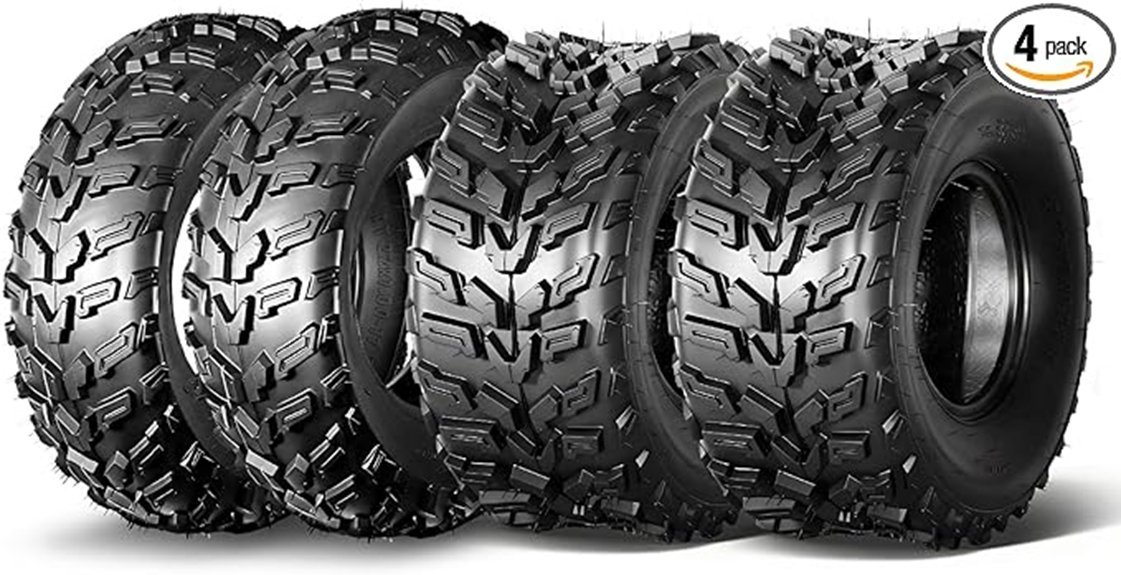
ATV/UTV Tires Review: All Terrain Performance? For mud, dirt, and gravel, this set uses a 22×7-11 front (5.5-inch rim, 10 mm tread, 6-ply) and a 22×10-9 rear (8-inch rim, 14 mm tread, 6-ply). Deeper rear grooves help in ruts, while front tread supports quick steering. Tubeless helps prevent pinched flats and allows easy plug/patch repairs. Max loads are 264 lbs front, 285 lbs rear, at 24 PSI, best for off-road not highway—keep going to compare traction options.
Key Takeaways
- Directional tread pattern improves traction across mud, dirt, gravel, and sand for all-terrain ATV/UTV use.
- Deeper rear tread (14 mm) boosts grip and stability in ruts, while front tread (10 mm) supports steering control.
- 6-ply casing enhances puncture and abrasion resistance for rocky brush and rough all-terrain riding.
- Tubeless construction reduces pinch flats and supports easier patching or plugging for small punctures during trails.
- Recommended pressure around 24 PSI helps consistent handling off-road, but these tires aren’t intended for highway driving.
ATV/UTV All Terrain Traction on Mud, Dirt, and Gravel
The directional tread design on these ATV/UTV tires is built to keep traction consistent when the surface changes, especially on mud, dirt, gravel, and sand.
Buyers seeking reliable off road performance should note the tread depth varies, 10 mm front (22×7-11) and 14 mm rear (22×10-9). This deeper rear tire tread helps under power when ruts form.
The 6-ply rated casing resists punctures and abrasions, supporting longer use over sharp stones. Tubeless construction adds convenience for trails.
Quick takeaways
- Best traction: mud, dirt, gravel, sand
- Sizes: 22×7-11 front, 22×10-9 rear
- Durability: 6-ply casing
- Use: ATV/UTV off road performance
Front vs. Rear Tire Fitment: 22×7-11 and 22×10-9
Fit Check (before purchase):** The 22×7-11 front uses a 5.5-inch rim width, giving narrower tire width for quick steering and easier trail setup.
The 22×10-9 rear mounts to an 8-inch rim width, widening traction area for stability. Both are tubeless and sized for ATV/UTV use, not highway driving.
How does this affect load balance? Wider rear rubber supports heavier driving forces during climbs and braking, while the front stays responsive.
- Front: 264 lbs max, 11-inch diameter, directional tread
- Rear: 285 lbs max, 9-inch diameter, deeper tread for mixed terrain
6-Ply Durability, Load Ratings, and Recommended PSI
Quick Takeaways
- 6-ply durability aids longevity
- Match load capacity to rider/cargo
- Set tire pressure to 24 PSI
What “Tubeless” Means for Repairs and Handling
After choosing tires based on 6-ply durability, load ratings, and the recommended 24 PSI, “tubeless” becomes the next factor that affects day-to-day use.
Tubeless repairs: what changes?
These 22×7-11 front and 22×10-9 rear tubeless tires seal air against the rim, not a separate tube. That means fewer pinched-flat scenarios and simpler tire repair.
Small punctures can often be patched or plugged without removing everything.
Handling advantages for buyers
With steady pressure retention, riders get handling advantages like quicker steering response and more consistent grip off-road.
Steady pressure retention delivers quicker steering response and more consistent off-road grip at 24 PSI.
Tubeless is best for ATV/UTV and non-highway use.
Takeaways:
- Easier tire repair than tube setups
- Better pressure stability at 24 PSI
- Consistent handling advantages off-road
Choosing Tire Sets by Terrain Limits and Use Case
Quick Scanning: What to match to your use. Buyers should set tire selection strategies by terrain limits first.
Front fit is 22×7-11, tread depth 10 mm, 6-ply puncture resistance, and tubeless handling at 24 psi.
Rear fit is 22×10-9, tread depth 14 mm, max load 285 lbs, tubeless, also at 24 psi.
These directional, 6-ply tires offer terrain adaptability for mud, dirt, gravel, and sand, not highway driving.
How to choose by use case
- Sandy or mixed trails: prioritize deeper rear tread.
- Rocky brush: rely on 6-ply casing.
- Check ATV/UTV compatibility; rim not included.
Frequently Asked Questions
Are These Tires Compatible With Wheel Rims Already Installed on My Atv/Utv?
Yes, they may fit, but tire compatibility depends on your wheel rims matching the rim specifications.
Front tires are 22×7-11 for a 5.5-inch rim width, 11-inch diameter. Rear tires are 22×10-9 for an 8-inch rim width, 9-inch diameter.
Measure the rim width and diameter first, since rim(s) aren’t included. Suitable for most ATV/UTV off-road use, not highway.
Takeaways:
- Match rim width (5.5 front, 8 rear)
- Match rim diameter (11 front, 9 rear)
- Confirm tubeless setup and valve fit
How Do These Tires Affect Braking Distance on Wet Gravel or Mud?
In wet conditions on gravel or mud, these tires improve braking traction because of a directional tread design that channels water and grips loose surfaces.
Their 6-ply, puncture-resistant build helps maintain tread support, which can support more consistent stopping.
Expect better control on dirt, mud, and sand, but braking distance still depends on speed and load.
Fit checks: 22×7-11 front, 22×10-9 rear, tubeless.
– Guide: test at low speed first
What’s the Best Tire Pressure Adjustment When Towing Heavy Loads Off-Road?
Best tire pressure adjustment for towing heavy off-road loads is modestly lower from the stated 24 psi to improve grip while keeping load stability.
A practical target is about 20–22 psi front and rear, then fine-tune after checking ride feel and sidewall flex.
Keep the exact size match, 22×7-11 front and 22×10-9 rear, and stay within the tire’s max load ratings (264/285 lbs).
Takeaways
- Start at 20–22 psi
- Recheck stability under load
- Don’t exceed max load ratings
Can These Tires Be Repaired With Plug Kits, and Do Plugs Void Warranty?
Can these tires be repaired with plug kits?
Yes, punctures can often be repaired with plug kits, but only if damage is suitable and handled correctly to maintain tire puncture prevention.
Do plugs void warranty?
Plug repairs may affect warranty coverage details. The buyer should request warranty terms in writing first, and follow manufacturer guidance for tubeless tires.
Key fit facts for comparison
- 22×7-11 front, 22×10-9 rear, 6-ply casing
- Not for highway use
How Long Should Tread Wear Take on Mixed Sand and Dirt Trails?
How long should tread wear last on mixed sand and dirt trails?
With 6-ply casing and directional tread, tread lifespan often targets roughly 1,000–2,000 miles depending on PSI and load, but mixed sand and dirt typically runs toward the lower end.
For 22×7-11 front (10 mm tread) and 22×10-9 rear (14 mm), expect faster wear in fine sand and sharper cuts over rocks.
Takeaways
- Check pressure often (24 PSI listed).
- Rotate front/rear when possible.
- Replace when tread depth is near half.
Conclusion
Conclusion: Are these 22×7-11 / 22×10-9 tires a good match?
If you worry the directional tread may be “too specific,” note these tires are built for mixed trail days. The front 22×7-11 and rear 22×10-9 sizes, paired with a 6-ply casing, target steering control on mud, dirt, gravel, and sand, while resisting punctures. Use the recommended PSI and confirm rim/tubeless compatibility.
Key takeaways
- Buy for off-road grip, not highway use
- Match dimensions for correct fitment
- Expect better durability from 6-ply construction