
How to Check Tire Pressure With an Inflator
You can get an accurate pounds per square inch (PSI) reading when you check tires cold, use the pressure on your driver-door placard, and confirm the result with a reliable gauge. Tire pressure changes as tires heat up, so a rushed reading can lead you to overfill or underfill. This guide shows you how to use an inflator, verify the reading, fix common problems, and keep the habit simple.
Quick Answer
Check tire pressure when the tires feel cold, ideally before driving or after the car sits for at least three hours. Set the inflator to the cold PSI listed on your driver-door placard, fill in short bursts, then confirm each tire with a manual or digital gauge. Replace the valve caps and check again if the Tire Pressure Monitoring System (TPMS) light stays on.
Key Takeaways
- Use the driver-door placard, not the tire sidewall, for your target PSI.
- Check tires cold because driving raises pressure and can mislead you.
- Fill in short bursts so you don’t overshoot the recommended pressure.
- Confirm the inflator reading with a reliable manual or digital gauge.
- Check all four tires, plus the spare if your vehicle has one.
Quick Steps: Check Tire Pressure With an Inflator
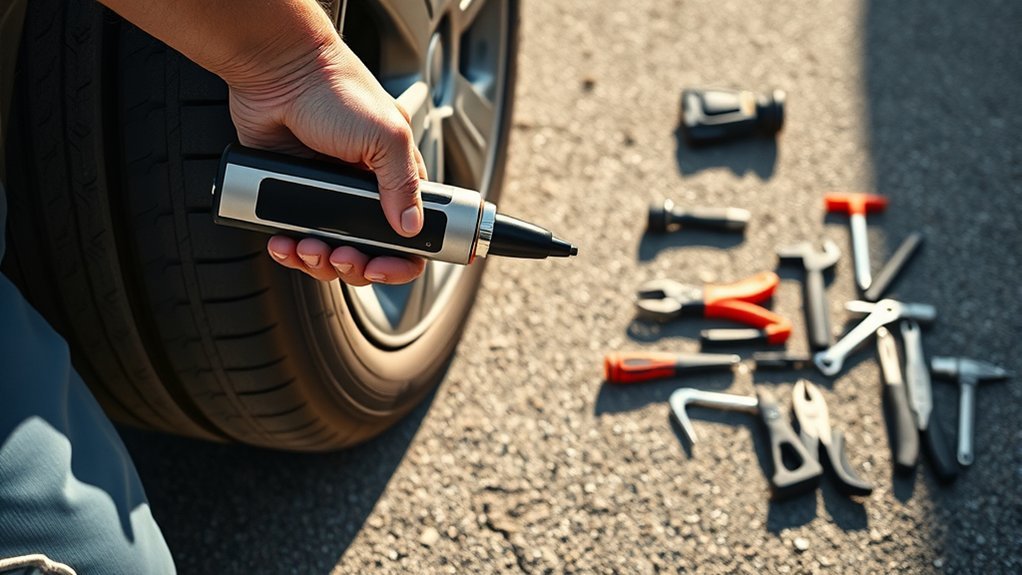
Estimated total time: 5 to 10 minutes for all four tires. You’ll need a tire inflator, a tire pressure gauge, and the recommended cold PSI from your driver-door placard or owner’s manual.
What You’ll Need Before You Start
- A portable tire inflator or gas station air pump
- A reliable digital or manual tire pressure gauge
- Your vehicle’s driver-door tire placard
- Valve caps for each tire
- Soapy water if you need to check for a valve leak
- Park on level ground and let the tires cool for at least three hours.
- Read the recommended cold PSI on the driver-door placard.
- Remove the valve cap and keep it where you won’t lose it.
- Press the inflator nozzle firmly onto the valve stem until you don’t hear air leaking.
- Set the inflator to the placard pressure, then inflate in short bursts.
- Check the pressure with a separate gauge after you remove the nozzle.
- Add or release air until the tire matches the placard pressure.
- Replace the valve cap and repeat the process on each tire.
According to the National Highway Traffic Safety Administration (NHTSA), TPMS can help warn you about low pressure, but you should still check tire pressure monthly. A separate gauge gives you more control because TPMS may only warn you after pressure drops significantly.
Find the Right PSI (Driver Door Placard) : Cold vs. Hot Checks
Your driver-door placard gives the tire pressure target you should use. Tire sidewalls show a maximum pressure rating, not the pressure your vehicle maker recommends for daily driving.
Open the driver’s side door and look for the tire and loading information label. Some vehicles list different PSI targets for the front tires, rear tires, and spare tire, so read the label before you start filling.
Check pressure before driving or after the car sits for at least three hours. That gives you a cold reading, which matches the way your vehicle maker sets the placard number.
Temperature also changes tire pressure. A common rule says tire pressure changes by about 1 PSI for every 10°F shift in air temperature, but some larger or higher-pressure tires can change more.
Note: Don’t bleed air from a hot tire just because the number looks higher after driving.
Step-by-Step: Prepare the Car and Attach the Inflator
- Park the car safely. Choose level ground, set the parking brake, and stay away from traffic if you use a public air pump.
- Let the tires cool. Wait at least three hours when you can, or check before you drive for the day.
- Remove the valve cap. Put it in your pocket or on a clean spot so it doesn’t roll away.
- Attach the nozzle firmly. Push the inflator nozzle straight onto the valve stem until the seal feels tight.
- Set the target PSI. Use the placard number for that tire position, not a guess or sidewall number.
- Inflate in short bursts. Pause often so the gauge can settle and you don’t overfill the tire.
- Verify the final reading. Remove the nozzle and check the tire with a separate gauge.
- Replace the valve cap. A cap helps keep dirt and moisture away from the valve core.
This routine gives you a simple way to avoid guesswork. It also helps you spot a tire that loses pressure faster than the others.
Verify Readings: TPMS, Manual Gauges, and Double-Checking
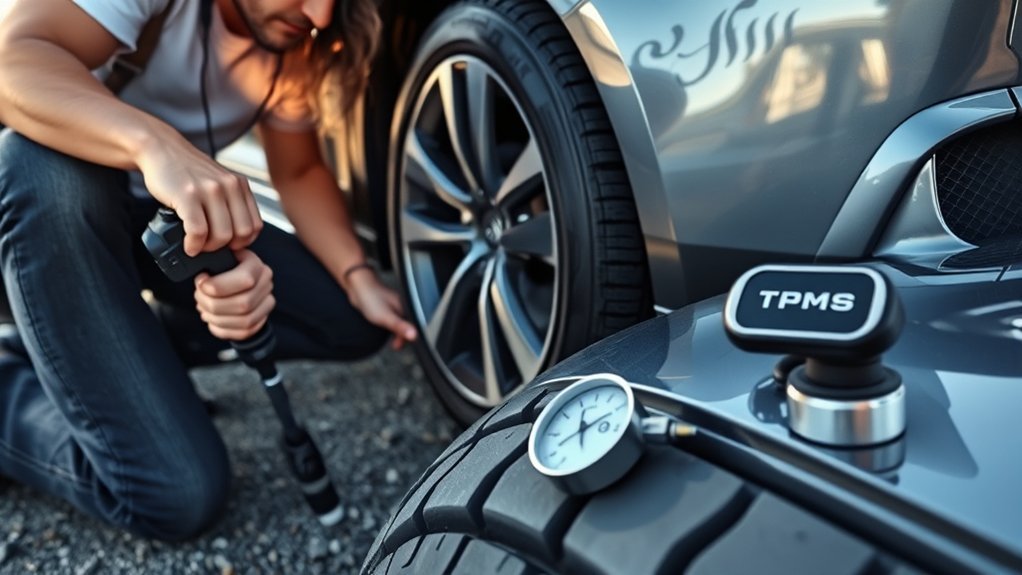
Check both the TPMS display and a handheld gauge when your vehicle shows tire pressure data. TPMS helps, but a gauge gives you a direct reading at the valve stem.
- Compare any TPMS alert with a manual gauge right away.
- Check all four tires and the spare if your vehicle carries one.
- Inflate each tire to the vehicle’s recommended cold pressure.
- Trust a good handheld gauge if the inflator reading jumps around.
- Recheck after a short drive if one tire keeps changing pressure.
Write down the readings if one tire keeps dropping. A pattern helps you decide whether the problem comes from the valve, tire bead, puncture, wheel, or gauge.
Troubleshoot Common Inflator and Valve Problems (Leaks, Bad Readings)
When pressure readings look wrong, start with the simple causes. Most problems come from a poor nozzle seal, a weak inflator, a damaged valve stem, or a gauge that no longer reads accurately.
Common Symptoms
- The inflator runs, but the PSI does not rise.
- You hear air leaking at the valve stem.
- The TPMS reading and handheld gauge differ by several PSI.
- One tire loses pressure again within a few days.
Likely Causes and Fixes
- Poor nozzle seal: Remove the nozzle and press it straight onto the valve stem again.
- Weak power source: Check the plug, battery, or outlet before you blame the tire.
- Leaky valve stem: Spray soapy water on the stem and look for bubbles.
- Bad gauge: Compare it with another trusted gauge before you adjust every tire.
- Hidden tire damage: Inspect the tread and sidewall for nails, cracks, bulges, or cuts.
Warning: Don’t drive on a tire with sidewall damage, a visible bulge, or pressure that drops again after filling.
Replace damaged valve caps, valve cores, hoses, or nozzles before you drive far. Visit a tire shop if the same tire keeps losing air after you check the valve.
Adjust for Temperature, Check Spares, and Routine Schedule
Temperature changes can make a tire look overfilled or underfilled even when you filled it correctly. Use the placard pressure as your cold target, then check again when the tires and outdoor temperature settle.
- Verify the recommended pressure on the driver-door placard before inflating.
- Expect about 1 PSI change for each 10°F shift on many passenger tires.
- Check the spare tire because many drivers forget it until they need it.
- Use a reliable gauge after inflation to confirm the final reading.
- Check pressure monthly and before long trips.
That small habit protects handling, tire wear, and fuel use. It also lowers your chance of dealing with an avoidable roadside problem.
Frequently Asked Questions
How Do You Check Tire Pressure When Filling Up?
Read the driver-door placard first, then attach the inflator nozzle firmly to the valve stem. Add air in short bursts, stop to check the PSI with a handheld gauge, and replace the valve cap when the tire reaches the placard pressure.
What Is the 4 PSI Rule?
The 4 PSI rule describes a rough hot-to-cold pressure difference some drivers use as a clue, not a manufacturer target. You should not set tire pressure by this rule unless your vehicle or tire maker gives that instruction.
What Is the Most Accurate Way to Check Your Tire Pressure?
The most accurate method uses a good tire pressure gauge on cold tires. Check before driving or after the vehicle sits for at least three hours, then compare the reading with the driver-door placard.
What Is the 5 PSI Rule?
The 5 PSI rule also refers to a rough hot-tire estimate that some drivers mention. Don’t add 5 PSI above the placard as a routine habit because overinflation can reduce comfort, traction, and even tire wear.
Can You Trust the TPMS Instead of a Tire Gauge?
You can use TPMS as a warning tool, but you should still keep a tire gauge in your vehicle. NHTSA says TPMS may only alert you when a tire becomes significantly underinflated, so a monthly manual check still matters.
Safety Disclaimer: This article gives general tire-pressure guidance. Your owner’s manual and driver-door placard set the correct pressure for your vehicle. Ask a qualified tire technician or mechanic if you see damage, repeated pressure loss, or unclear readings.
Conclusion
Accurate tire pressure starts with cold tires, the driver-door placard, and a gauge you trust. Use the inflator in short bursts, then verify each tire before you replace the valve cap. Check the spare and repeat the routine monthly or before long trips. A few minutes of care can help you drive with more control, better tire life, and fewer roadside surprises.
References
- Tire Safety Ratings and Awareness, TireWise – National Highway Traffic Safety Administration, accessed 2026
- Tire Pressure Monitoring System, FMVSS No. 138 – National Highway Traffic Safety Administration, 2005
- Understanding Tire Pressure and Temperature Change – AAA, 2025
- How Does Temperature Change Affect Tire Air Pressure? – Tire Rack, accessed 2026

3 thoughts on “How to Check Tire Pressure With an Inflator: the Right Way”