Best 4K Dash Cams for Clear Front and Rear Evidence
Last updated: June 14, 2026
As an Amazon Associate, we may earn from qualifying purchases.
If you want a 4K dash cam that can capture usable evidence in daylight, at night, and while parked, focus on sensor quality, parking mode, storage support, heat tolerance, and app reliability before chasing the highest resolution number. The strongest picks below include front-and-rear systems, STARVIS or STARVIS 2 sensors, 5GHz Wi-Fi or Wi-Fi 6, GPS features, impact locking, and parking options for drivers who want clear clips without a complicated setup.
Not every 4K model records 4K at 60fps in every mode, and some cameras disable HDR when using higher frame rates. Use the comparison table and product notes below to choose based on your real need: smoother highway footage, better night plates, longer storage, remote monitoring, or simpler daily protection.
Quick Picks: Which 4K Dash Cam Should You Buy?
- Best night-focused option: REDTIGER F7NP for drivers who want a simple 4K front and 1080p rear setup.
- Best remote-monitoring option: DDPAI Z60 Pro 4K Dual Front & Rear for app, storage, and optional 4G-focused buyers.
- Best all-rounder: VIOFO A229 Pro for strong front/rear resolution, GPS, parking modes, and app controls.
- Best for long trips: VIOFO A329S 4K+2K for buyers who want 4K60 front recording and SSD support.
- Best value feature set: GKU 4K+2.5K for shoppers who want a higher-resolution rear camera and included card.
| REDTIGER 4K Dual Front Rear Dash Cam (F7NP) | 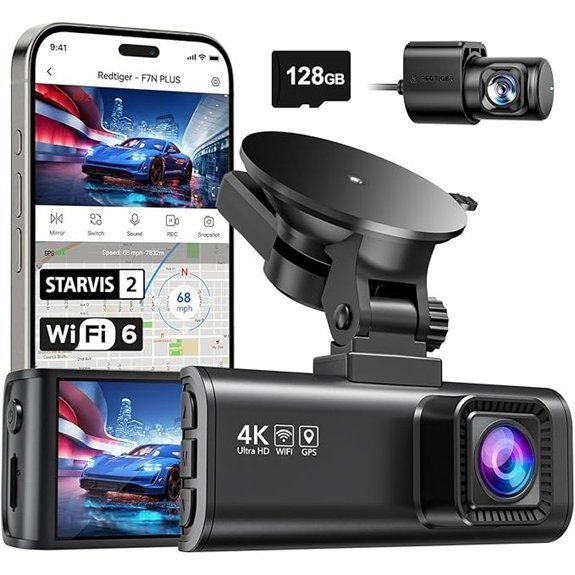 |
Best Night Vision | Resolution: Front 4K / Rear 1080P | Sensors (STARVIS): STARVIS 2 sensor (front) | Parking Monitoring: 24/7 parking modes (time-lapse & G-sensor) | VIEW LATEST PRICE | Read Our Analysis |
| DDPAI Z60 Pro 4K Dual Front & Rear Dash Cam | 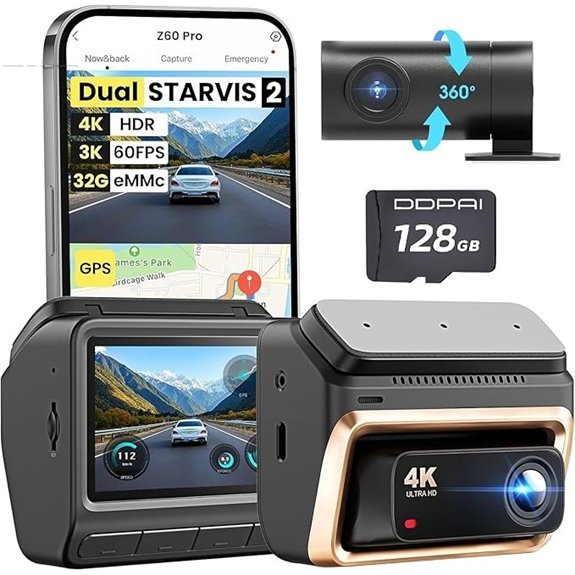 |
Best Remote Monitoring | Resolution: Front 4K (2160P) / Rear 1080P | Sensors (STARVIS): Dual STARVIS 2 sensors (IMX678 front, IMX662 rear) | Parking Monitoring: 24/7 parking monitoring (time-lapse at 5fps) | VIEW LATEST PRICE | Read Our Analysis |
| VIOFO A229 Pro 4K+2K Dual Dash Cam | 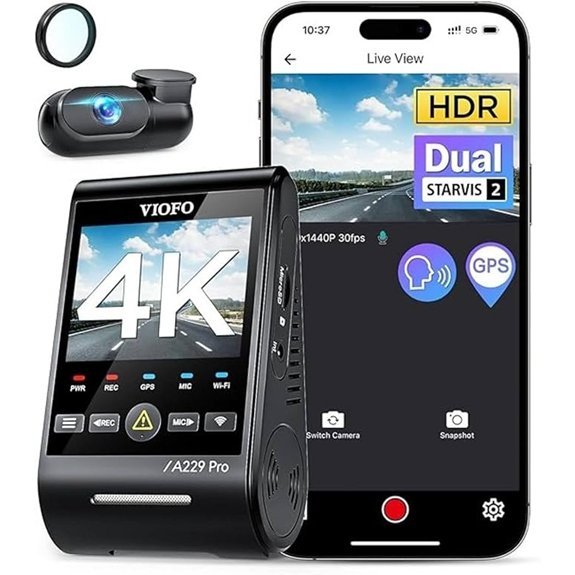 |
Best All-Rounder | Resolution: Front 4K (2160P) / Rear 2K (1440P) | Sensors (STARVIS): Dual STARVIS 2 sensors (IMX678 front, IMX675 rear) | Parking Monitoring: 24/7 protection with three parking modes (time-lapse, low bitrate, auto event) | VIEW LATEST PRICE | Read Our Analysis |
| VIOFO A329S 4K+2K Dual Dash Cam (Front/Rear) | 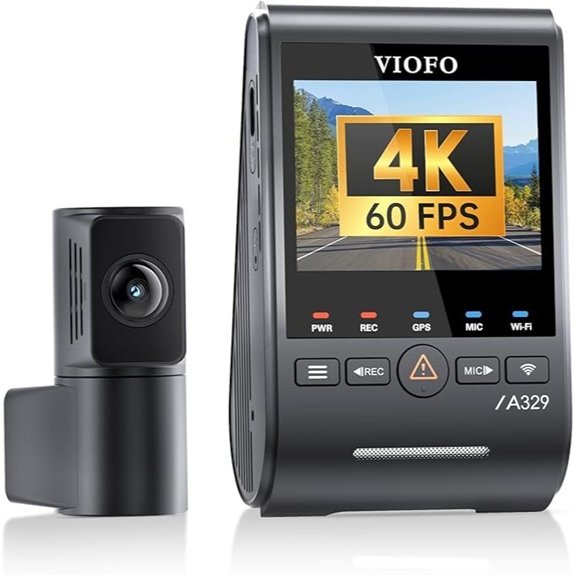 |
Best For Long Trips | Resolution: Front 4K@60fps / Rear 2K | Sensors (STARVIS): Dual STARVIS 2 sensors (front + rear) | Parking Monitoring: 24/7 impact detection / ultra-low-power parking mode | VIEW LATEST PRICE | Read Our Analysis |
| GKU 4K+2.5K Front & Rear Dash Cam (64GB) | 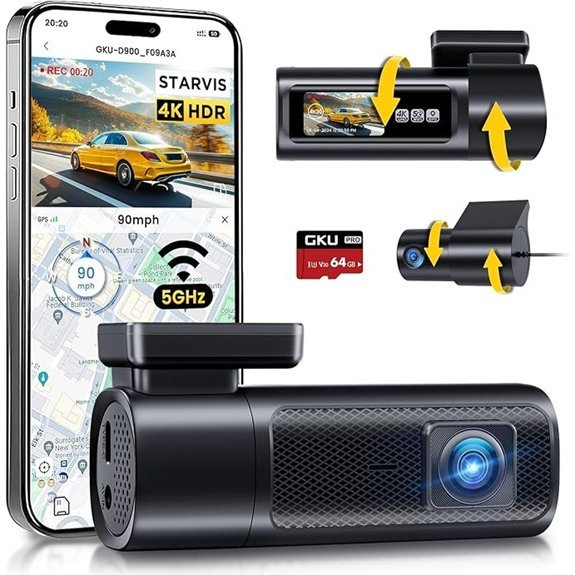 |
Best Value Feature Set | Resolution: Front 4K (up to 60fps) / Rear 2.5K | Sensors (STARVIS): SONY STARVIS sensor(s) | Parking Monitoring: 24-hour parking monitoring (time-lapse & G-sensor; hardwire kit required) | VIEW LATEST PRICE | Read Our Analysis |
| DDPAI Z60 Pro 4K Front & Rear Dash Cam | 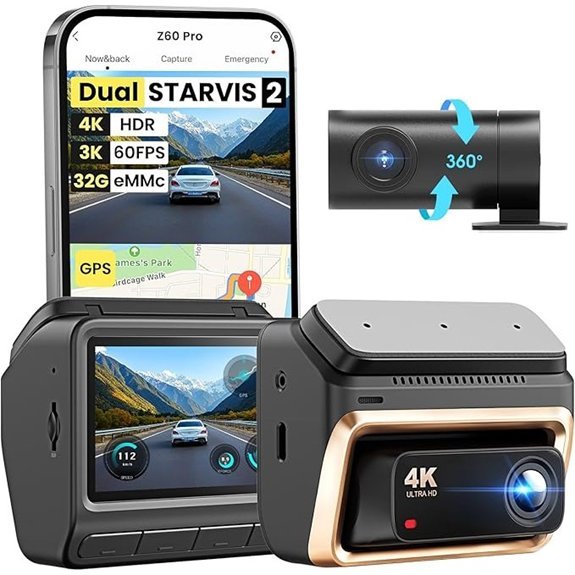 |
Best Storage Redundancy | Resolution: Front 4K (2160P) / Rear 1080P | Sensors (STARVIS): Dual STARVIS 2 sensors (IMX678 front, IMX662 rear) | Parking Monitoring: 24/7 parking monitoring (time-lapse at 5fps) | VIEW LATEST PRICE | Read Our Analysis |
| VIOFO A329S 4K60 Dash Cam with Wi-Fi 6 | 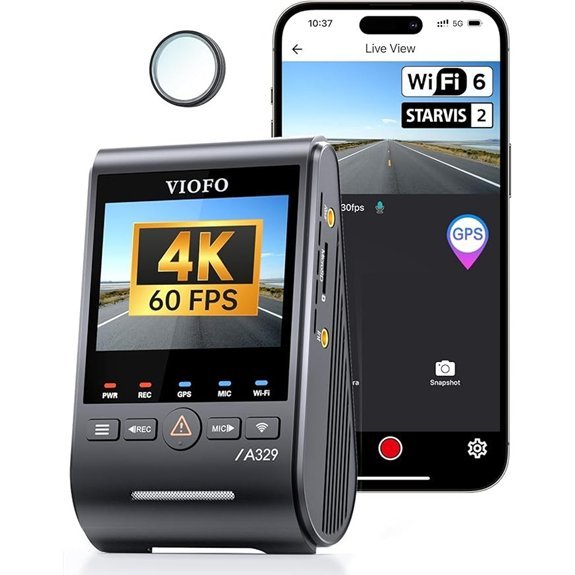 |
Best 4K60 Front Camera | Resolution: Front 4K@60fps / Rear (dual-channel) | Sensors (STARVIS): STARVIS 2 IMX678 front sensor | Parking Monitoring: Impact detection power-saving parking mode (ultra-low-power) | VIEW LATEST PRICE | Read Our Analysis |
Before You Choose: 4K, 4K60, HDR, and Parking Mode
A 4K dash cam is useful only if the footage stays readable when you need it. For fast highway driving, 4K60 can reduce motion blur. For night driving and headlight glare, HDR and a strong sensor may matter more than frame rate. For parked incidents, hardwire-kit compatibility, impact detection, low-voltage protection, and reliable clip locking matter more than headline resolution.
Also check the recording mode carefully. Some models offer 4K60 only in a specific front-camera mode, while dual-channel recording, HDR, or parking mode may use different frame rates. Confirm the exact mode you plan to use before buying.
More Details on Our Top Picks
-
REDTIGER 4K Dual Front Rear Dash Cam (F7NP)
The REDTIGER F7NP is a practical choice if you want a straightforward 4K front and 1080p rear dash cam with night-focused features, GPS, app access, and parking protection. Based on the listed specs, the front camera uses a STARVIS 2 sensor with an F1.5 aperture, while WDR/HDR support helps balance bright headlights, shadows, and changing road light. It is best for drivers who want strong everyday evidence without paying for more advanced SSD storage or Wi-Fi 6 features.
The main tradeoff is that this is better described as a 4K dual dash cam than a specialist 4K60 performance model. Choose it for simple front/rear coverage, night readability, and value-focused features; skip it if your top priority is confirmed 4K60 front recording.
- Resolution:Front 4K / Rear 1080P
- Sensors (STARVIS):STARVIS 2 sensor (front)
- Parking Monitoring:24/7 parking modes (time-lapse & G-sensor)
- Wi-Fi Connectivity:Built-in 5.8GHz Wi-Fi (app for preview/download)
- Loop Recording / G-Sensor:Loop recording with G-sensor locking on collision
- Supercapacitor / High-reliability Power:Supercapacitor power source (high heat resistance)
- Additional Feature:5.8GHz WiFi downloads
- Additional Feature:Free memory card included
- Additional Feature:18-month warranty
Pros
- Good fit for buyers who want 4K front coverage plus a rear camera.
- Front STARVIS 2 sensor and wide aperture target low-light recording.
- Supercapacitor design is better suited to heat than a small internal battery.
Cons
- Rear camera is 1080p, not 2K or 4K.
- Not the best pick if 4K60 recording is the main requirement.
- Parking features may require extra installation steps depending on your setup.
Best For
Daily commuters who want a dependable 4K front dash cam with rear coverage, GPS features, and simple app access.
-
DDPAI Z60 Pro 4K Dual Front & Rear Dash Cam
The DDPAI Z60 Pro is a strong match for buyers who care about remote monitoring, storage redundancy, and low-light front/rear recording. The article-listed specs include 4K front and 1080p rear HDR recording, dual STARVIS 2 sensors, 32GB built-in eMMC, included 128GB TF storage, 5GHz Wi-Fi, and optional 4G support. That combination makes it useful for drivers who want more than basic loop recording.
The key buying decision is whether you need remote features enough to justify the extra complexity. If you only want a simple set-and-forget dash cam, a less connected model may be easier. If you want app downloads, storage backup, and parking alerts, this DDPAI option is one of the more feature-heavy picks in the roundup.
- Resolution:Front 4K (2160P) / Rear 1080P
- Sensors (STARVIS):Dual STARVIS 2 sensors (IMX678 front, IMX662 rear)
- Parking Monitoring:24/7 parking monitoring (time-lapse at 5fps)
- Wi-Fi Connectivity:5GHz Wi-Fi Turbo (app for playback & downloads)
- Loop Recording / G-Sensor:Loop recording; collision detection locks footage (10s before/after)
- Supercapacitor / High-reliability Power:(Not explicitly supercapacitor) Built-in eMMC + robust power management (dual storage protection)
- Additional Feature:Built-in 32GB eMMC
- Additional Feature:4G LTE remote monitoring
- Additional Feature:3K@60fps front mode
Pros
- Built-in eMMC plus removable storage can help protect important clips.
- Dual STARVIS 2 sensor listing is a strong spec for day/night evidence.
- Optional 4G support may suit buyers who want remote monitoring.
Cons
- Rear camera is listed as 1080p rather than 2K.
- 4G features may require an extra module, plan, or setup.
- Buyers should confirm exact recording modes before purchase.
Best For
Drivers who want connected features, parking monitoring, and storage redundancy more than the simplest possible installation.
-
VIOFO A229 Pro 4K+2K Dual Dash Cam
The VIOFO A229 Pro is the best all-rounder in this list because it balances 4K front recording, 2K rear recording, STARVIS 2 sensors, GPS, app control, and multiple parking modes. Based on the listed feature set, it is a strong choice for buyers who want both front and rear evidence to be sharper than a basic 4K/1080p setup.
Its biggest advantage is balance. You get a higher-resolution rear camera than many cheaper dual-channel kits, plus practical features such as voice control, a CPL filter, GPS logging, emergency locking, and buffered parking capture. Buyers who specifically need confirmed 4K60 recording should verify the exact recording modes on the current listing before choosing it over the A329S options.
- Resolution:Front 4K (2160P) / Rear 2K (1440P)
- Sensors (STARVIS):Dual STARVIS 2 sensors (IMX678 front, IMX675 rear)
- Parking Monitoring:24/7 protection with three parking modes (time-lapse, low bitrate, auto event)
- Wi-Fi Connectivity:5GHz Wi-Fi (VIOFO app for preview/sharing)
- Loop Recording / G-Sensor:Loop recording with buffering; emergency lock on collisions
- Supercapacitor / High-reliability Power:Supercapacitor (operates in extreme temps)
- Additional Feature:Voice control support
- Additional Feature:CPL polarizing lens included
- Additional Feature:Quad-mode GPS module
Pros
- 4K front and 2K rear setup gives stronger rear evidence than 1080p kits.
- Three parking modes give buyers more flexibility after hardwiring.
- Supercapacitor, CPL, GPS, and voice control round out the feature set.
Cons
- High-resolution dual-channel files require a quality, high-endurance card.
- Hardwire kit may be needed for full parking-mode use.
- Exact frame-rate and HDR combinations should be checked before purchase.
Best For
Buyers who want the safest overall balance of video quality, parking protection, and everyday usability.
-
VIOFO A329S 4K+2K Dual Dash Cam (Front/Rear)
The VIOFO A329S 4K+2K is the best fit here for long trips and storage-heavy use because the listed specs include 4K@60fps front recording, 2K rear recording, Wi-Fi 6, voice control, microSD support up to 512GB, and SSD support up to 4TB. That makes it a stronger match for drivers who record long routes, road trips, rideshare shifts, or frequent highway driving.
The main caution is mode selection. The article-listed note says 4K@60fps and HDR do not work simultaneously, so buyers should decide whether smoother motion or HDR exposure balance matters more for their driving. Parking impact detection in ultra-low-power mode also requires the compatible VIOFO hardwire kit.
- Resolution:Front 4K@60fps / Rear 2K
- Sensors (STARVIS):Dual STARVIS 2 sensors (front + rear)
- Parking Monitoring:24/7 impact detection / ultra-low-power parking mode
- Wi-Fi Connectivity:Wi-Fi 6 (fast 5GHz transfers)
- Loop Recording / G-Sensor:Loop recording with impact-triggered event recording/locking
- Supercapacitor / High-reliability Power:(Not explicitly supercapacitor) Designed for low-power parking; power management for SSD use
- Additional Feature:4K@60fps front recording
- Additional Feature:Wi-Fi 6 (30MB/s)
- Additional Feature:External SSD support
Pros
- Best fit in this list for buyers who want front 4K60 recording.
- SSD support is useful for long trips and extended storage.
- Wi-Fi 6 can make large file transfers less painful.
Cons
- 4K60 and HDR may not run at the same time.
- SSD use may require a recommended cable and careful setup.
- Full parking protection requires a compatible hardwire kit.
Best For
Road-trip drivers, rideshare drivers, and anyone who wants smoother front footage plus expanded storage options.
-
GKU 4K+2.5K Front & Rear Dash Cam (64GB)
The GKU 4K+2.5K kit is aimed at buyers who want a value-focused front-and-rear setup with a higher-resolution rear camera than many 1080p rear kits. The listed features include front 4K recording up to 60fps, rear 2.5K recording, 5GHz Wi-Fi, GPS logging, a 64GB card, and time-lapse or G-sensor parking modes when hardwired.
This is a good option if you want strong listed specs without jumping to a premium SSD-focused model. Before buying, confirm the exact sensor configuration, supported HDR/60fps modes, hardwire-kit requirements, and warranty registration details on the current product page.
- Resolution:Front 4K (up to 60fps) / Rear 2.5K
- Sensors (STARVIS):SONY STARVIS sensor(s)
- Parking Monitoring:24-hour parking monitoring (time-lapse & G-sensor; hardwire kit required)
- Wi-Fi Connectivity:5GHz Wi-Fi (app for preview/download)
- Loop Recording / G-Sensor:Loop recording with G-sensor auto-lock on impact
- Supercapacitor / High-reliability Power:(Not explicitly supercapacitor) Designed for hardwire parking; recommends hardwire kit
- Additional Feature:4K60 / 4K30 HDR modes
- Additional Feature:360° rotatable rear camera
- Additional Feature:Registration-required service
Pros
- Rear 2.5K recording is a useful upgrade over basic 1080p rear cameras.
- Includes a 64GB card according to the article-listed specs.
- GPS and 5GHz Wi-Fi add practical everyday value.
Cons
- Hardwire kit is required for full parking-monitoring use.
- Supercapacitor use is not explicitly stated in the provided specs.
- Warranty and registration details should be checked before purchase.
Best For
Budget-conscious buyers who still want front 4K recording, a sharper rear camera, GPS, Wi-Fi, and included starter storage.
-
DDPAI Z60 Pro 4K Front & Rear Dash Cam
This DDPAI Z60 Pro listing appears to focus on the same core strengths as the other Z60 Pro entry: 4K front recording, 1080p rear coverage, dual STARVIS 2 sensors, 5GHz Wi-Fi, built-in eMMC, and storage-failure protection. Its best use case is redundancy: buyers who worry about corrupted cards, overwritten clips, or losing important impact footage may appreciate the built-in storage layer.
Because this model overlaps heavily with the other DDPAI Z60 Pro pick, compare the current Amazon listings carefully before purchase. Check what is included in the box, whether the 4G module is bundled or optional, the included card size, and whether one ASIN offers a better kit for your vehicle.
- Resolution:Front 4K (2160P) / Rear 1080P
- Sensors (STARVIS):Dual STARVIS 2 sensors (IMX678 front, IMX662 rear)
- Parking Monitoring:24/7 parking monitoring (time-lapse at 5fps)
- Wi-Fi Connectivity:5GHz Wi-Fi Turbo (app control & fast downloads)
- Loop Recording / G-Sensor:Loop recording; collision detection saves 10s before/after
- Supercapacitor / High-reliability Power:(Not explicitly supercapacitor) Internal eMMC + power management for parking
- Additional Feature:D²Save 2.0 protection
- Additional Feature:Built-in eMMC fallback
- Additional Feature:Includes installation accessories
Pros
- Built-in eMMC fallback is useful for critical clip protection.
- 5GHz Wi-Fi and app control help with downloads and settings.
- Collision-triggered clip saving supports evidence retention.
Cons
- Overlaps with the other DDPAI Z60 Pro listing in this roundup.
- Rear camera is listed as 1080p.
- Remote-monitoring features may require optional hardware or setup.
Best For
Buyers comparing DDPAI Z60 Pro bundles who want the strongest included storage and safety package.
-
VIOFO A329S 4K60 Dash Cam with Wi-Fi 6
The VIOFO A329S 4K60 Dash Cam with Wi-Fi 6 is the most performance-focused pick for buyers who specifically want front 4K@60fps recording, fast wireless transfers, hands-free voice control, a CPL filter, and support for large storage. It is a better fit for motion clarity than a basic 4K/30fps dash cam, especially if you drive highways or want smoother footage of fast-moving vehicles.
The tradeoff is the same one buyers should expect with many high-resolution dash cams: 4K60 may not be available with HDR at the same time, and larger files require better storage planning. Choose this model if front-camera performance and transfer speed matter most; choose a dual 4K+2K kit if rear-camera detail is just as important.
- Resolution:Front 4K@60fps / Rear (dual-channel)
- Sensors (STARVIS):STARVIS 2 IMX678 front sensor
- Parking Monitoring:Impact detection power-saving parking mode (ultra-low-power)
- Wi-Fi Connectivity:Wi-Fi 6 (fast 5GHz transfers; app integration)
- Loop Recording / G-Sensor:Loop recording with impact detection locking in parking mode
- Supercapacitor / High-reliability Power:(Not explicitly supercapacitor) Power-saving parking mode; designed for hardwire kit
- Additional Feature:Hands-free voice control
- Additional Feature:Super slim 2.8mm cable
- Additional Feature:Anti-glare CPL included
Pros
- Strongest match for shoppers searching specifically for a 4K60 dash cam.
- Wi-Fi 6 is helpful when moving large 4K files to a phone.
- CPL and voice control improve daily usability.
Cons
- 4K60 mode may limit HDR use.
- Large files require high-quality storage and regular management.
- Confirm rear-camera bundle details before ordering.
Best For
Drivers who prioritize smooth front footage, quick downloads, and high-end recording features over the lowest possible price.
Factors to Consider When Choosing a 4K Dash Cam
When choosing a 4K dash cam, prioritize image sensor quality, recording modes, HDR behavior, storage capacity, heat tolerance, and parking protection. Higher resolution does not automatically mean better evidence. The best dash cam for your car is the one that records readable plates, saves clips reliably, and keeps working in your climate and driving routine.
Image Sensor Quality
The image sensor strongly affects how readable your dash cam footage will be, especially at night or in harsh contrast. STARVIS and STARVIS 2 sensors are commonly used in higher-performing dash cams because they target better low-light capture and cleaner detail. A good sensor can matter more than resolution alone when you need to read plates under headlights, streetlights, rain, or shadows.
For dual-channel systems, also look at the rear camera sensor and resolution. A 4K front camera paired with a weak rear camera may still miss useful evidence behind your vehicle.
Frame Rate Tradeoffs
60fps can make fast-moving footage smoother and may reduce motion blur, but it also creates larger files and can limit other features. Some dash cams disable HDR or reduce processing options when recording at higher frame rates. If most of your driving is slow city traffic, 4K30 with strong HDR may be more useful than 4K60 without HDR.
Choose 4K60 if you often drive highways, want smoother footage, or need better frame-by-frame motion clarity. Choose 4K30 or HDR mode if nighttime glare, tunnels, backlighting, and exposure balance are your bigger concerns.
HDR And Low Light
HDR helps balance bright and dark areas, which is important when headlights, reflective plates, sun glare, and shadows appear in the same frame. Low-light sensor performance helps reduce noise and preserve detail after dark. The best setup combines a strong sensor, useful HDR, and a lens that handles glare well.
Before buying, check whether HDR works in the exact recording mode you plan to use. If HDR and 4K60 cannot run together, decide which setting matters more for your driving.
Storage And Capacity
4K footage uses storage quickly, and 4K60 uses even more. A small card may overwrite important clips sooner than expected, especially with front-and-rear recording. Look for high-endurance microSD support, clear maximum capacity, loop recording, locked event clips, and fast offload options such as 5GHz Wi-Fi or Wi-Fi 6.
If you take long trips or drive for work, consider a model with larger card support or SSD support. Built-in eMMC can also add redundancy if the removable card fails.
Power And Parking
Parking mode is useful only if the dash cam is powered correctly and protects your vehicle battery. For real 24/7 monitoring, many models need a hardwire kit with low-voltage cutoff. Look for impact detection, buffered recording, time-lapse mode, low-bitrate mode, and automatic event locking.
For hot climates, a supercapacitor is usually preferable to a small internal battery because it is better suited to temperature swings. Always verify the operating temperature range and hardwire-kit compatibility before installing.
Connectivity And Apps
Built-in Wi-Fi makes it easier to preview, download, and share footage without removing the memory card. 5GHz Wi-Fi is faster than older 2.4GHz connections, while Wi-Fi 6 can improve large-file transfers on supported phones. GPS logging is also valuable because it can attach route, speed, date, and location data to video clips.
If you want remote access, look for optional LTE or cloud support, but check whether it requires a separate module, subscription, SIM card, or mobile plan.
Installation And Durability
Check what comes in the box before buying. Some kits include a memory card, rear cable, CPL filter, GPS module, or installation accessories, while others sell those parts separately. Cable thickness, rear-camera mounting, windshield angle, and trim routing can all affect installation time.
Durability matters because dash cams sit in direct sun, cold, vibration, and constant power cycles. A reliable mount, heat-friendly power design, and quality storage card can prevent many common problems.
Common Buyer Mistakes to Avoid
- Buying only by resolution: A 4K label does not guarantee readable plates at night.
- Ignoring the rear camera: Rear resolution and sensor quality matter for hit-and-run evidence.
- Skipping the hardwire kit: Many parking modes do not work properly from a basic 12V plug.
- Using the wrong microSD card: Choose a high-endurance card that supports the camera’s maximum bitrate and capacity.
- Assuming 4K60 always includes HDR: Some models require you to choose between smoother motion and HDR exposure control.
- Forgetting heat tolerance: Parking in direct sun can shorten the life of weaker power designs.
Who Should Buy Each Type of 4K Dash Cam?
- Daily commuters: A 4K front and 1080p or 2K rear setup with GPS, loop recording, and G-sensor locking is usually enough.
- Night drivers: Prioritize STARVIS 2, HDR, a good aperture, and a CPL filter over frame rate alone.
- Highway drivers: Look for front 4K60 support to reduce blur from faster traffic.
- Rideshare and delivery drivers: Choose larger storage, strong parking mode, fast downloads, and simple clip locking.
- Road-trip drivers: Consider SSD support or larger microSD capacity so footage is not overwritten too quickly.
- Parked-on-street drivers: Focus on hardwire support, low-voltage protection, impact detection, and buffered recording.
Frequently Asked Questions
Do These Dash Cams Void Vehicle Warranties if Installed Myself?
They usually don’t void warranties just for self-installation, but you shouldn’t alter factory wiring or safety systems; if a dealer proves installation caused damage, they can deny related repairs, so keep receipts and use noninvasive methods.
How Do Firmware Updates Get Applied Over Time?
Firmware updates usually install through the dash cam’s mobile app, a microSD card, USB transfer, or the manufacturer’s update tool. Follow the brand’s instructions carefully, keep power connected during the update, and check release notes before installing.
Can These Dash Cams Integrate With Fleet Management Systems?
Some consumer dash cams offer GPS logs, app downloads, cloud features, or optional LTE modules, but true fleet integration depends on the brand’s software, API support, subscription plan, and business dashboard compatibility.
What Are Typical Long-Term Storage Needs for Recorded Footage?
Storage needs depend on resolution, frame rate, bitrate, number of channels, and how long you keep footage. 4K and 4K60 video use space quickly, so choose a high-endurance microSD card or a model with SSD support if you want longer retention.
Are There Privacy Concerns When Parking Mode Records in Public Areas?
Yes — you’ll face privacy concerns when parking mode records in public areas, since footage can capture bystanders, private property, and license plates; you should comply with local laws, limit retention, blur identities, and notify where required.
Conclusion
The best 4K dash cam for most buyers is not simply the one with the biggest resolution claim. Choose the model that fits your real driving pattern: REDTIGER F7NP for simple night-focused coverage, VIOFO A229 Pro for the strongest all-round balance, VIOFO A329S for 4K60 and long-trip storage, DDPAI Z60 Pro for connected monitoring and redundancy, or GKU 4K+2.5K for value-focused front/rear detail.
Before you buy, confirm the exact Amazon listing, recording modes, included accessories, hardwire requirements, and current warranty details. Once those match your vehicle and driving needs, you will have a dash cam setup that is far more likely to capture useful evidence when it matters.