Masoll Tire Pressure Monitoring System Review
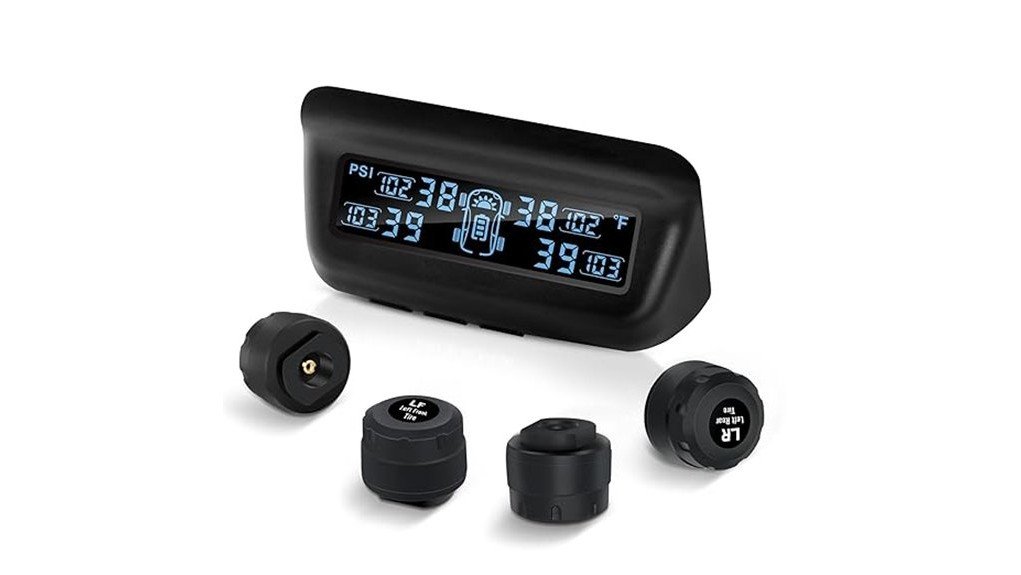
Masoll TPMS M13 is a compact four-sensor tire pressure monitoring system for sedans, SUVs, pickup trucks, RVs, and travel trailers under 38 ft. It measures 0 to 87 PSI and shows wireless readings on an LCD with anti-reflective coating and auto backlight. The system auto-calibrates, then alerts at 25% above or 15% below baseline, with 1.5 PSI accuracy, so you get clear safety checks and easier tire control, and more details follow below.
Key Takeaways
- Masoll TPMS M13 monitors four tires with external sensors and wireless LCD readings for quick pressure checks.
- It covers 0 to 87 PSI and provides 1.5 PSI accuracy for dependable daily monitoring.
- The system alerts when pressure rises 25% above or falls 15% below the calibrated reference.
- It suits sedans, SUVs, pickup trucks, RVs, and travel trailers under 38 feet.
- Installation is simple, with a solar-charged display, auto backlight, and low-maintenance operation.
What Is the Masoll TPMS M13?
The Masoll Tire Pressure Monitoring System, model M13, is a compact TPMS designed to keep a vehicle’s tire conditions visible at a glance.
It uses four sensors, covering 0 to 87 PSI, and fits sedans, SUVs, pickup trucks, RVs, and travel trailers under 38 ft. The installation process is direct, which helps drivers move toward quicker control.
It uses four sensors, covering 0 to 87 PSI, and fits a range of vehicles.
Its LCD screen has anti-reflective treatment and auto backlight, and user experiences often note clear reading under changing light.
Solar charging, auto wake, and sleep functions support steady use, while 1.5 PSI accuracy strengthens confidence on the road.
How the M13 Monitors Tire Pressure
Tracking tire conditions, the M13 uses four external sensors to measure each tire’s pressure from 0 to 87 PSI, then sends those readings to its LCD display for quick review.
This sensor technology gives you direct awareness of each wheel, and it supports pressure alerts when readings move beyond set limits. Each sensor transmits data wirelessly, so the system keeps monitoring without driver guesswork.
You can check the display at a glance, and that makes tire oversight simpler, freer, and more controlled. For daily driving, the process stays steady, precise, and easy to read, with no unnecessary steps.
M13 Features That Improve Safety
Safety comes first with the M13, and its auto calibration system helps keep tire monitoring accurate by setting a reference pressure based on the vehicle’s normal tire level.
This supports tire safety by reducing guesswork and keeping pressure accuracy close to ideal, so pressure changes are noticed early. The system alerts when pressure rises 25% above, or falls 15% below, the learned reference, which helps a driver respond before small issues grow.
It also tracks inflation and deflation automatically, preserving control as tires change. With 1.5 PSI accuracy, it delivers clear, practical protection and more freedom on the road.
Which Vehicles the M13 Supports
A practical fit for many road-going setups, the M13 TPMS is designed for vehicles with 4 tires, so it works well on sedans, SUVs, pick-up trucks, RVs, and travel trailers under 38 ft.
This sedan compatibility makes it a practical choice for drivers seeking order and independence on the road. Its four sensors read from 0 to 87 PSI, with sensor accuracy rated at 1.5 PSI, so pressure data stays reliable.
For trailers under 38 ft, the system remains well suited without extra hardware. It supports safer travel, steadier tire care, and clearer control.
Setup, Charging, and Booster Tips
Getting the Masoll M13 TPMS ready is straightforward, since the system is built for easy installation and low-maintenance use.
Follow installation tips by mounting the display where it is visible, then match each sensor to the correct tire during sensor placement. The four sensors cover 0 to 87 PSI, with 1.5 PSI accuracy, so setup stays precise.
Mount the display where it’s visible and match each sensor to the correct tire for precise setup.
The solar panel keeps charging during daylight, and its overheat and overcharge protection supports steady operation.
For trailers over 38 feet, add the booster to strengthen signal transmission. Auto wake-up and sleep modes also reduce power use, helping the driver stay free.
Frequently Asked Questions
How Long Do the Sensors’ Batteries Last?
The sensor batteries’ exact lifespan is not specified, so sensor longevity remains uncertain. Battery replacement may eventually be needed, though solar charging and power-saving modes should reduce dependence on frequent intervention and support liberation from worry.
Can the Display Be Read in Direct Sunlight?
Yes, the display should remain readable in direct sunlight, since anti-reflective treatment improves sunlight visibility and display clarity. Its auto backlight further supports legibility, helping drivers stay informed without surrendering attention or freedom.
Does the System Work During Heavy Rain?
Yes, heavy rain should not stop it. Like steadfast sentinels in a storm, its rain performance appears suitable, while sensor reliability remains supported by sealed wireless sensors and protected solar charging, preserving freedom on the road.
How Often Should Sensor Positions Be Rotated?
Sensor positions are typically rotated with tire rotations, about every 5,000 to 8,000 miles, supporting sensor maintenance and rotation frequency. That routine helps preserve balanced readings, safety, and freedom from preventable tire trouble.
Is It Compatible With Winter Tire Changes?
Yes, winter tire changes are generally compatible if the sensors are transferred or matched properly. Like seasons turning in a quiet rite, the installation process depends on sensor compatibility and correct relearning for seamless liberation.
Conclusion
The Masoll TPMS M13 acts like a steady dashboard guard, giving drivers tire data at a glance. Its four sensors track pressure from 0 to 87 PSI, with 1.5 PSI accuracy, while auto calibration, alarm thresholds, and inflation or deflation alerts help reduce guesswork. The LCD display, solar charging, and power-saving design support daily use, and its fit for many four-tire vehicles adds practical value. For basic monitoring, it is a clear, useful choice.