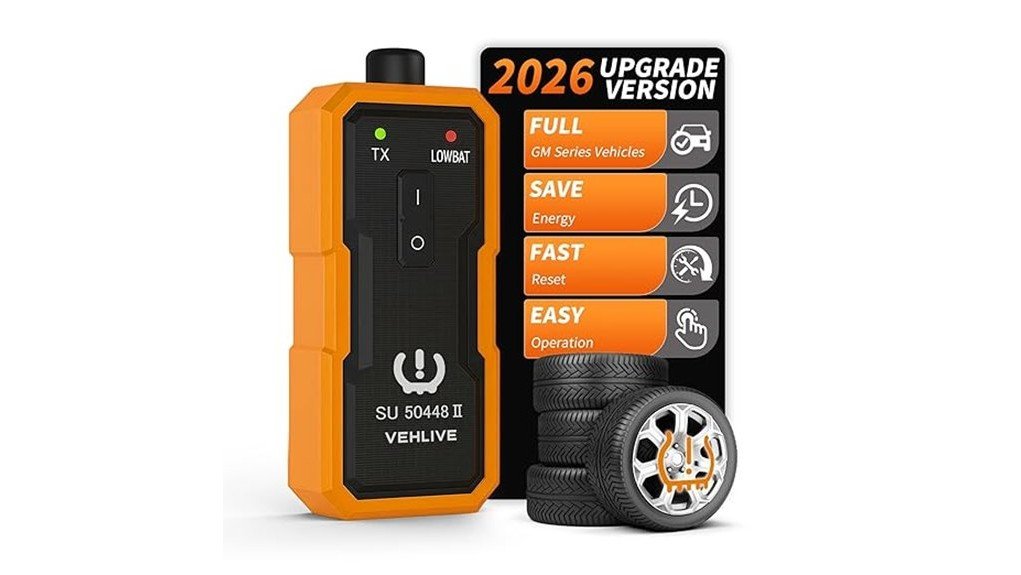
A GM TPMS relearn tool resets and activates tire pressure sensors on Chevrolet, Cadillac, Buick, GMC, and Opel models, with support for 315 MHz and 433 MHz systems. It uses a two-button layout, a green learning light, and ABS housing for durable field use. For each tire, place it by the valve stem, press the learn button, and wait for the horn confirmation, making relearns faster, cleaner, and easier, with more useful details ahead.
Key Takeaways
- This GM TPMS relearn tool resets and activates tire pressure sensors on 2006–2026 vehicles.
- It supports 315 MHz and 433 MHz sensors, covering many Chevrolet, Cadillac, Opel, Buick, and GMC models.
- The two-button design is simple to use, with a green light confirming successful sensor activation.
- ABS housing adds durability, with dust and splash resistance for repeated use.
- It can reduce shop visits by letting drivers relearn TPMS sensors themselves at home.
What the GM TPMS Relearn Tool Does
The GM TPMS Relearn Tool is designed to reset and activate tire pressure monitoring sensors on GM series vehicles from 2006 to 2026, making it a practical way to restore proper TPMS function after tire changes, sensor replacement, or rotation.
It uses a two-button layout, and its green indicator shows active learning. You position it at the sidewall near the valve stem, then wait for the horn beep.
Support for 315 MHz and 433 MHz improves sensor compatibility, while ABS housing adds durability.
For the reader, that means faster service, steadier TPMS functionality, and less dependence on shop control.
Which GM Vehicles It Works With
Because compatibility depends on the vehicle platform, this GM TPMS relearn tool is aimed at GM-series models from 2006 to 2026, including Chevrolet, Cadillac, Opel, Buick, and GMC passenger vehicles.
Chevrolet compatibility is broad across sedans, crossovers, and many SUVs, while Cadillac features are supported on most mainstream platforms. It works with 315 MHz and 433 MHz sensors, so the range covers many factory setups.
The unit is not for trucks, which keeps the match focused and practical. For drivers seeking simpler maintenance and more independent vehicle care, this coverage makes the tool a useful, freedom-minded choice.
How to Use the TPMS Relearn Tool
Start by putting the vehicle into TPMS learning mode, then bring the tool to each tire one at a time, since the sensor reset process depends on clear signal pickup near the valve stem.
Press the learning button, wait for the horn beep, and confirm sensor activation before moving to the next wheel. The solid green light indicates the tool is working, and the easy reset sequence helps restore proper TPMS readings with little effort.
After all four tires respond, exit learning mode. The process is straightforward, practical, and supports a more independent, liberated approach to routine vehicle care and maintenance.
Build Quality and Battery Life
Built for repeated use, the TPMS Relearn Tool for GM Tire Sensor uses ABS plastic housing, which gives it solid resistance to dust and light splashing water while helping protect the internal components from everyday wear.
The material quality supports a practical durability assessment for routine garage work. It feels compact, and its casing stays stable during repeated placement against the sidewall.
Battery life is managed with multi-wavelength circuitry, so the tool can stay active through multiple relearn cycles without waste.
- ABS shell
- Dust resistance
- Splash protection
- Wear control
- Efficient power use
Why It’s a Smart Buy
When a GM driver needs a reliable TPMS relearn solution, this tool makes a strong case on value and convenience.
It supports GM vehicles from 2006 to 2026, works with 315 MHz and 433 MHz sensors, and uses a simple two-button process. That range creates cost savings by reducing shop visits and repeated service fees.
The ABS plastic body adds durability, so one unit can serve through many relearn cycles.
The ABS plastic body adds durability, letting one tool handle many relearn cycles with lasting reliability.
For you, user convenience is clear: place it near the valve stem, press, hear the horn beep, and move on with greater freedom and less waiting.
Frequently Asked Questions
Does It Support Both 315 MHZ and 433 MHZ Sensors?
Yes; it supports both 315 MHz and 433 MHz sensors. Its sensor frequency compatibility is part of its tool features, offering broader GM vehicle use and giving drivers greater freedom from repeated tire-pressure relearn hassles.
Is It Compatible With Chevrolet, Cadillac, Buick, and GMC Models?
Yes, it is compatible with Chevrolet, Cadillac, Buick, and GMC models, supporting TPMS functionality overview and sensor replacement tips, helping drivers reclaim reliable tire monitoring while preserving freedom through straightforward, efficient relearn operation.
Does the Tool Work on GM Trucks?
No, it generally does not work on GM trucks. Coincidentally, the same TPMS tool benefits that help cars suit 315 MHz and 433 MHz sensor types rarely extend to truck platforms, leaving drivers freer to choose another option.
How Do I Know My Vehicle Is in TPMS Learning Mode?
A vehicle is in TPMS learning mode when the horn confirms entry, a dash message appears, and sensor activation starts at each wheel. During the learning process, the system prompts tire-by-tire reprogramming.
Can Customer Support Help Verify Compatibility Before Purchase?
Yes, customer support can help verify compatibility before purchase; nearly 70% of buyers value pre-checks. They handle customer inquiries and compatibility checks, offering reassurance, freedom from guesswork, and confidence before committing to the tool.
Conclusion
To sum up, the GM TPMS Relearn Tool works like a small bridge between routine tire service and a fully reset monitoring system. It supports 315 MHz and 433 MHz sensors, fits many Chevrolet, Cadillac, Buick, GMC, Opel, and select GM models, and uses a simple two-button design for quick activation. For you, that means less hassle, less shop time, and a practical way to keep TPMS warnings accurate after tire changes or sensor replacement.