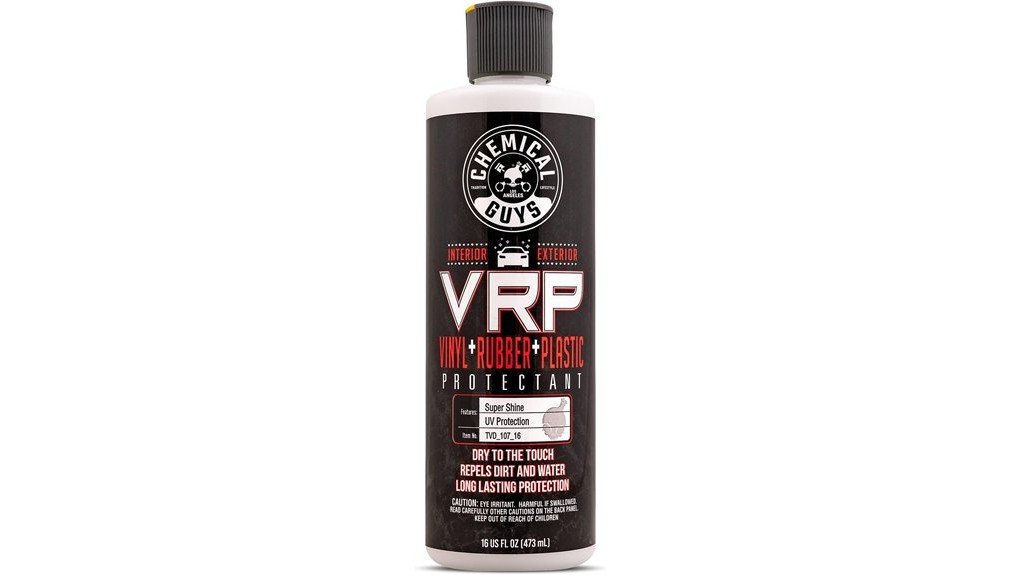
Chemical Guys VRP is a 16 oz vinyl, rubber, and plastic dressing that restores trim, dashboards, tires, and patio furniture. It leaves a clean satin finish, not a wet or greasy shine, so surfaces look refreshed and stay dry to the touch. Apply a thin coat to a clean, dry surface with a foam applicator or microfiber towel, then wipe excess. Its UV resistance helps slow fading, and more details follow below.
Key Takeaways
- Chemical Guys VRP restores vinyl, rubber, and plastic with a clean satin finish, not an oily shine.
- It leaves surfaces dry to the touch, helping prevent greasy residue and dust buildup.
- The product works on dashboards, trim, tires, bumpers, and even vinyl furniture.
- Apply a thin coat to a clean, dry surface, then wipe off excess for the best result.
- UV-resistant protection helps reduce fading, drying, and discoloration over time.
What Is Chemical Guys VRP?
Chemical Guys VRP Vinyl, Rubber, and Plastic Dressing is a professional-grade dressing sold in a 16 oz bottle, designed to restore and protect common automotive and household surfaces.
It targets vinyl, rubber, and plastic, so the product benefits extend beyond tires to trim, dashboards, seals, and patio furniture. The formula leaves a dry-to-the-touch, non-greasy layer, which helps surfaces stay cleaner and more manageable.
It also shields against fading, cracking, and discoloration from weather exposure. User feedback often notes easy application with a microfiber towel or applicator, and the even finish supports practical, freedom-minded maintenance without excess effort.
Chemical Guys VRP Review: Shine and Finish
When the focus shifts to shine and finish, the 16 oz Chemical Guys VRP Vinyl, Rubber, and Plastic Dressing stands out for giving surfaces a clean satin look rather than an overly glossy one.
It supports a balanced finish comparison, so you can judge restraint against glare with ease.
- It leaves rubber and plastic looking refreshed, not wet.
- The dry-to-the-touch result helps protect shine longevity.
- On trim and tires, the finish reads smooth, even, and liberated from heaviness.
This satin effect suits drivers who prefer control, clarity, and a polished look without visual excess.
How to Apply Chemical Guys VRP
Applying Chemical Guys VRP is straightforward, and the process begins with a clean, dry surface so the dressing can bond evenly.
Use a foam applicator or microfiber towel, then spread a thin coat in smooth passes, avoiding heavy buildup.
Wait a few minutes, then wipe away excess for a dry, satin result.
For better control, application tips include working one section at a time and using less product than expected.
In a product comparison, VRP is easier to manage than greasy dressings, because it leaves surfaces refreshed, restrained, and free from slippery residue.
Where You Can Use Chemical Guys VRP
Beyond its easy application, VRP stands out because it can be used on a wide range of vinyl, rubber, and plastic surfaces, both inside and outside a vehicle. Its application versatility gives it strong surface compatibility for trim, tires, dashboards, door panels, weatherstripping, and engine bay plastics, so users can keep several areas consistent.
- Interior surfaces, including dashboards and panels.
- Exterior parts, such as tires, bumpers, and trim.
- Non-automotive uses, like vinyl furniture, boat trim, and RV seals.
This flexibility supports a cleaner, freer detailing routine, with fewer products needed overall.
How Chemical Guys VRP Protects Against Fading
Sun exposure is one of the main threats to vinyl, rubber, and plastic surfaces, and Chemical Guys VRP is designed to help slow that wear.
Its UV Resistance creates a protective layer that limits fading, drying, and discoloration, so surfaces keep a richer tone longer. The 16 oz formula spreads evenly, and it supports Surface Longevity on tires, trim, and interior panels.
Because it dries to the touch, it helps block dust buildup too, which keeps the finish cleaner. For those wanting durable freedom from constant reconditioning, VRP offers a practical, low-gloss defense.
Frequently Asked Questions
How Long Does One Application of VRP Typically Last?
One application typically lasts several weeks, though application duration varies with weather, washing, and surface exposure. Product effectiveness remains strongest when surfaces stay dry and clean, helping maintain a protected, liberated look.
Does VRP Leave Tires Slippery After Application?
No, it typically dries to a satin, dry-to-the-touch finish, not a slick glaze. Like a calm road after rain, it offers tire protection without slipperiness. Good application tips: apply sparingly and wipe excess clean.
Can VRP Be Layered for a Deeper Finish?
Yes, VRP can be layered for a deeper finish; careful application techniques allow light coats to build finish enhancement without greasiness. Each layer should dry before the next, preserving a clean, liberated look.
Will VRP Stain Light-Colored Trim or Upholstery?
It generally will not stain light-colored trim or upholstery if applied sparingly. For stain prevention, one should wipe excess immediately and use application tips: a microfiber towel or applicator for an even, controlled finish.
Is VRP Safe to Use in Hot Weather?
Yes, VRP is generally safe in hot weather. It resists heat, offers UV protection, and allows smooth product application. Wipe on, wipe off, and keep surfaces free, fresh, and boldly protected.
Conclusion
Chemical Guys VRP delivers a clean satin finish, not an oily shine, so the result looks refreshed rather than overdone. It works on vinyl, rubber, and plastic, and the dry-to-touch formula helps reduce dust buildup while adding UV protection against fading. For tires, trim, and interior panels, it offers practical versatility in a 16 oz bottle. Like a light seal over worn surfaces, it restores color while keeping the look controlled, neat, and professional.