Toyota Supra Low Coolant Warning: What It Means & Why It Matters
The low coolant warning light in your Toyota Supra alerts you to a coolant level that’s below a safe threshold. Ignoring it can lead to overheating and serious engine damage. Common causes include natural evaporation, leaks, or faulty sensors. If you see this light, you should pull over, let your engine cool, and check the coolant level. Staying informed about these issues is key to keeping your Supra running smoothly, and more insights are ahead.
Understanding the Low Coolant Warning in Your Toyota Supra
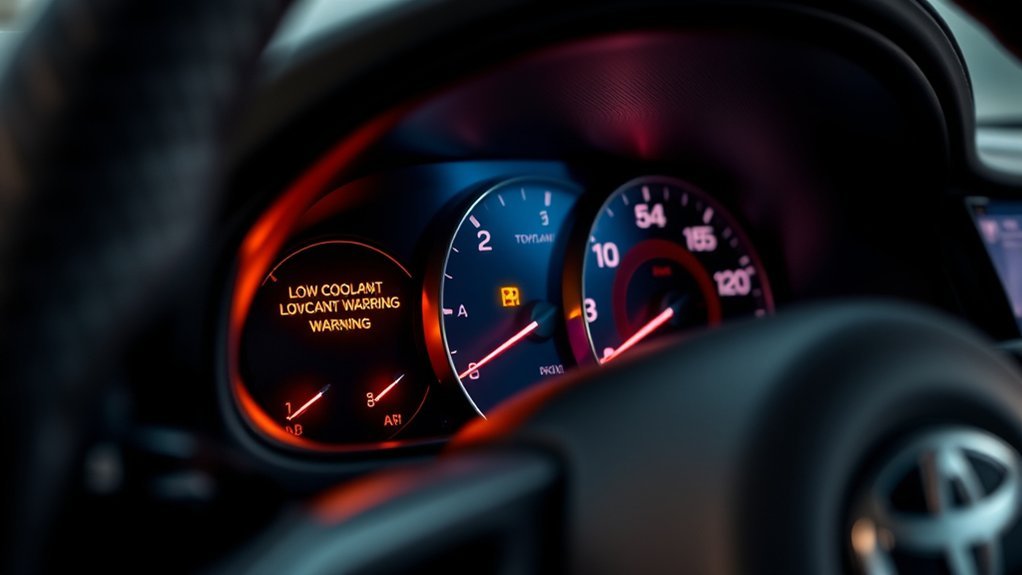
Have you ever wondered what that low coolant warning light means in your Toyota Supra? This warning indicates that your coolant level is below the safe threshold, which can lead to engine overheating if you don’t act quickly. Typically, the light appears as a radiator icon or with wavy lines beneath a thermometer, glowing red or yellow on your dashboard. Common reasons for this warning include natural coolant evaporation, leaks from hoses or the radiator, and faulty sensors. To prevent serious engine damage, you should regularly check the coolant in your reservoir and maintain an appropriate mixture—ideally a 50/50 blend of coolant and distilled water. If the low coolant warning persists after topping off or you notice frequent coolant loss without visible leaks, it’s essential to seek professional help to identify and resolve any underlying issues. Keeping your engine cool is key to your driving freedom.
Immediate Actions for a Coolant Warning Light
When you see the low coolant warning light illuminate on your Toyota Supra’s dashboard, it’s vital to act swiftly to avoid potential engine damage. First, safely pull over and turn off the engine to prevent overheating. Allow the engine to cool for at least 15 to 30 minutes before checking the coolant level in the reservoir. Inspect the coolant level against the MIN and MAX markers; if it’s below the minimum line, add coolant. Always use the correct coolant type recommended in your owner’s manual, and be careful not to overfill the reservoir. If the warning light remains on after adding coolant or if the engine temperature rises, it’s important to seek professional assistance. Ignoring these signs can lead to severe issues within your cooling system and result in costly engine damage. Stay proactive to keep your Supra running smoothly!
Signs You Need Professional Help With Coolant Issues?
How can you tell if your Toyota Supra needs professional help with coolant issues? If you frequently refill your coolant without seeing any leaks, it’s a sign of a hidden issue that calls for professional investigation. Keep an eye out for warning lights; a persistent coolant light despite routine maintenance indicates underlying problems that shouldn’t be ignored. If your engine overheats or the temperature gauge rises, you need immediate assistance to avoid serious engine damage. Additionally, if you notice a sweet-smelling puddle under your car or cold air blowing from the heater, these are signs of coolant loss that warrant technician evaluation. Gurgling sounds from the engine bay often suggest air pockets or blockages in the coolant system, further signaling the need for expert diagnosis. Remember, system pressure is vital, and any irregularities can lead to significant issues down the road.
Common Causes of Low Coolant Levels in Your Toyota Supra
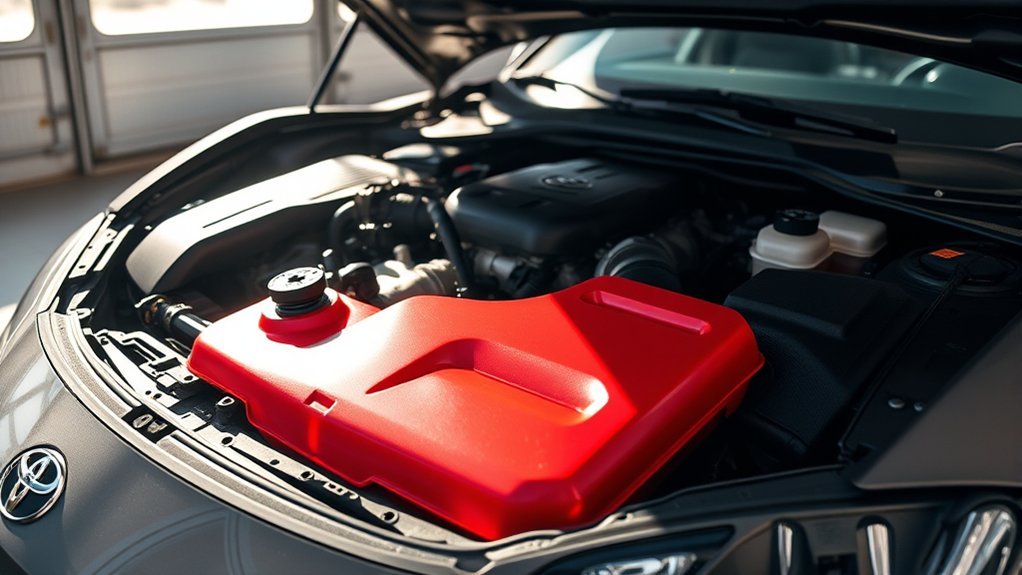
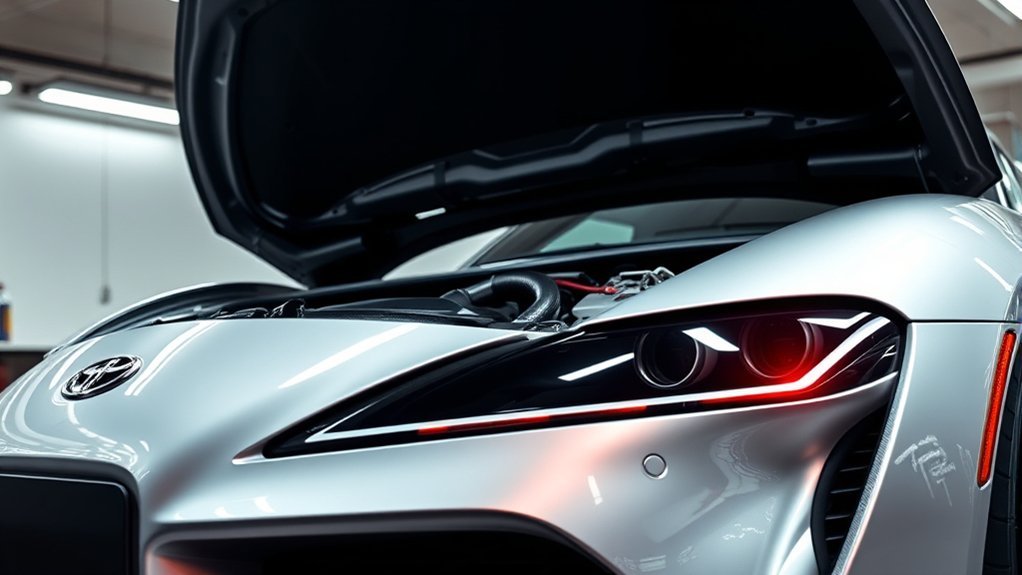
Understanding the common causes of low coolant levels in your Toyota Supra can help you address issues before they escalate. One primary reason is natural evaporation, especially for B58 engine owners, which can lead to low coolant levels over time. You might also encounter coolant leaks from various points in the cooling system, such as hoses, the radiator, or the water pump, often without visible signs. A faulty radiator cap or a cracked coolant reservoir can also allow coolant to escape, contributing to the problem. Additionally, internal engine issues, like a failing head gasket, can result in coolant loss, indicated by milky oil or white exhaust smoke. Regularly checking your coolant levels is essential; neglecting them could lead to overheating, risking serious damage to your engine block. Make sure you’re using the correct type of coolant for peak performance and longevity.
Effective Strategies to Prevent Coolant Issues in Your Supra
To keep your Toyota Supra’s cooling system in top shape, proactive maintenance is key. Start by regularly checking your coolant levels every 5-6 months or during oil changes. Catching drops early can prevent overheating issues down the line. Always use distilled water when topping off your coolant to maintain that crucial 50/50 mix, which helps fend off internal corrosion.
If you notice slow coolant loss, replace the coolant reservoir cap; a faulty cap can lead to coolant evaporation and pressure loss. Keep an eye on seals and caps for signs of evaporation, especially common among B58 engine owners. Finally, consider performing a coolant flush every 30,000 to 60,000 miles to eliminate contaminants and keep your cooling system running smoothly. By following these strategies, you’ll guarantee your Supra stays cool and reliable on the road.
Frequently Asked Questions
Is It Safe to Drive With Low Coolant in My Toyota?
It’s not safe to drive with low coolant. Insufficient coolant levels can cause engine overheating, compromising radiator function and vehicle safety. Regular maintenance, checking for coolant leaks, and responding to warning indicators are essential for peak performance.
What Causes a Low Coolant Light to Come On?
When your coolant light flickers like a warning star, it signals coolant leaks, radiator issues, or thermostat failure. Check the coolant reservoir, as a failing water pump could lead to an overheating engine and serious engine damage.
Can I Still Drive With a Coolant Warning?
No, you shouldn’t drive with a coolant warning. Ignoring it risks overheating issues and affects engine performance. Check fluid levels immediately, follow maintenance tips, and use the correct coolant types for ideal driving safety.
Can I Just Add Water if the Coolant Is Low?
You can add water temporarily, but it risks engine damage. For ideal performance, mix coolant types properly and keep an eye on maintenance tips. Seasonal changes and leak detection guarantee your engine stays cool and efficient.
Conclusion
In conclusion, ignoring a low coolant warning can lead to serious engine damage, while addressing it promptly can save you time and money. Whether you’re cruising the streets or pushing the limits on the track, keeping an eye on your coolant levels is essential. You don’t want a thrilling ride to turn into a costly repair. Stay proactive, follow the maintenance strategies outlined, and enjoy every drive in your Toyota Supra without worry!