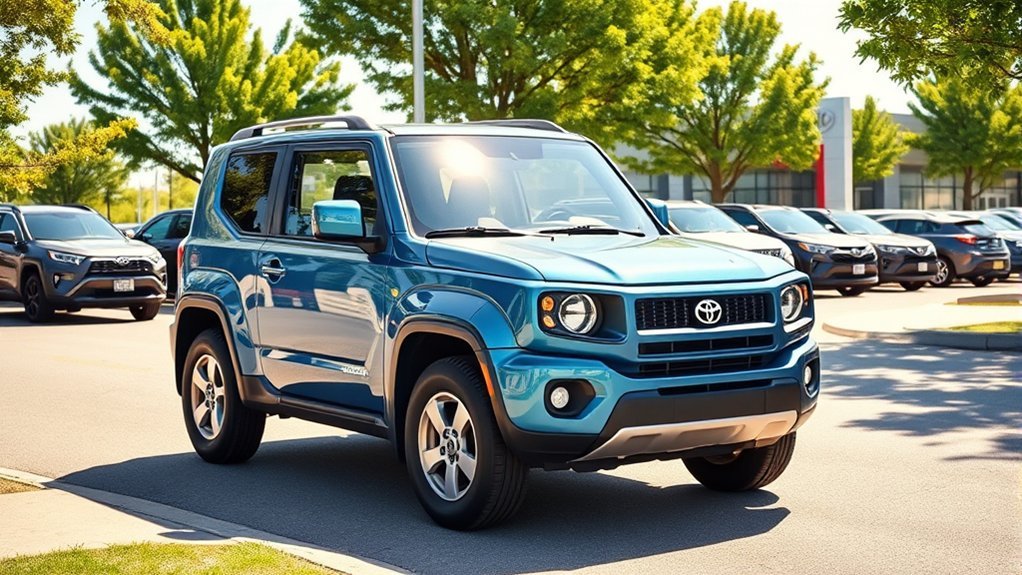
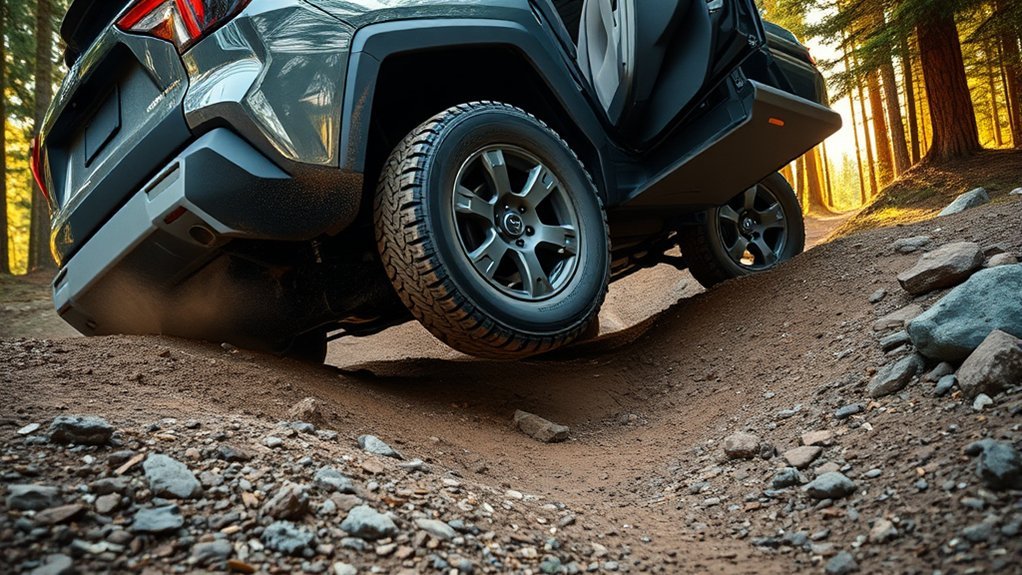
The Toyota RAV4, specifically the TRD Off-Road variant, offers solid off-road capabilities for light to moderate terrains but struggles with tougher obstacles. Its 8.6 inches of ground clearance and Dynamic Torque Vectoring AWD enhance traction, yet it lacks a low-range transfer case, limiting its steep climbing ability. Users find it performs well on graded roads but often face power distribution delays that can lead to front wheel spin. There’s more to explore regarding its performance and potential upgrades.
Understanding Off-Road Capabilities of the Toyota RAV4
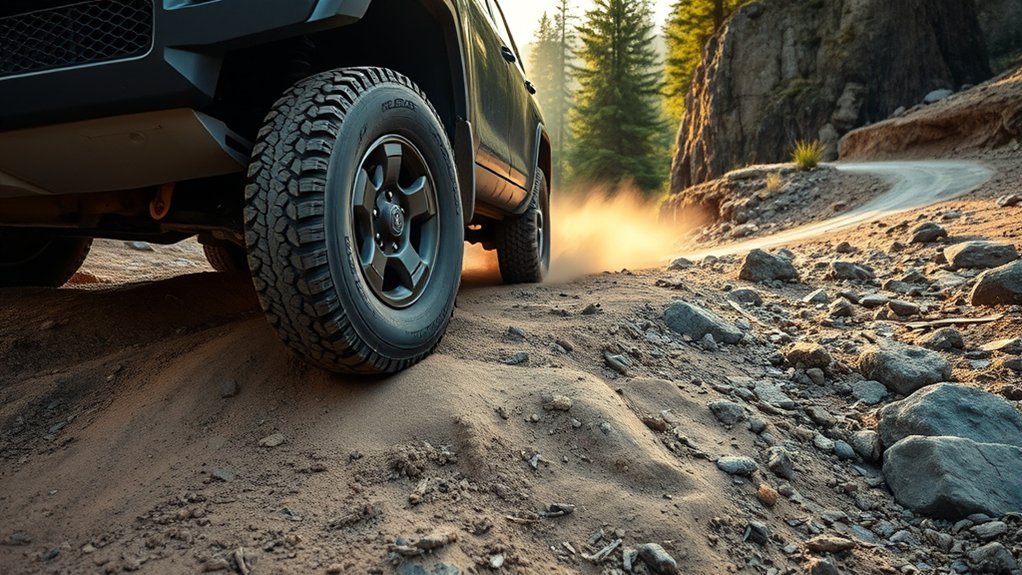
When considering the off-road capabilities of the Toyota RAV4, it’s essential to recognize its strengths and limitations. The RAV4 TRD Off-Road model features a Dynamic Torque Vectoring All-Wheel Drive system that enhances traction in light off-road conditions. With 8.6 inches of ground clearance, it navigates gravel roads and mild trails effectively. However, this ground clearance also presents challenges; the vehicle struggles with larger rocks and deep potholes, limiting its performance on steep ascents and rough terrains. Furthermore, the absence of a low-range transfer case means you won’t conquer hardcore off-roading easily. While the stock tires are decent, upgrading to off-road tires can greatly improve your experience. Overall, the RAV4 excels on graded fire access roads and gentle trails, making it a solid choice for those seeking adventure without sacrificing daily driving comfort.
What Terrain Can the RAV4 Handle?
The Toyota RAV4 proves to be a versatile vehicle, adept at handling a variety of terrains beyond just paved roads. You’ll find it’s well-suited for light to moderate off-road conditions, like gravel roads and mild trails, making it ideal for overland adventures. Its Dynamic Torque Vectoring All-Wheel Drive system allows for effective power distribution across different terrains, though it doesn’t include a low range transfer case for steep climbs.
With a Multi-Terrain Select dial featuring modes such as MUD, SAND, ROCK & DIRT, and SNOW, the RAV4 enhances its adaptability. The TRD Off-Road model boasts 8.6 inches of ground clearance, enabling it to tackle obstacles like small rocks and dirt paths. However, be mindful that while it performs well on graded fire access roads, stock tires may limit its full off-road potential. Upgrading your tires could greatly boost your RAV4’s capability on challenging terrain.
Challenges the RAV4 Faces in Tough Terrain
When you take the RAV4 off the beaten path, you’ll quickly notice its ground clearance limitations and the absence of a low range transfer case. These factors can make steep inclines and rocky terrain challenging, often leading to power distribution delays that may leave you spinning your front wheels instead of gaining traction. While modifications can enhance its off-road capabilities, they often come with trade-offs that affect fuel efficiency and comfort.
Ground Clearance Limitations
Although the Toyota RAV4 offers versatility for various driving conditions, its ground clearance limitations present significant challenges in tough terrain. With a minimum ground clearance of 180 mm for the PHEV model and 190 mm for the HEV, you’ll find maneuvering large rocks and deep potholes quite tricky. The departure angle of 20° and ramp break-over angle of 15.5° can hinder your ascent on steep inclines and uneven surfaces. Furthermore, the stock tires may not enhance off-road performance, making an upgrade to more aggressive options advisable. The front valance design also negatively impacts the approach angle, increasing the risk of scraping. While the RAV4 handles light to moderate off-road conditions, its limitations restrict its capability compared to dedicated off-road vehicles.
Lack Of Low Range
Ground clearance limitations aren’t the only hurdle when taking the Toyota RAV4 off the beaten path. The vehicle’s lack of low range notably hampers its off-road capabilities. Without a low range transfer case, you may struggle with:
- Steep ascents that require more torque.
- Maneuvering large rocks that demand precise control.
- Deep potholes that challenge ground clearance.
- Maintaining traction on loose surfaces, leading to excessive front wheel spin.
Although the all-wheel drive system offers some support, users often find it inadequate in distributing power effectively during tough terrain. The RAV4, while equipped with a Trail mode, is best suited for graded fire access roads rather than true off-road adventures, limiting your experience in exploring the wild.
Power Distribution Delays
While the Toyota RAV4 offers a capable all-wheel drive system, it can struggle with power distribution delays that pose challenges in tough off-road conditions. Users often report a lag in responsiveness during hard acceleration, which can hinder off-road performance. In Trail mode, the intended benefit of increased wheelspin before power redirection seems minimal, showing limited effectiveness in rugged environments. The RAV4 Prime’s electric motor system also experiences non-instantaneous power transfer, complicating traction on slippery terrains. Experiences vary widely; some find adequate power distribution, while others encounter frustrating front wheel spin without sufficient rear-wheel engagement. These delays can dampen your off-road aspirations, reminding you that the RAV4 is more suited for light adventures than extreme trails.
What Users Say About RAV4 Off-Roading
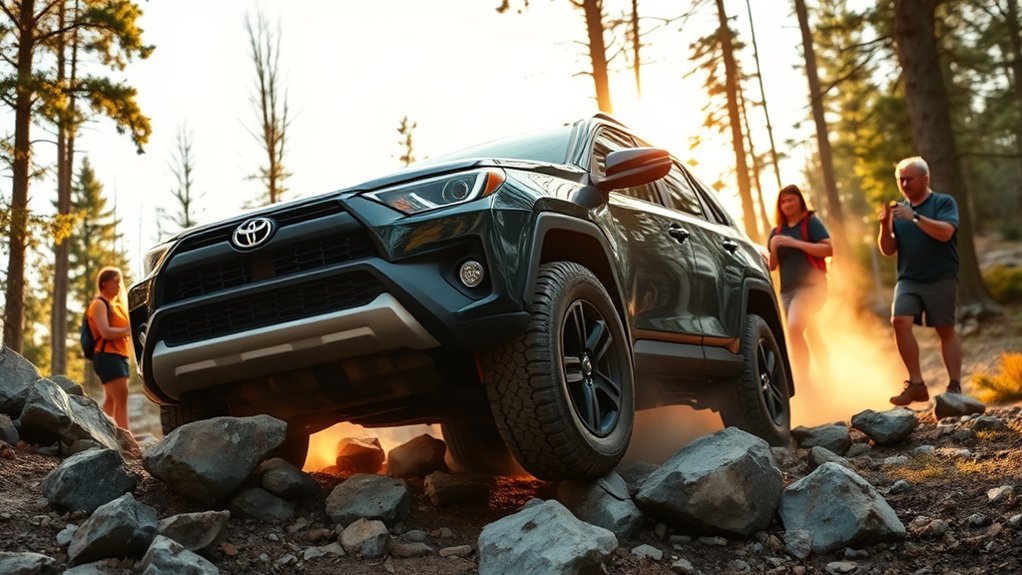
How do users really feel about the Toyota RAV4’s off-road capabilities? Feedback is mixed, revealing that while the RAV4 shines in light to moderate conditions, it falters in tougher terrains. Here’s what many drivers have noted:
- Dynamic Torque Vectoring All-Wheel Drive is effective on dirt roads but can lead to excessive front wheel spin in slippery conditions.
- Stock tires often fall short; upgrading to specialized off-road tires is frequently recommended.
- The RAV4 performs well on graded fire access roads and gentle trails, but struggles with heavy obstacles.
- Many users suggest modifications like lift kits and aggressive tires, though these can impact fuel efficiency and comfort.
Comparing Rav4’s Off-Road Abilities With Competitors
When you compare the RAV4 to the 4Runner, it becomes clear that the latter is built for more demanding off-road situations. While the RAV4 offers features like Trail Mode, it can’t match the performance and capabilities of the 4Runner or other dedicated off-road vehicles. If you’re considering modifications to enhance your RAV4’s off-road abilities, keep in mind that these changes might impact overall comfort and efficiency.
RAV4 vs. 4Runner Performance
Although the Toyota RAV4 offers some off-road capabilities, it can’t quite compete with the rugged performance of the Toyota 4Runner. If you’re considering off-road adventures, here’s what sets them apart:
- Low-range transfer case: The 4Runner features this essential component, enhancing its climbing power on steep terrains.
- Ground clearance: The RAV4’s 8.6 inches can’t match the 4Runner’s, limiting your ability to traverse larger obstacles.
- Suspension design: The 4Runner’s superior suspension handles rough trails with ease, while the RAV4 struggles.
- Drivetrain robustness: User feedback shows the 4Runner has fewer issues with power distribution and wheel spin.
While the RAV4 is a solid choice for casual driving, the 4Runner truly excels in demanding off-road environments.
Trail Mode Limitations
While the Toyota RAV4’s Trail mode offers some enhancements for off-road driving, it ultimately falls short compared to its competitors, particularly the Toyota 4Runner and Jeep Wrangler. The RAV4 TRD Off-Road model features torque-vectoring all-wheel drive, yet it lacks a low-range transfer case, limiting its ability on steep ascents and rough terrains. Users often report excessive front wheel spin and slow rear-wheel engagement, raising doubts about its all-wheel drive efficiency in challenging conditions. Unlike the 4Runner and Wrangler, known for their superior off-road capabilities, the RAV4 struggles to keep pace. Although modifications like lift kits can improve performance, they may sacrifice fuel efficiency and comfort, further distinguishing the RAV4 from more purpose-built off-road vehicles.
User Modifications Impact
Though the Toyota RAV4 can be a competent vehicle for light off-roading, its stock capabilities often fall short compared to competitors like the Toyota 4Runner and Jeep Wrangler. However, user modifications can greatly enhance its off-road performance. Here’s how:
- Lift Kits: Increase ground clearance, reducing the risk of undercarriage damage.
- Aggressive All-Terrain Tires: Improve traction on rugged terrains, addressing stock tire limitations.
- Torque-Vectoring System Enhancements: Optimize performance in light to moderate off-road conditions.
- Skid Plates: Protect vulnerable components from rocks and debris.
While these modifications can elevate the RAV4’s off-road capabilities, they may compromise fuel efficiency and ride comfort, so weigh your choices carefully.
Modifications to Boost RAV4’s Off-Road Performance
To maximize the Toyota RAV4’s off-road capabilities, several key modifications can make a considerable difference in performance. Upgrading to off-road tires greatly boosts traction and stability on rugged terrains, while a lift kit enhances ground clearance for better obstacle navigation. Adding skid plates protects the undercarriage during rocky excursions, and an aggressive suspension setup improves ride quality on rough surfaces.
Here’s a quick overview of essential modifications:
| Modification | Benefit |
|---|---|
| Off-road tires | Enhanced traction |
| Lift kit | Increased ground clearance |
| Skid plates | Undercarriage protection |
These modifications not only improve overall performance but also empower you to tackle challenging terrains with confidence. By investing in these enhancements, you’ll reveal the full potential of your RAV4, making your off-road adventures more exhilarating.
Is the RAV4 Right for Your Off-Road Adventures?
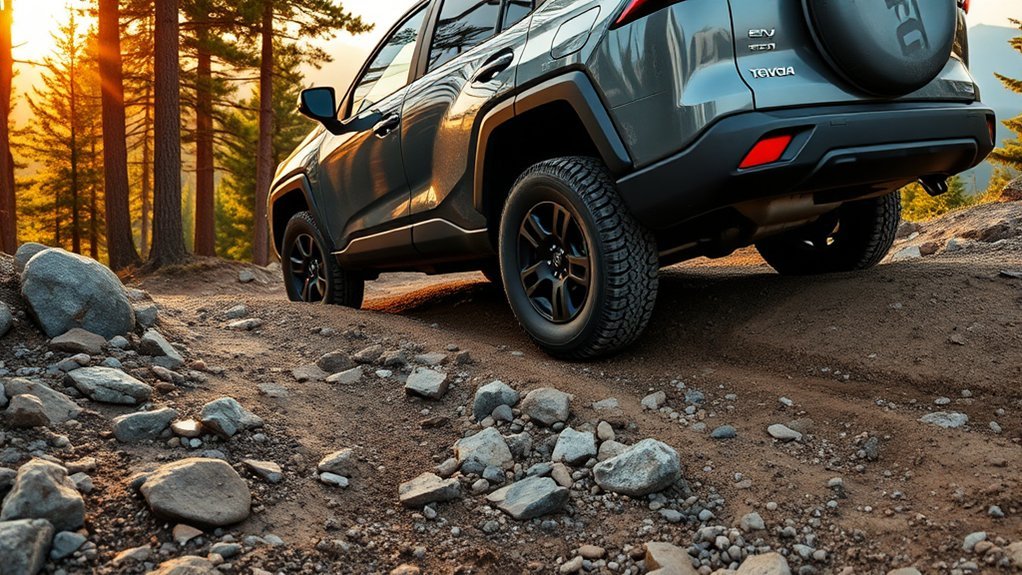
Are you considering the Toyota RAV4 for your off-road adventures? The RAV4, especially the TRD Off-Road variant, offers intriguing off-road capabilities, but it’s crucial to evaluate whether it suits your needs. Here are some key factors:
- Dynamic Torque Vectoring AWD: This feature enhances traction across various terrains.
- Multi-Terrain Select Dial: Adjust your drive mode for mud, sand, or snow for peak performance.
- 8.6 Inches of Ground Clearance: Navigate light off-road conditions with ease, though it may struggle on steep inclines.
- Fuel Efficiency: The rear disconnect feature balances off-road capability and everyday usability with a combined MPG of 28.
While the RAV4 can handle gravel roads and mild trails effectively, it may not meet the demands of more challenging off-road adventures. Consider your adventure style and expectations before committing to a RAV4.
Conclusion: The RAV4’s Place in Off-Roading
While the Toyota RAV4, especially the TRD Off-Road model, showcases impressive features for light off-roading, it ultimately finds its strength in balancing everyday usability with moderate adventure capabilities. Designed for compact SUV enthusiasts, the RAV4 excels on graded fire access roads and gentle trails, making it a solid choice for casual outdoor adventures. Its torque-vectoring AWD system and Multi-Terrain Select drive modes enhance its light off-road capabilities, but the absence of a low-range transfer case constrains its performance on steep inclines. User feedback highlights that the stock tires may not hold up in tougher conditions, encouraging upgrades for those seeking more traction. Ultimately, the RAV4 is better suited for on-road driving, appealing to those who prioritize practicality while enjoying occasional light off-road escapades. If you’re after a balance of comfort and moderate adventure, the RAV4 might just be your perfect vehicle.
Frequently Asked Questions
Is the RAV4 Good for Off-Road?
The RAV4 offers decent off-road capabilities with its all-terrain features, but its performance may fall short in tougher conditions. For casual adventures, it’s suitable; for serious off-roading, consider upgrades to maximize its potential.
What Is the Weakness of the Toyota RAV4?
The Toyota RAV4’s weaknesses include limited interior space, compromised fuel efficiency with modifications, and average safety ratings. While it’s reliable for daily driving, it doesn’t excel in off-road conditions, impacting overall versatility.
Is RAV4 Good for Mountain Driving?
Yes, the RAV4 handles mountain driving well, thanks to its traction control and suspension system. It navigates uneven mountain terrain effectively, but stick to graded paths for the best experience in challenging conditions.
Do RAV4S Do Good in Snow?
RAV4s handle snow well, thanks to their traction control and winter performance features. You’ll find they provide reliable stability and control in light to moderate snow, but deeper conditions may require caution and additional measures.
Conclusion
In conclusion, the Toyota RAV4 can handle light off-roading, making it a solid choice for casual adventurers. But if you’re seeking rugged trails and extreme terrains, you might want to evaluate alternatives. Isn’t it worth asking yourself what kind of off-road experience you truly desire? By weighing the RAV4’s capabilities against your specific needs, you can determine if this versatile SUV is the right companion for your next outdoor expedition. Happy exploring!