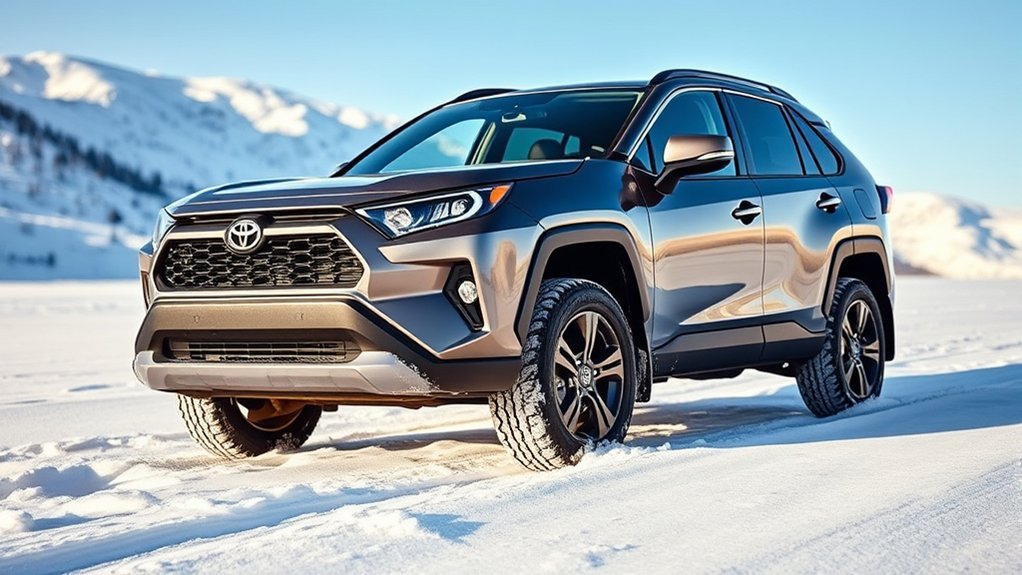
Yes, the Toyota RAV4 once offered a V6 option, specifically a 3.5-liter engine producing 270 horsepower. This engine provided impressive acceleration and towing capacity, enhancing its appeal. However, due to shifting consumer preferences for better fuel efficiency and the rising popularity of four-cylinder and hybrid models, Toyota discontinued the V6. If you’re curious about the trade-offs between V6 and four-cylinder models, as well as the future of RAV4, there’s more to explore.
The Value of the V6 Engine in RAV4 History
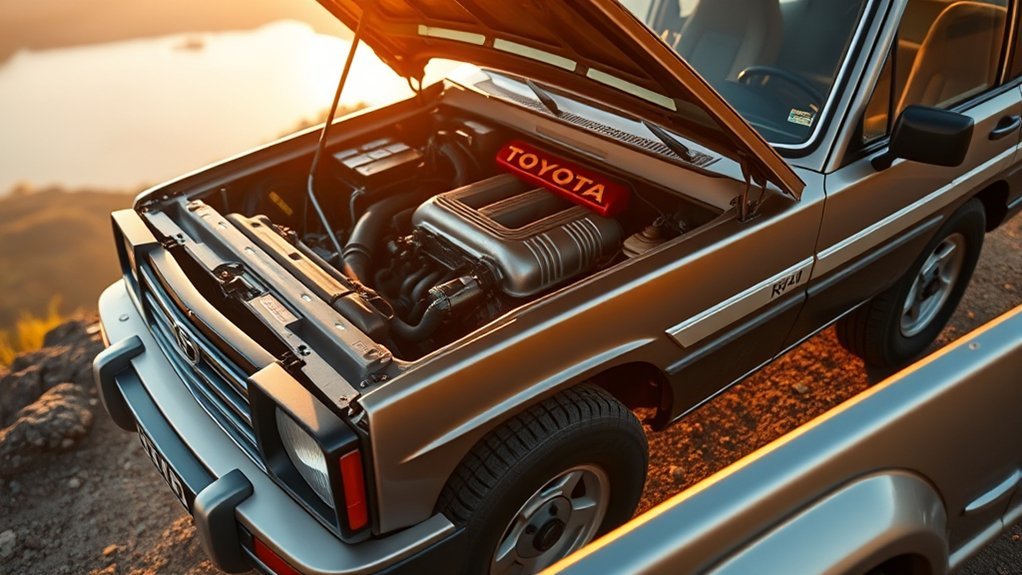
Why did the V6 engine option hold such significance in the history of the Toyota RAV4? The introduction of the V6 engine in the third generation (2005-2012) marked a pivotal shift in the RAV4’s identity. With a powerful 3.5-liter V6 engine producing 270 horsepower, it offered unparalleled performance compared to its previous generation’s four-cylinder models. You could feel the difference in acceleration, achieving 0-60 MPH in a competitive time for its class, which appealed to drivers craving a spirited driving experience. Additionally, the enhanced towing capacity catered to those needing versatility in their vehicles. While the combined fuel economy of 22 MPG was respectable, it couldn’t compete with the efficiency of later models. Still, many RAV4 owners reminisce about the V6’s robust capabilities, underscoring a yearning for more power and performance that resonated deeply with certain consumer segments.
Reasons for Discontinuation of the V6
As consumer preferences shifted toward greater fuel efficiency, Toyota made the strategic decision to discontinue the V6 engine option for the RAV4 with the launch of the current generation in 2013. Low sales volumes and a clear market trend towards fuel economy drove this change. You’ll find that competitors like the Honda CR-V outperformed the RAV4 in MPG ratings, making the four-cylinder a more appealing choice.
| Reason for Discontinuation | Impact on RAV4 | Consumer Sentiment |
|---|---|---|
| Low sales volume | Limited options | Mixed feelings |
| Shift to fuel efficiency | Simplified production | Nostalgia for power |
| Regulatory pressures | Compliance with standards | Desire for towing capacity |
| Competitor performance | More competitive | Preference for MPG |
| Standardization | Cost-effective | Acceptance of change |
Ultimately, the V6’s discontinuation reflects a broader industry movement, emphasizing efficiency and practicality.
Toyota RAV4 Performance Comparison: V6 vs. Four-Cylinder
When comparing the performance of the Toyota RAV4’s V6 and four-cylinder engines, you’ll notice distinct differences that cater to varying driver preferences. The V6 engine, available from 2005 to 2012, was celebrated for its impressive acceleration, allowing you to reach 60 MPH quicker than any other Toyota at the time. This power also translated into greater towing capacity, appealing to those needing robust performance. In contrast, the current four-cylinder models prioritize fuel efficiency, achieving an EPA-rated 25 MPG for AWD configurations, which aligns with today’s market trends favoring sustainability. While the four-cylinder engine offers a more economical choice, some drivers miss the exhilaration and capability of the V6. Ultimately, your decision hinges on whether you value raw power or efficient performance. The shift to a four-cylinder reflects broader consumer preferences, but the nostalgia for the V6’s prowess still resonates with many owners.
Owner Experiences: Valuing the V6 vs. Adapting to the Four-Cylinder
Many RAV4 owners find themselves reminiscing about the thrill of the V6 engine, especially after experiencing the shift to the four-cylinder models. The V6’s power and performance were hard to forget, even as owners adapt to the benefits of the newer engine. While the four-cylinder offers better fuel efficiency, many feel the absence of the excitement that the V6 provided.
- V6 engines excelled in towing capacity.
- Four-cylinder models average 25 MPG for AWD.
- Owners appreciate fuel economy but miss V6 power.
- Hybrid models may offer a future performance-fuel balance.
Transitioning to the four-cylinder can be bittersweet. You’ll likely value the cost savings, yet the yearning for that V6 punch remains. As more owners explore hybrid options, the hope for a harmonious blend of performance and efficiency grows, signaling a new chapter for RAV4 enthusiasts.
Why Are Consumers Shifting Toward Fuel-Efficient Four-Cylinder Engines?
With fuel prices climbing and environmental concerns at the forefront, consumers are increasingly gravitating towards fuel-efficient four-cylinder engines. You’re not alone in seeking options that minimize your carbon footprint while keeping operating costs low. The shift is evident, as vehicles like the Honda CR-V showcase better fuel efficiency at 28 MPG AWD compared to the RAV4’s 25 MPG AWD from its four-cylinder engine.
Manufacturers recognize this trend, standardizing four-cylinder engines to simplify production and meet rising demand for eco-friendly alternatives. This change isn’t just about saving money at the pump; it’s also about embracing a lifestyle that prioritizes sustainability. As the automotive industry adapts to CAFE standards, they’re aligning their offerings with your expectations for better fuel efficiency. Ultimately, choosing a four-cylinder engine empowers you to make a responsible choice for both your wallet and the planet.
How Do CAFE Standards Affect Your RAV4 Choices?
CAFE standards play a significant role in shaping your choices when it comes to the Toyota RAV4. These regulations mandate improved fuel economy, leading to the discontinuation of less efficient engine options, like the V6. Instead, you’re more likely to find the economical 2.5-liter four-cylinder engine that aligns with current market demands.
Consider the following impacts of CAFE standards on your RAV4 options:
The influence of CAFE standards is reshaping your RAV4 options towards more efficient, smaller engines.
- Discontinuation of V6 engines for better mileage.
- Standardization of smaller, efficient engine options.
- Increased competition with rivals like the Honda CR-V.
- Rising investments in hybrid and electric technology.
As CAFE standards tighten, the push for efficiency reshapes your RAV4 choices, steering you away from traditional engines and into a future rich with fuel-efficient solutions. Embracing these changes can lead to more sustainable driving experiences and align with evolving consumer preferences.
The Future of the RAV4: Exploring Hybrid and Electric Options
As the automotive landscape evolves, Toyota is keenly adapting its RAV4 lineup to meet the growing demand for hybrid and electric options. The current generation focuses on efficiency, offering hybrid variants that combine a 2.5-liter four-cylinder engine with an electric motor, achieving up to 40 MPG in city driving. This shift caters to your desire for sustainable, environmentally friendly vehicles.
Looking ahead, the RAV4 Prime stands out as a plug-in hybrid model, allowing for electric-only driving while enhancing performance. With increasing regulatory pressures and consumer preference for greener options, future iterations of the RAV4 are likely to include even more advanced hybrid and electric technologies.
This commitment to innovation guarantees that you’ll have a variety of eco-conscious choices that not only meet your transportation needs but also contribute positively to the environment. The future of the RAV4 is indeed bright and green.
Common Issues in Older V6 Toyota RAV4s
While the V6 engine offered in older Toyota RAV4s can deliver impressive performance, it’s important to be aware of some common issues that may arise. Many owners report specific problems, especially in the 2006-2008 models, which can affect your driving experience.
- Oil-burning issues can lead to increased oil consumption and potential engine damage.
- The timing cover may develop leaks, risking further complications if not addressed promptly.
- Overheating is a concern, often tied to inadequate maintenance of the cooling system.
- Head gasket failures are more likely without timely oil changes.
Buying Tips for Used V6 RAV4s
When you’re in the market for a used V6 Toyota RAV4, it’s crucial to focus on certain key factors that can greatly impact your purchase. Start by prioritizing model years 2011-2012, as they’re generally more reliable than the 2006-2008 versions, which suffer from oil-burning issues. Always check for a documented maintenance history; regular oil changes and cooling system upkeep are important for V6 engine longevity.
Before finalizing your purchase, have a trusted mechanic inspect the vehicle, especially if the seller limits your options. Lower mileage often indicates less wear, so consider a V6 RAV4 with 76,000 miles over a 4-cylinder with 105,000 miles. Finally, be aware of the price difference; the V6 option may cost more due to its performance capabilities, so weigh this against your budget and needs to confirm you’re making a wise investment.
Frequently Asked Questions
Does the RAV4 Come in a 6 Cylinder?
The RAV4 doesn’t come with a six-cylinder option. Instead, you’ll find a focus on four-cylinder engines, enhancing RAV4 performance and fuel efficiency. Embrace this trend for a more eco-friendly driving experience.
What Was the Last Year of the RAV4 V6?
The last year you could experience RAV4’s thrilling V6 performance was 2012. Its robust 3.5-liter engine offered power and capability, but shifting preferences for fuel efficiency ended that chapter in the RAV4’s history.
Why Did Toyota Stop Putting V6 in RAV4?
Toyota stopped using the V6 in the RAV4 to improve engine efficiency and align with changing consumer preferences for fuel economy. Simplifying production also helped focus on a single, more efficient engine option.
What RAV4 Has a V6?
In the domain of automotive might, the 2006-2012 RAV4 stands tall with its V6 engine, showcasing unparalleled performance. Compared to its four-cylinder siblings, its power and towing capacity set it apart as a true champion.
Conclusion
To sum up, while the V6 RAV4 was once a powerful contender, its disappearance leaves a gaping void for enthusiasts craving that extra thrill. Sure, the four-cylinder engine is efficient and fuel-friendly, but it can’t quite match the exhilarating roar of its V6 predecessor. As you navigate your options, remember that the future is shifting towards hybrids and electrics, but don’t overlook the charm of the V6. It’s a piece of automotive history that still ignites excitement in the hearts of many.