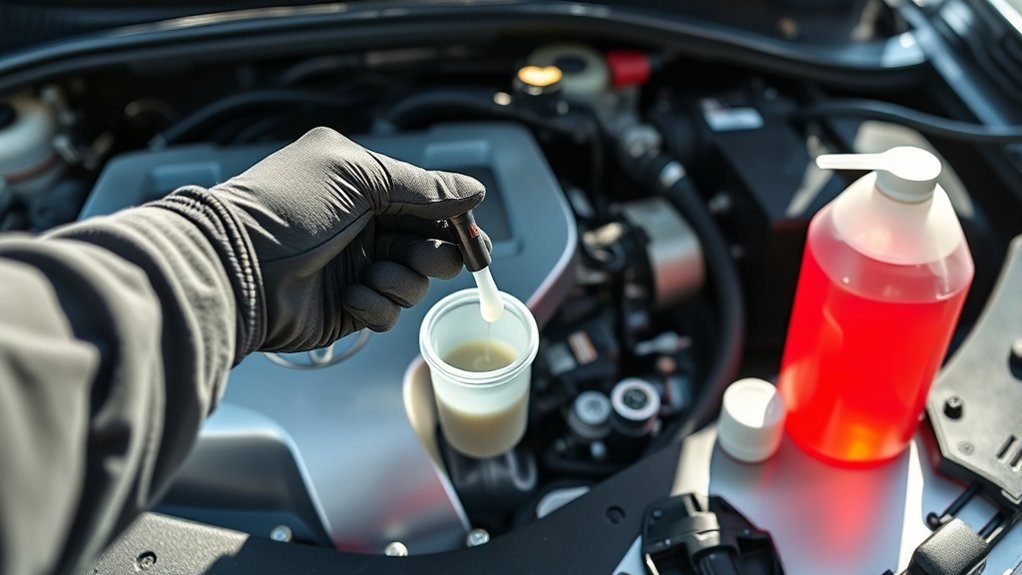
To change the power steering fluid in your Toyota RAV4, first locate the power steering reservoir and remove its cap. Use a turkey baster or siphon to extract the old fluid, then properly discard it. Refill the reservoir with the appropriate transmission fluid, like Dexron II or III. Consider flushing the system for best results. Regular inspections and maintenance can help keep your steering system in peak condition. Learn how to identify contamination and guarantee your fluid’s longevity.
How to Change Power Steering Fluid in Your RAV4
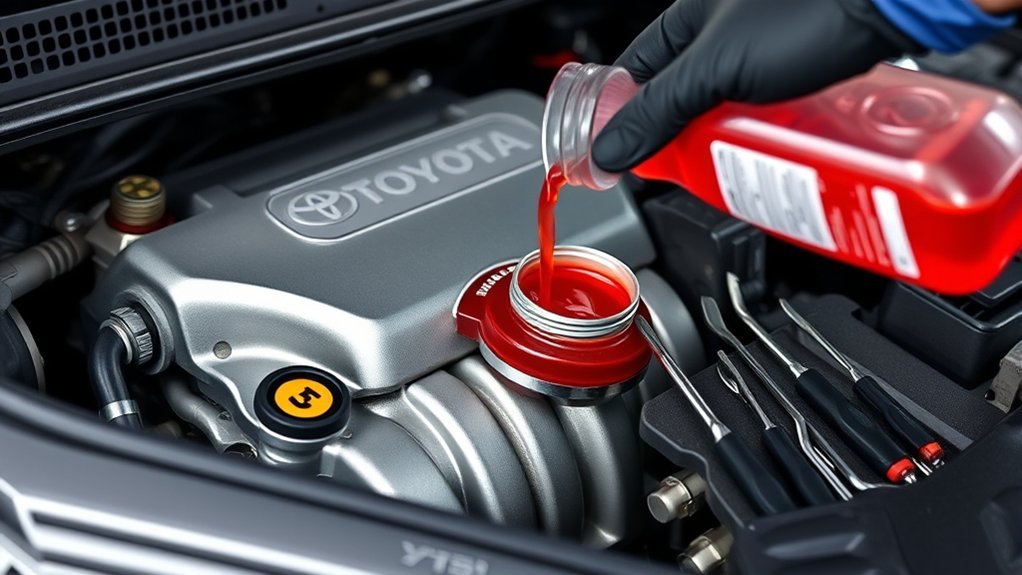
Changing the power steering fluid in your Toyota RAV4 is a straightforward process that helps maintain steering performance. Start by locating the power steering reservoir and removing the cap. Use a turkey baster or siphon to extract the old fluid, discarding it properly to avoid environmental harm. Refill the reservoir with the appropriate transmission fluid, specifically Dexron II or III, until it hits the indicated level.
For best results, you should flush the system. Disconnect the return line and cycle the steering wheel while adding new fluid until it runs clear. This step guarantees you’ve expelled any residual contaminants. After flushing, inspect the reservoir for any black residue or contamination. Cleaning it thoroughly is essential to maintain peak power steering performance. By dedicating this much time to your RAV4’s maintenance, you empower yourself with better control and a smoother driving experience.
Identifying Contaminated Power Steering Fluid
How can you tell if your power steering fluid is contaminated? Identifying contaminated fluid is essential for maintaining your RAV4’s steering system. Regular maintenance and checks can save you from costly repairs.
Identifying contaminated power steering fluid is crucial for your RAV4’s maintenance and can prevent expensive repairs.
- Check Fluid Color: Your power steering fluid should be reddish and clear. If it appears dark or black, that’s a sign of contamination, often due to poor maintenance.
- Inspect for Residue: Use a dipstick to look for black deposits. If you find any, this confirms contamination and indicates a need for a fluid flush.
- Watch for Symptoms of Failure: If you notice hard steering or whining noises, these may be symptoms of fluid contamination affecting your system’s performance.
Tips for Cleaning the Power Steering Reservoir
Before you can refill your power steering system with fresh fluid, it’s essential to clean the power steering reservoir to guarantee maximum performance. Start by draining the contaminated fluid to prevent further contamination. Employ effective cleaning techniques by using a suitable cleaning solution or a mild detergent and water mixture to scrub the reservoir’s interior, ensuring all black deposits are removed. Rinse thoroughly with clean water to eliminate any residual solution or debris.
Inspect the dipstick, if applicable, for remaining residue and confirm the fluid level meets the reservoir’s indicators. A common mistake is neglecting to check for debris after cleaning, which can lead to issues down the line. To maintain ideal function, regularly monitor your power steering fluid‘s color and clarity. Following these maintenance tips will help you avoid potential problems and ensure a smooth driving experience.
Signs It’s Time to Change Your Power Steering Fluid?
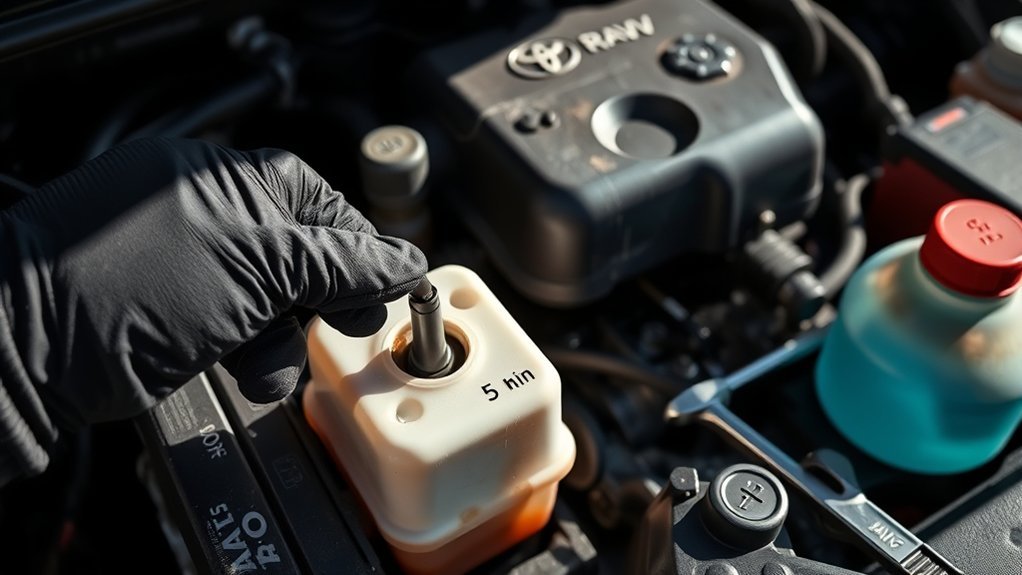
Maintaining a clean power steering reservoir is just the first step in ensuring your vehicle’s steering system operates smoothly. Recognizing the signs that it’s time to change your power steering fluid is essential for peak performance. Here are some key power steering symptoms to watch for:
- Fluid Color Indicators: If you notice the fluid has changed from its typical reddish hue to dark or murky shades, it’s time for a change.
- Contamination: Black deposits or residue in the reservoir indicate contamination and a need for fluid replacement.
- Steering Performance Issues: Experiencing difficulty in steering or hearing unusual noises while turning the wheel suggests that the fluid is degraded and needs changing.
Regular inspections can help you avoid potential issues, ensuring your power steering system functions effectively, allowing for a smoother, safer driving experience.
Why You Should Care About Power Steering Fluid Maintenance
While you might overlook power steering fluid maintenance, neglecting it can lead to serious consequences for your vehicle’s steering system. The significance of maintenance can’t be overstated; clean power steering fluid guarantees peak performance and longevity of components. Contaminated fluid, often evidenced by black deposits, can greatly impact fluid quality and lead to increased wear on system parts. This wear not only heightens the risk of steering difficulties but also poses safety hazards while driving.
Regularly checking the power steering reservoir allows you to identify issues early, preventing costly repairs. Maintaining the reddish color of your power steering fluid is essential, as any deviation signals contamination that could jeopardize your vehicle’s reliability. By proactively changing the fluid and cleaning the reservoir, you can enhance steering performance and enjoy the full benefits of a well-maintained power steering system. Don’t let neglect compromise your driving experience—take control of your vehicle’s maintenance today.
Frequently Asked Questions
Can I Change Power Steering Fluid Myself?
Yes, you can change the power steering fluid yourself! Regular fluid changes enhance steering performance and longevity. Follow DIY maintenance tips, checking fluid levels every 30,000 miles to reap the benefits of a smooth steering experience.
Does a Toyota RAV4 Have Power Steering Fluid?
Yes, your Toyota RAV4 uses power steering fluid, essential for smooth steering system care. Think of it as oil for your engine; regular power steering maintenance with the right fluid types guarantees longevity and peak performance.
How Often Should Power Steering Fluid Be Changed on a Toyota?
You should change the power steering fluid every 30,000 to 60,000 miles. Regularly check for signs of contamination, like discoloration or residue, to guarantee proper power steering maintenance and avoid potential system issues.
How Much Does It Cost to Replace Power Steering on a RAV4?
“An ounce of prevention’s worth a pound of cure.” For power steering repair on your RAV4, expect costs between $300 and $700, depending on fluid maintenance needs and parts. Always compare costs before proceeding.
Conclusion
In summary, regularly changing your power steering fluid is essential for maintaining peak performance and extending the life of your RAV4’s steering system. Neglecting this maintenance can lead to catastrophic failures that could feel as disastrous as a shipwreck in a storm. By staying vigilant and attentive to signs of contamination, you can guarantee a smooth and responsive steering experience. Don’t underestimate the importance of this simple task; it can make all the difference in your driving comfort and safety.