

To activate the All-Wheel Drive (AWD) in your Toyota RAV4, drive at a speed of 25 MPH or less. Then, press the chassis symbol button, which is located on the left side of the steering column. Look for the indicator light on the instrument panel to confirm that AWD is engaged. Remember, this feature automatically responds to driving conditions. Stick around to learn more tips about using and troubleshooting AWD effectively.
Why All-Wheel Drive Matters for Your RAV4

When you drive a Toyota RAV4, you’ll appreciate how All-Wheel Drive (AWD) markedly enhances your vehicle’s performance in various conditions. The AWD system automatically activates when slip is detected, guaranteeing peak power distribution to the wheels. This feature considerably improves traction on slippery surfaces like snow, rain, and mud, boosting your overall safety and driving performance.
In challenging climates, engaging AWD reduces the likelihood of accidents, making it invaluable for those maneuvering through adverse weather. Additionally, the RAV4’s AWD capabilities excel on curvy roads, enhancing handling and stability during turns. By activating AWD at speeds below 25 MPH, you guarantee smooth functionality, priming the system for immediate response when needed.
In essence, AWD not only elevates your driving experience but also empowers you with the confidence to tackle diverse terrains safely. Embrace the freedom that AWD offers, transforming the way you drive your RAV4.
Top Misconceptions About Activating AWD
Have you ever wondered about the common myths surrounding the activation of All-Wheel Drive (AWD) in your Toyota RAV4? One major misconception is that you must manually engage AWD at all times. In reality, AWD technology automatically activates when it detects slip, enhancing your traction based on road conditions. Another myth is that the AWD light signals the system is engaged; instead, it indicates potential issues with the AWD system. Many drivers confuse AWD with 4WD, not realizing that AWD operates on demand while 4WD requires manual activation for off-road use. It’s also a misconception that AWD is always “on”; it only engages under suitable conditions, like snow or rain. Finally, remember that engaging the all-wheel drive lock button should only be done at speeds below 25 MPH to prevent transmission damage. Stay informed to maximize your RAV4’s capabilities!
How to Activate AWD
To activate the AWD system on your Toyota RAV4, make sure you’re driving at 25 MPH or less. Press the chassis symbol located on the left side of the steering column to engage the system. Confirm activation by checking for the indicator light on your instrument panel.
Activation Speed Requirement
Activating the All-Wheel Drive (AWD) system on your Toyota RAV4 is straightforward, provided you’re traveling at a speed of 25 MPH or less. This activation speed requirement guarantees peak performance and safety while engaging the AWD system. To manually engage it, locate the chassis symbol button on the left side of your steering column. Once you press this button, the AWD system will activate, enhancing traction on slippery surfaces. Remember, the AWD system operates as needed based on driving conditions, and it can’t be turned off. By understanding these activation parameters, you can confidently navigate different terrains, empowering your driving experience and embracing the freedom of all-weather capability.
Indicator Light Confirmation
When you engage the All-Wheel Drive (AWD) system on your Toyota RAV4, confirming its activation is vital for guaranteeing peak performance. To activate the AWD, verify your speed is 25 MPH or less, then locate the chassis symbol on the left side of the steering column and press it. After engaging, check your instrument panel for the indicator light; it should illuminate, confirming that the AWD is active. This feature enhances traction in slippery conditions, automatically engaging when slip is detected. If the AWD indicator light remains illuminated, it might signal a potential issue with the system, so it’s important to investigate or seek service promptly. Monitoring this light guarantees your RAV4 performs at its best.
Tips for Using the AWD Lock Function Safely
To use the AWD Lock function safely, always engage it when your speed is 25 MPH or less to avoid damaging the transmission. Keep an eye on the indicator light on your instrument cluster to confirm that the AWD Lock is active. If you exceed the speed limit, the system will automatically disengage, so be mindful of your speed to maintain traction.
Engage Below 25 MPH
Engaging the AWD Lock function on your Toyota RAV4 is essential for maximizing traction in challenging conditions, but it’s important to do so safely. To activate the AWD Lock, guarantee your speed is below 25 MPH. Press the chassis symbol button near the steering wheel to engage the differential lock, which enhances traction on surfaces like mud, snow, or uneven terrain. Once activated, check for the indicator light on your instrument panel, confirming that the AWD Lock mode is engaged. Remember, the AWD Lock will automatically disengage if you exceed 25 MPH or apply the brakes, guaranteeing safe operation. This feature provides you with the confidence to tackle difficult driving conditions effectively.
Monitor Indicator Light
After activating the AWD Lock, keeping an eye on the indicator light is essential for safe operation. The AWD lock indicator light on your instrument panel confirms that the function is engaged and operational. If the light blinks, it signals a malfunction or improper engagement, so you’ll need to inspect the system. Regularly monitor this light to catch any errors early and guarantee smooth driving. To safely deactivate the AWD lock, simply press the chassis symbol button again or tap the brakes; the system will disengage automatically if your speed exceeds 25 MPH. Always consult your owner’s manual for specific instructions and safety precautions regarding the AWD lock function in your Toyota RAV4 model.
Avoid Excessive Speed
Maintaining a low speed of 25 MPH or less while using the AWD lock is essential for your vehicle’s health. Engaging the AWD lock in low-traction conditions, such as mud or snow, can enhance performance, but only if you adhere to speed guidelines. Exceeding 25 MPH can deactivate the AWD lock, risking transmission damage.
| Speed (MPH) | AWD Lock Status | Action Required |
|---|---|---|
| 0-25 | Active | Safe to use |
| >25 | Inactive | Slow down immediately |
| Braking | Inactive | Release brakes slowly |
| Monitor | Indicator Light | Confirm AWD is active |
Always monitor the indicator light and follow the manufacturer’s guidelines to avoid issues caused by excessive speed.
Troubleshooting Common AWD Issues in Your RAV4
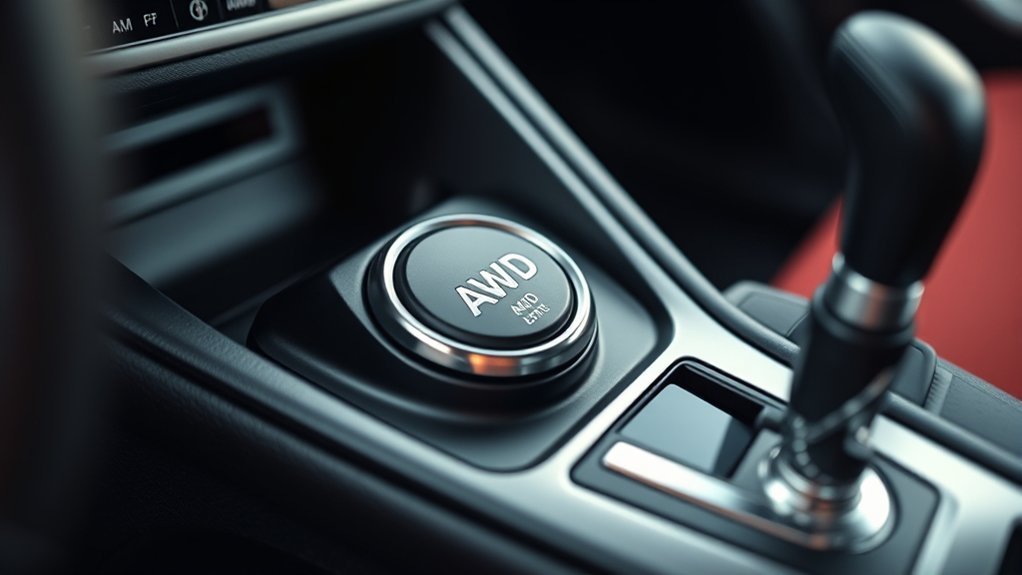
While driving your Toyota RAV4, you might encounter issues with the all-wheel drive (AWD) system that can affect performance and safety. If the AWD light on your instrument panel is illuminated, it signals a malfunction that needs immediate attention. First, verify the AWD system is activated by checking that the indicator light is on after pressing the chassis symbol. Remember, you need to be traveling at a speed of 25 MPH or less for the system to engage properly. If the AWD engages unexpectedly, this could indicate a deeper issue that requires a system check to prevent damage. Regularly troubleshooting your AWD system is essential; consult your owner’s manual for guidance. This includes checking fluid levels and performing system resets as necessary. Keeping these tips in mind can help you maintain peak AWD performance and guarantee a safer driving experience.
When to Use AWD in Your Toyota RAV4?
Knowing when to activate the all-wheel drive (AWD) in your Toyota RAV4 can markedly enhance your driving experience and safety. It’s crucial to engage AWD in snowy, rainy, icy, or muddy conditions to improve traction and reduce the likelihood of accidents. On curvy roads, activating AWD helps enhance handling and maintain better control of your vehicle.
Even on dry pavement, using AWD can provide improved grip and stability, especially during sudden acceleration or hard cornering. Remember to turn on the AWD at speeds of 25 MPH or less for safe activation, guaranteeing optimal power distribution to the wheels.
Regularly check the AWD light on your instrument panel while driving in challenging conditions; this guarantees your system is functioning correctly. By understanding when to activate AWD, you can confidently navigate various driving conditions and enjoy a safer, more liberated driving experience.
Frequently Asked Questions
How Do I Turn on All-Wheel Drive on My Toyota RAV4?
To turn on AWD in your RAV4, confirm you’re under 25 MPH, activate the system, and check the indicator light. This enhances traction in various driving conditions, especially during seasonal changes. Regular maintenance keeps it ideal.
Does RAV4 AWD Automatically Engage?
Yes, your RAV4’s AWD system automatically engages like a vigilant guardian, optimizing traction control in slippery conditions. This intelligent system enhances performance, ensuring your driving experience remains smooth and confident, no matter the terrain.
Where Is the AWD Button on RAV4?
You’ll find the AWD button on your RAV4 near the steering wheel, usually on the left side. This location enhances RAV4 performance, offering off-road capabilities and AWD benefits while ensuring efficient AWD system types and maintenance.
How Do I Turn My AWD Back On?
To turn your AWD back on, drive under 25 MPH, press the chassis button near the steering column, and check the indicator light. Remember, proper tire pressure and maintenance enhance your RAV4’s off-road capabilities.
Conclusion
In summary, activating the AWD on your Toyota RAV4 can transform your driving experience, much like a key freeing a treasure chest of adventure. By understanding when and how to use this feature, you’ll enhance your vehicle’s performance in various conditions. Remember to keep an eye out for common issues and use the AWD lock function wisely. With these tips, you’re ready to tackle any road ahead with confidence and ease. Happy driving!