What’s in This Article
- Step-by-Step Guide to Safely Clean Your Engine
- What You’ll Need to Clean the Engine Safely
- How to Protect Sensitive Engine Components
- Should You Clean Your Engine Yourself or Let the Pros Handle It?
- Common Problems When Cleaning Your Engine and How to Fix Them
- Tips for Keeping Your Engine Bay Clean
- Troubleshooting Engine Cleaning Issues
- Frequently Asked Questions
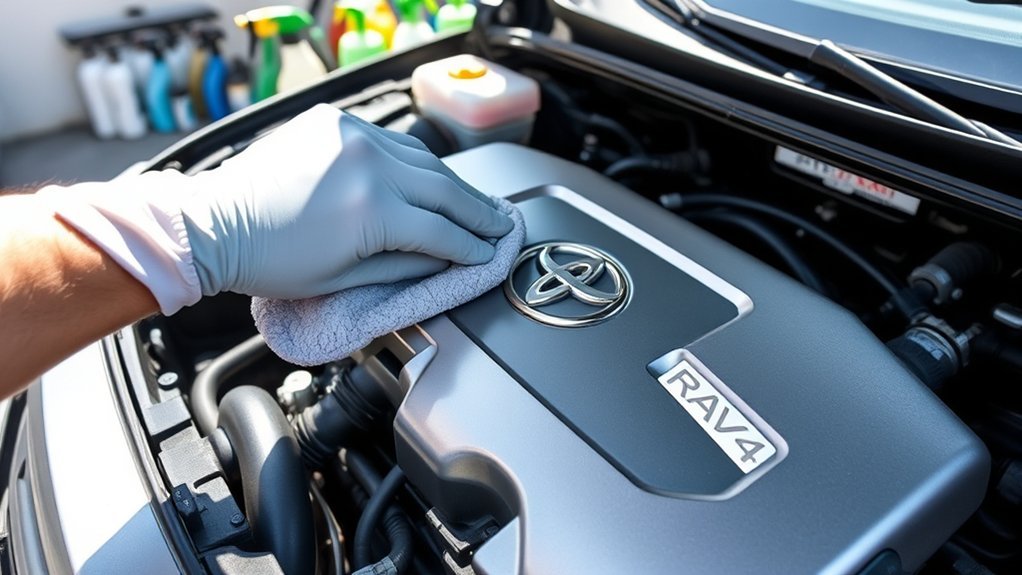
Engine grime can hide small leaks, worn hoses, and loose caps before you notice a problem. Cleaning your Toyota RAV4 engine bay can help you spot those issues, but water in the wrong place can damage electrical parts. Use a cool engine, gentle cleaner, light wiping, and careful drying to keep the job safe.
Quick Answer
To clean your Toyota RAV4 engine safely, let the engine cool, cover sensitive parts, and wipe grime with an automotive-safe degreaser. Avoid spraying water into the engine compartment because Toyota owner’s manual guidance warns that water can affect electrical components. Dry the engine bay well before you start the vehicle.
Key Takeaways
- Start only when the engine is cool enough to touch safely.
- Cover the alternator, fuse box, air intake, battery terminals, and exposed connectors before cleaning.
- Use a damp towel, soft brush, and small amount of cleaner instead of a direct water spray.
- Never touch orange high-voltage cables or service plugs on hybrid and plug-in hybrid models.
- Call a mechanic if you see damaged wiring, oil leaks, warning lights, or heavy grease buildup.
Step-by-Step Guide to Safely Clean Your Engine
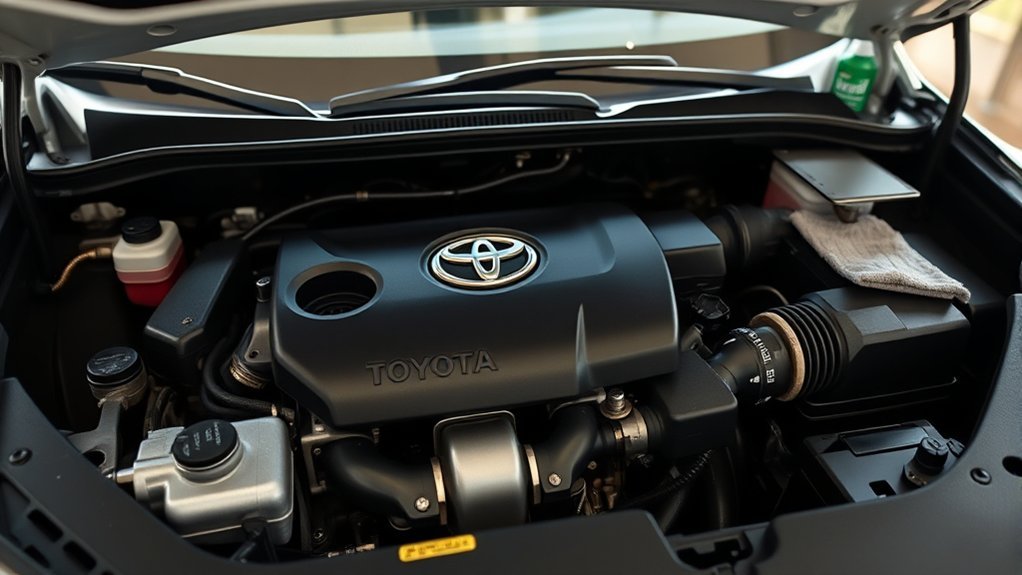
Estimated total time: Plan on 30 to 60 minutes for a light engine bay clean. Add more time if the bay has heavy grease, mud, or salt residue.
Warning: Do not spray water directly inside the engine compartment, and do not pressure wash electrical parts.
Clean your Toyota RAV4 engine bay with a low-water method first. This reduces the chance of water reaching connectors, sensors, and covered electrical parts.
- Park safely and cool the engine. Park on level ground, set the parking brake, turn the vehicle off, and let the engine cool.
- Remove loose debris. Pick out leaves, twigs, and large dirt by hand or with a soft detailing brush.
- Cover sensitive parts. Cover the alternator, fuse box, air intake, battery terminals, and exposed connectors with plastic bags or towels.
- Apply cleaner carefully. Spray automotive-safe degreaser onto a towel or brush, not directly onto electrical parts.
- Wipe dirty areas. Work from cleaner areas to greasy areas, and use light pressure around plastic covers and wiring.
- Use minimal moisture. Wipe cleaner residue with a damp microfiber towel. Avoid soaking the engine bay.
- Dry every reachable area. Use dry microfiber towels and gentle air from a blower if you have one.
- Remove all covers. Check that you removed every bag, towel, and tape strip before you close the hood.
- Inspect before starting. Look for pooled water, loose caps, warning labels, damaged wiring, or cleaner residue.
- Start only after drying. Start the RAV4 after the bay looks dry, then listen for rough idle or warning lights.
This method works best for light dust, road grime, and mild grease. If you see an oil leak, damaged wiring, rodent damage, or heavy buildup, let a professional inspect it first.
What You’ll Need to Clean the Engine Safely
The right tools help you clean more safely and avoid harsh methods. Gather everything before you open the hood so you don’t leave cleaner sitting too long.
- Automotive-safe degreaser that works on plastic and rubber
- Microfiber towels for wiping and drying
- Soft detailing brush for corners and textured plastic
- Plastic bags or towels for covering sensitive parts
- Low-pressure spray bottle for controlled cleaner use
- Gloves and eye protection for cleaner safety
- Gentle air blower or compressed air on a low setting
Read the product label before you use any degreaser. Avoid cleaners that warn against use on plastic, rubber, painted metal, or electrical areas.
How to Protect Sensitive Engine Components
Protect sensitive components before you clean your Toyota RAV4 engine bay. According to Toyota owner’s manual guidance, you should not apply water inside the engine compartment because water can affect electrical components.
| Step | Description |
|---|---|
| Check the Manual | Review your model’s owner guidance before cleaning. |
| Cover Components | Use plastic bags or towels for sensitive areas. |
| Apply Cleaner Carefully | Put cleaner on a towel or brush, not on connectors. |
| Avoid Pressure Washing | Keep water away from electrical parts and air intake areas. |
| Dry and Inspect | Remove covers, dry the bay, and check for moisture. |
For most drivers, one or two light cleanings a year is enough. Clean sooner after muddy roads, dusty work sites, or winter salt exposure.
Should You Clean Your Engine Yourself or Let the Pros Handle It?
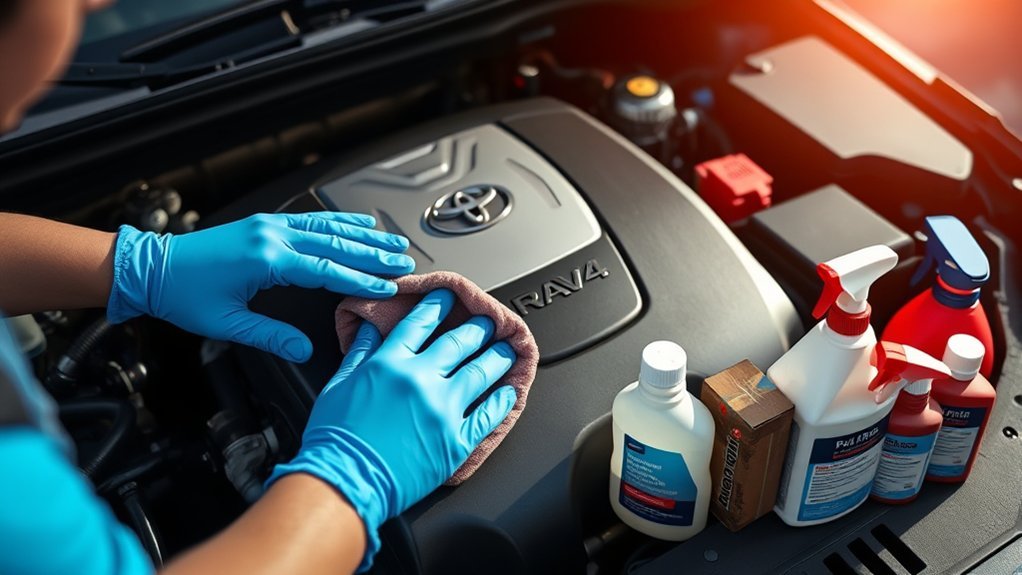
You can clean light dust and mild grime yourself if you work slowly and keep water away from electrical parts. A professional makes more sense when the engine bay has oil leaks, heavy grease, warning lights, or damaged wiring. Hybrid and plug-in hybrid owners should use extra care around orange high-voltage cables and covered hybrid parts.
Cost and Value Considerations
DIY cleaning usually costs less because you only need basic supplies like towels, cleaner, gloves, and brushes. The real cost comes from mistakes, especially if water reaches connectors or the air intake.
A professional detailer costs more, but trained help can lower risk on dirty, older, or high-mileage vehicles. Choose professional help if you feel unsure, see leaks, or don’t know which parts to cover.
Experience and Skill Level
Clean the engine yourself only if you can identify the alternator, fuse box, air intake, battery area, and exposed connectors. You don’t need advanced repair skills, but you do need patience and caution.
If you own a RAV4 Hybrid or RAV4 Plug-in Hybrid, never touch orange high-voltage wiring, orange connectors, or service plugs. Toyota hybrid safety guidance treats these areas as high-risk parts that trained people should handle.
Risk of Damage
Water can enter connectors, ignition parts, fuse boxes, and air intake areas when you spray too close. Pressure washing raises that risk because it can push water past seals.
Cleaner residue can also create problems if you let it dry on rubber, plastic, or painted parts. Use small amounts, wipe residue away, and dry the area before you start the vehicle.
Common Problems When Cleaning Your Engine and How to Fix Them
Engine cleaning problems usually come from too much water, poor drying, or harsh chemicals. Use this guide to catch the issue early.
| Problem | Cause | Solution |
|---|---|---|
| Water near electrical parts | Spraying or wiping without covers | Stop cleaning, dry the area, and inspect connectors. |
| Rough idle after cleaning | Moisture near ignition or sensors | Turn the vehicle off and let the bay dry longer. |
| Grease remains | Cleaner did not sit long enough | Reapply cleaner to a towel and wipe the spot again. |
| Cleaner residue | Too much product or poor wiping | Use a damp towel, then dry with microfiber. |
| Warning light appears | Moisture or an existing fault | Do not keep driving. Get the code checked. |
Stop the job if the engine starts running poorly, warning lights appear, or you smell burning plastic. Those signs need a proper inspection.
Tips for Keeping Your Engine Bay Clean
A clean engine bay starts with small habits, not heavy washing. Wipe dust early, remove leaves from corners, and fix leaks before grime spreads.
Regular Maintenance Schedule
Keep your Toyota RAV4 engine bay clean with light, steady care. This schedule works for most drivers:
- Inspect the engine bay every oil change.
- Remove leaves, seed pods, and loose debris right away.
- Wipe dusty plastic covers with a dry or slightly damp microfiber towel.
- Clean lightly once or twice a year if the bay stays mostly dry and clean.
- Clean sooner after salt, mud, farm roads, or dusty construction areas.
Protective Covers Usage
Cover the alternator, fuse box, air intake, battery terminals, and exposed connectors before you wipe nearby areas. Use loose covers that you can remove easily.
Do not force plastic bags deep around wiring, hoses, or moving parts. After cleaning, remove every cover and check the engine bay before you close the hood.
Safe Cleaning Techniques
Safe cleaning means using less water, less pressure, and more wiping. Focus on control instead of speed.
- Use cleaner on a towel or brush instead of spraying it across the whole bay.
- Work in small sections so cleaner does not dry on surfaces.
- Use a damp towel to lift residue instead of a direct hose stream.
- Dry with microfiber towels and gentle air before starting the engine.
- Check for warning lights, rough idle, or unusual smells after cleaning.
Troubleshooting Engine Cleaning Issues
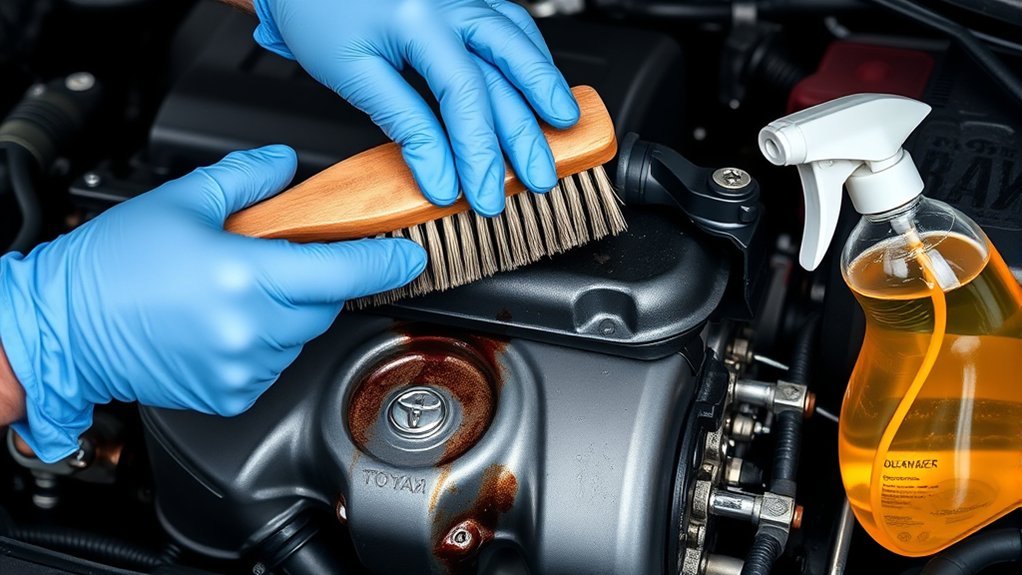
If your RAV4 has trouble after cleaning, stop and check the simple causes first. Look for damp connectors, cleaner residue, loose covers, or pooled water in low spots.
If the engine fails to start, don’t keep cranking it. Check that you removed all covers from the air intake area, then let the engine bay dry longer.
If the engine starts but runs rough, moisture may sit near ignition parts or sensors. Turn the vehicle off, let it dry, and call a mechanic if the problem stays.
If a warning light appears after cleaning, scan the code before you keep driving. A code can help you find whether moisture, a loose connector, or an unrelated fault caused the warning.
Frequently Asked Questions
How can I clean my engine without damaging anything?
Use a cool engine, cover sensitive parts, and clean with towels, brushes, and controlled cleaner. Avoid direct spraying, pressure washing, and harsh chemicals around wiring or air intake areas.
Can you spray water directly on a Toyota RAV4 engine?
You should avoid spraying water directly inside the engine compartment. Toyota owner’s manual guidance warns against applying water inside the engine compartment because water can affect electrical components.
Can a RAV4 Hybrid engine bay be cleaned?
You can clean light dust from a RAV4 Hybrid engine bay, but you should use a low-water wipe-down method. Do not touch orange high-voltage cables, orange connectors, service plugs, or covered hybrid system parts.
How often should you clean a Toyota RAV4 engine bay?
Most drivers only need one or two light cleanings a year. Clean sooner if you drive through mud, dust, salt, or leaves that collect under the hood.
What should you do if the RAV4 runs rough after cleaning?
Turn the vehicle off and let the engine bay dry longer. If rough idle, warning lights, or burning smells continue, have a mechanic inspect the vehicle before you keep driving.
Safety Disclaimer: This article is for informational purposes only. Always check your Toyota owner’s manual before cleaning the engine bay, and ask a qualified mechanic if you see damaged wiring, warning lights, leaks, or hybrid high-voltage components.
Conclusion
The safest way to clean your Toyota RAV4 engine bay is to use gentle wiping, minimal moisture, and careful protection for electrical parts. Start with a cool engine, cover sensitive areas, and dry everything before you start the vehicle.
If the engine bay has heavy grease, leaks, warning lights, or hybrid high-voltage parts you don’t understand, let a professional handle it. A careful clean can make inspection easier and help your RAV4 look better under the hood.
References
- 2021 RAV4 Hybrid Owner’s Manual: Cleaning and Protecting the Vehicle Exterior – Toyota, 2021
- 2020 RAV4 Owner’s Manual: Cleaning and Protecting the Vehicle Exterior – Toyota, 2020
- Cleaning A Car Engine: Tips For Owners And Car Lovers – Toyota of Fort Walton Beach, 2022
- Hybrid System Electrical Safety Precautions – NHTSA/Toyota, 2017